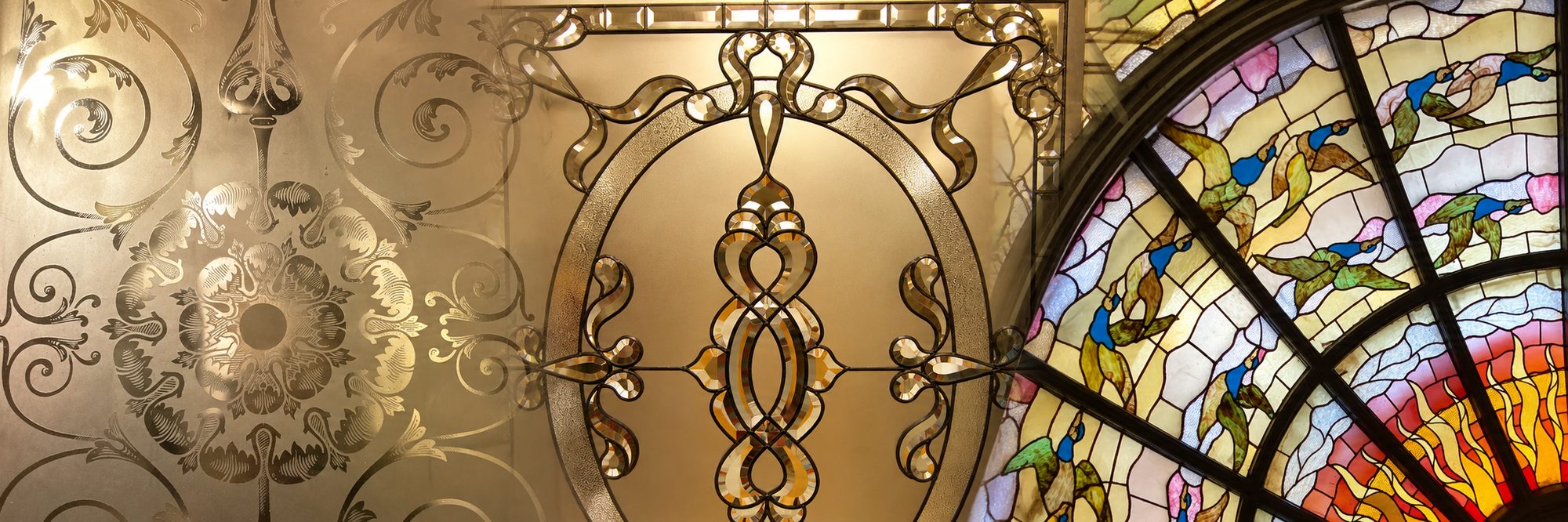

Decorative glass has changed a great deal over several thousand years. This timeline picks out the turning points, from the first glass beads to modern bonded and kiln formed work, and links each stage to a fuller article. See also the glossary for the technical terms and the glass types guide for how each kind is made.
Glass first appears
The earliest glass objects, mostly beads and small vessels, come from Egypt and Mesopotamia. Windows are still thousands of years away.
Glassblowing
Blowing glass into a tube makes thin, cheap vessels possible, and under Rome glass starts to appear as small window panes in important buildings.
The first coloured windows
Fragments and the earliest surviving figure windows in European churches show coloured glass held together with lead strips.
The cathedral age
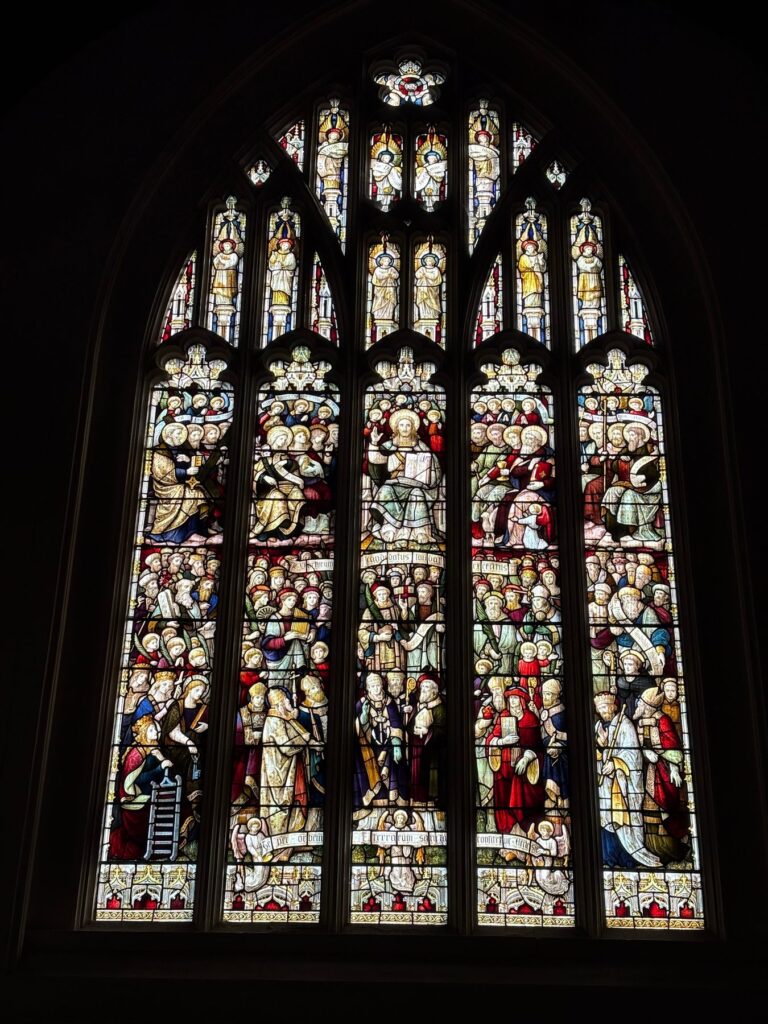
Gothic building opens walls to light, and cathedrals such as Chartres, Canterbury and Salisbury fill with glass telling Bible stories to a mostly unlettered congregation.
Silver stain
Painting with a silver compound and firing it gives yellow and gold shades on clear glass, so a single piece can carry two colours.
Large late Gothic windows
Perpendicular churches have vast windows with tiers of figures. King’s College Chapel and Fairford show the scale reached before the Reformation.
Decline and survival
The Reformation and later conflict destroy much church glass, and enamel painting on large clear panes replaces the older mosaic of coloured pieces.
Gothic revival
Interest in medieval buildings brings new church glass and a revival of older methods. William Morris founds his firm in 1861.
Acid etching and Victorian shopfronts
Etched and engraved glass spreads through pubs, banks, shops and homes, offering privacy and pattern without colour.
Sandblasting
An American patent for blasting sand against glass opens the way to frosted and deep carved decoration.
Bevels and brilliant cutting
Cut and polished edges catch light in doors, windows and display cabinets as industrial cutting becomes affordable.
Opalescent glass and copper foil
Louis Comfort Tiffany and John La Farge develop milky, streaked opalescent glass, and the copper foil method allows curved lamp shades and fine detail.
Art Nouveau and the Glasgow Style
Flowing plant forms, and Charles Rennie Mackintosh’s stylised rose, bring a new look to leaded glass in homes and tea rooms.
Prairie windows
Frank Lloyd Wright designs geometric glass as part of the architecture of his houses, using clear and lightly coloured panes.
Art Deco and the Irish studios
Geometric design and strong colour appear in domestic and commercial glass, while Harry Clarke’s jewel-like church windows set a new standard.
Rebuilding after the war
Bombed cathedrals are reglazed with modern work. Coventry’s new cathedral and artists such as Piper, Reyntiens and Chagall give stained glass a contemporary voice.
Studio glass and kiln forming
Glass is melted, slumped and fused in small studios, and kiln formed panels and art glass become established.
Overlay stained glass
Bonded, laminated and overlay techniques become popular in the UK, bringing leaded-light styles to double glazed units for front doors and windows.
A mix of old and new
Conservation of historic windows continues alongside new commissions, and decorative glass is used in homes, bars, shops and public buildings.