
Copper foil stained glass is made by wrapping the edge of each piece of glass in thin adhesive-backed copper tape and joining the pieces with solder. It is also called the Tiffany method, after Louis Comfort Tiffany, whose studio used it widely for lamps and windows. Because the joints are narrow and the foil follows the edge exactly, it allows finer detail and tighter curves than lead came, and it can be built into three-dimensional shapes.
How it is made
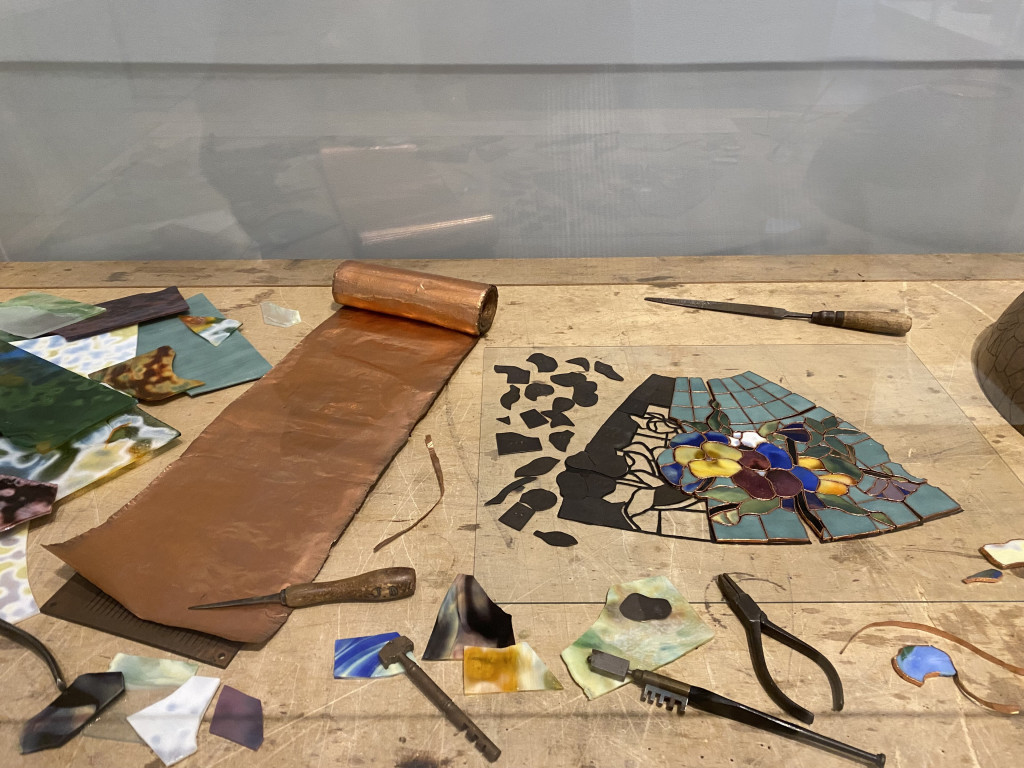
- The design is drawn full size as a pattern, and each piece is numbered.
- The glass is cut, and its edges are ground so that the pieces fit closely.
- Each edge is wrapped in copper foil, and the foil is pressed flat on both faces.
- The pieces are assembled on the pattern and held in place, and the joints are tack soldered.
- Every foiled seam is covered with a bead of solder on both sides.
- The finished piece is cleaned, and the solder can be left silver or darkened with a patina such as black or copper.
The step-by-step methods are in How to Grind Glass and Apply Copper Foil and How to Solder.
Where it is used
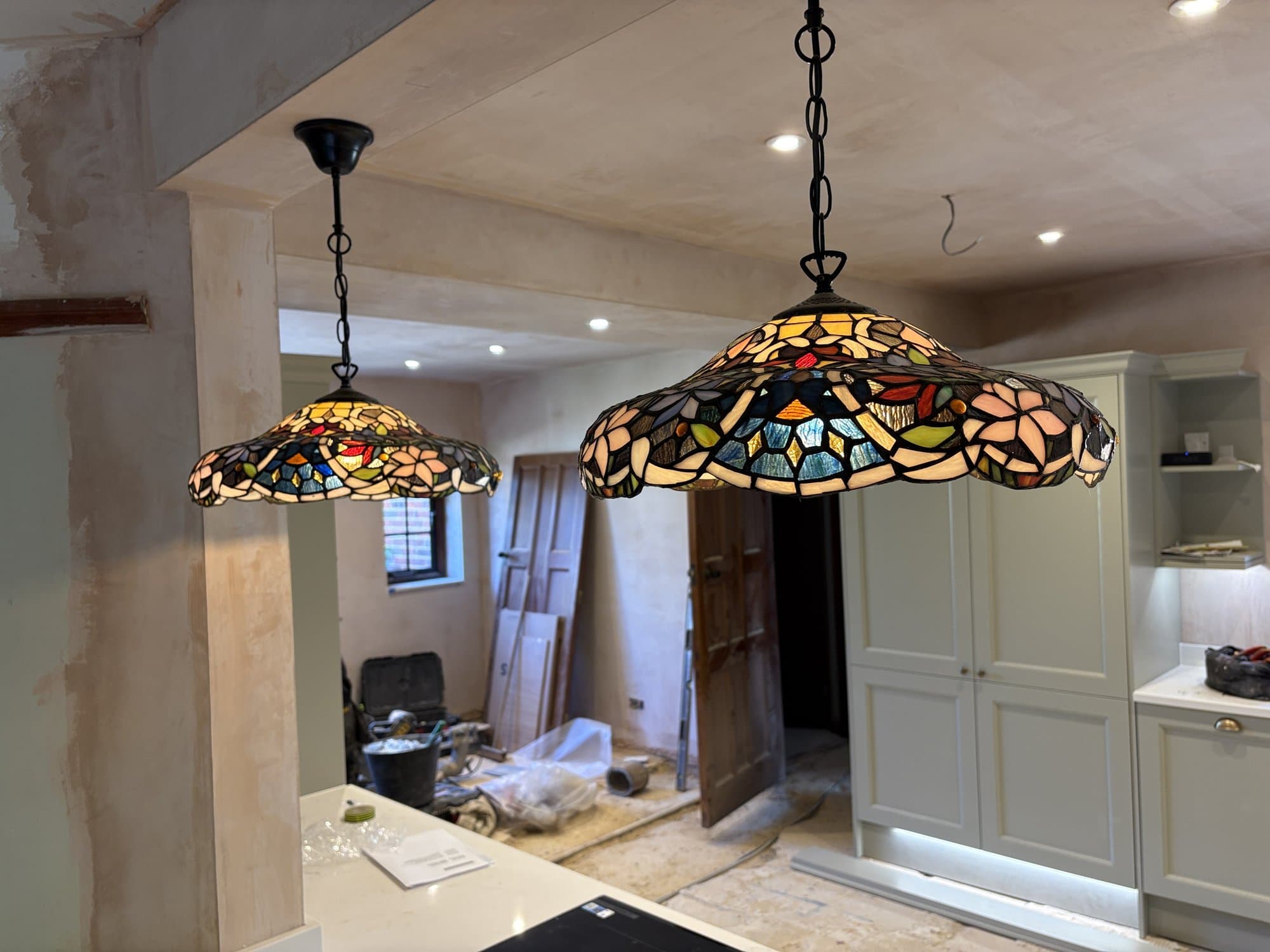
- Lamps and lampshades. The foil follows the curves of a shade. This is the form associated with Tiffany.
- Small panels, suncatchers and boxes. Fine detail and small pieces work well in foil.
- Windows. Foiled panels with fine detail are used in doors and windows, usually with reinforcing bars or rods hidden in the solder lines, because a soldered seam is not as flexible as lead came.
- Three-dimensional pieces. Foil can join pieces at angles, which came cannot easily do.
Copper foil compared with lead came
| Copper foil | Lead came | |
|---|---|---|
| Lines | Narrow, silver or patinated solder | Wider, grey lead with a raised profile |
| Detail | Fine detail and small pieces | Broader, bolder lines |
| Curves and shapes | Good for tight curves and three-dimensional work | Good for flat panels and gentle curves |
| Strength | Strong in small pieces, needs reinforcement in large windows | Flexible, and supported by bars in windows |
| Look | Delicate, jewel-like | Traditional and architectural |
Neither is better. They suit different designs, and many studios use both. Compare with leaded lights and traditional stained glass.
History
The method was developed in the United States in the 1880s. Sanford Bray patented a foil and solder method in 1886, and Tiffany’s studio made it famous. See Opalescent Glass, Tiffany and the Copper Foil Method.
Related pages
- How to grind glass and apply copper foil
- How to solder
- Louis Comfort Tiffany
- Glass tools and equipment
- Glass Glossary
Sources and further reading
Related glossary terms: Copper foil, Solder, Patina.
Frequently asked questions
What is copper foil stained glass?
In the copper foil method the edges of each piece of glass are wrapped in thin adhesive copper tape and the joints are then soldered together.
How does it differ from lead came?
Copper foil gives thinner lines and allows tighter curves and finer detail than leaded lights, though the finished panel relies on the solder for strength.
Why is it used for lamp shades?
The thin joints can follow the curves of a shade, which is why Tiffany-style lamps are made this way.
Who developed the method?
It is associated with Louis Comfort Tiffany in the late nineteenth century. See the page on Louis Comfort Tiffany.
Help improve this page
Have you worked with this type of glass, or have specialist knowledge or experience you would like to share? Corrections, additional information and practical observations that could help make this guide more useful are welcome. Photographs of this kind of work or how it is produced are welcome too.
Suggest an improvement
Photographs of copper foil stained glass
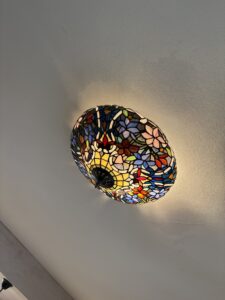 Floral Ceiling Light, Tiffany-Style Stained Glass
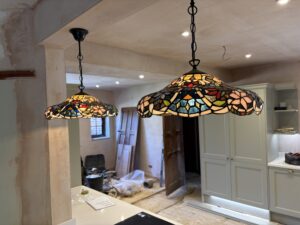 Floral Pendant Lamps, Tiffany-Style Stained Glass
 Carnivorous Plant Lamp Shade, Tiffany-Style Stained Glass
See every photograph of copper foil stained glass in the gallery →
Published 19 October 2026 · Last updated