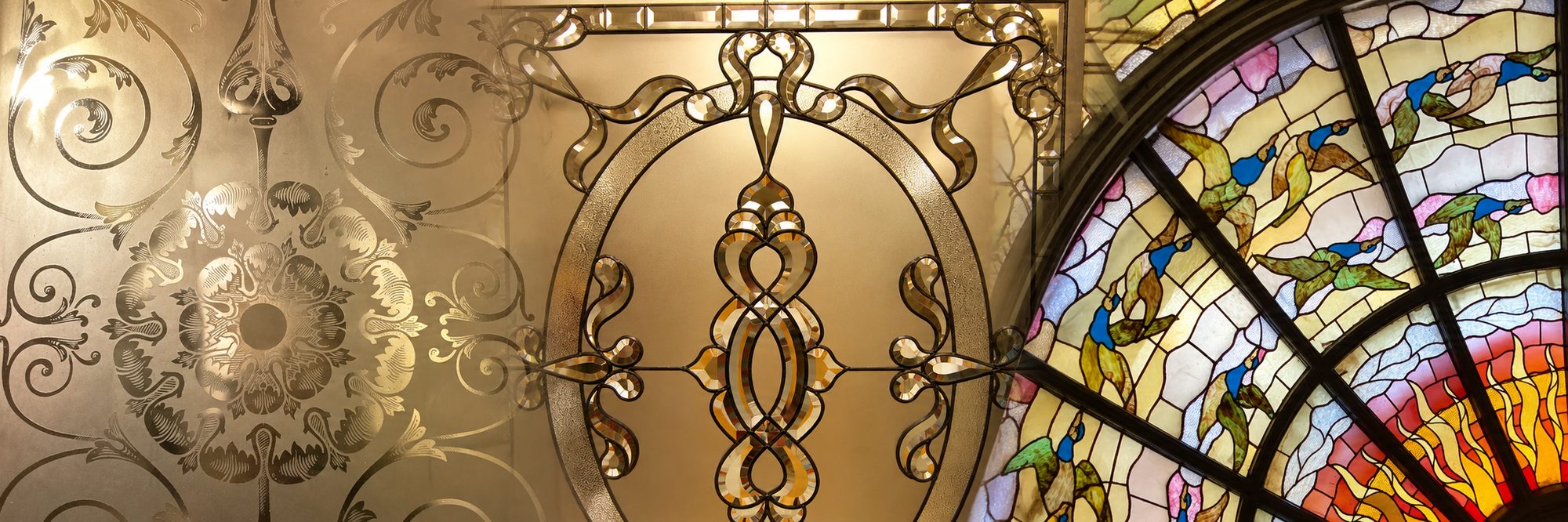

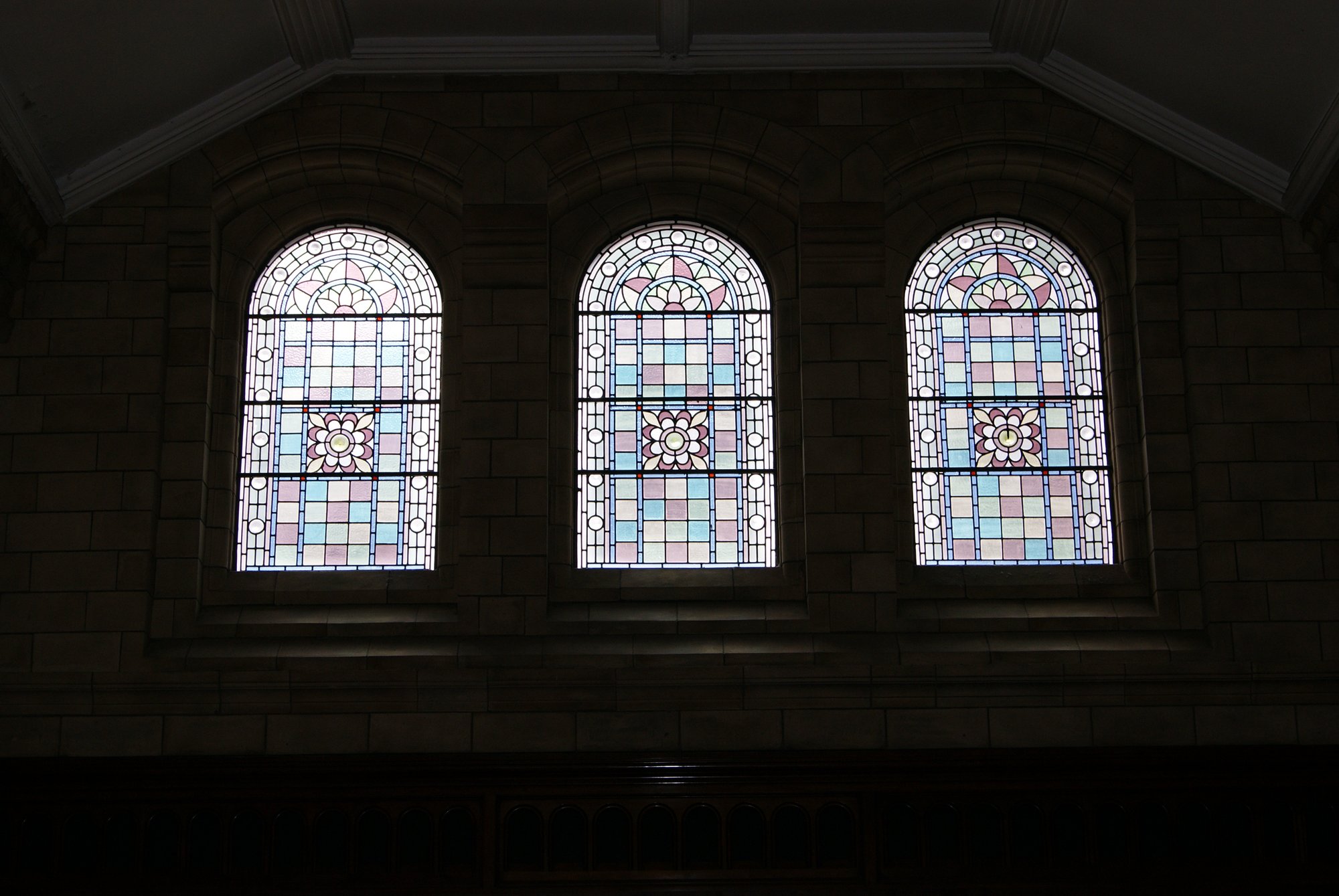
A leaded light is a window made from many small pieces of glass held together by strips of lead. The term covers a wide range of windows. The diamond panes in a Tudor cottage window are leaded lights, as are the tulip panel in an Edwardian front door and the coloured fanlight over a 1930s hallway.
On this site, “leaded lights” describes the technique of holding glass in lead, while “stained glass” means the coloured glass. The two appear together so often that the words are often used as if they meant the same thing, but a leaded light can be made entirely from clear glass, and coloured glass can be held in place in other ways. For the coloured, pictorial tradition, see the page on traditional stained glass.
What a leaded light is made of
The strips of lead are called cames. Look at the end of a came and you will see it is shaped like a letter H on its side: two flat flanges, one either side of a thin central web. The edge of each piece of glass sits in the channel between the flanges and the web, so every piece is gripped along its whole outline. Cames come in different widths, from a few millimetres up to a centimetre or more, and with either a rounded or a flat face. A fine lattice of narrow cames gives a delicate look, and wide cames look heavier and more solid.
Where two cames meet, the joint is soldered on both sides. That keeps the network of lead rigid. Once the soldering is finished, the gaps between glass and lead are packed with cement, a stiff putty traditionally made from linseed oil and whiting (powdered chalk). It is brushed in and worked under the flanges, then the surplus is cleaned off. Without the cement a panel would rattle in the wind and let water through every seam.
Larger panels also need support. Lead is soft, so a wide window is fixed to iron or steel bars, and the panel is tied to them with soldered copper wires.
How a panel is built
Everything starts with a drawing at full size, often called the cartoon. Each piece of glass is cut to its shape on the drawing and ground at the edges until it fits. The cut pieces are laid out on a bench and built up one at a time, with a length of came between each, nailed down to keep the whole panel square as it grows. When the last edge is in, it is soldered, cemented, cleaned and polished, and the lead is often darkened with a patina so that it reads as a clean black line.
The method is old. Lead cames were already in use in medieval windows, and the basic idea has barely changed since. The wider story is told in a short history of stained glass.
Quarries, roundels and borders
Most leaded lights are built from a small number of elements.
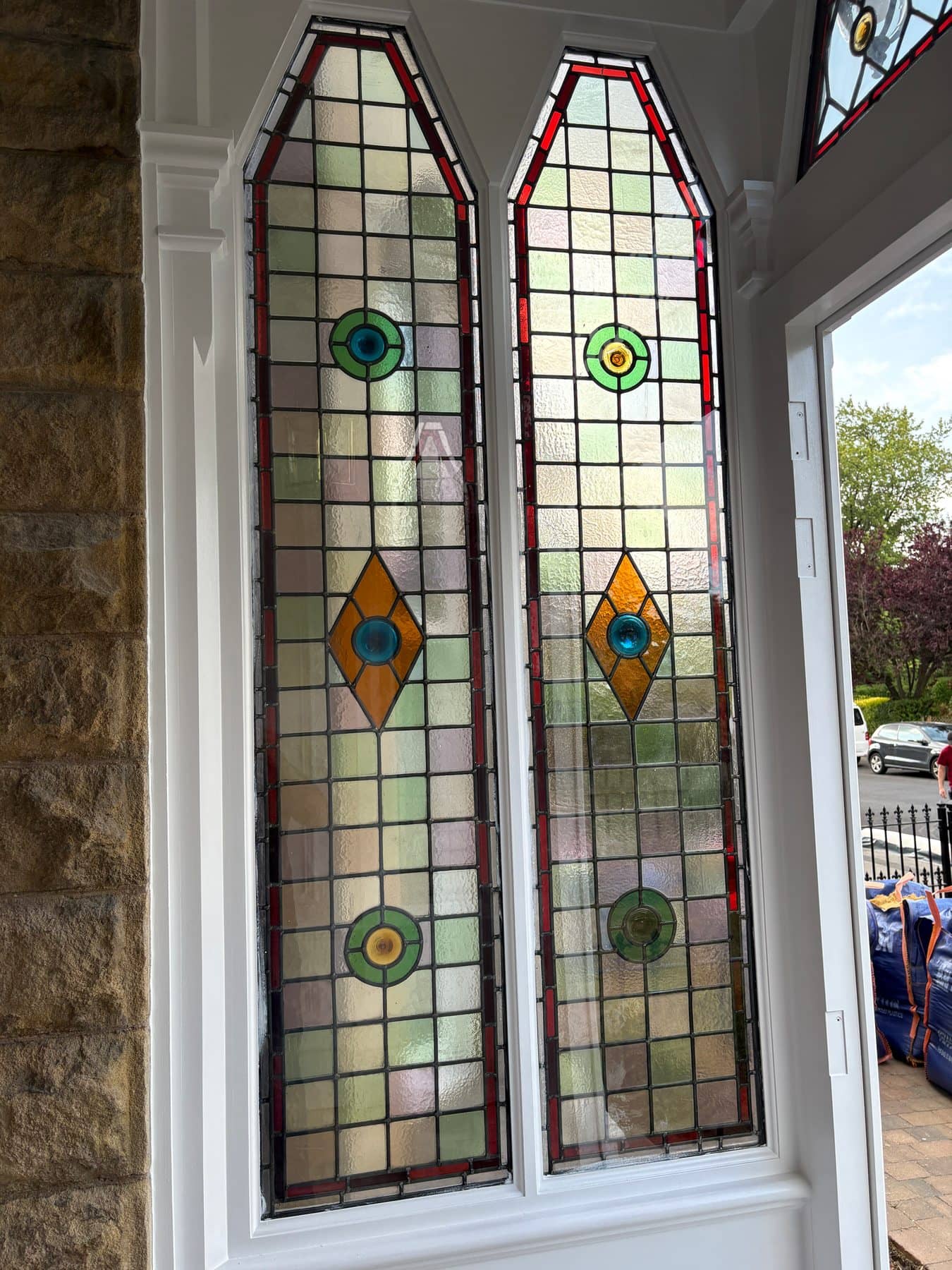
Quarries are the small diamond or square panes that make up a lattice. They can be clear, lightly tinted or textured. The diamond-paned casement is the oldest and best-known domestic form, and for centuries it was a practical choice as well as a decorative one, because small panes were all that early glassmakers could produce.
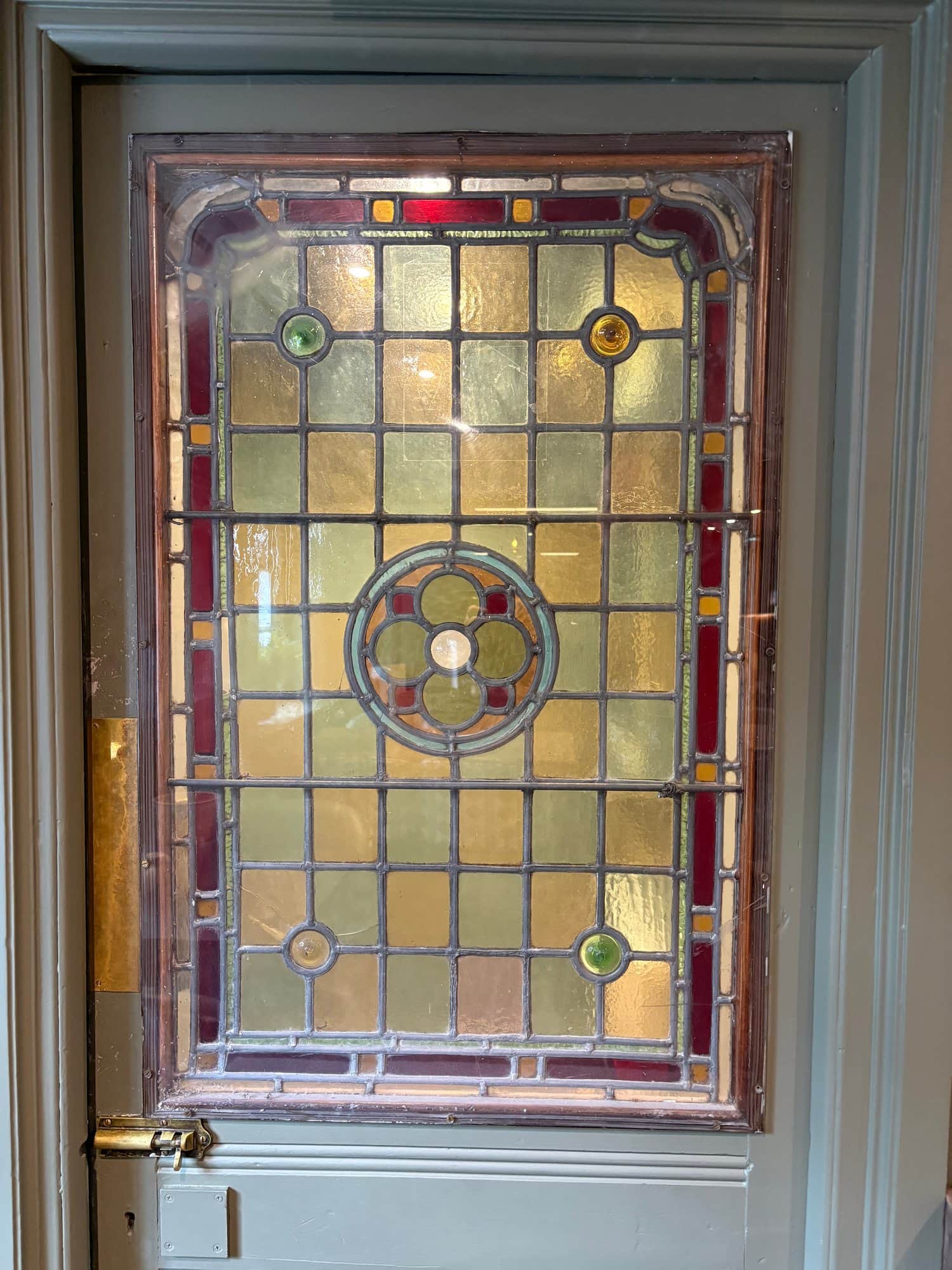
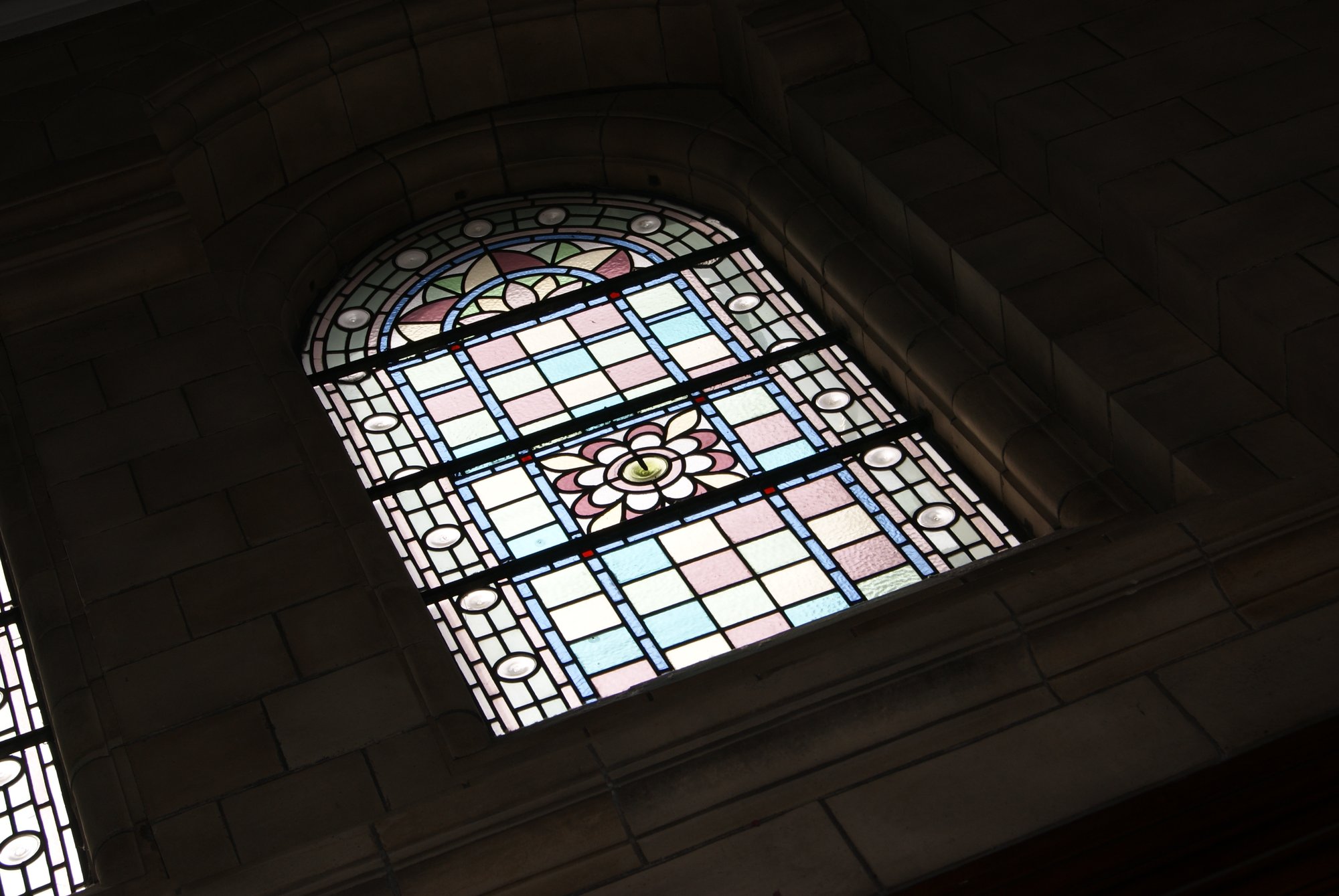
Roundels, also called bullseyes, are circular pieces of glass. Traditionally they were cut from the thick centre of a spun disc of crown glass, which is why many have a ridged, swirled look and a small bump where the glassmaker’s iron was attached. Many modern roundels are pressed or machine-made to resemble them.
Borders in a contrasting colour, often red or amber, frame the panel and hide the way it meets the window frame.
Textured glass, rolled by machine and sold for generations as cathedral glass, is used extensively in domestic work because it lets light in while blurring the view from outside.
Leaded lights in ordinary houses
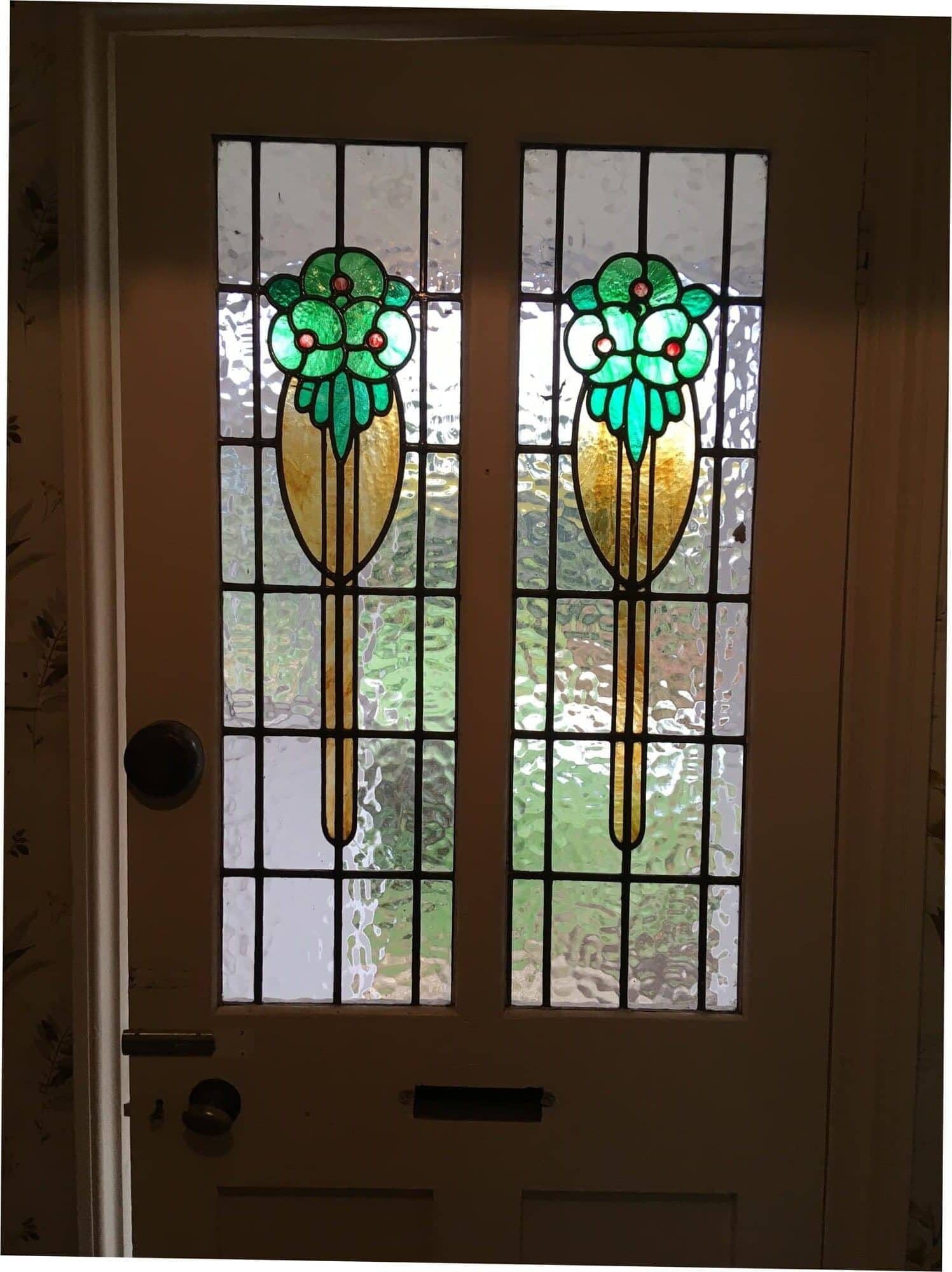
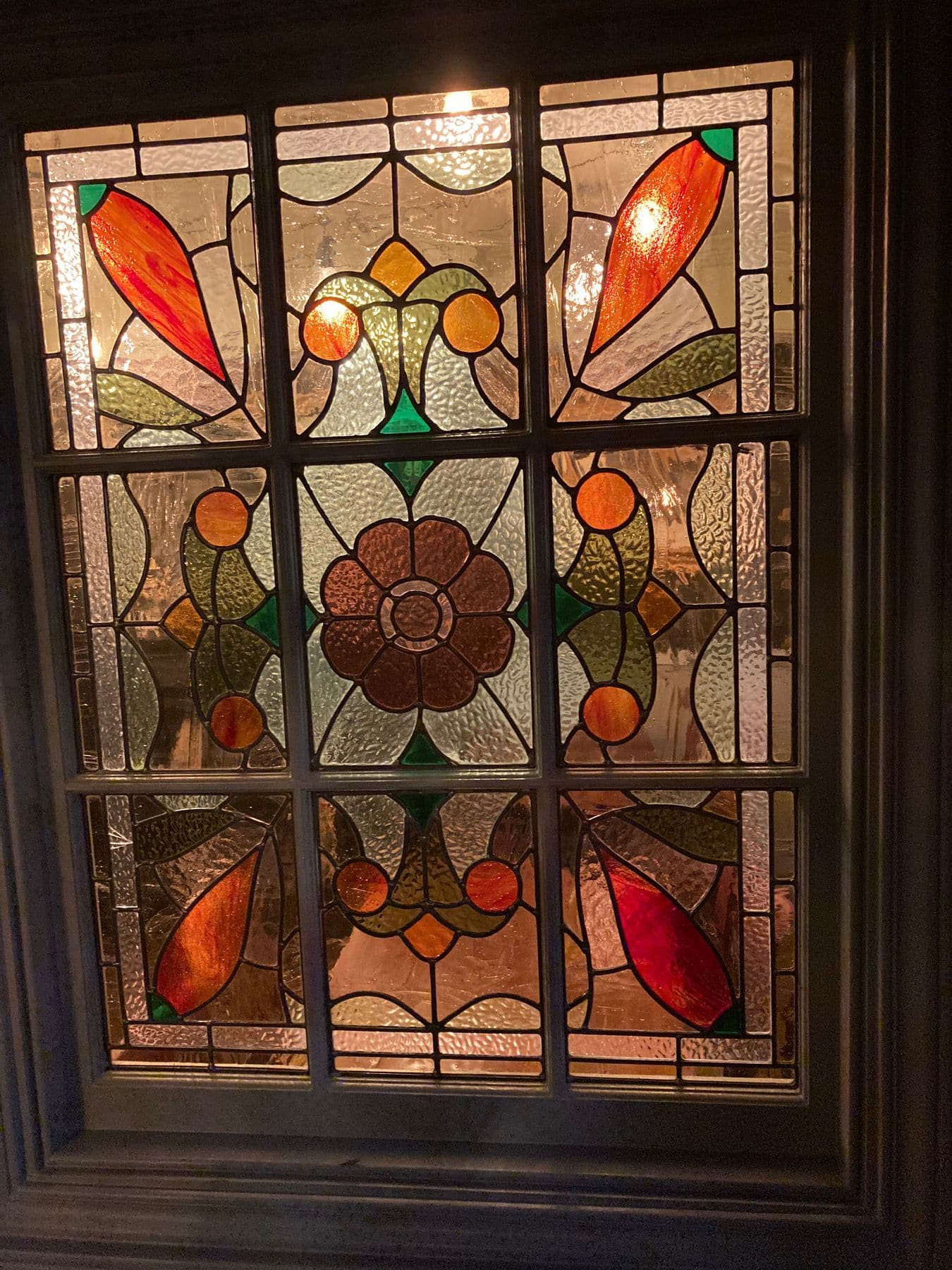
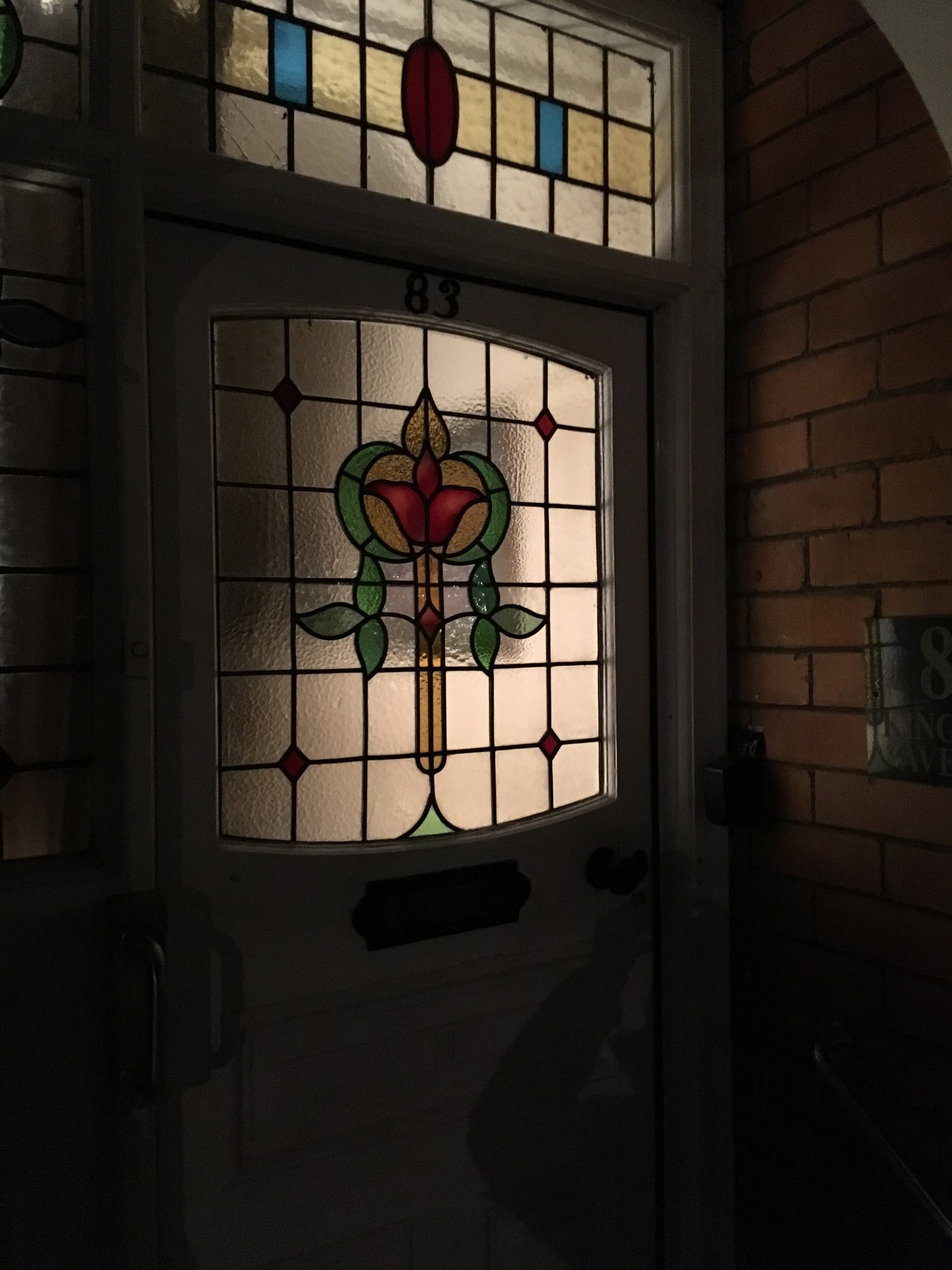
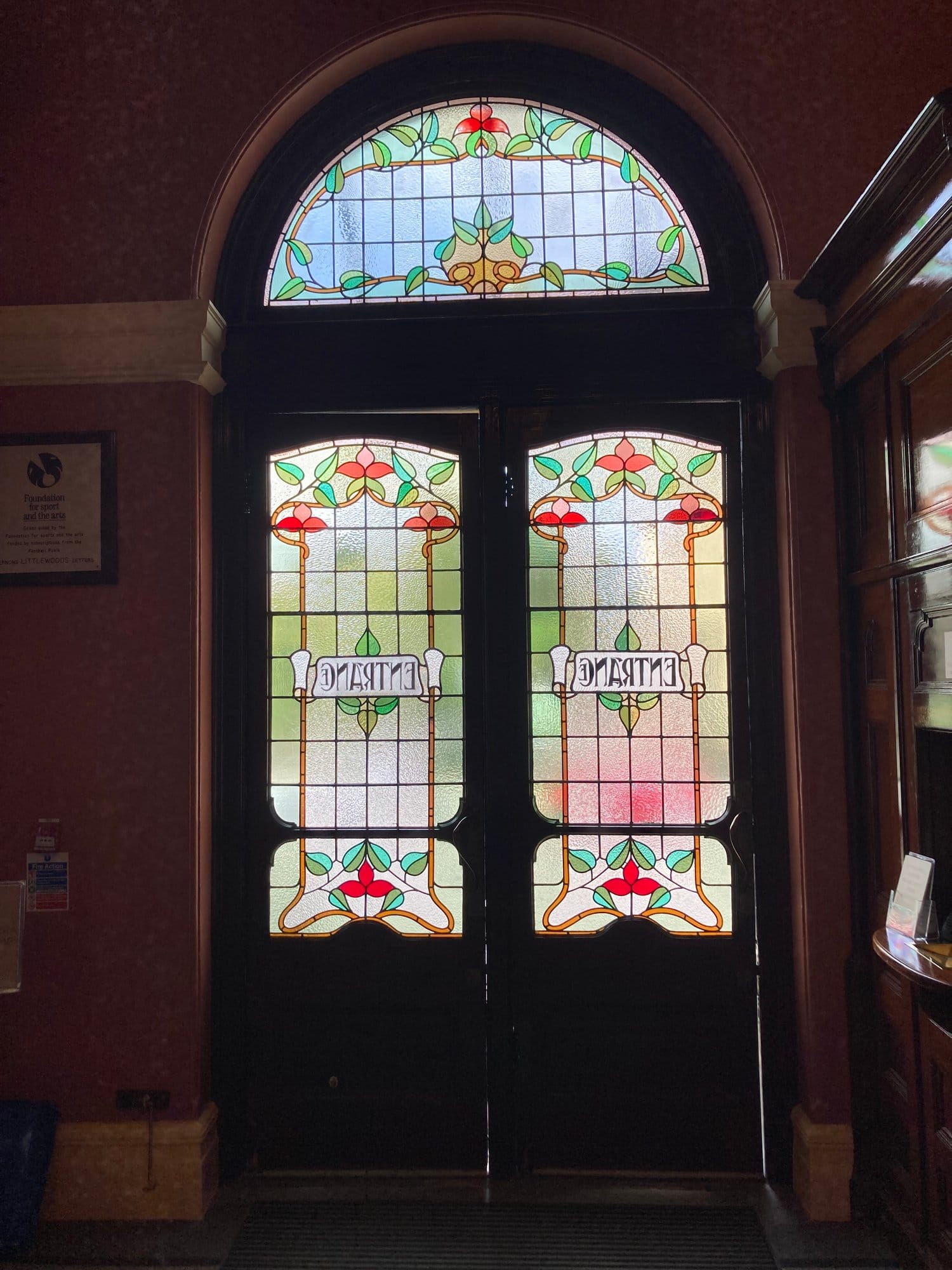
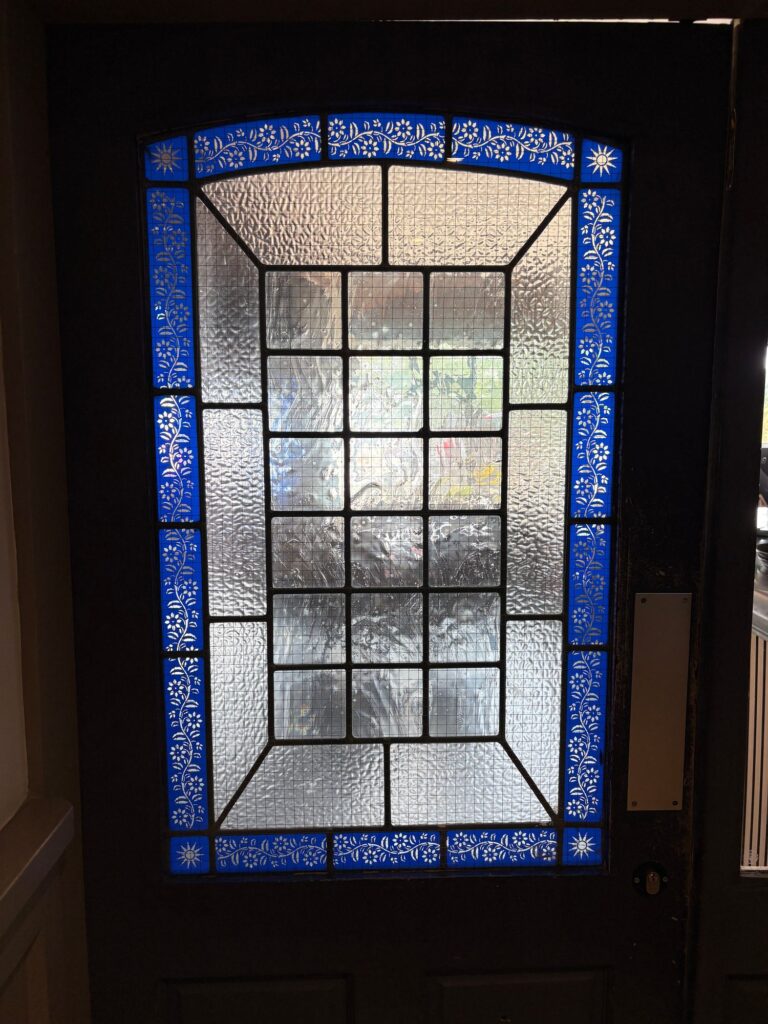
Leaded lights spread from churches and grand houses into everyday homes in the second half of the nineteenth century, when machine-made glass and mass production brought the cost down. Terraced streets of Victorian houses often have a coloured panel in the front door and a patterned fanlight above it. Edwardian builders went further, and the early twentieth century produced a great many floral door panels, with stylised roses, tulips and lilies influenced by Art Nouveau and the Arts and Crafts movement. Between the wars, a rising-sun design on a front door or a hall window became a hallmark of the suburban semi.
The practical reason was privacy. A leaded panel in a door lets light into a hall but stops anyone looking straight in, and it costs far less than a full stained glass window.
Ageing, damage and repair
Lead is soft, and over decades a large panel can sag under its own weight. It often bulges outwards in the middle, with the glass pressing against the cames and sometimes cracking. The cement dries and falls out, solder joints open up, and the panel starts to rattle and let in draughts and water.
A panel in this condition can usually be saved. The standard repair is to take it out, lay it flat, strip out the old lead, clean and mend the glass, then rebuild it with new cames and fresh cement, usually adding support bars so that it does not sag again. There is more about the work, and the thinking behind it, on the conservation and restoration page.
Leaded lights today
A traditional leaded panel is single-glazed, so on its own it does nothing for heat loss. That has led to a different way of building them for modern homes. The decorative leaded layer is sealed inside an insulated, double-glazed unit, which is usually called an encapsulated unit. The lead and any coloured glass are then protected inside, and the outside is a plain flat surface that is easy to clean. Some manufacturers seal a traditional panel between the two sheets, and others fix the lead to a flat sheet of glass instead.
There is also overlay stained glass, which achieves the leaded look on a single sheet of glass instead of assembling separate pieces, and is aimed at the same uses.
A note on lead
Lead is a poisonous metal, and the risk comes from dust and from swallowing it by hand-to-mouth contact, not from looking at a window. If you are handling old cames or cleaning a panel, wash your hands thoroughly before eating, drinking or smoking, and do not sand or burn off old lead. The working safely with glass page has the details.
Discover more leaded lights
Photographs of leaded lights, with notes on what is in each one, are collected in the leaded lights gallery. You can also browse by period and by building type from there.
Mackintosh and leaded glass
Few designers used lead lines as boldly as Charles Rennie Mackintosh. His roses and tulips are drawn almost entirely in lead, with only small touches of colour. To see how this works in real buildings, look at the photographs and notes on Hill House, the Willow Tea Rooms and House for an Art Lover, plus an article on 78 Derngate in Northampton.
Questions people ask
Are leaded lights the same as stained glass?
Not exactly. Leaded lights describes the construction, with glass held in lead. Stained glass describes the colour. Many leaded lights contain no colour at all.
Is a leaded light made of real lead?
In a traditional panel, yes. The cames are lead, or sometimes a lead alloy. Some modern imitations use self-adhesive lead strip stuck to a sheet of glass, and a few use other metals, so it is worth asking if it matters to you.
Can a damaged leaded light be repaired?
Usually. Cracked pieces can be replaced, sagging panels releaded and loose joints resoldered. It is rarely worth replacing a whole panel that can be restored.
History and related reading
Medieval Stained Glass and the Origins of Leaded Lights, How to Build a Leaded Panel. See also A Short History of Stained Glass. The tools and methods are covered in Tools and Equipment.
See also How Lead Came and Overlay Lead Are Made.
Care: see How to Clean Decorative Glass Safely.
Much of the clear textured glass used in leaded lights in Britain is rolled patterned glass made in St Helens, Merseyside, where it has been made since 1852. See How Window Glass Was Made.
Painted detail is fired in a kiln, and the method is explained in How Painted and Silver Stained Glass Is Fired. The discs used in old pub and cottage windows are covered in Roundels and Bullseyes in Leaded Lights. Lead is not the only way of joining the pieces: see Copper Foil Stained Glass.
At home: glass for a front door and decorative glass for kitchens, bathrooms and stairs.
Related glossary terms: Lead came, Quarry, Roundel, Saddle bar, Releading, Double glazing.
Frequently asked questions
What is a leaded light?
A leaded light is a window or panel made from pieces of glass held in grooved strips of lead, called came, with the joints soldered. The glass can be clear or coloured, and the pattern is often diamonds, rectangles or a flowing design.
What is the difference between a leaded light and stained glass?
A leaded light describes how a panel is built, while stained glass describes coloured, and often painted, glass. Many stained glass windows are leaded lights, but a leaded light can be made entirely from clear glass. See traditional stained glass for the coloured tradition.
Can leaded lights be double glazed?
Yes. A traditional leaded light needing double glazing is encapsulated inside the sealed unit. In the overlay method, the lead and colour are applied to the surface of a single sheet of glass, which can be ordinary or toughened, so they sit on the outside of the unit where they can be touched. See overlay stained glass.
How long do leaded lights last?
The lead itself can last a century or more, but the cement that seals the glass weathers over time and long panels can sag. Re-cementing or releading is the usual repair, and conservation and restoration explains the options.
Help improve this page
Have you worked with this type of glass, or have specialist knowledge or experience you would like to share? Corrections, additional information and practical observations that could help make this guide more useful are welcome. Photographs of this kind of work or how it is produced are welcome too.
Suggest an improvement
Articles featuring leaded lights
Photographs of leaded lights
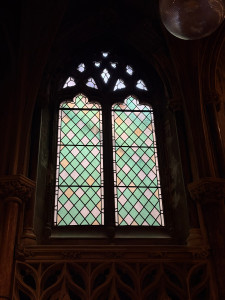 Green and Clear Diamond Leaded Lights in a Gothic Window, Farm Street Church, London
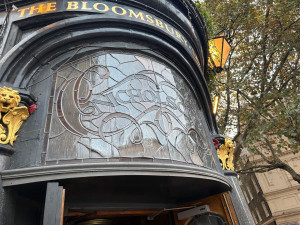 Curved Acid Etched and Leaded Window above the Pub Entrance, The Bloomsbury, London
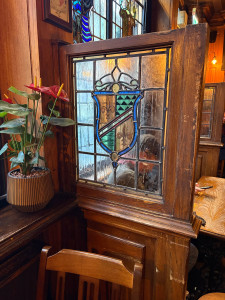 Heraldic Shield in a Small Leaded Window above Panelling, The Bloomsbury, London
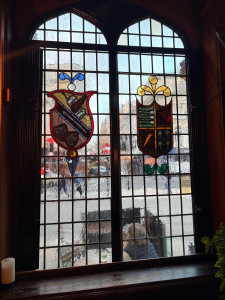 Pair of Heraldic Shields in Leaded Windows, Stained Glass, The Bloomsbury, London
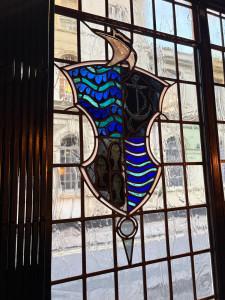 Heraldic Shield with Blue Wave Pattern, Stained Glass, The Bloomsbury, London
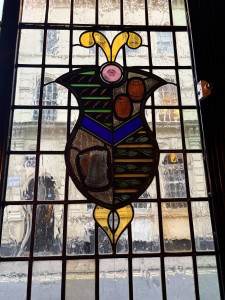 Heraldic Shield with Green and Blue Bands and Yellow Crest, Stained Glass, The Bloomsbury, London
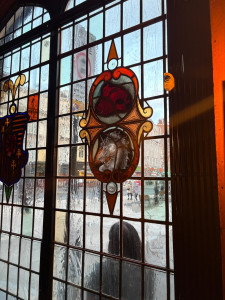 Heraldic Shield with Red Rose in a Leaded Window, Stained Glass, The Bloomsbury, London
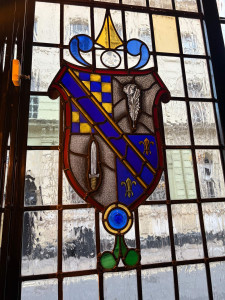 Heraldic Shield with Blue and Gold Chequers and Diagonal Band, Stained Glass, The Bloomsbury, London
See every photograph of leaded lights in the gallery →
Published 8 July 2026 · Last updated