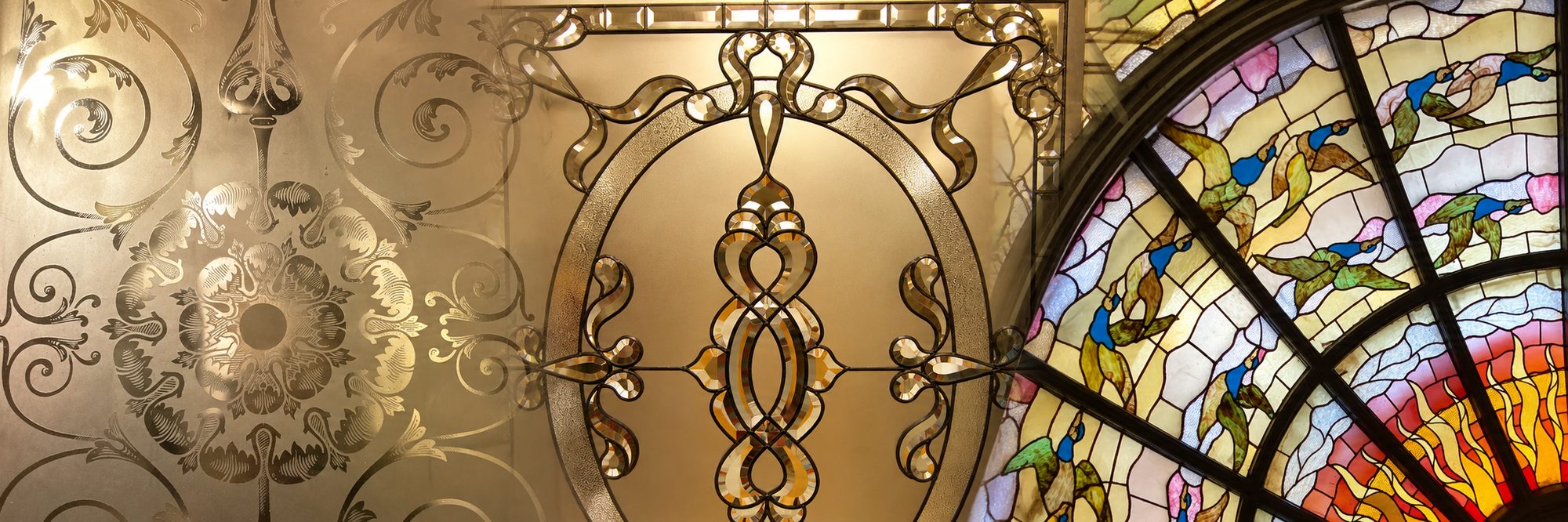

Decorative glass is not only for front doors. Inside the home it solves practical problems: it brings light into dark halls, gives privacy in bathrooms without blocking daylight, and adds a feature to kitchens and landings. The right type depends on the room.
Kitchens
- Cupboard and display doors. Leaded or bevelled glass gives a traditional look, and etched glass a cleaner one.
- Doors between kitchen and hall. Etched or textured glass lets light through and screens the view.
- Splashbacks and shelves. Toughened fused or coloured glass can make a bold feature. Heat resistance matters near a hob, so ask the maker.
Bathrooms and cloakrooms
- Windows. Etched, sandblasted or textured glass gives privacy and keeps the light.
- Shower screens and doors. Etched designs on toughened glass are common. Safety glass is required in these locations.
- Internal doors. Frosted or leaded glass in a bathroom door brings in light from the landing.
Halls, stairs and landings
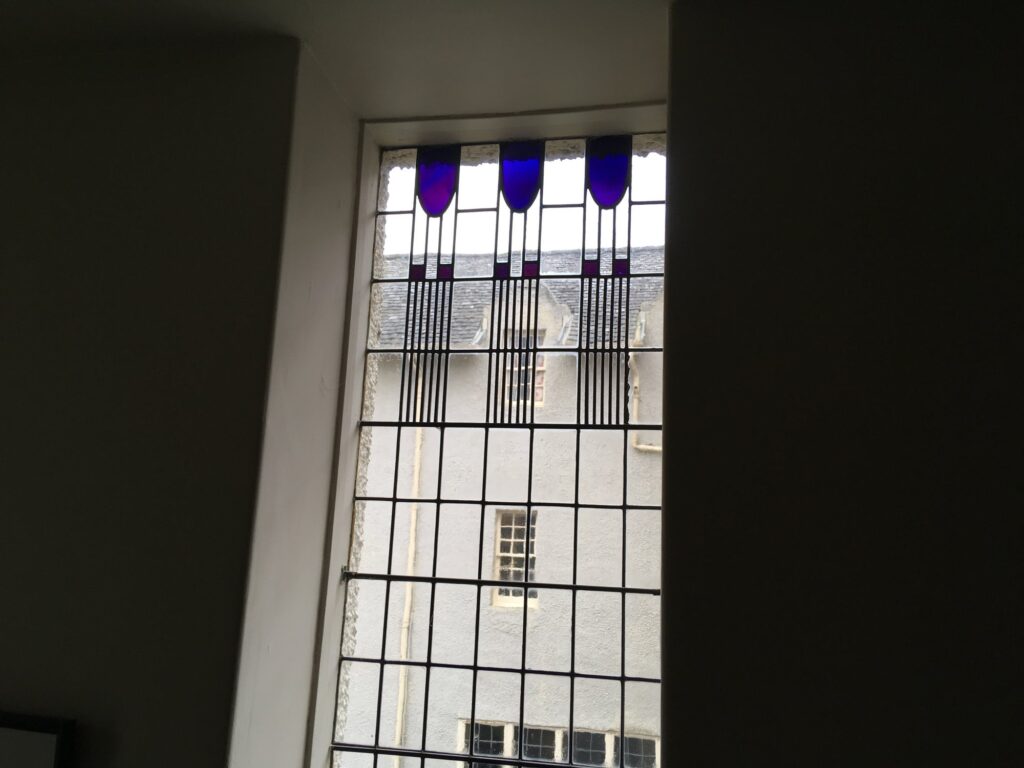
- Stair windows. A leaded or coloured window can be a focal point as you climb the stairs.
- Internal doors and screens. Bevelled or leaded panels let light pass between rooms.
- Fanlights over internal doors. A traditional way of sharing light.
Living and dining rooms
- Doors between rooms. Glazed double doors keep a sense of space.
- Cabinets. Leaded glass doors on cabinets are a classic.
- Windows. A feature window or a leaded border can add character without blocking the view.
Practical points
- Look for safety glass in doors, side panels and low windows. Check the current rules and ask the maker.
- Think about cleaning. Smooth glass is simpler to clean than textured or deeply carved glass.
- Consider moisture. Leaded lights suit bathrooms if well made and sealed, and many are used there.
- Check with the maker before putting decorative glass near a heat source.