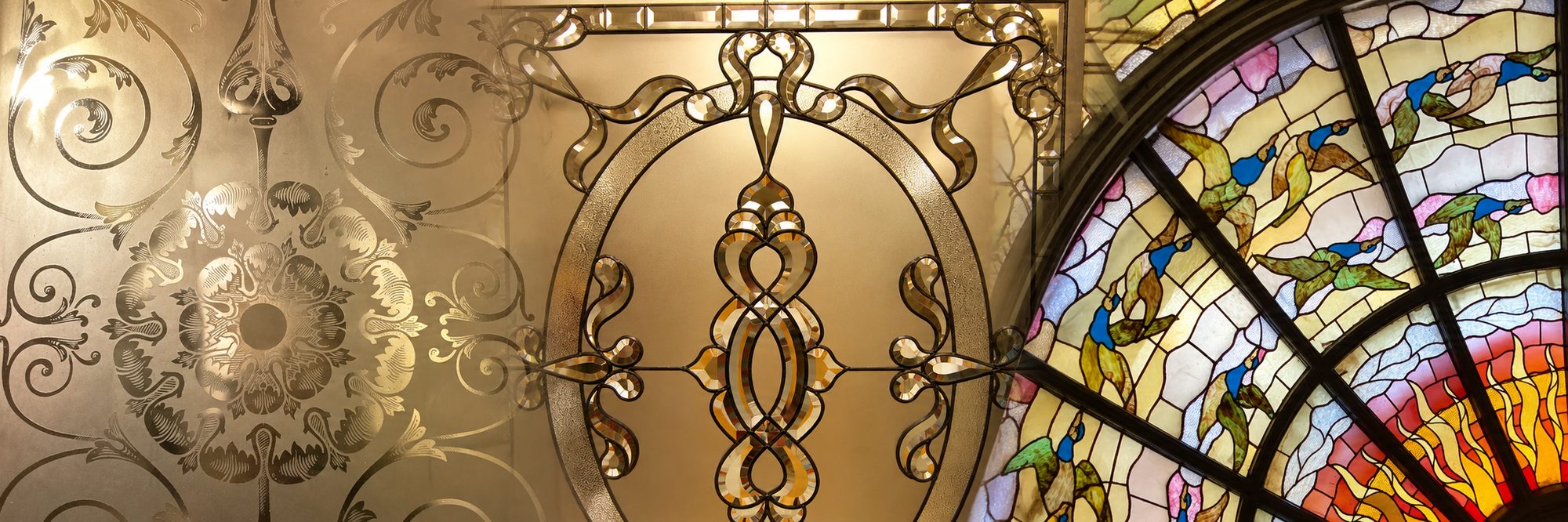
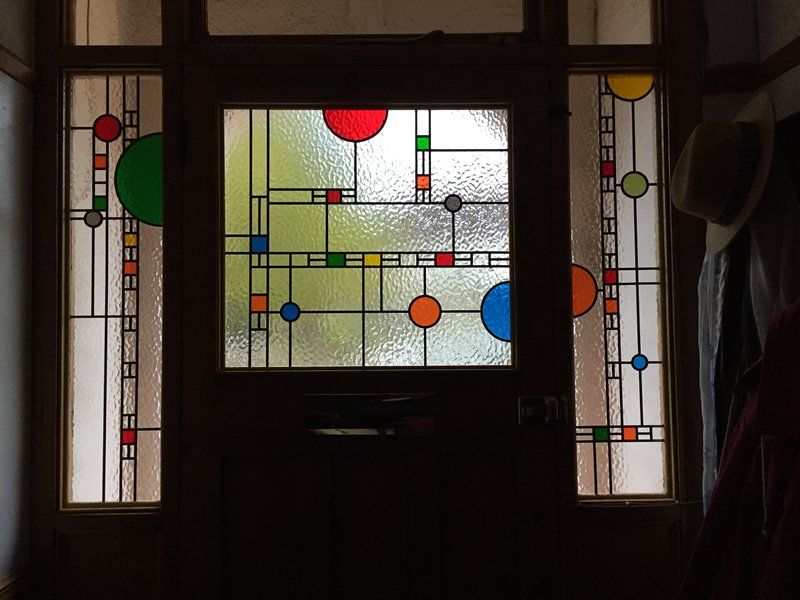
A glass panel in a front door has several jobs at once. It lets light into the hall, it controls what can be seen from the street, it needs to be safe and secure, and it sets the character of the house from the pavement. Four types of decorative glass are used most often: etched, bevelled, leaded and stained. Each handles these jobs in a different way. Looking at examples is the best way to discover what suits the house, and a panel can then be commissioned to fit the doorway.
The four main choices
| Glass | Look | Light | Privacy | Suits |
|---|---|---|---|---|
| Etched (sandblasted or acid etched) | Frosted and clear areas forming a design, from fine line work to bold shapes. | Lets in plenty of softened light. | Good. Dense frosting blocks the view in. | Modern and period homes, particularly with clean, restrained designs. |
| Bevelled | Clear glass with polished angled edges that catch the light and throw small rainbows. | Very good. The glass stays clear. | Low on its own. Often combined with textured or coloured pieces. | Victorian, Edwardian and traditional homes. |
| Leaded lights | Glass pieces held in lead bars, in diamonds, squares or flowing designs. | Good, depending on the glass used. | Varies. Textured glass gives more privacy than clear. | Period homes of every age, and modern homes that want a traditional look. |
| Stained or coloured | Coloured glass, sometimes painted, in a pattern or picture. | Dark colours reduce the light, but the glass glows in daylight. | Good with strong colours. | Entrances, halls and landings where colour is the main feature. |
These choices can be combined. Many door panels pair bevels with leaded lights, or etched designs with a leaded border.
Choosing by the age of the house
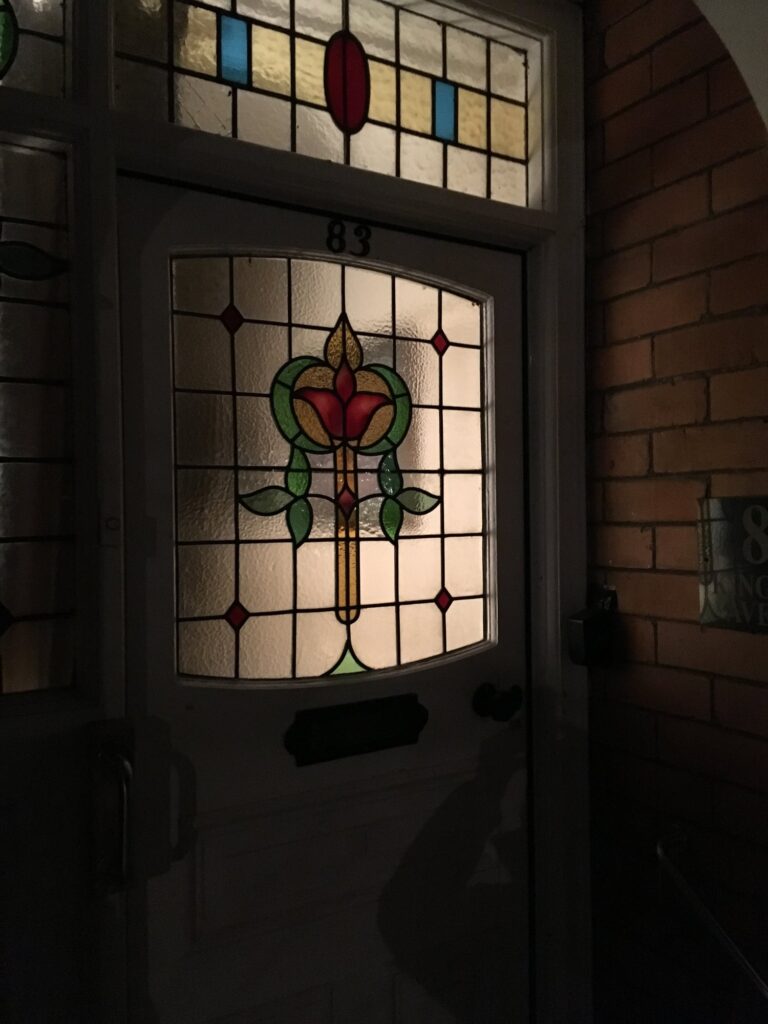
- Victorian (1837 to 1901). Coloured and etched panels, bevelled glass and floral patterns suit the period. See Victorian photos in the gallery.
- Edwardian (1901 to 1910). Lighter designs, with stylised flowers, leaded lights and bevels, often in a central panel with clear borders. See Edwardian photos in the gallery.
- 1920s and 1930s. Geometric patterns, sunbursts and Art Deco lines work well in leaded, bevelled and etched glass. See Art Deco photos in the gallery.
- Mid-century and later. Simple geometric etched or leaded designs suit these homes better than elaborate scrolls. See contemporary photos in the gallery.
- New builds. A single decorative panel gives character to an otherwise plain door, and etched or bevelled panels look crisp in modern frames.
The photo gallery can be browsed by period, which helps when deciding what suits a particular type of house: Victorian and Gothic Revival, Edwardian, Art Nouveau, Arts and Crafts, Art Deco and Contemporary. The residential photographs show how each type looks in ordinary homes.
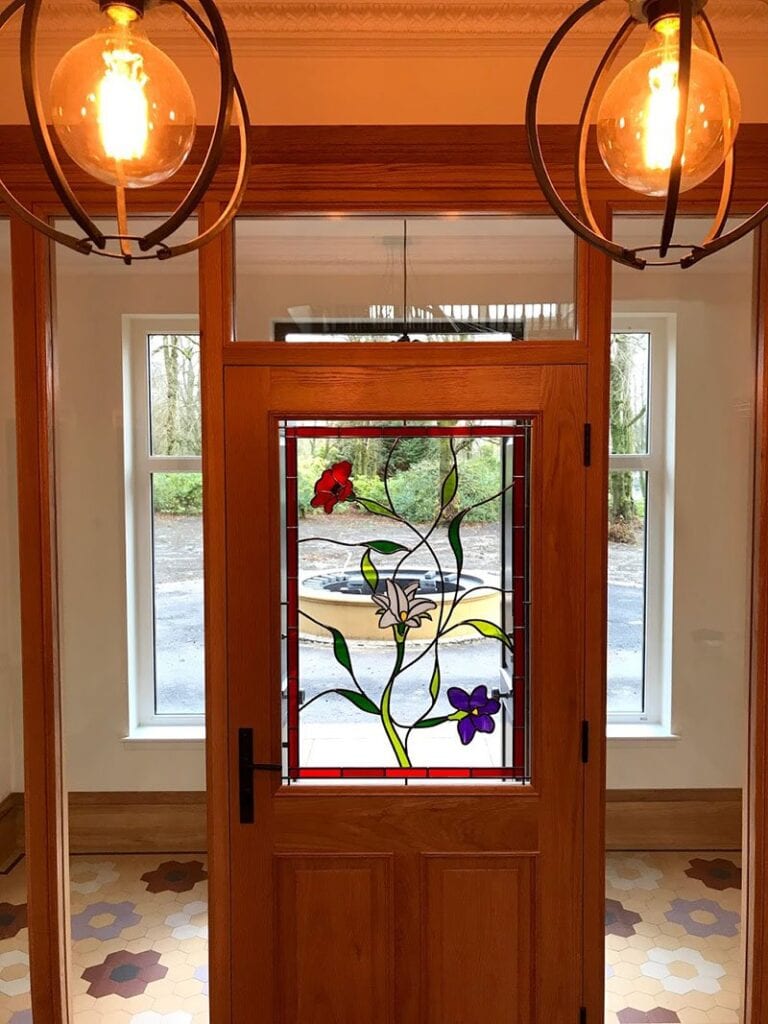
Practical points
- Safety. Glass in and next to doors is classed as a critical location in the building regulations, which in many situations means safety glass (toughened or laminated). Ask the supplier how the glass will meet this requirement, and check the current regulations for your area.
- Security. Laminated glass and well-fitted frames resist forced entry better. Decorative glass can also be sealed inside a double-glazed unit.
- Privacy. View a sample against the light, and from the street, before deciding. The effect changes through the day.
- Maintenance. Etched and bevelled glass need only normal cleaning. Leaded lights should be inspected every few decades for loose lead or failing cement.
- Workmanship. The quality of the construction and fitting matters more than the description on the label. Ask to see examples and ask who manufactures the glass.
Related pages
- Etched glass for homes
- Bevelled glass for homes
- Acid etched glass
- Sandblasted glass
- Decorative bevelled glass
- Leaded lights
- Traditional stained glass
- Types of stained glass sheet
- Photo gallery
- Glass Glossary
- How to clean decorative glass
Published 20 October 2026 · Last updated