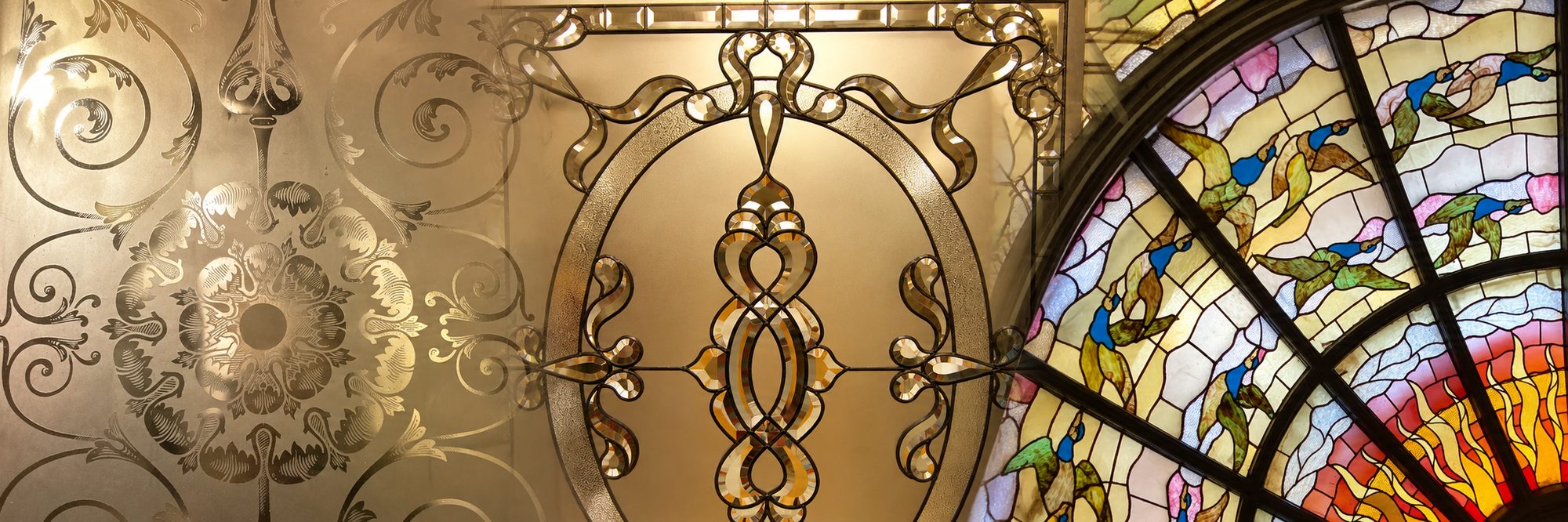

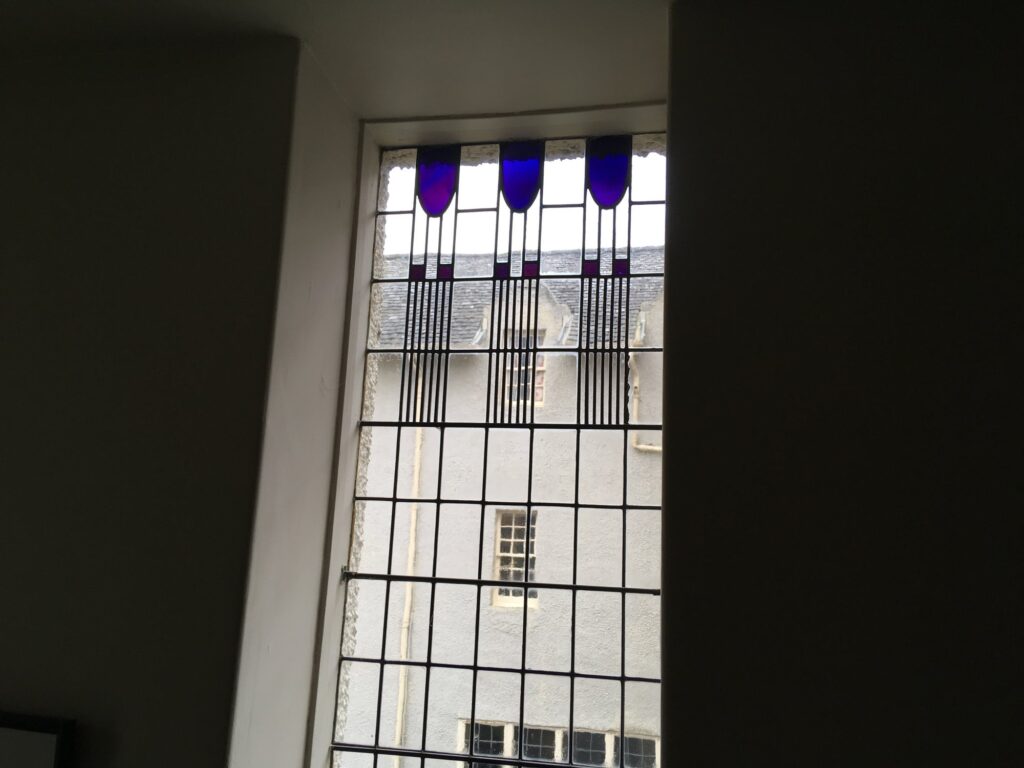
Lead came is the soft metal framework of a traditional stained glass window, and a thin lead line is also what gives overlay stained glass its look. The two are produced differently, but they share the same material and the same job: a dark, slightly raised line that separates colours and defines a design.
Why lead is used
Lead melts at a low temperature, about 327 degrees Celsius, so it is easy to cast and shape. It is soft enough to bend round curves and to be cut with a knife, and it can be soldered readily. It is also flexible enough to allow for the movement of glass with changes in temperature, and it weathers well, forming a stable grey surface that protects the metal below.
Cast came
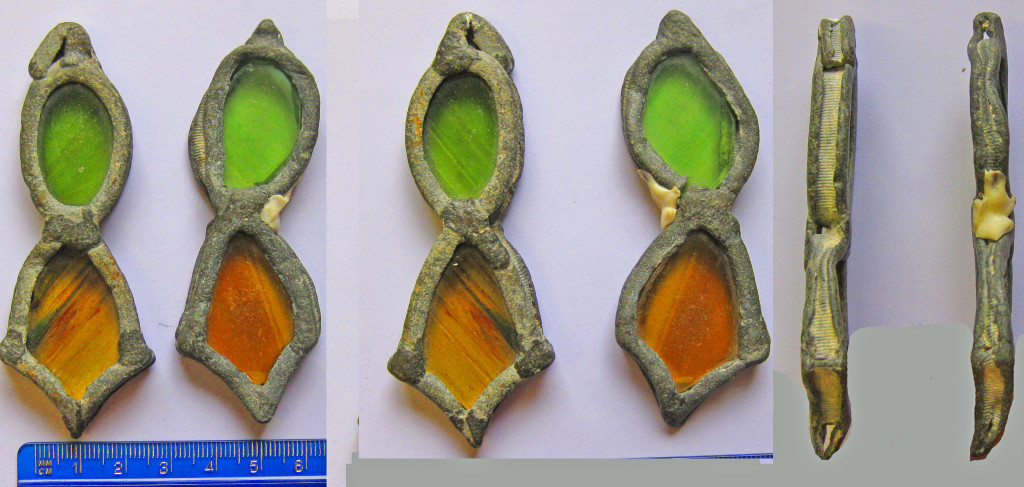
The earliest account of producing came is by the monk Theophilus, writing in the early twelfth century. Molten lead was poured into a wooden mould, and the cast strip was scraped to width. This left uneven flanges and tool marks, which help to date old windows. Some workshops still cast lead in iron moulds.
Milled came
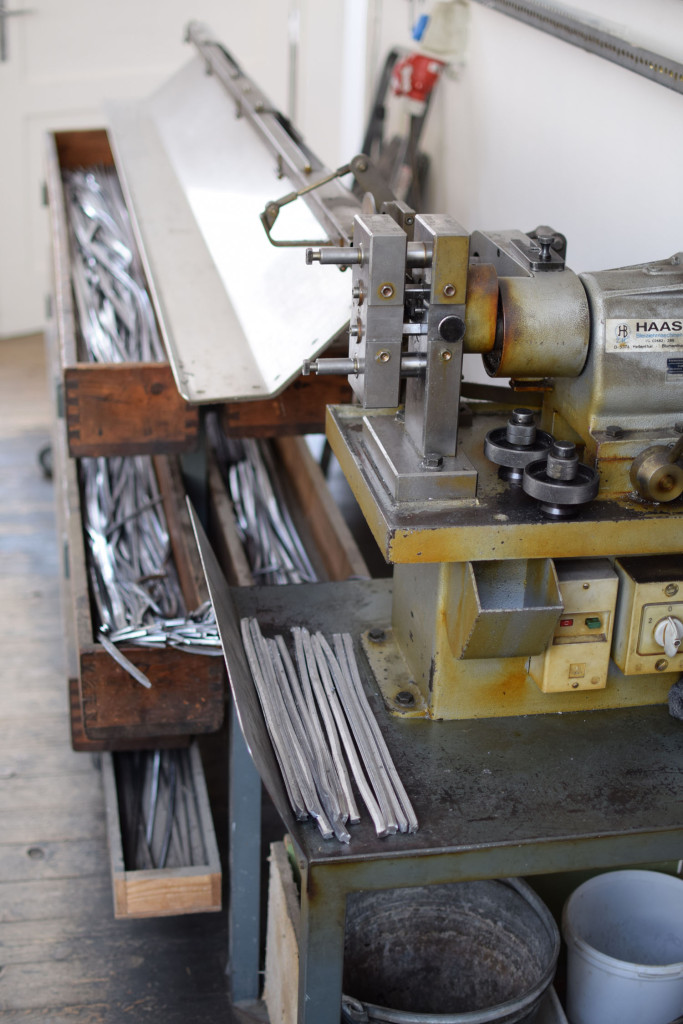
The lead mill, also called a vice or mill, changed the trade. A cast bar of lead is pulled through a pair of grooved wheels, called cheeks, that squeeze it into the H-shaped section. The result is more even, uses less lead for the same length, and can be produced in standard widths. The mill is shown in a woodcut of 1568, and the oldest surviving example dates from 1717. Some manufacturers cut their initials or a date into the wheels, and these marks can still be read on old came. Milling work-hardens the metal, so milled came is firmer but can be brittle if the flanges or heart are cut too thin.
Modern lead came
Most studios now buy lead came ready-made. It is produced by extrusion, in which heated lead is forced through a shaped die, and it is sold in lengths of about two metres or more, in a range of widths and profiles. The two usual profiles are the H section, with a channel on each side, used between pieces, and the U section, with a single channel, used round the edge of a panel. Faces are flat or rounded, and flanges and hearts come in different thicknesses to suit the glass. Reinforced came has a hidden core of steel or similar to add strength to larger panels. Zinc and brass came are made in a similar way and are used where more rigidity is needed.
Lead is toxic if swallowed or breathed in, so the care described in Working Safely With Glass applies to handling came. See also How to Cut Lead Came and How to Build a Leaded Panel.
Overlay lead
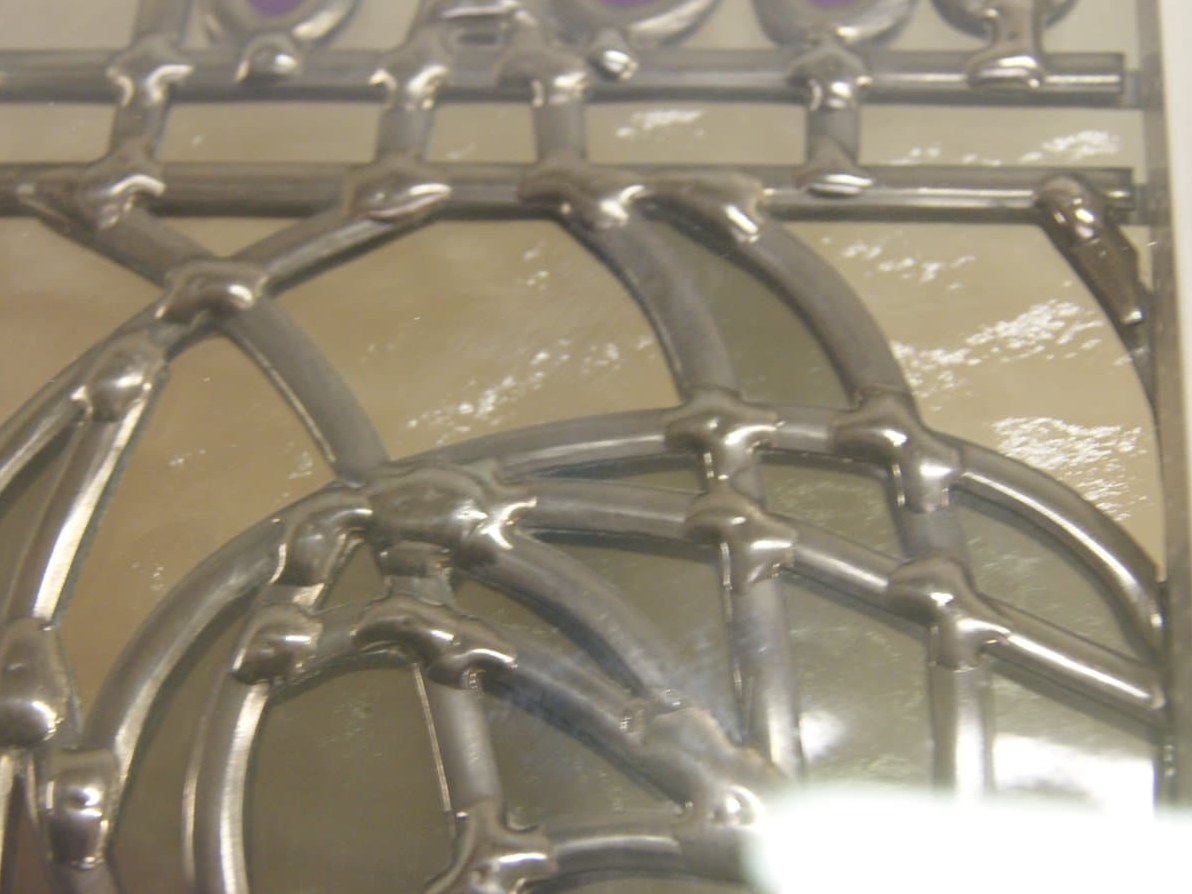
Overlay stained glass, described in where overlay came from, does not use came. It uses a thin lead strip that is stuck to the surface of a sheet of glass. The strip is made from very pure lead, usually with a small addition of another metal such as antimony to improve its finish and weathering. It is rolled or drawn into a flat strip or a low profile that looks like the face of a came, and a pressure-sensitive adhesive is applied to the back and covered with a release paper. The strip is cut to length, laid along the pattern, pressed down and burnished with a tool, and the joins are cut or lapped to look like soldered joints. The lead is only decoration, because the strength comes from the glass beneath, which is why overlay can be applied to a single sheet of glass, including toughened glass.
Coated overlay lead
Some overlay lead is supplied with a protective coating on the face. Coatings vary between products, but they are used for the same reasons:
- They slow the oxidation that dulls bare lead, so the lines keep a consistent colour and finish as the years go by.
- They resist fingerprints, water marks and household cleaners, so the glass is easier to clean.
- The finish is more uniform from one roll to the next, which matters when lines from different batches meet in one panel.
- They reduce direct contact with bare lead when the glass is handled and cleaned.
- They hold up better in sealed double glazed units and in sunlight, where uncoated lead can bloom or discolour.
Bare lead does weather to a grey oxide, and this suits traditional windows. On overlay, where a crisp even line is part of the effect, a coating keeps the appearance closer to how it looked when new.
Related pages
Terms are explained in the Glass Glossary.
Sources and further reading
- US patent 4,977,010: strips of came and method for producing the same
- US patent 4,335,170: simulated stained and leaded glass windows
See also Overlay Colour Films, UV Protection and Durability for the colour side of overlay.
Published 19 October 2026 · Last updated