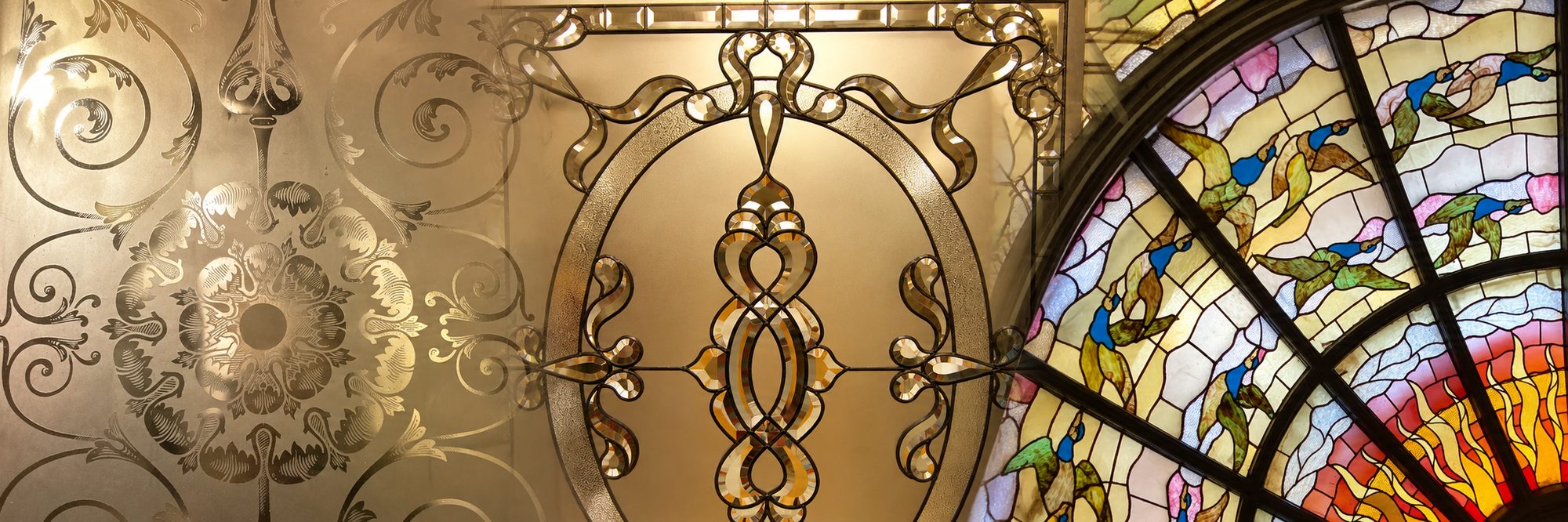


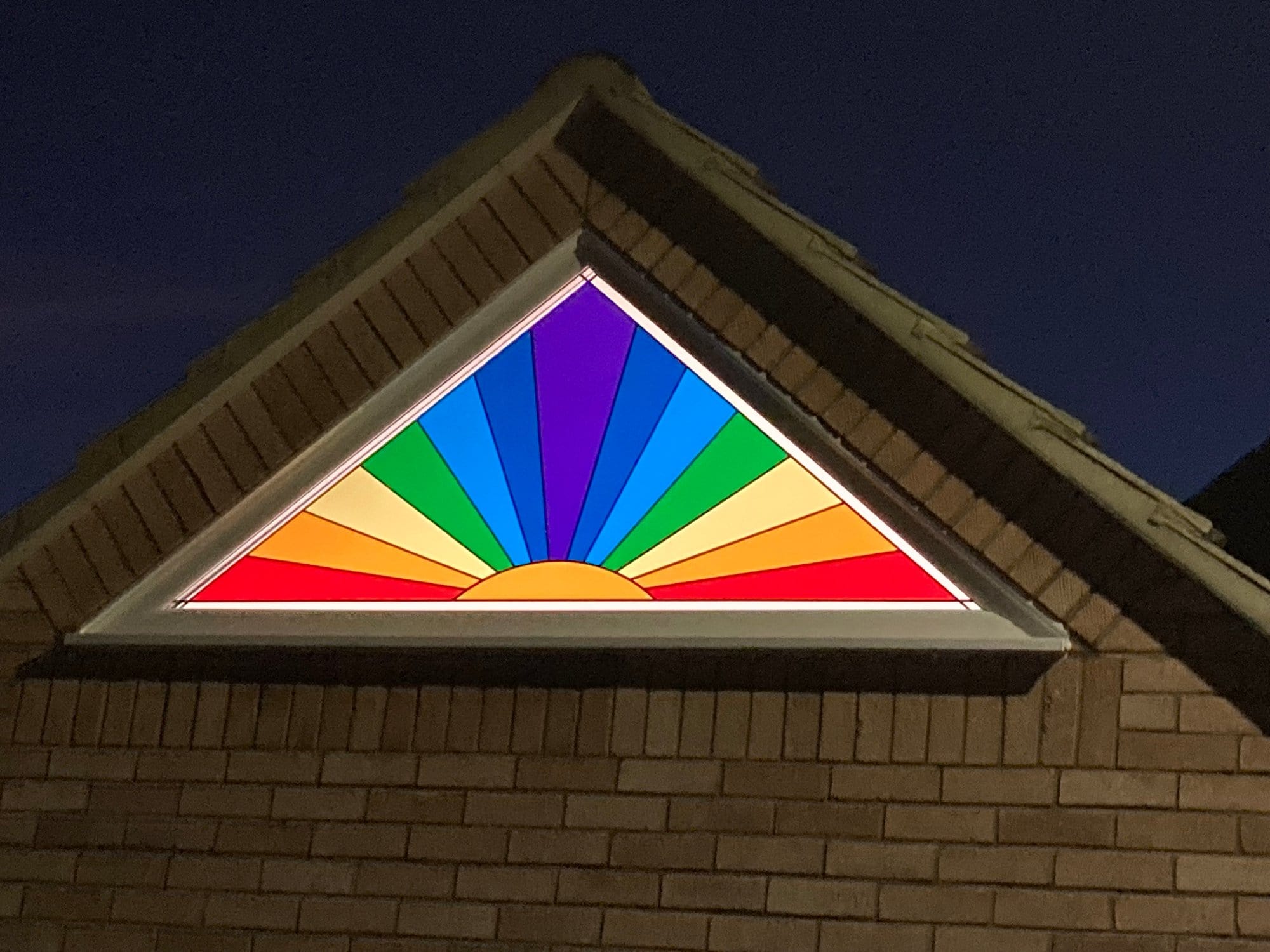
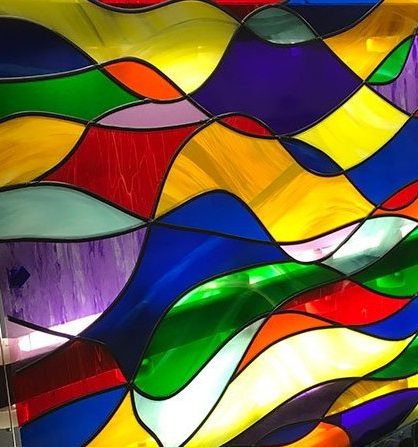
Overlay stained glass is a modern way of getting the look of a leaded stained glass window on a single sheet of safety glass. The lead lines and the colour are applied to the surface of a sheet of toughened glass, instead of being built up from many separate pieces of glass held in lead.
It is a different thing from traditional stained glass, and it is worth being clear about that from the start. Overlay makes no attempt to be hand-cut glass. What it offers is the same pattern, in the same colours, in a form that is tough, easy to clean and straightforward to fit.
How overlay glass is made
It begins with a drawing, as any leaded window does. The lead is applied to the surface of a single sheet of toughened glass, following the drawing, and it goes on both sides of the sheet. The pattern sits in the same places as it would in a traditional panel.
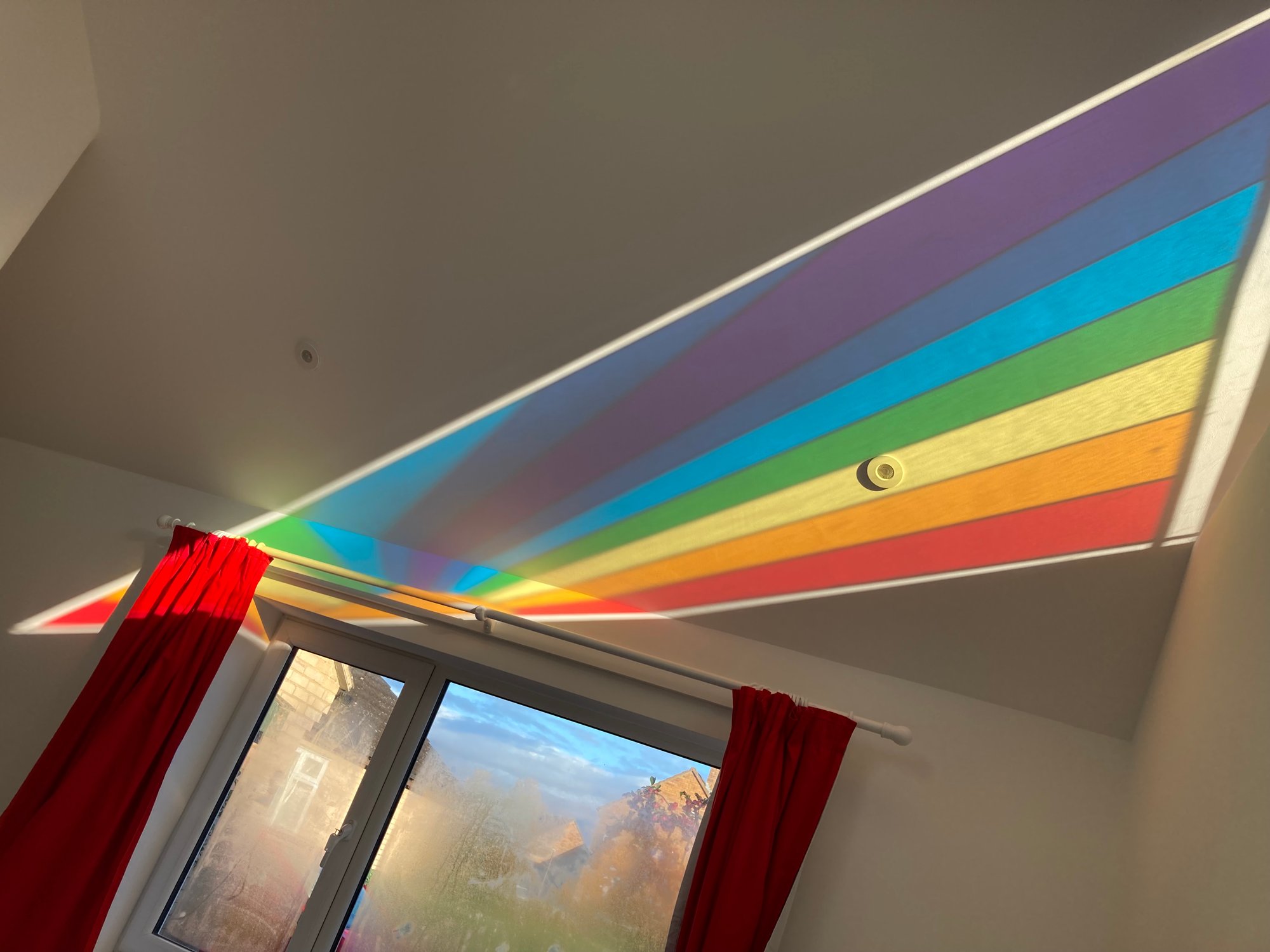
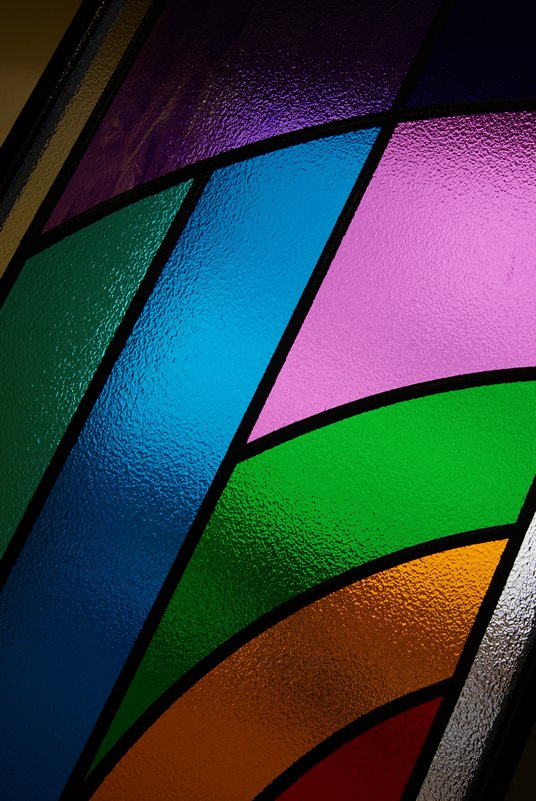
Colour comes next, in the form of a colour film applied to one side of the glass, underneath the leadwork. To apply it, the sheet is turned over, so the work is done in mirror image, which takes some getting used to. There are hundreds of colours, and most can be combined with a frosted film to add more shades and textures. The film is durable and, when it is done properly, realistic, and light passes through it much as it does through coloured glass.
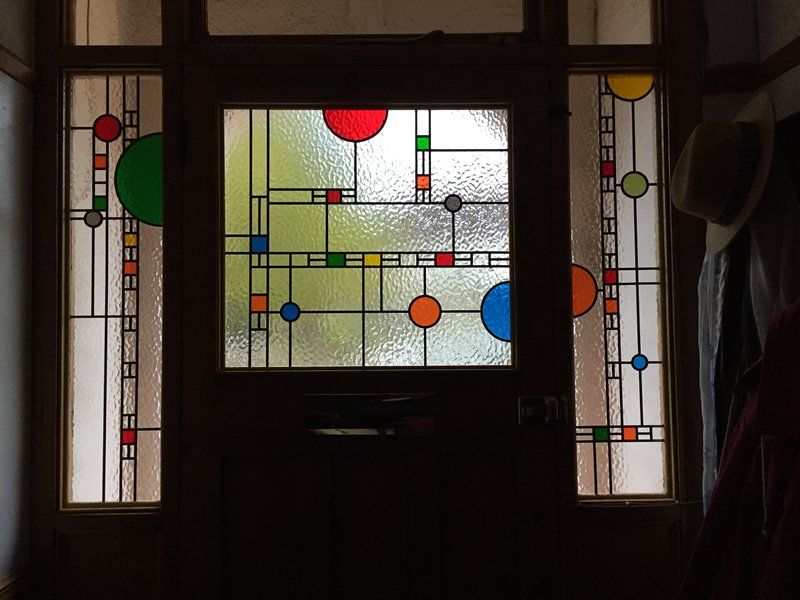
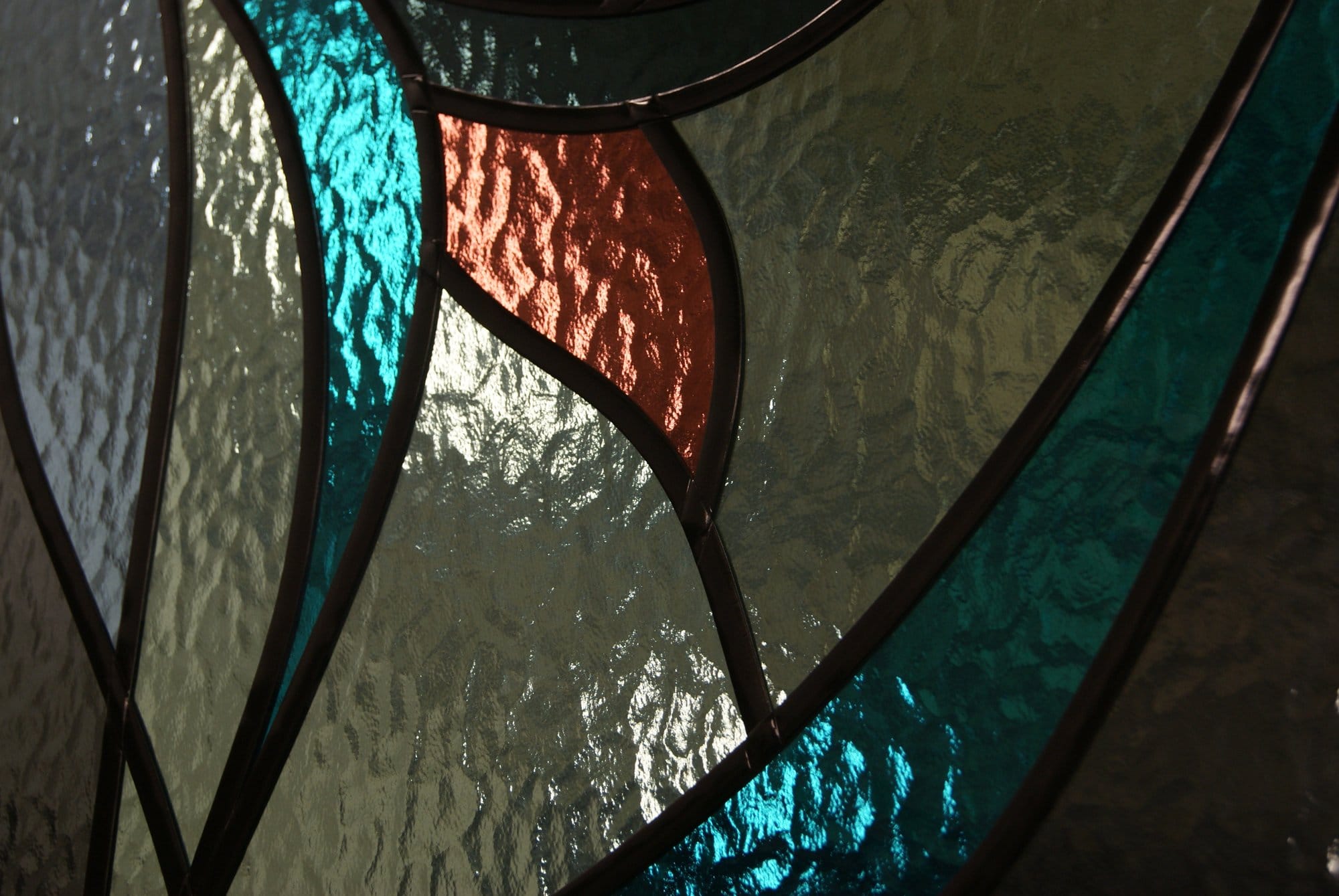
The base glass does not have to be clear. Textured glasses such as Minster and Stippolyte are used, and Minster in particular gives a slightly aged look. The lead itself comes in a natural finish or a darker antique one. Roundels, the round pieces seen in many traditional windows, are made separately from clear or textured glass and added to the design. The finished panel can be supplied as a single sheet, or sealed into a double-glazed unit. In a sealed unit the overlay design is the decorative outer leaf, and a second, plainer texture can be used as the backing glass. An energy-saving low-emissivity coating is normally put on the inner face of a sealed unit, which is what current regulations expect for new windows and doors.

Why use toughened glass
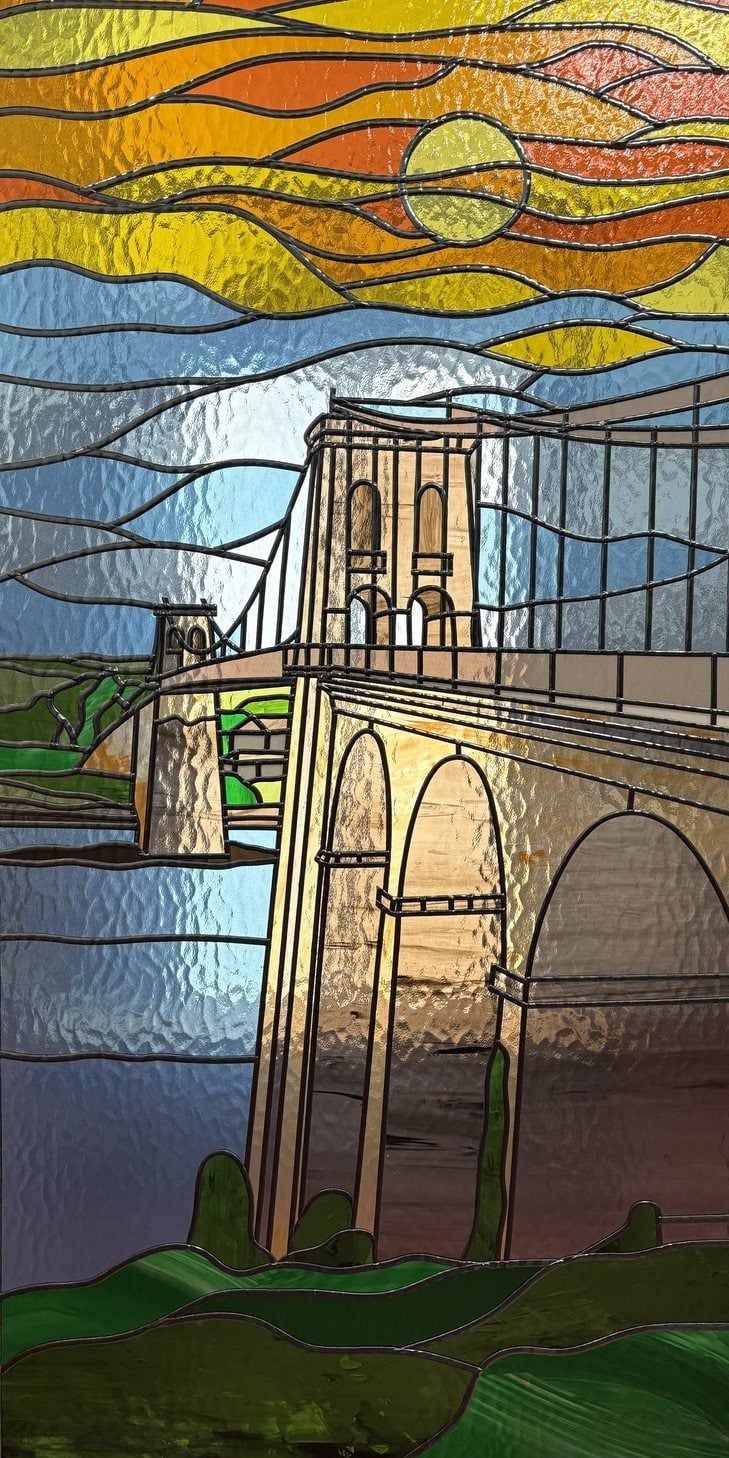
Everything starts from a sheet of toughened safety glass. Toughened glass is heat-treated so that, if it ever breaks, it crumbles into small blunt pieces instead of sharp shards. In a door, a low window or anywhere near a stair, that is what building regulations require, and it makes overlay glass a good choice where a traditional leaded panel would need separate safety glazing. It is also strong enough to take everyday knocks, and the surface can simply be wiped clean.
Overlay compared with leaded lights
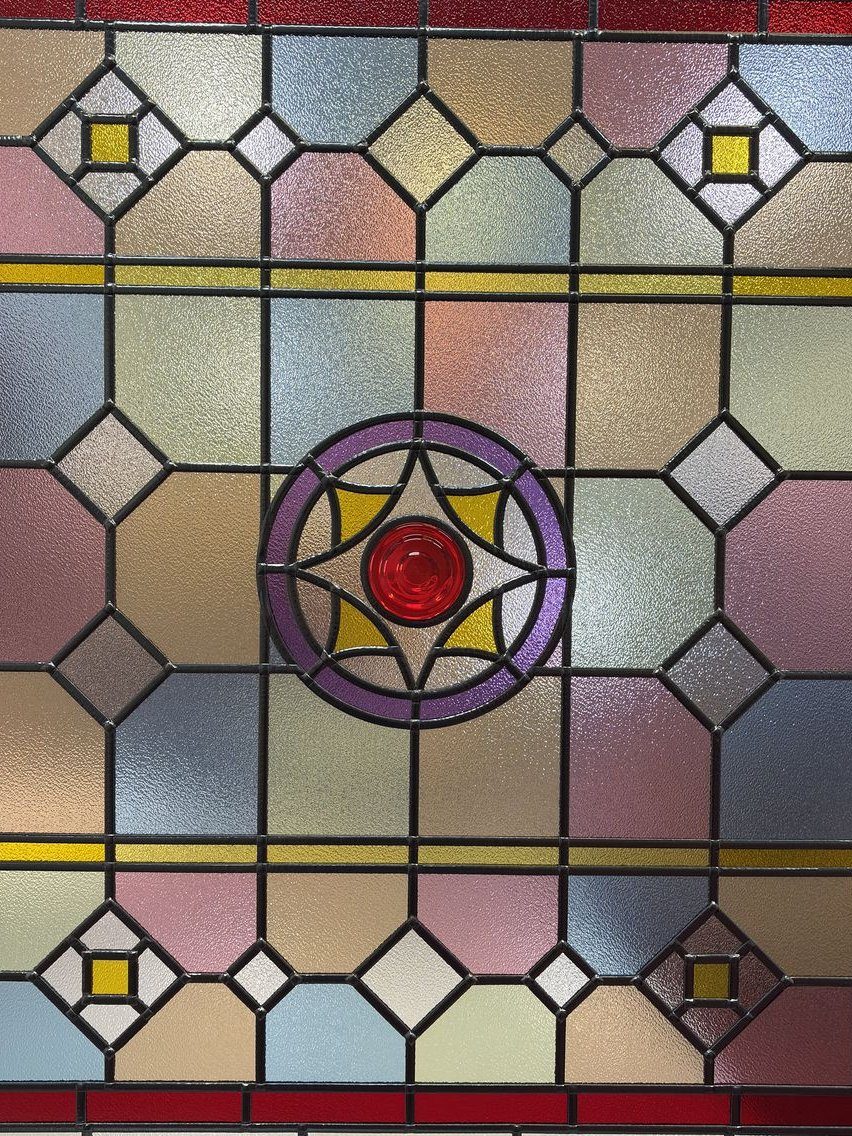
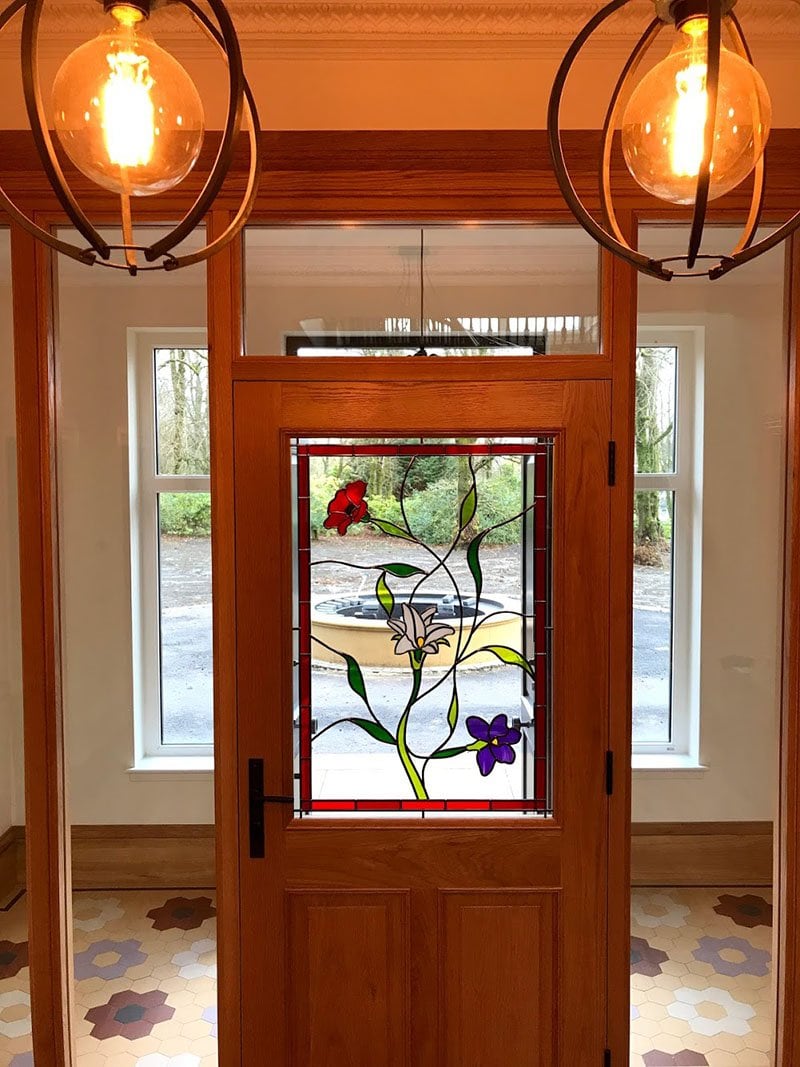
A traditional leaded light is built piece by piece. It is hand-made, each piece of glass is individually cut, and the panel is only as stable as its lead. Over many years it can sag, and the small pieces are the weak point, since any one of them can crack or work loose. Overlay avoids those weaknesses. It does not sag, because the lead is fixed to a rigid sheet, and there are no small pieces to break out. It also lets less cold air through, as there are no joints for it to leak through.
The trade-off is that it is a modern product, with its own character. The colours come from film, not from glass that was coloured in the making, so you do not get the depth, streaks and variation of antique or hand-blown glass. For listed buildings, church windows and period features, traditional glass is the right choice. For a front door, an internal glass screen or a modern house that needs a period look, overlay is a practical option.
Overlay and bevels
Decorative bevels can be added to the design. A bevel is a piece of thick glass with a sloped, polished edge that splits light into colours. In an overlay panel, the bevels are bonded to the toughened sheet with UV-cured adhesive and lead lines are placed around them, so the finished panel has the sparkle of a bevelled window. There is more on the glass itself on the decorative bevelled glass page.
Copying and replacing
An overlay panel that has been broken cannot be mended, but it is usually possible to replace it with a close copy, since the whole pattern is on a single flat sheet and can be reproduced from a photograph or drawing. The same applies if you want to match an existing leaded window, for example when a house has had its windows changed and the pattern needs to be matched elsewhere.
Mackintosh style panels
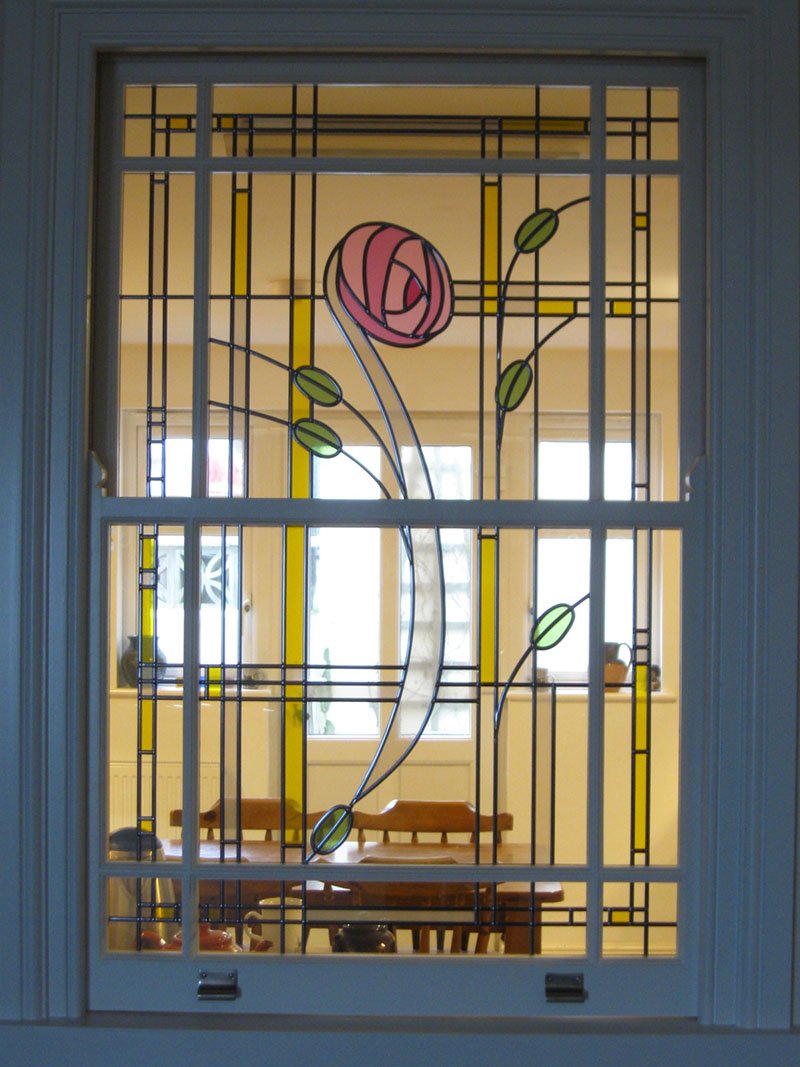
Mackintosh designs suit overlay well, because the strong lines and small areas of colour are easy to reproduce with lead on toughened glass. Mackintosh style roses are often made this way for front doors and windows. To see the original leaded glass they are based on, look at Charles Rennie Mackintosh and the Willow Tea Rooms.
Questions people ask
Is overlay stained glass real stained glass? It is not the same as hand-made stained glass, and it does not pretend to be. It reproduces the look of a leaded window on a different construction.
Does the colour fade? A good-quality film is designed for long outdoor and indoor life. Direct sun over many years will affect any coloured material, so ask your supplier about the warranty and the specification.
Can it be double glazed? Yes. It can be supplied as a single sheet or sealed into a double-glazed unit.
History and related reading
Where Overlay Stained Glass Came From. See also A Short History of Stained Glass.
See also How Lead Came and Overlay Lead Are Made for how overlay lead and coated lead are made.
The colour films used in overlay, their UV filters and how durable they are, and its use in double glazed, toughened, laminated and fire-resistant glass, are covered in Overlay Colour Films, UV Protection and Durability.
Care: see How to Clean Decorative Glass Safely.
Related glossary terms: Toughened glass, Laminated glass, Double glazing, Lead came.
Frequently asked questions
What is overlay stained glass?
Overlay stained glass imitates the look of leaded and stained glass by applying lead, colour and texture to the surface of toughened safety glass. It is supplied as single, double or triple glazed units.
How is it different from traditional stained glass?
In traditional stained glass separate pieces of coloured glass are joined with lead came. In overlay the colour and lead are applied to a single sheet, so the construction is different even where the appearance is similar.
Does it need to be protected?
The overlay sits on the outside of the glass unit where it can be touched, so it should be handled gently. The article on overlay colour films, UV protection and durability covers this in more detail.
How is it cleaned?
Soft cloths and mild cleaners are best. The guide on how to clean decorative glass gives details.