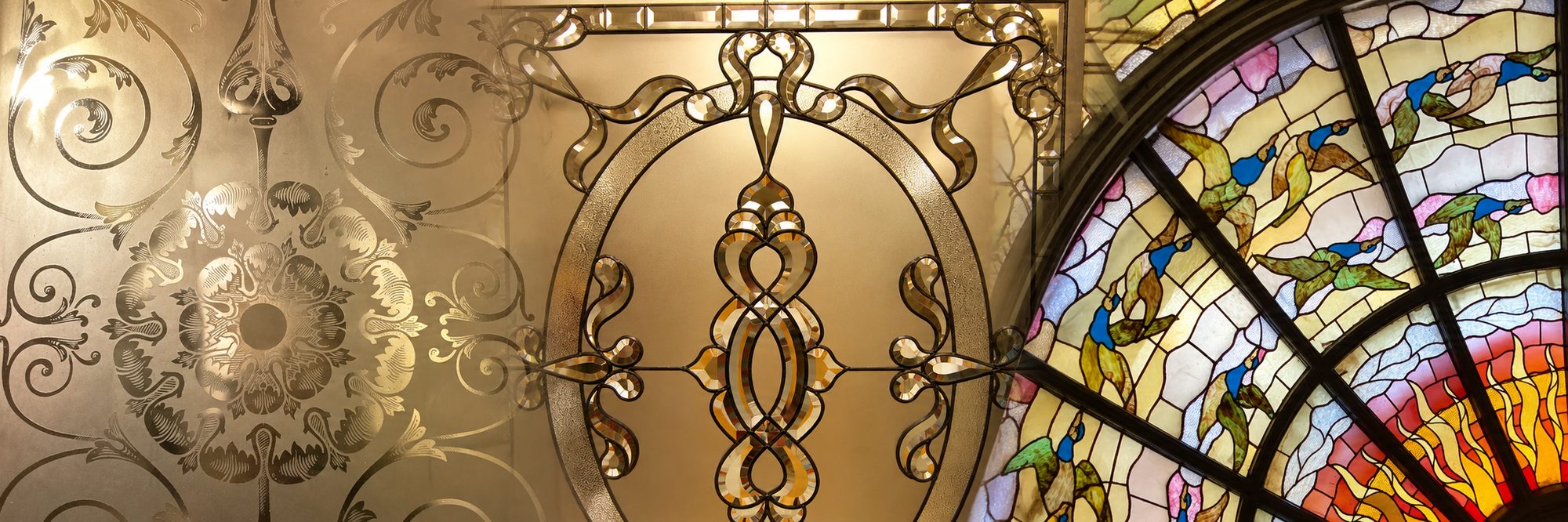

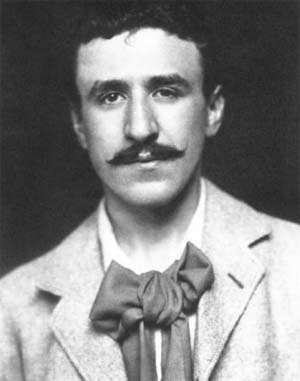
Charles Rennie Mackintosh (1868 to 1928) was a Glasgow architect and designer. His buildings, furniture and interiors, and above all his leaded glass, gave Scotland its own version of early twentieth century design, and the style is still copied on front doors and windows all over Britain. A panel in the Mackintosh style can be commissioned today, and the leaded technique behind it can be learnt by anyone who wishes to create their own.
The Mackintosh tour
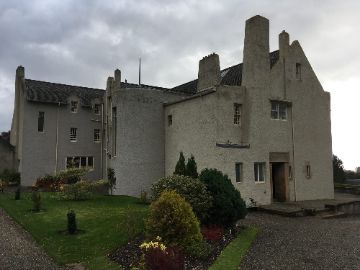
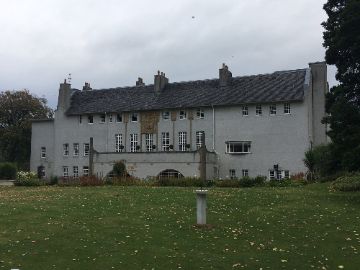
A map of his surviving buildings, with a suggested route through Glasgow, Helensburgh, Dundee and Northampton. Select a pin to see the building.
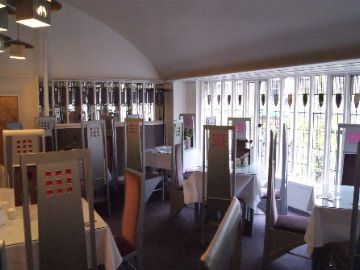
Open the Mackintosh tourPhotographs of the glass are on the pages for the Willow Tea Rooms, House for an Art Lover, Hill House and 78 Derngate. The fate of his best-known building is told in Glasgow School of Art: What Happened to the Mackintosh Building.
Early life and training
Mackintosh was born on 7 June 1868 in Townhead, Glasgow, the fourth of eleven children. His father, William, was a senior clerk and superintendent in the city police, and the family spelled the name McIntosh at first. Charles settled on Mackintosh around 1893. The family moved to Dennistoun when he was ten, and he stayed at Allan Glen’s Institution until about fifteen.
At sixteen, in 1884, he was apprenticed to the architect John Hutchinson and started evening classes at the Glasgow School of Art, where he won prizes. He joined the Glasgow firm Honeyman and Keppie in 1889 as a draughtsman and designer, became a partner in 1901 and left in 1913 to set up on his own.
Margaret Macdonald and The Four
He met Margaret Macdonald at the art school around 1892. She, her sister Frances and Herbert MacNair worked so closely with Charles that they became known as The Four, and their long, thin, stylised plants are the heart of what became the Glasgow Style. Charles and Margaret married on 22 August 1900. They had no children, and her gesso panels and decorative schemes did more to shape his interiors than he is usually given credit for.
The Glasgow Style
The Four were part of a wider Glasgow Style, Scotland’s version of Art Nouveau, which ran from the 1890s to about 1910. It borrowed from the Celtic revival, the Arts and Crafts movement and Japanese design, and its tall, thin, stylised figures were mocked at the time as the “Spook School”. The Glasgow School of Art, under its director Francis Newbery, was the heart of it, and it was unusual in letting women study and teach. Margaret and Frances Macdonald, Jessie M. King, Ann Macbeth and Jessie Wylie Newbery are often now called the Glasgow Girls. When the Four showed their work at the Vienna Secession in 1900, designers in Austria and Germany took notice.
The Mackintosh rose
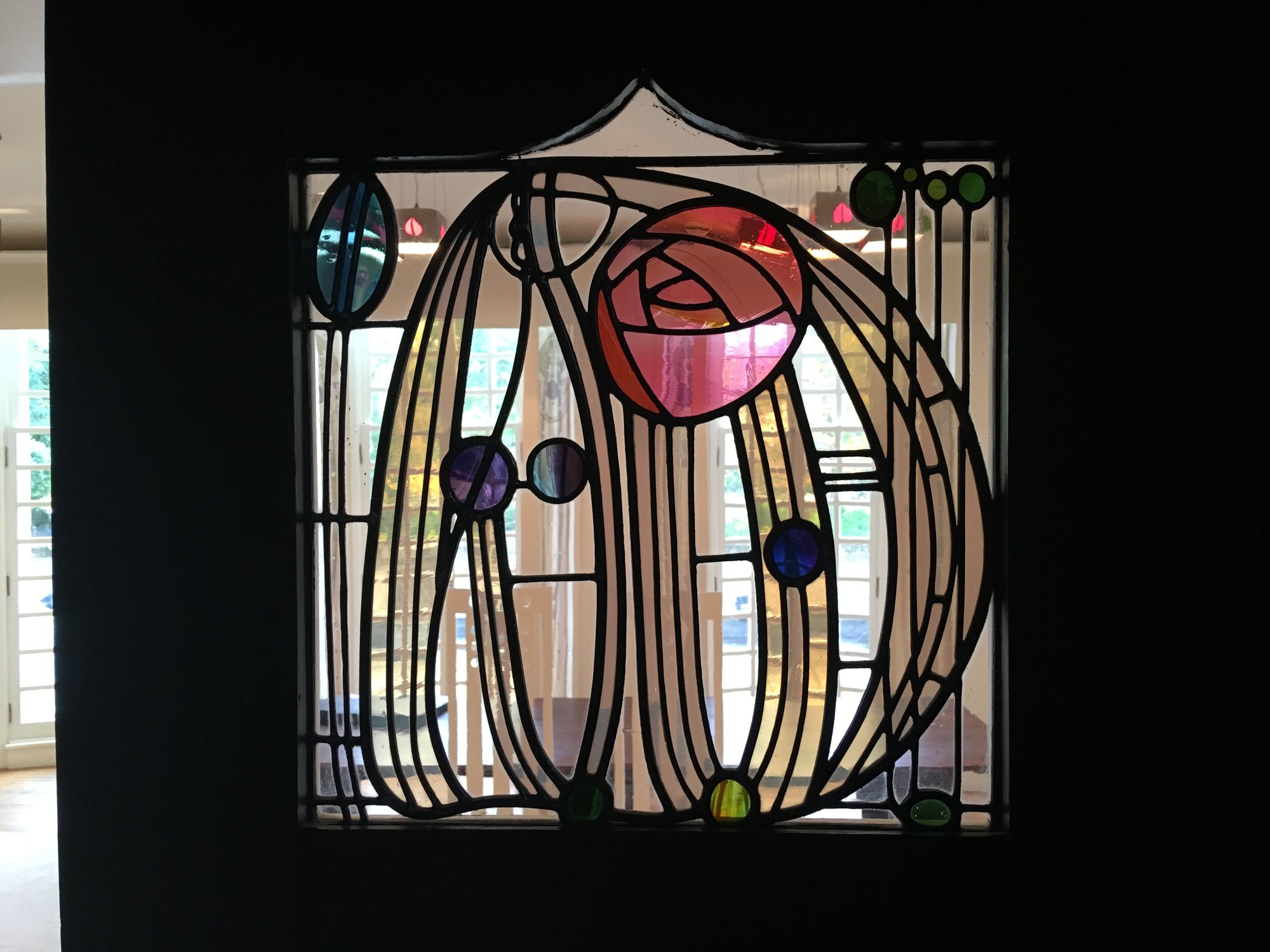
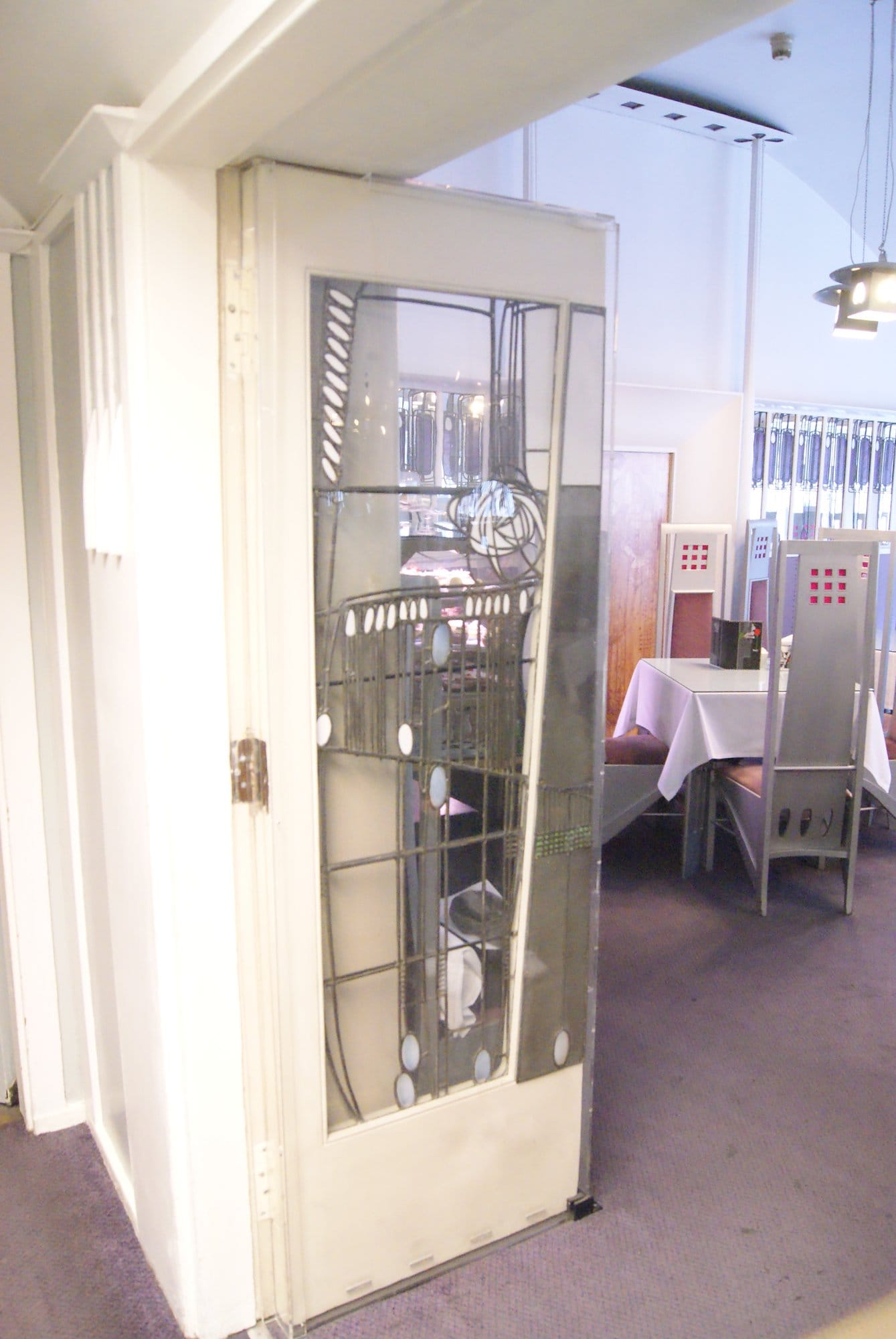
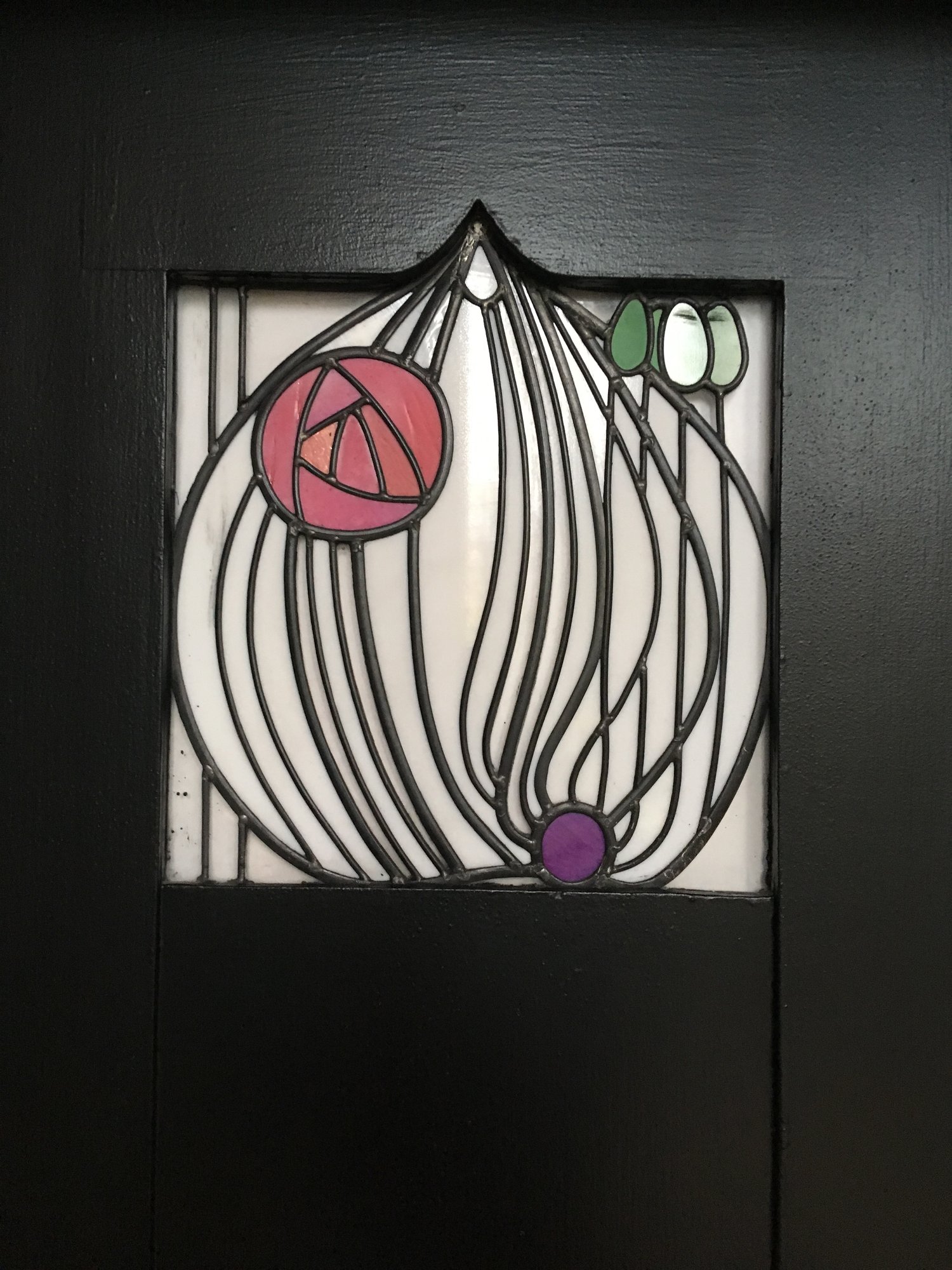
The shape people most link with him is the stylised rose: a round bloom drawn in a few curved lines, often on a long stem and set against hard vertical and horizontal bars. In glass it is leaded, with the rose in pink, green or clear glass and the straight lines carried by the lead itself. The result is lighter and more graphic than Victorian coloured glass, and it is why Mackintosh-style leaded lights, overlay stained glass and etched glass are so popular for front doors and internal doors, and the same shapes appear in the leaded lights gallery.
Later life
Commissions became scarce after 1913. In 1914 the couple moved to Walberswick in Suffolk, where he was briefly arrested in 1915 as a suspected German spy. By 1923 they were living at Port-Vendres in the south of France, where he mostly painted watercolours. They returned to London in 1927 because he was ill with tongue cancer, and he died on 10 December 1928, aged 60.
How his reputation recovered
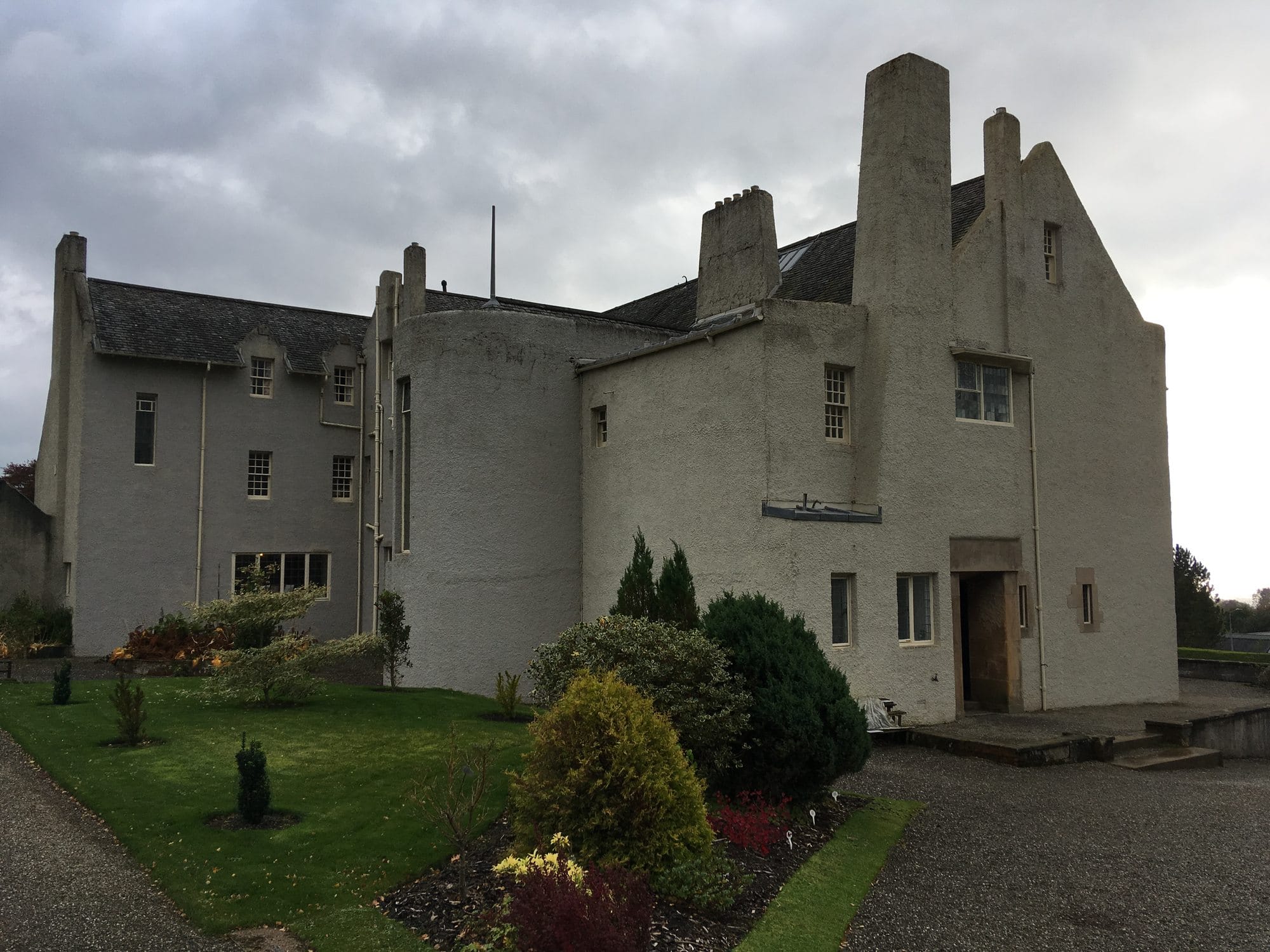
He died with little money and his name faded for decades. The revival was slow. Glasgow’s year as European City of Culture in 1990 helped, and a major exhibition at the Metropolitan Museum of Art in New York in 1996 had a greater effect. He was on the Clydesdale Bank £100 note in 2009, a collection of his designs sold at auction for £1.3 million in 2012, and in 2018 the Oak Room from Miss Cranston’s Ingram Street tea rooms was rebuilt at V&A Dundee.
Why it matters for stained glass
Mackintosh did not use glass as a picture. He used it as a pattern held together by lead, and he treated the lead lines as part of the design. His work is therefore a good lesson in how leaded lights work: the strength of the line, the choice of a few small areas of colour, and the clear glass around them that lets daylight in. It is also why his style translates so well to other techniques, including overlay stained glass and sandblasted glass.
The Mackintosh statue
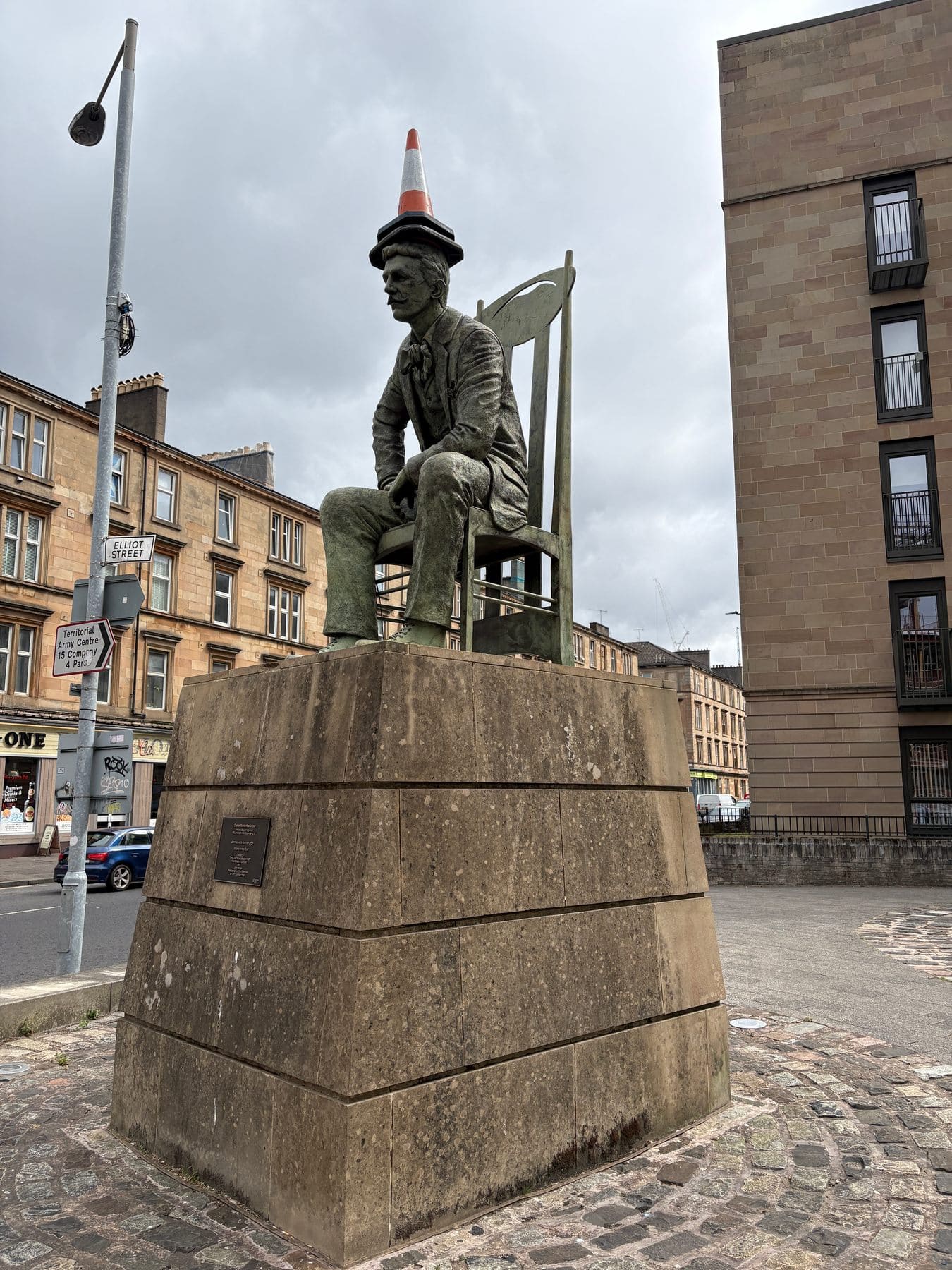
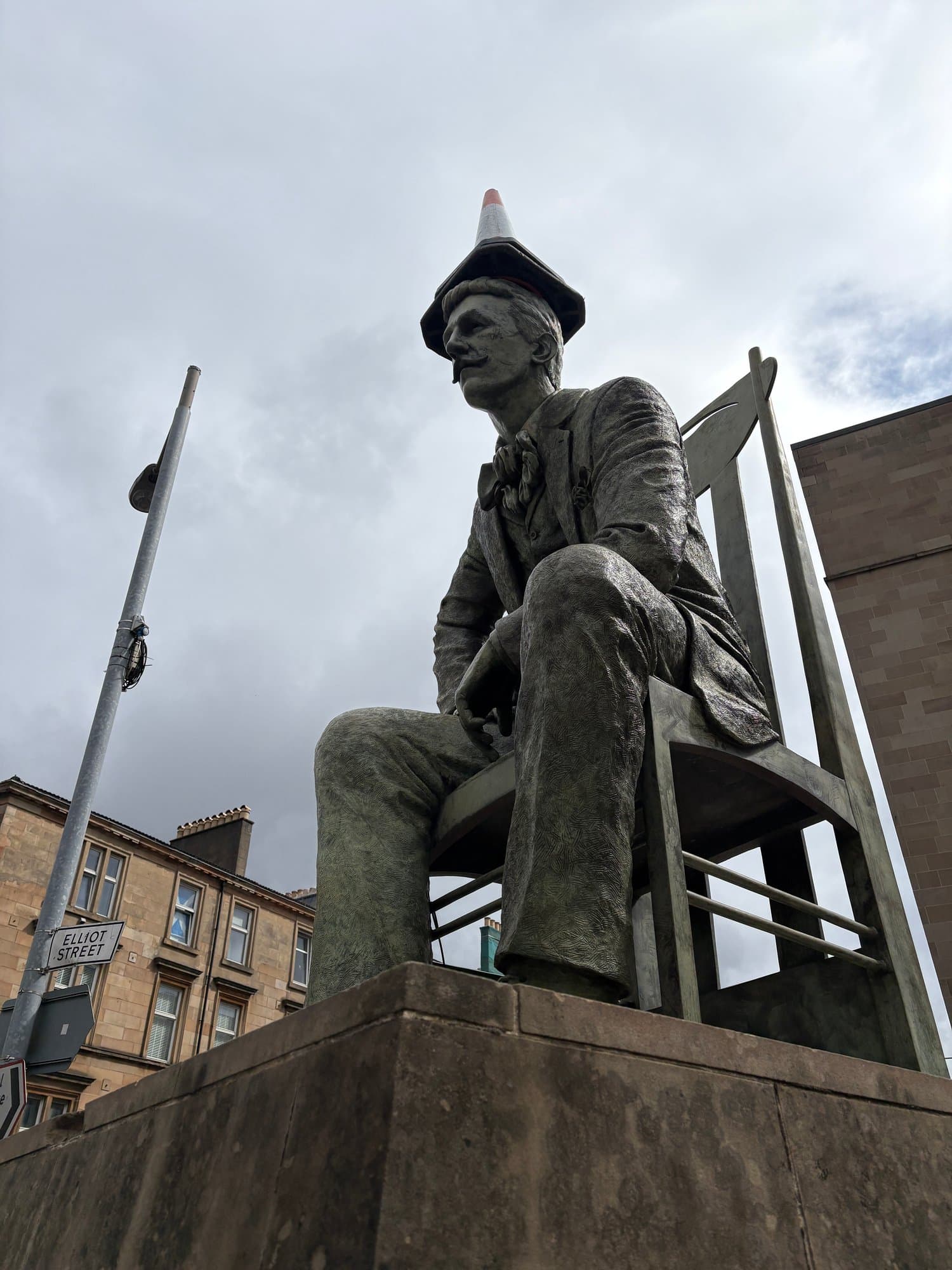
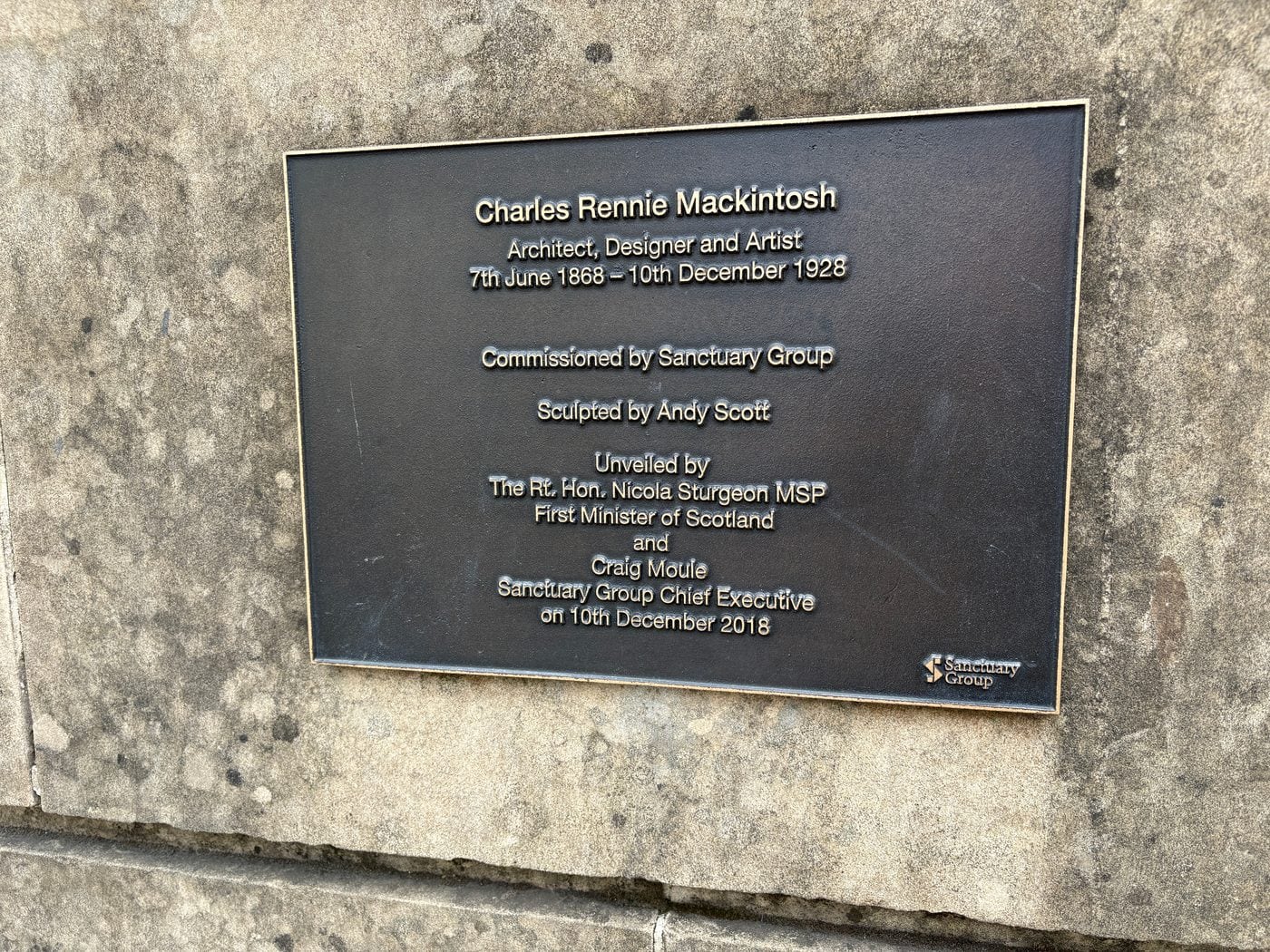
A bronze statue of Mackintosh seated beside one of his tall chairs now stands in Glasgow. The plaque beside it says it was sculpted by Andy Scott, commissioned by Sanctuary Group and unveiled on 10 December 2018, the 90th anniversary of his death. A traffic cone is often placed on its head, a Glasgow tradition.
Other artists
Mackintosh was one of several designers who rethought glass around 1900. See also Frank Lloyd Wright, Louis Comfort Tiffany, John La Farge and Edward Burne-Jones and William Morris, or browse all artists.
Sources and further reading
Questions people ask
Was Mackintosh a stained glass artist?
He was mainly an architect and designer, but glass was a key part of his interiors, and he designed the leaded panels in many of his buildings along with the furniture and light fittings around them.
What is a Mackintosh rose?
A stylised rose made of a few curved lines, usually on a long stem. It appears in glass, metalwork, furniture and textiles associated with Mackintosh and Margaret Macdonald.
Where can Mackintosh glass be seen?
Glasgow has more of his work than anywhere else. Besides the Willow Tea Rooms and House for an Art Lover, the Hunterian in Glasgow holds the reassembled Mackintosh House, Hill House is in Helensburgh and 78 Derngate is in Northampton. The Mackintosh tour maps each site and suggests a route.
For the wider story, see Stained Glass from the Gothic Revival to the Twentieth Century and A Short History of Stained Glass.
Published 16 October 2026 · Last updated