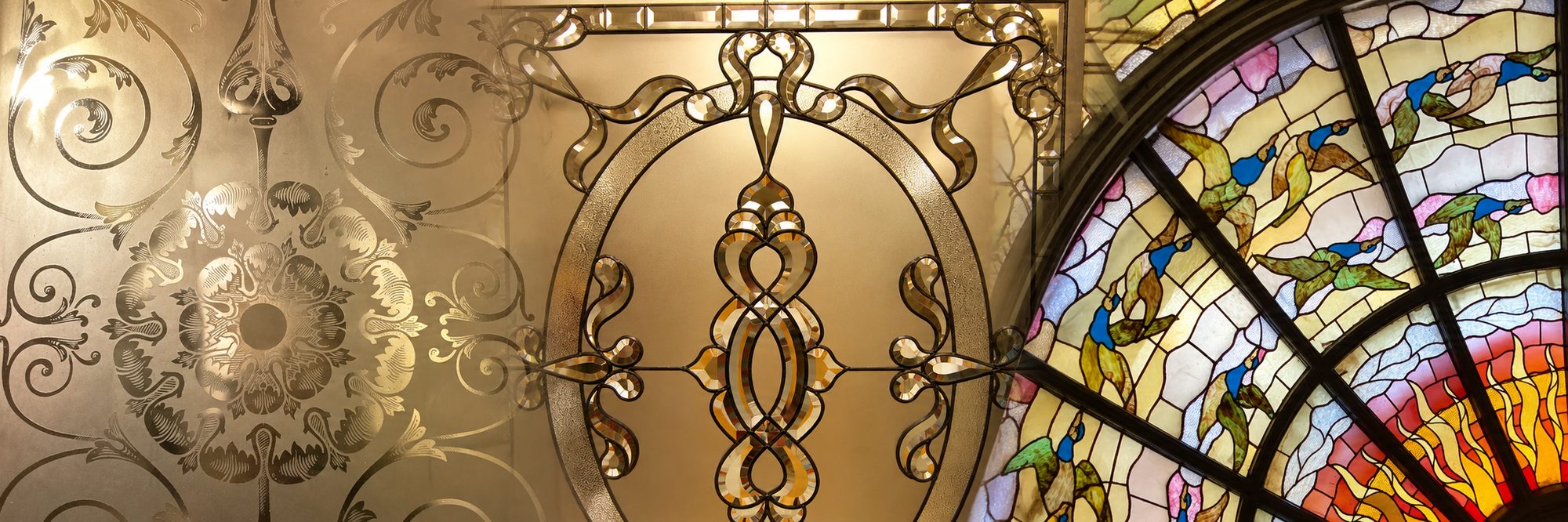

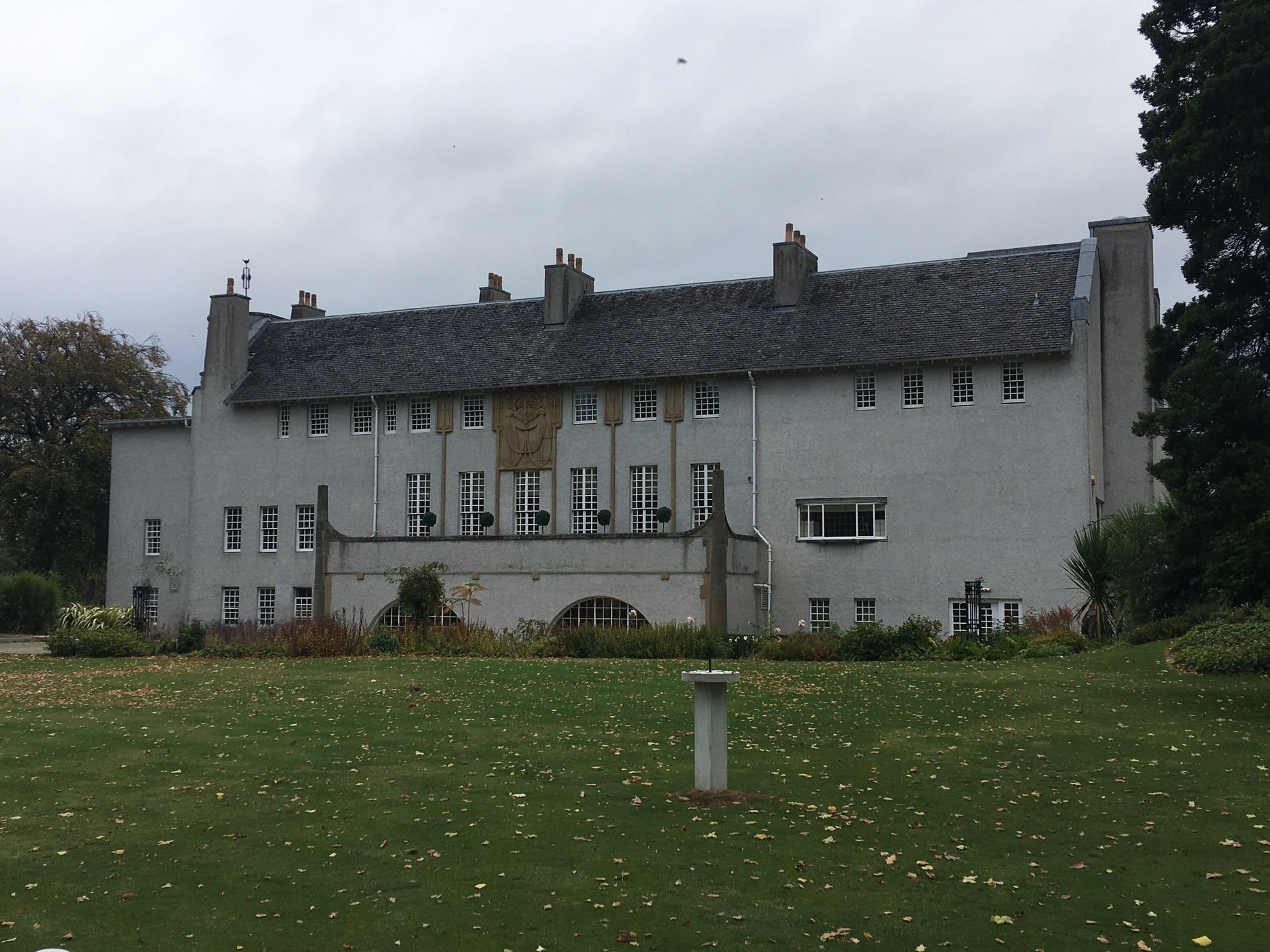
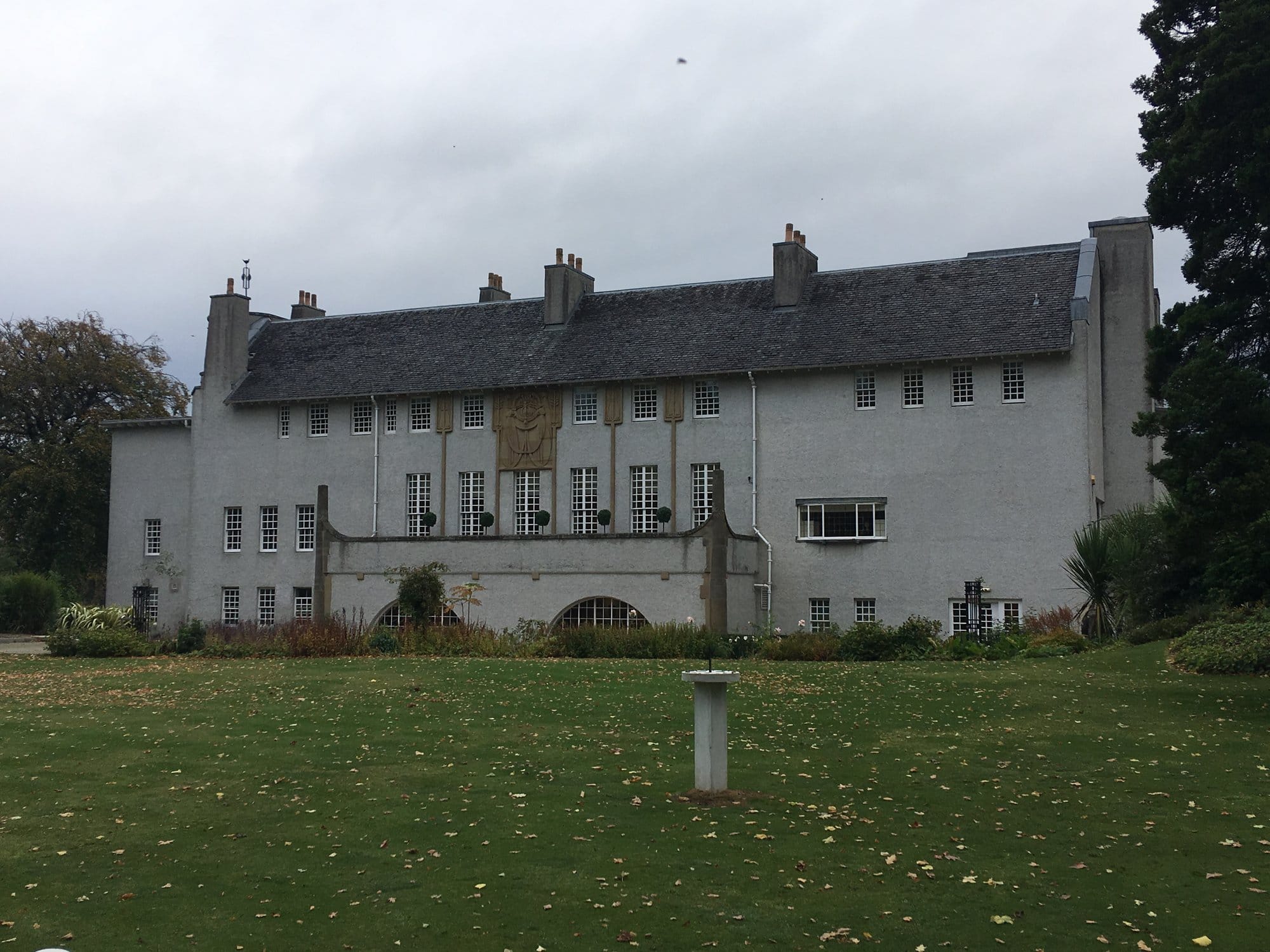
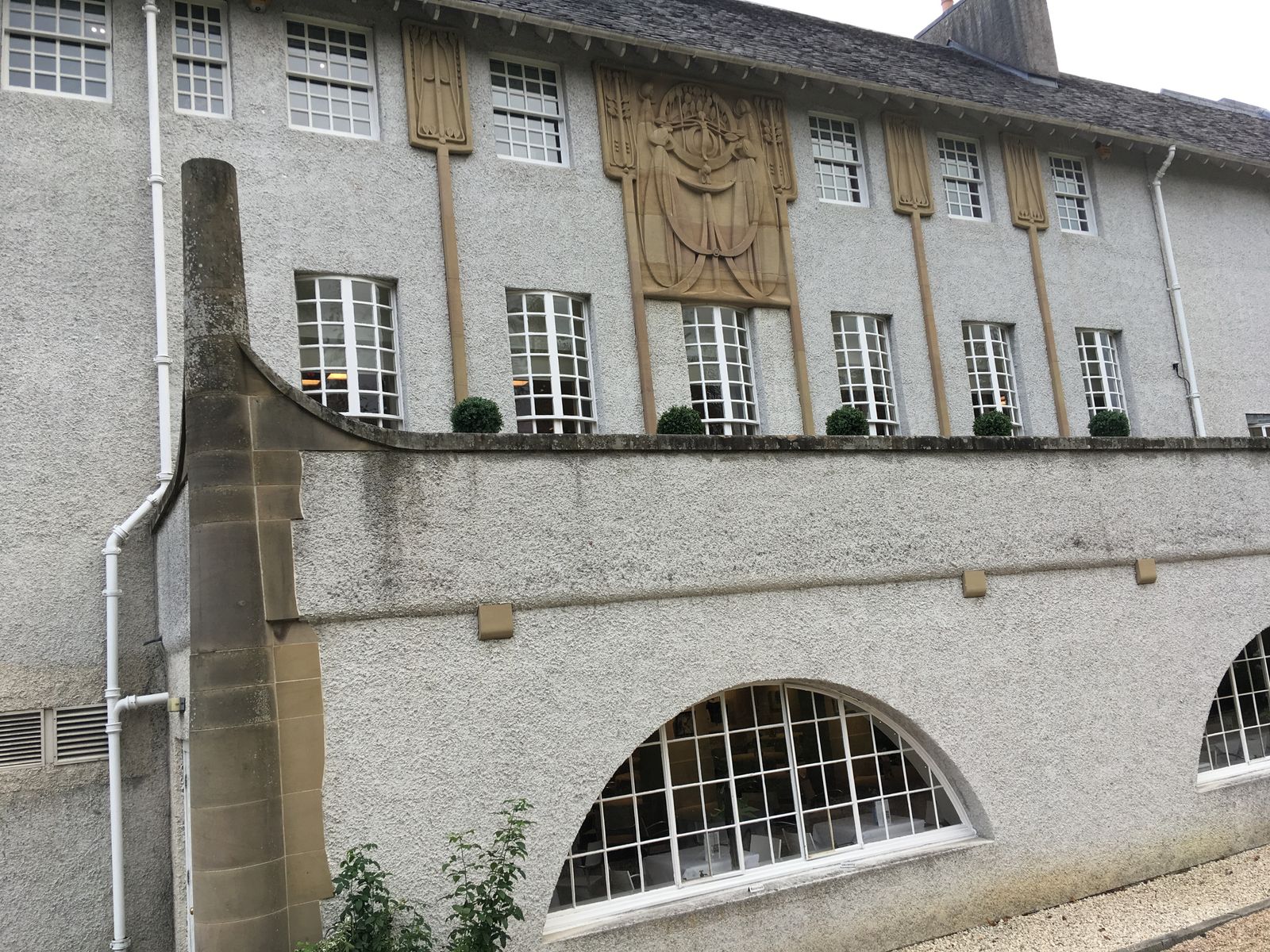
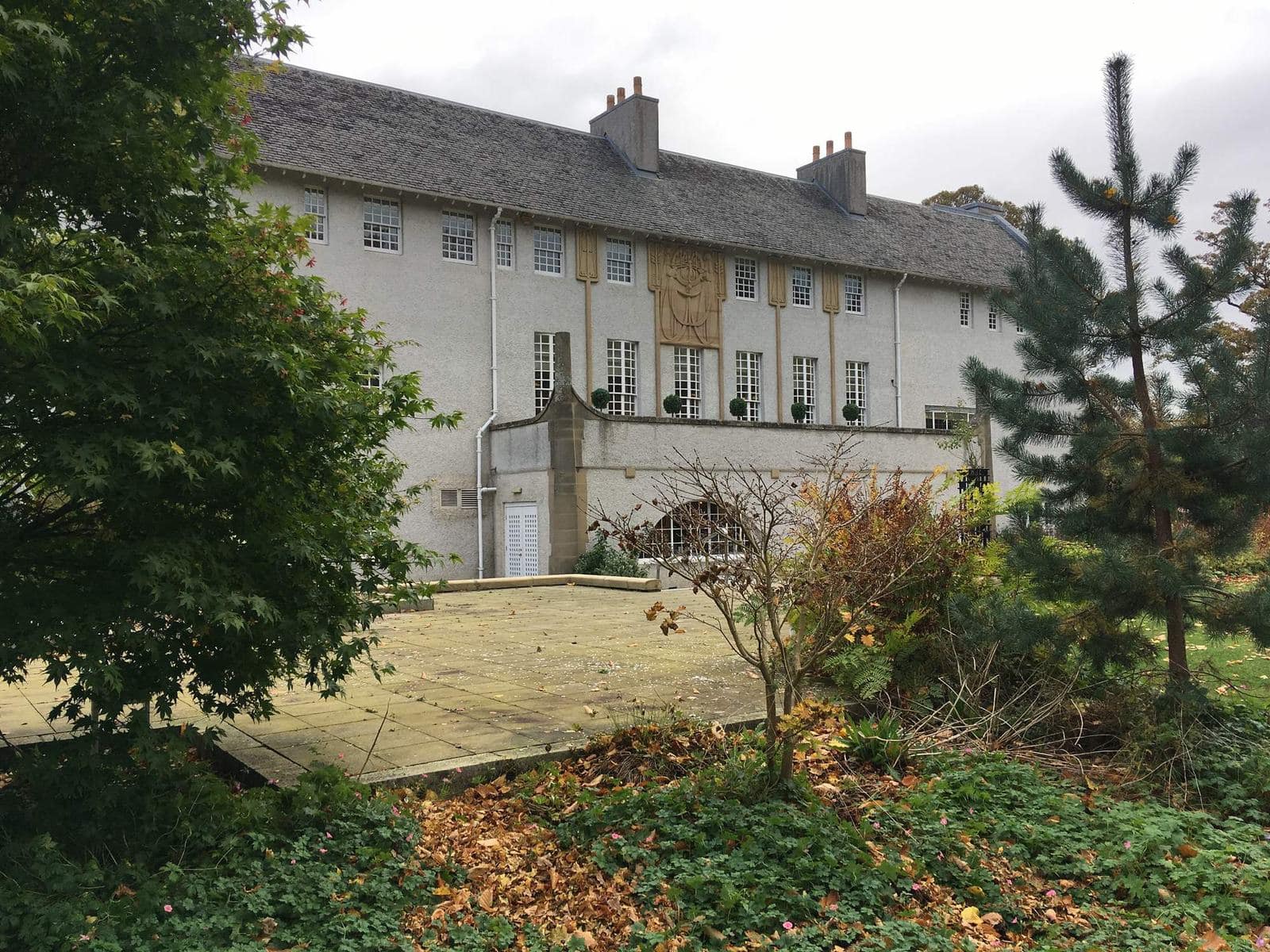
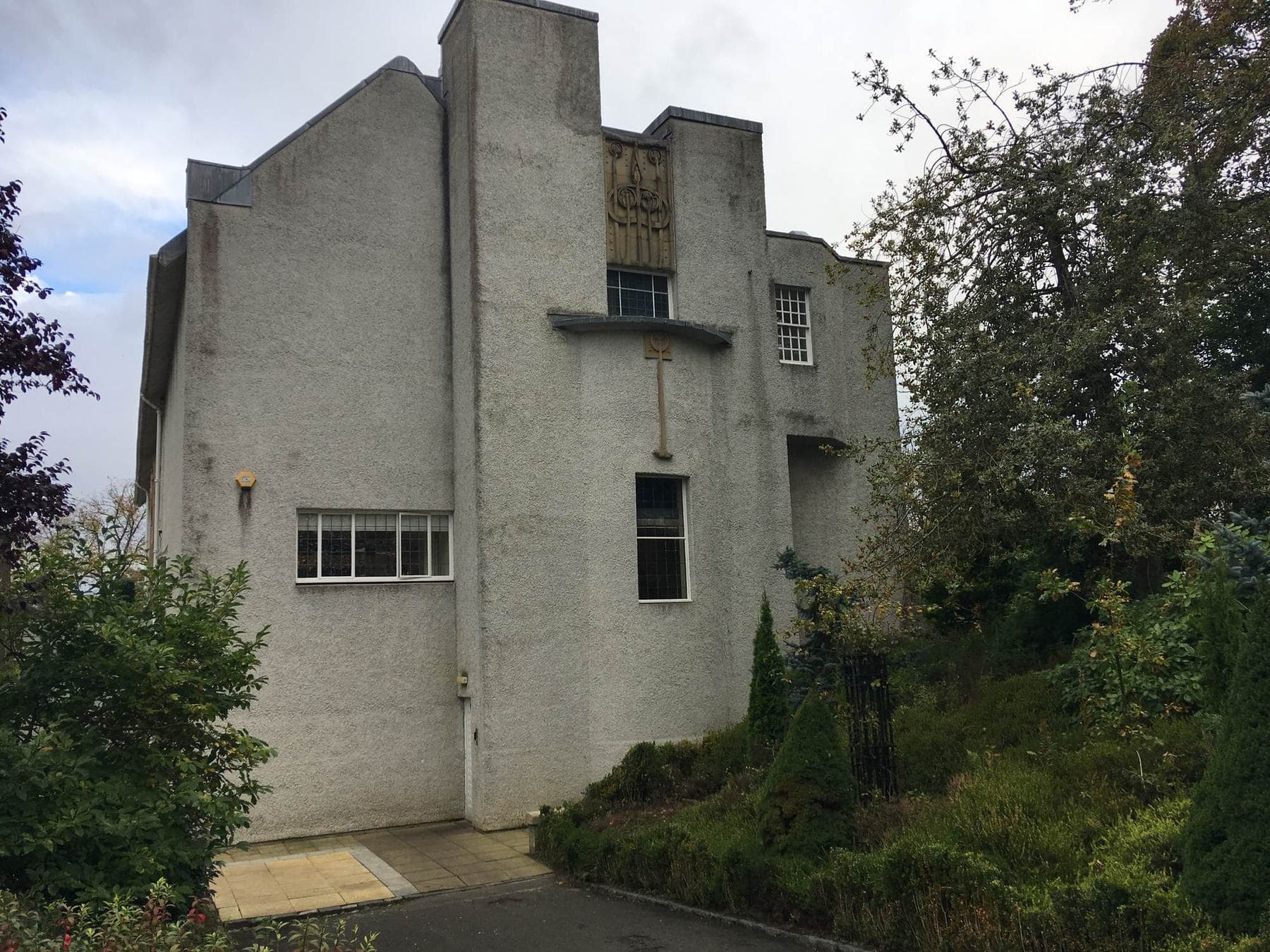
House for an Art Lover stands in Bellahouston Park in Glasgow. Mackintosh drew it in 1901 and never saw it built, and it opened to the public in 1996. The glass is not original Mackintosh glass. It was made recently by contemporary craftspeople working from his designs, which makes it a good place to see how his drawings turn into real leaded lights.
The 1901 competition
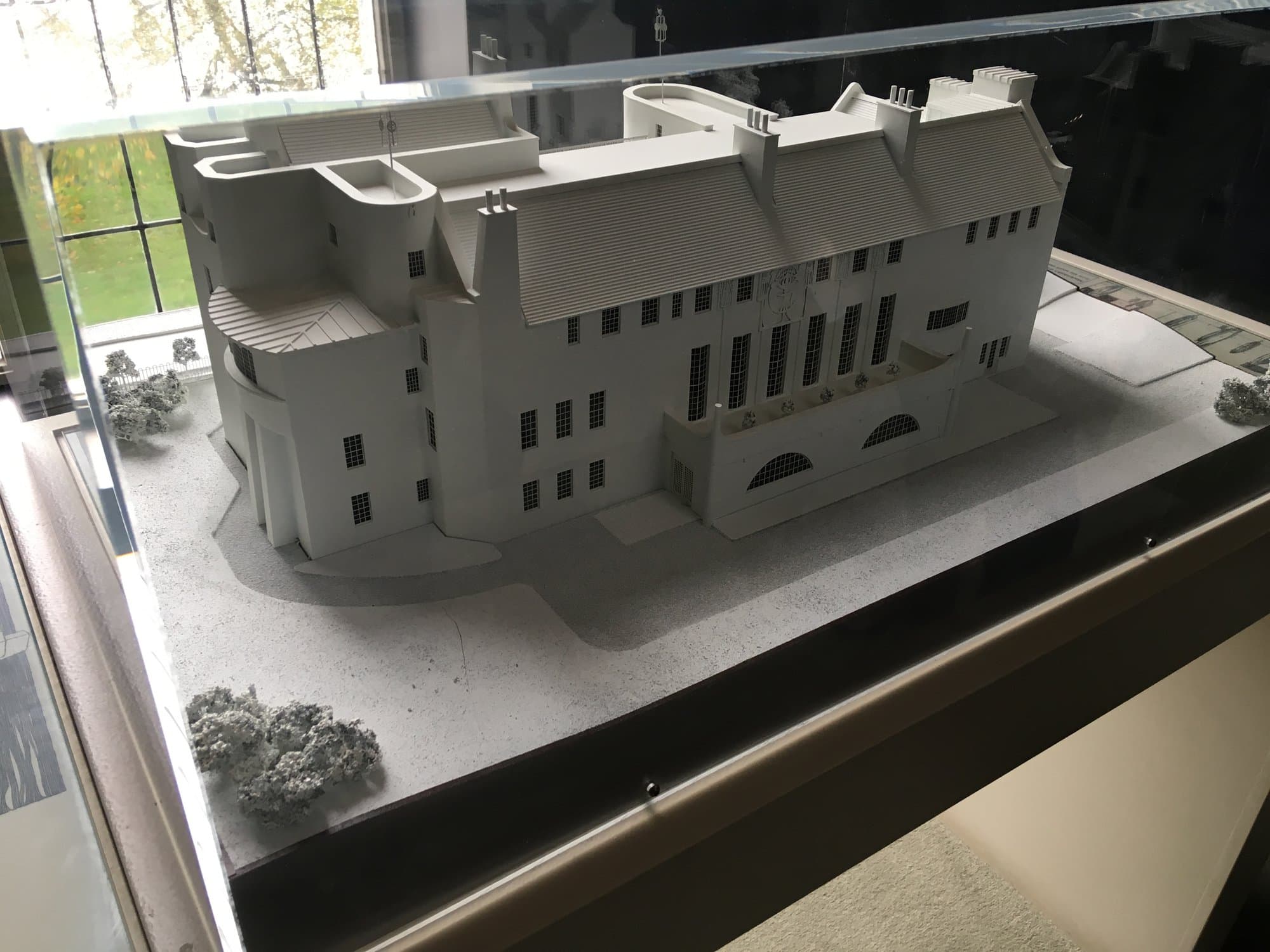
The story starts with a German design magazine, Zeitschrift für Innendekoration, which in 1901 asked architects to design a house for an art lover. Thirty-six designs came in from around Europe, and only two of them were British. One was from Mackintosh and his wife, Margaret Macdonald, who sent fourteen drawings. What made theirs different was that the house was not only a building. The furniture, the stencilled walls, the lights and the panels were all drawn as part of the same idea, so that a room felt designed from the floor to the ceiling.
They were disqualified, and you will read different reasons for that, from missing perspective drawings to unfinished sketches. The magazine still rated the entry highly enough to give it a prize and to publish the drawings in 1902. The competition house was meant to be built in Germany, and it never was.
Building it ninety years later
For most of the twentieth century it stayed a set of drawings. In the late 1980s a Glasgow engineer called Graham Roxburgh, who had already rescued Craigie Hall nearby, decided to build it. Planning began in 1987 and work started in 1989, paid for by the Scottish Development Agency, Glasgow City Council and Roxburgh among others.
Then the money ran out in the recession, and the site stood unfinished until 1994, when Glasgow City Council and the Glasgow School of Art stepped in to pay for the interior and the grounds. It was finished in 1996. The drawings were never meant to be working plans, so the architects, led at first by John Kane and Graeme Robertson, with Professor Andy MacMillan of the Mackintosh School of Architecture helping, had to fill the gaps using other houses by Mackintosh and Macdonald. Contemporary craftspeople made the stained glass and other decoration, which is why the glass here is new, not original.
Two designers, not one
The 1901 design is credited to both of them, and it is worth remembering Margaret as much as Charles. Her panels, textiles and stencilled patterns are why the rooms feel so complete, with the same rose and tulip shapes turning up in the walls, the furniture and the glass.
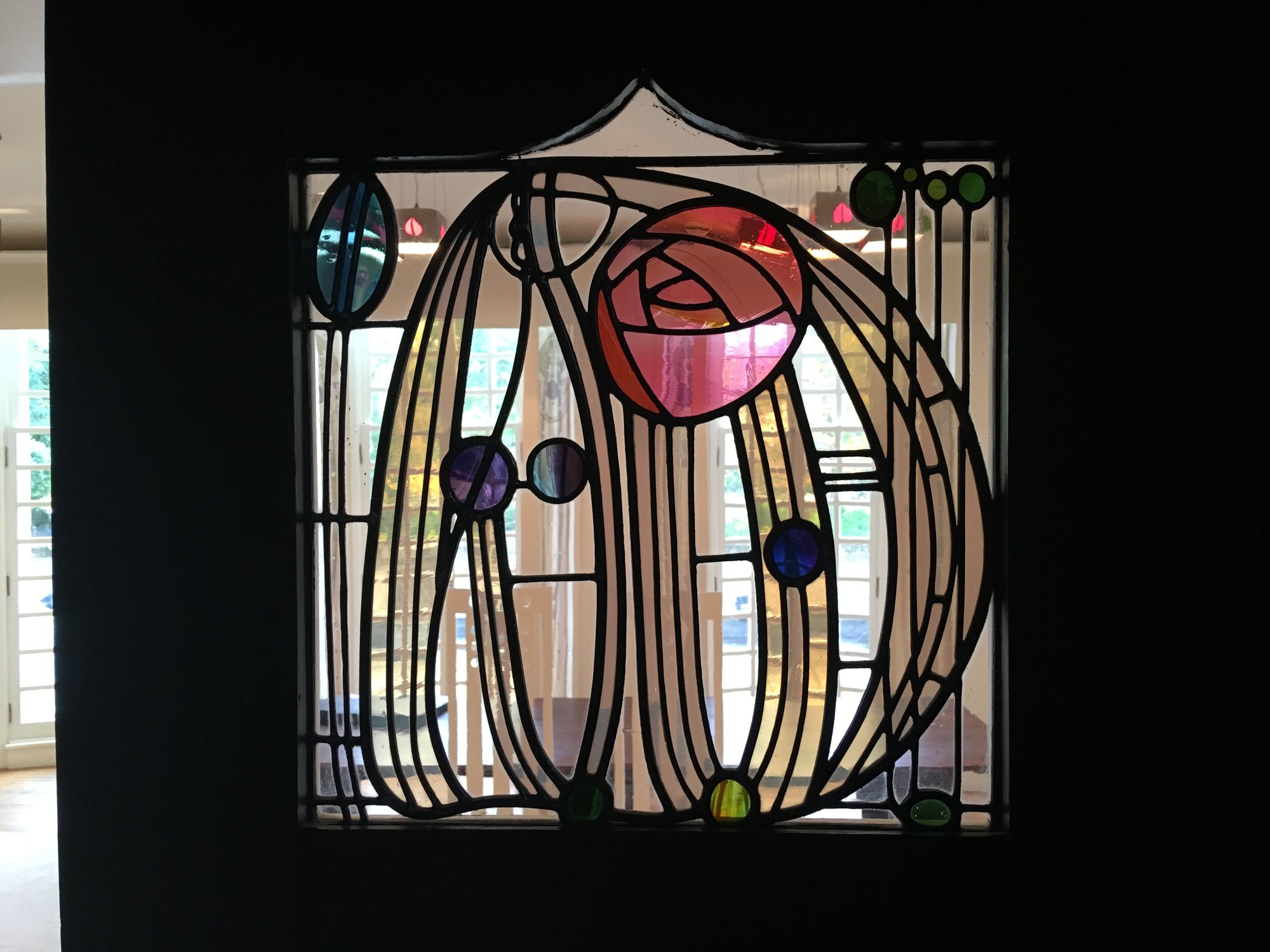
The glass
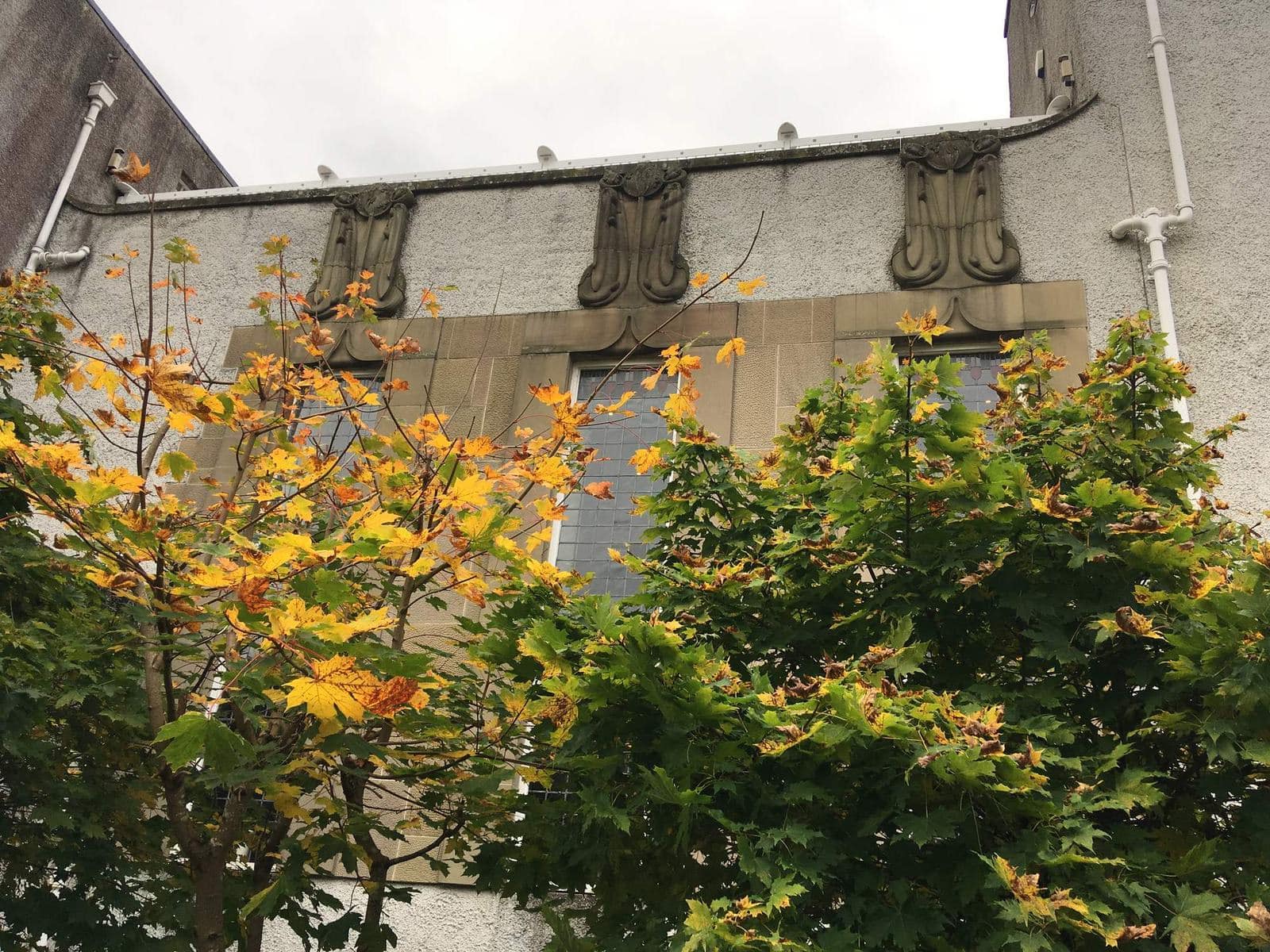
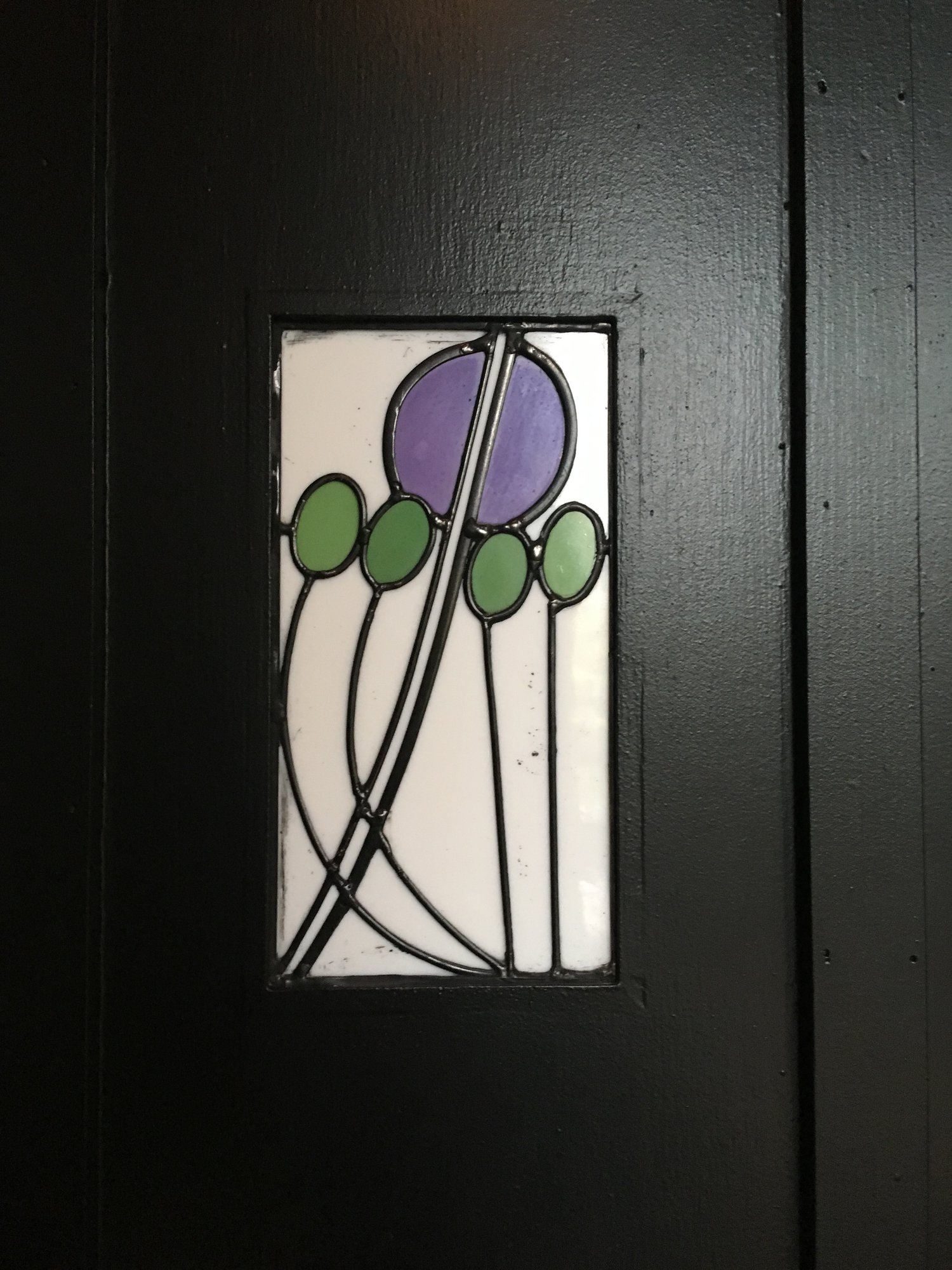
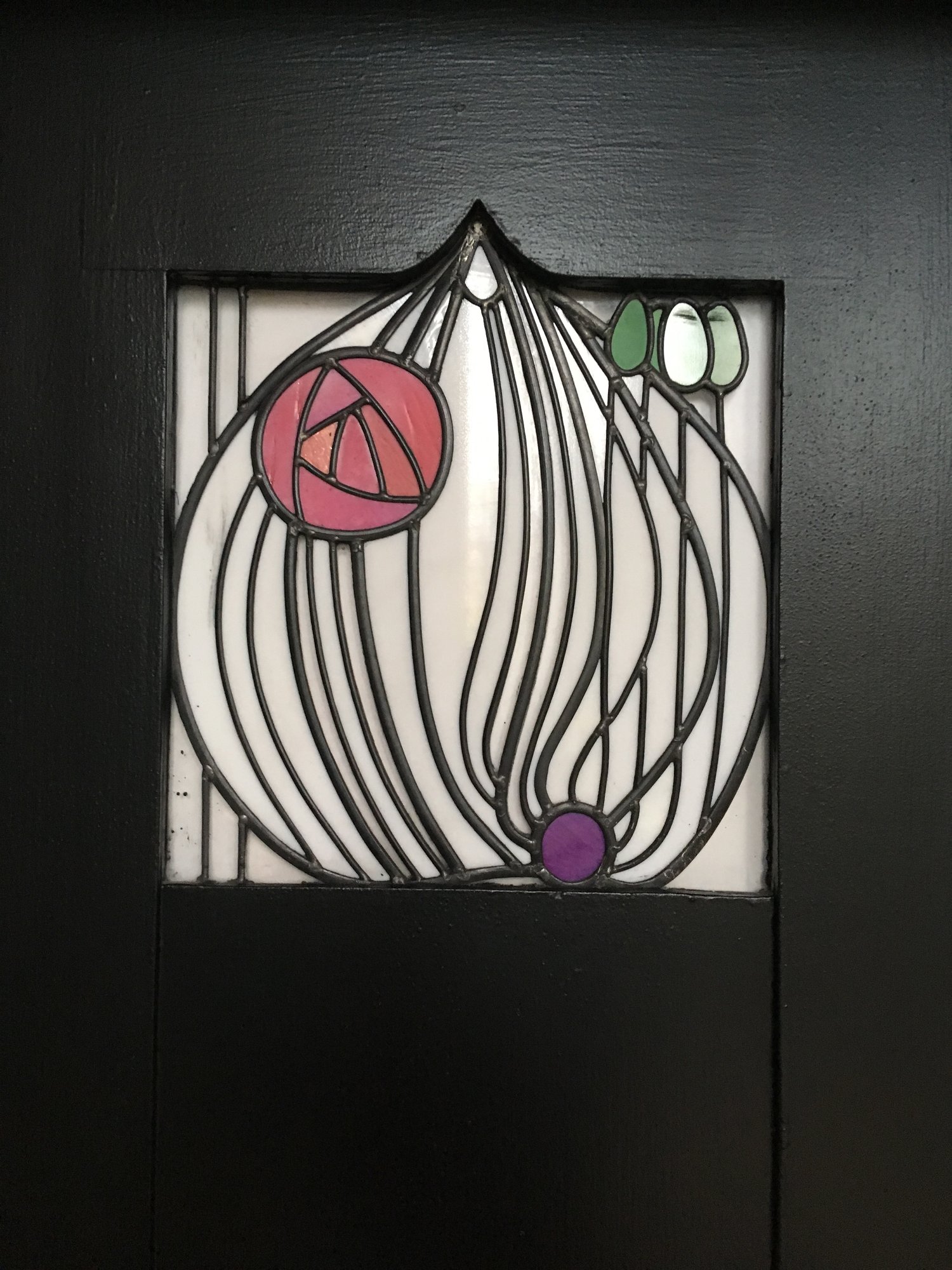
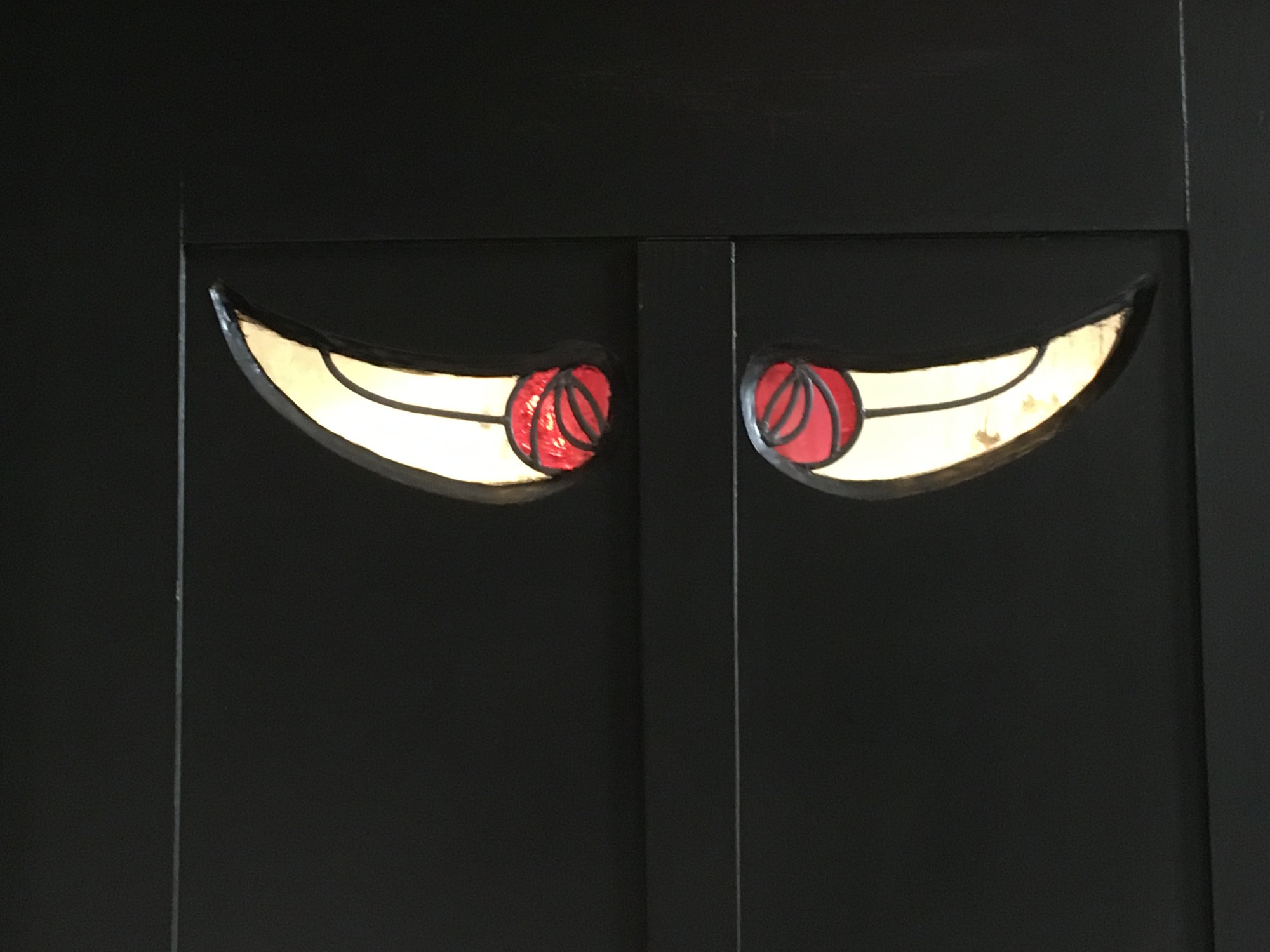
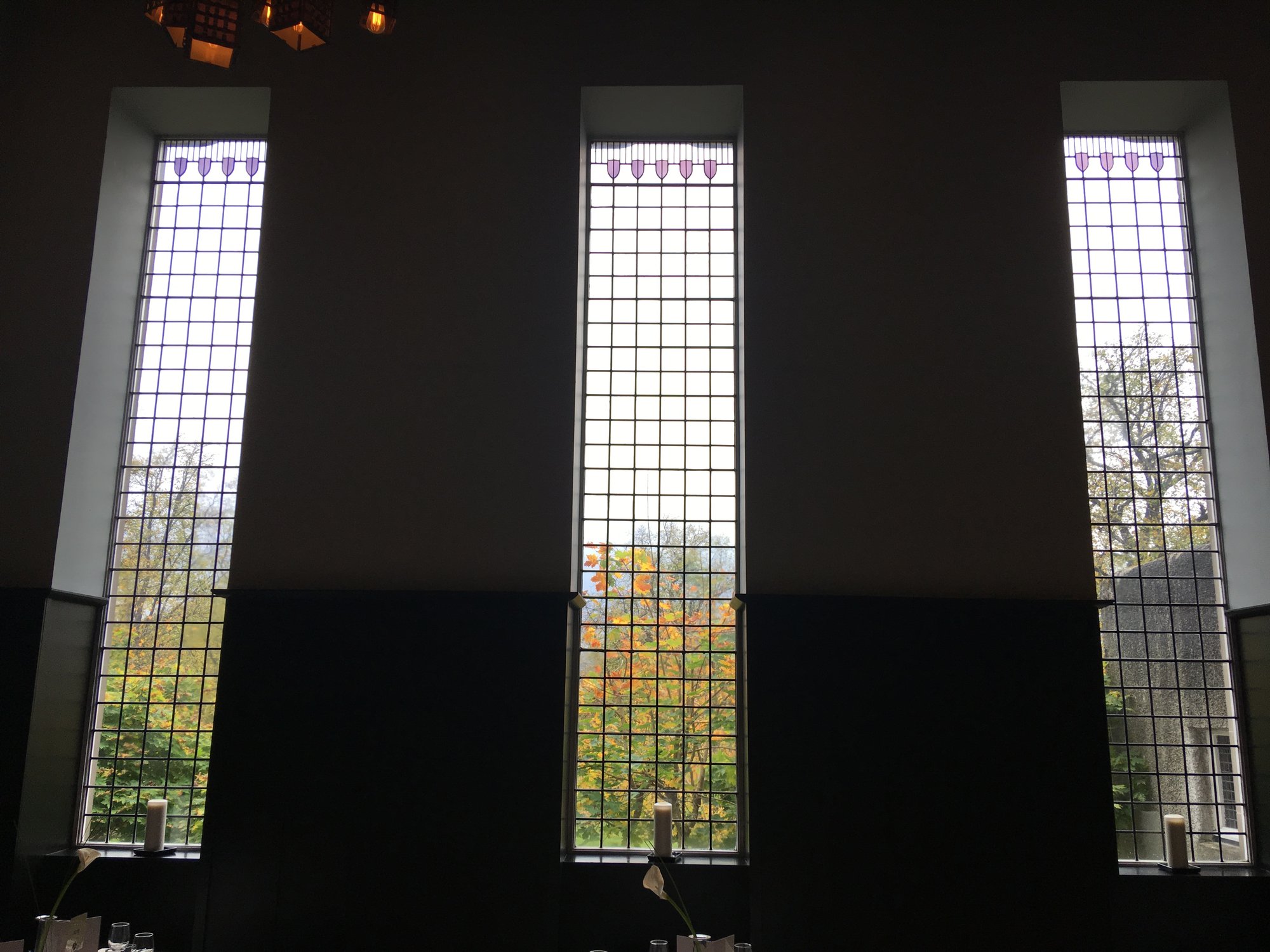
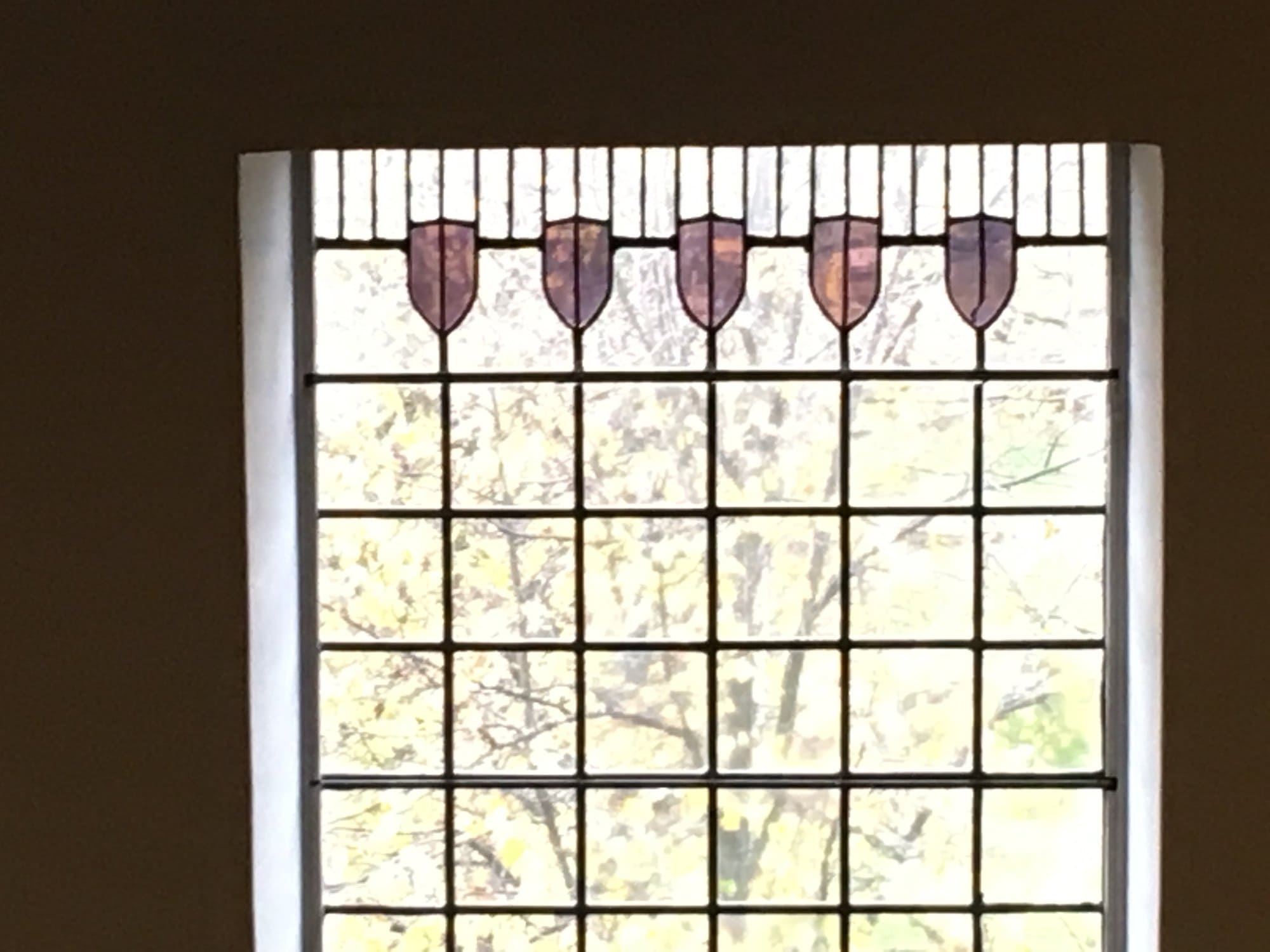
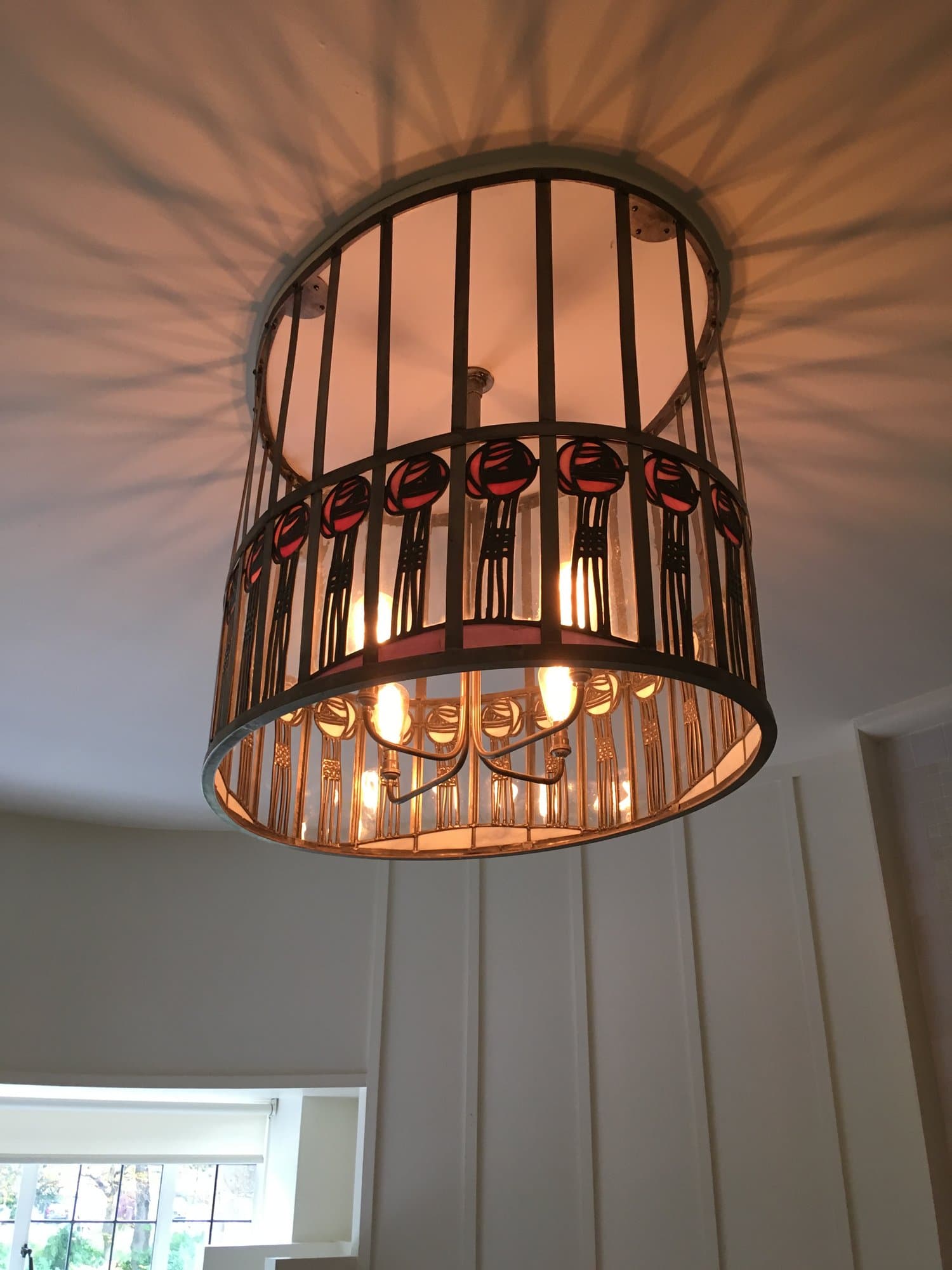
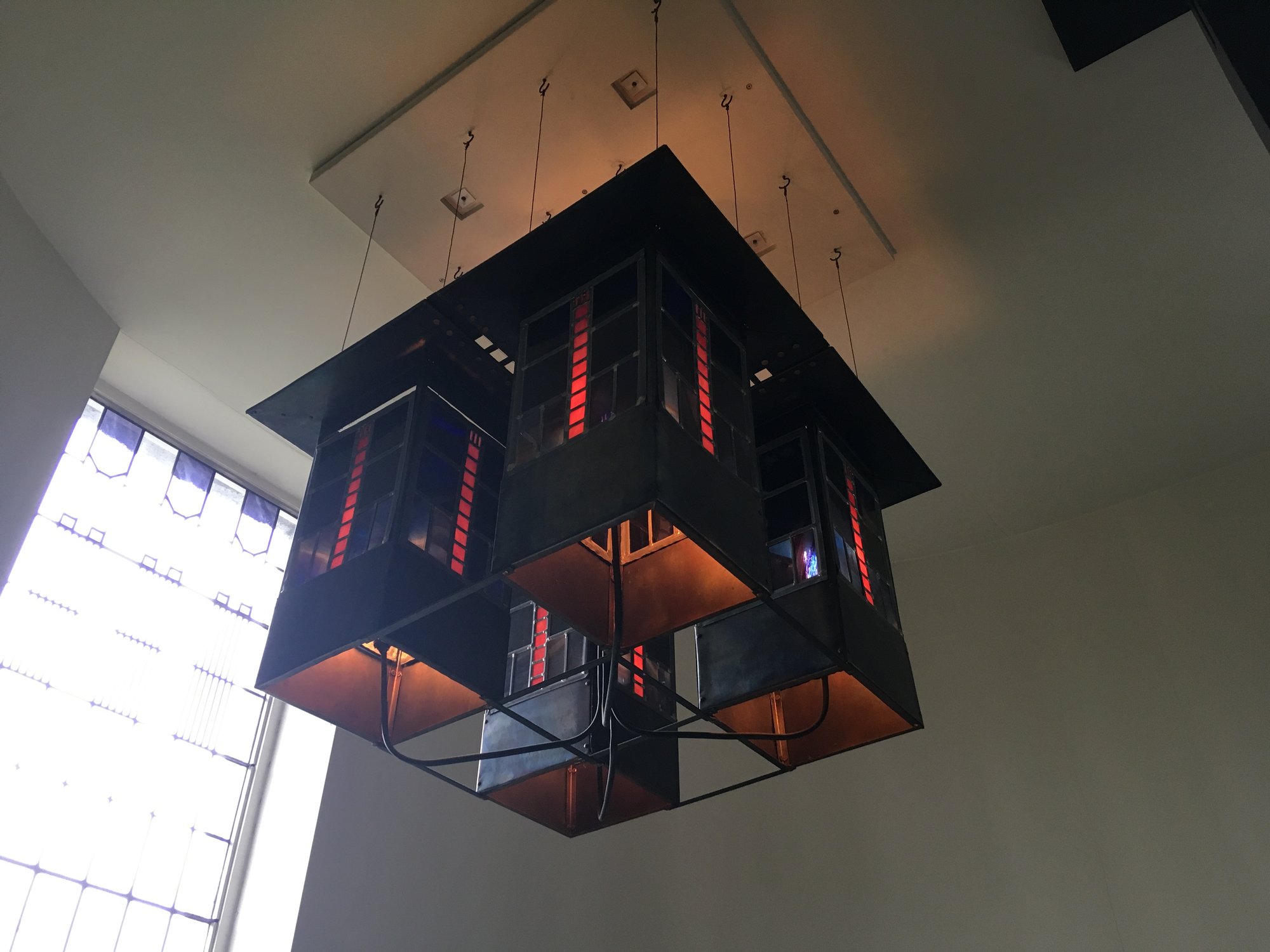
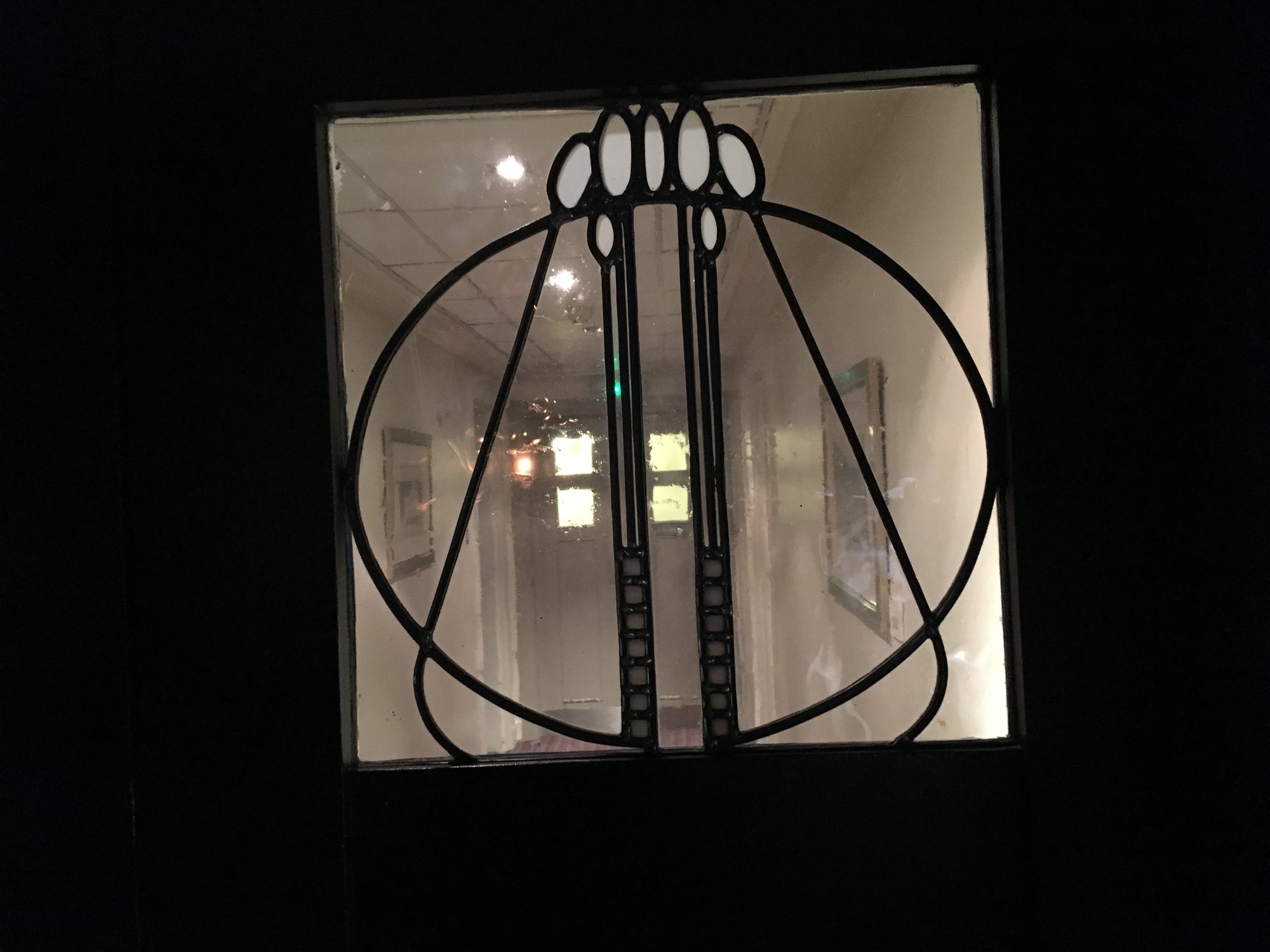
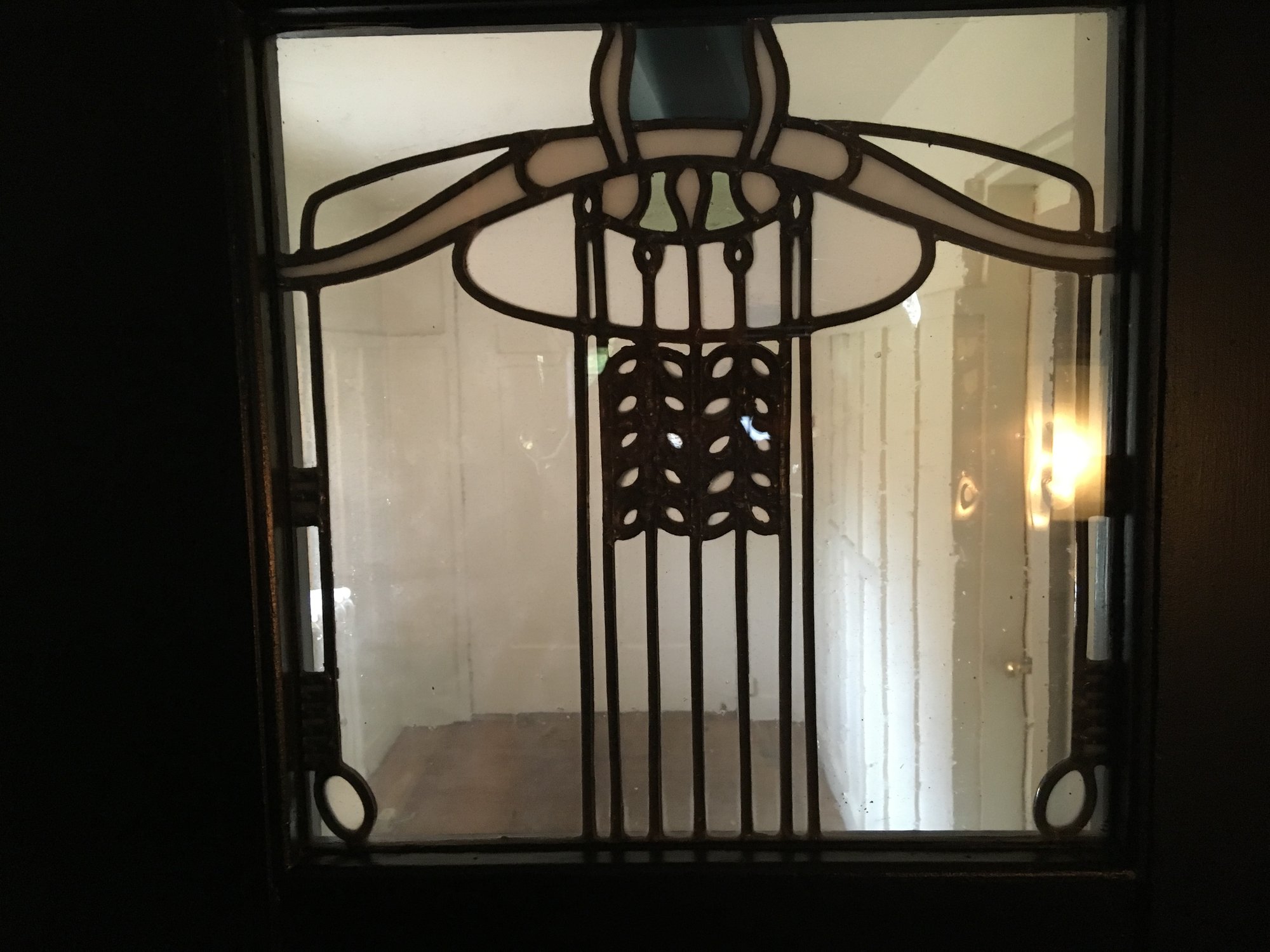
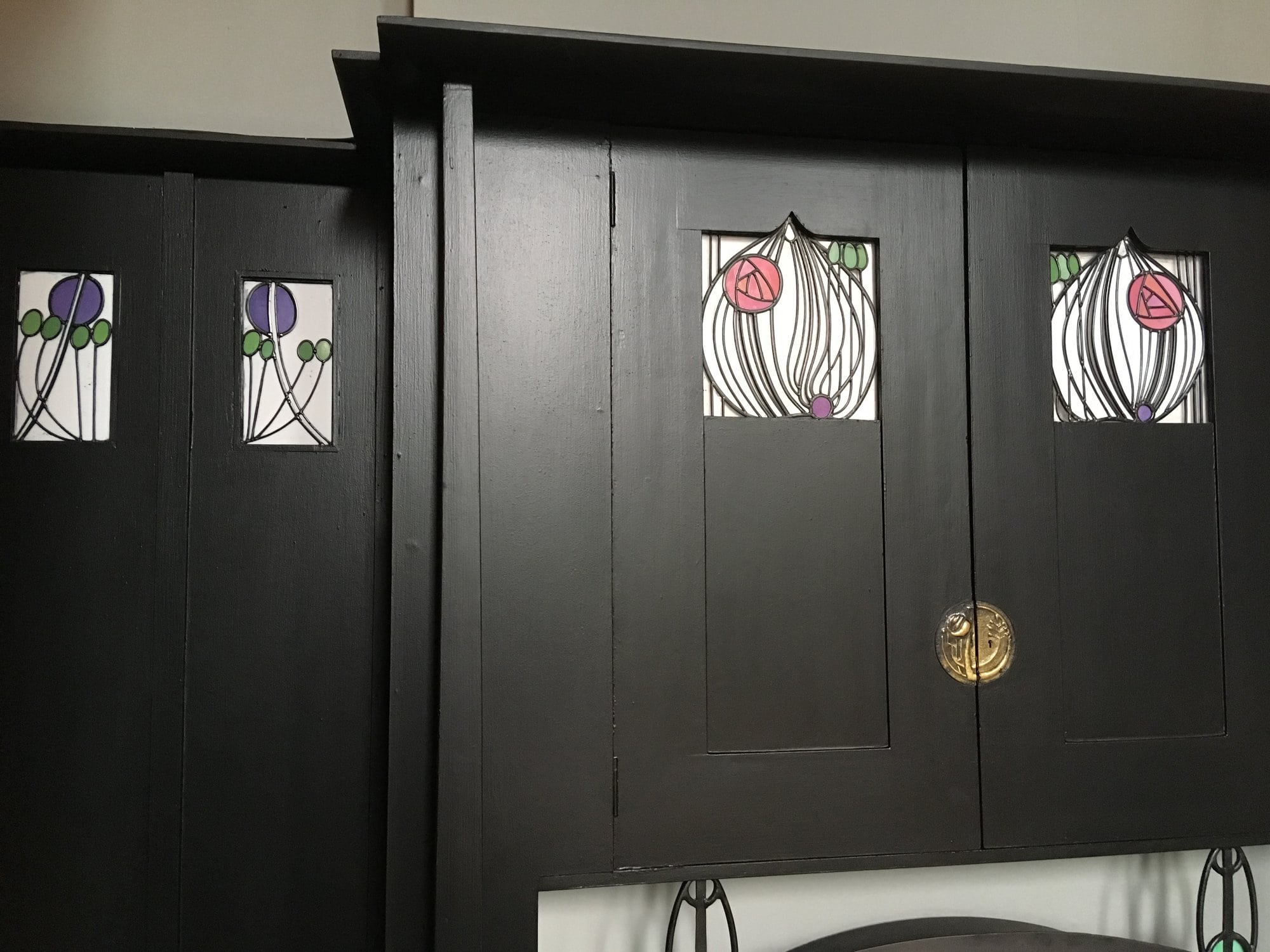
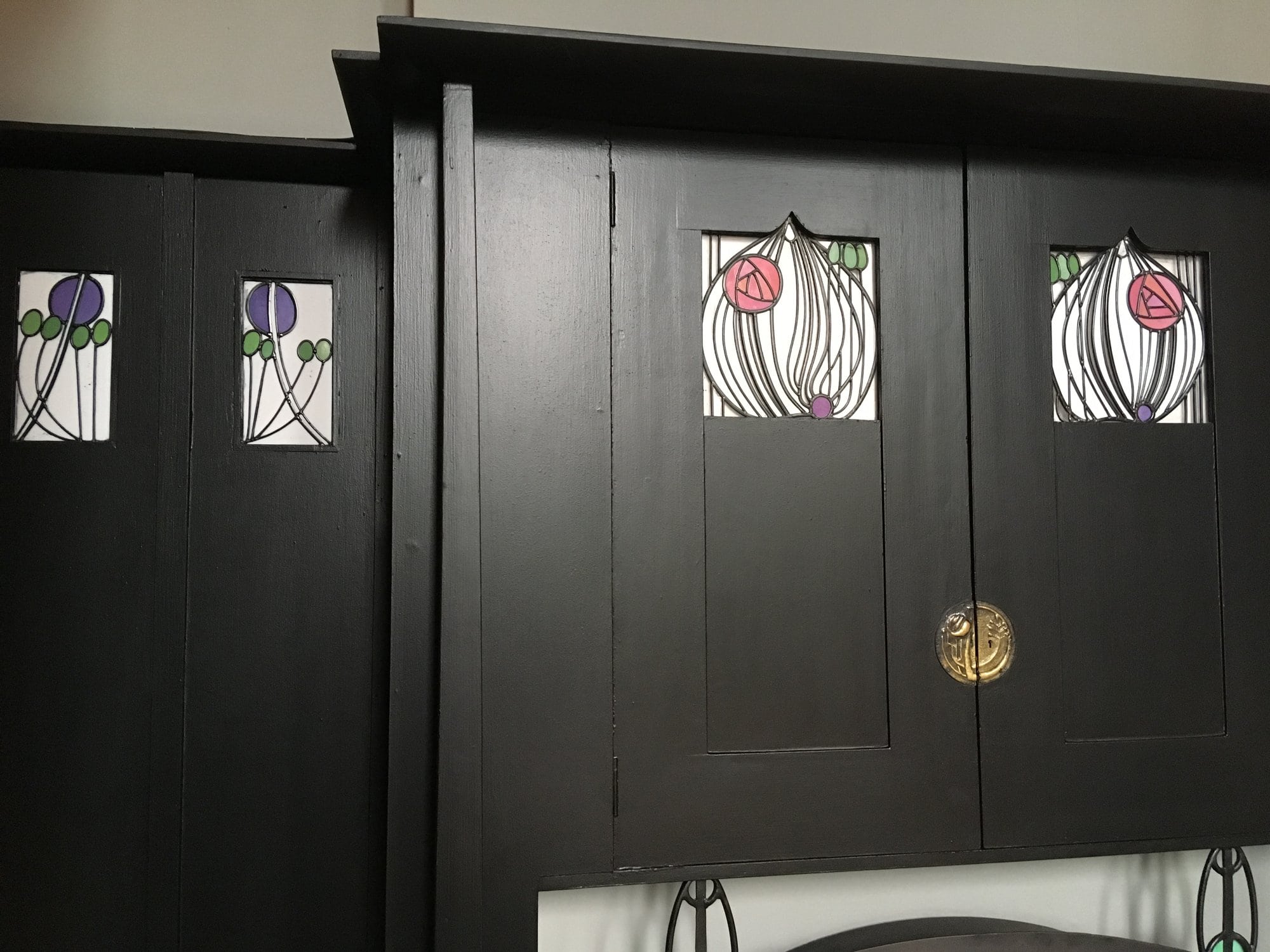
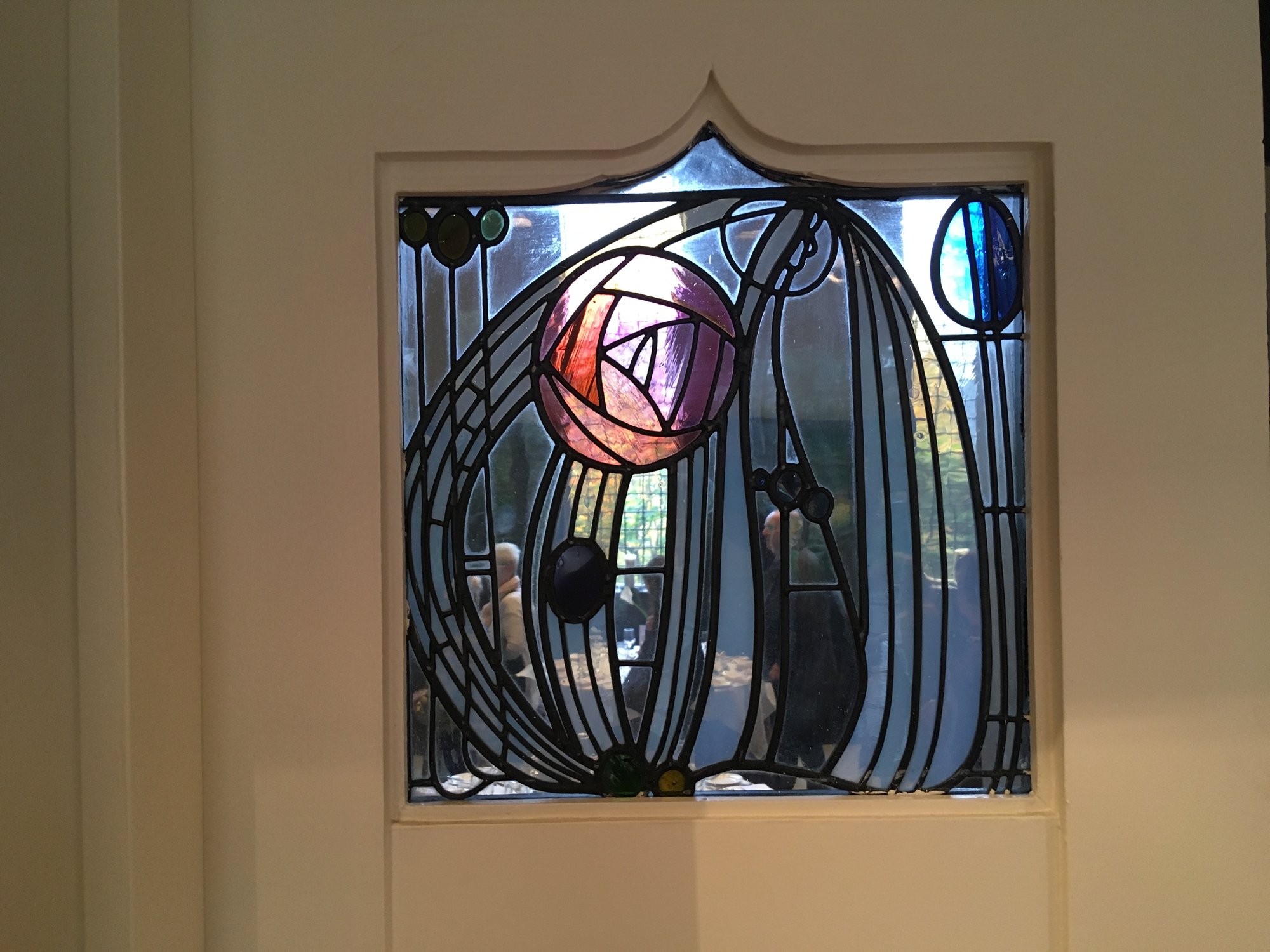
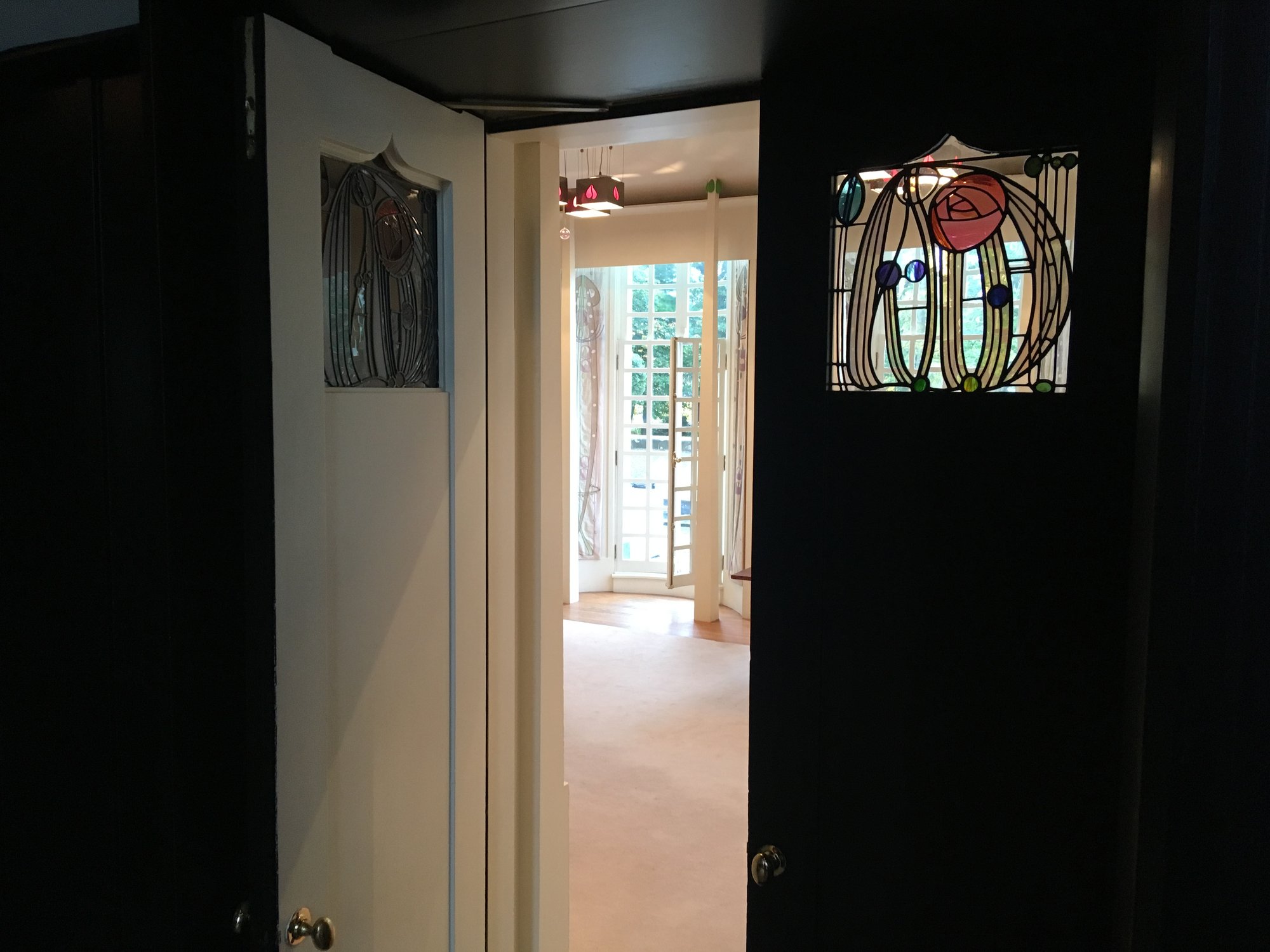
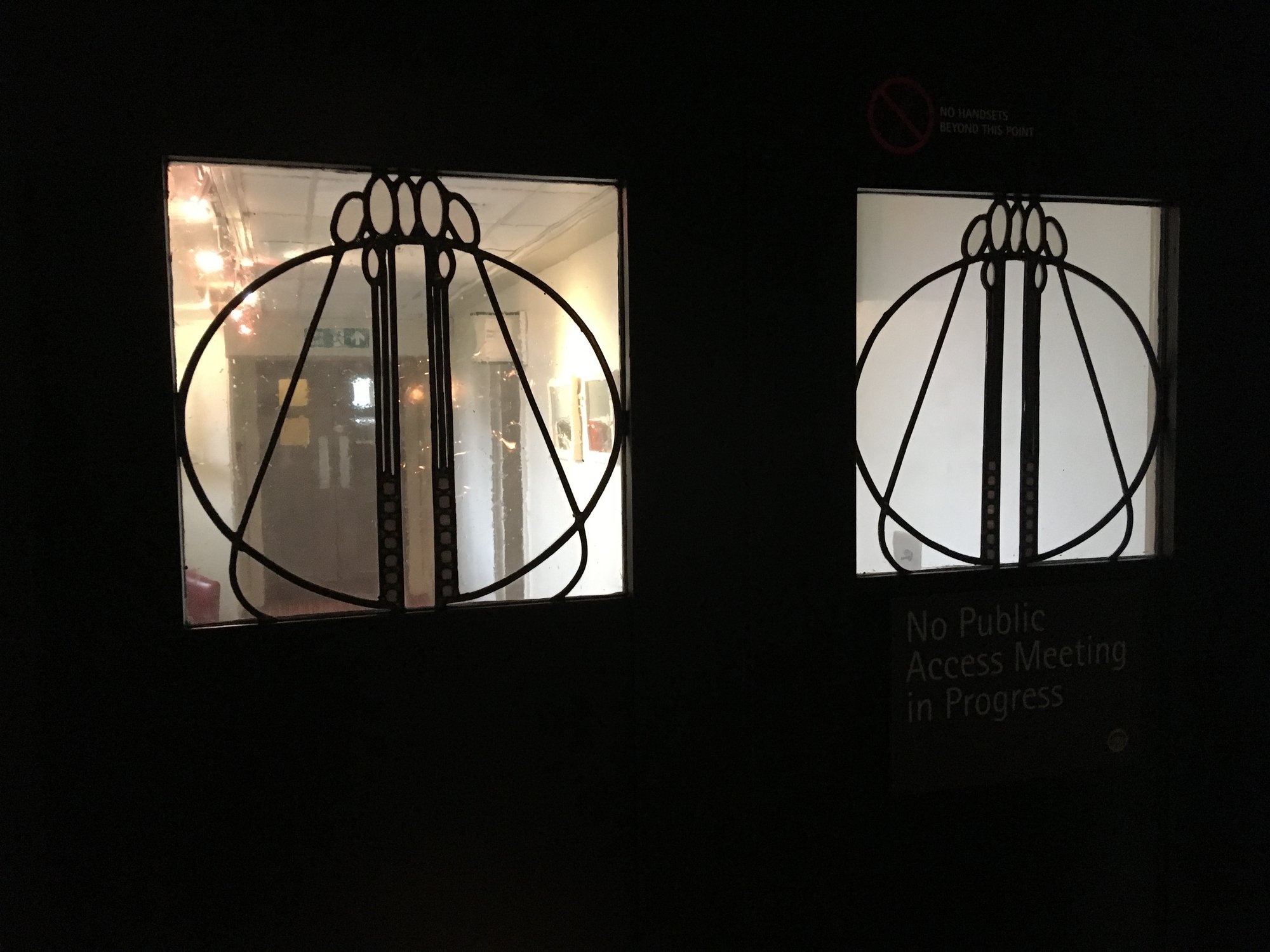
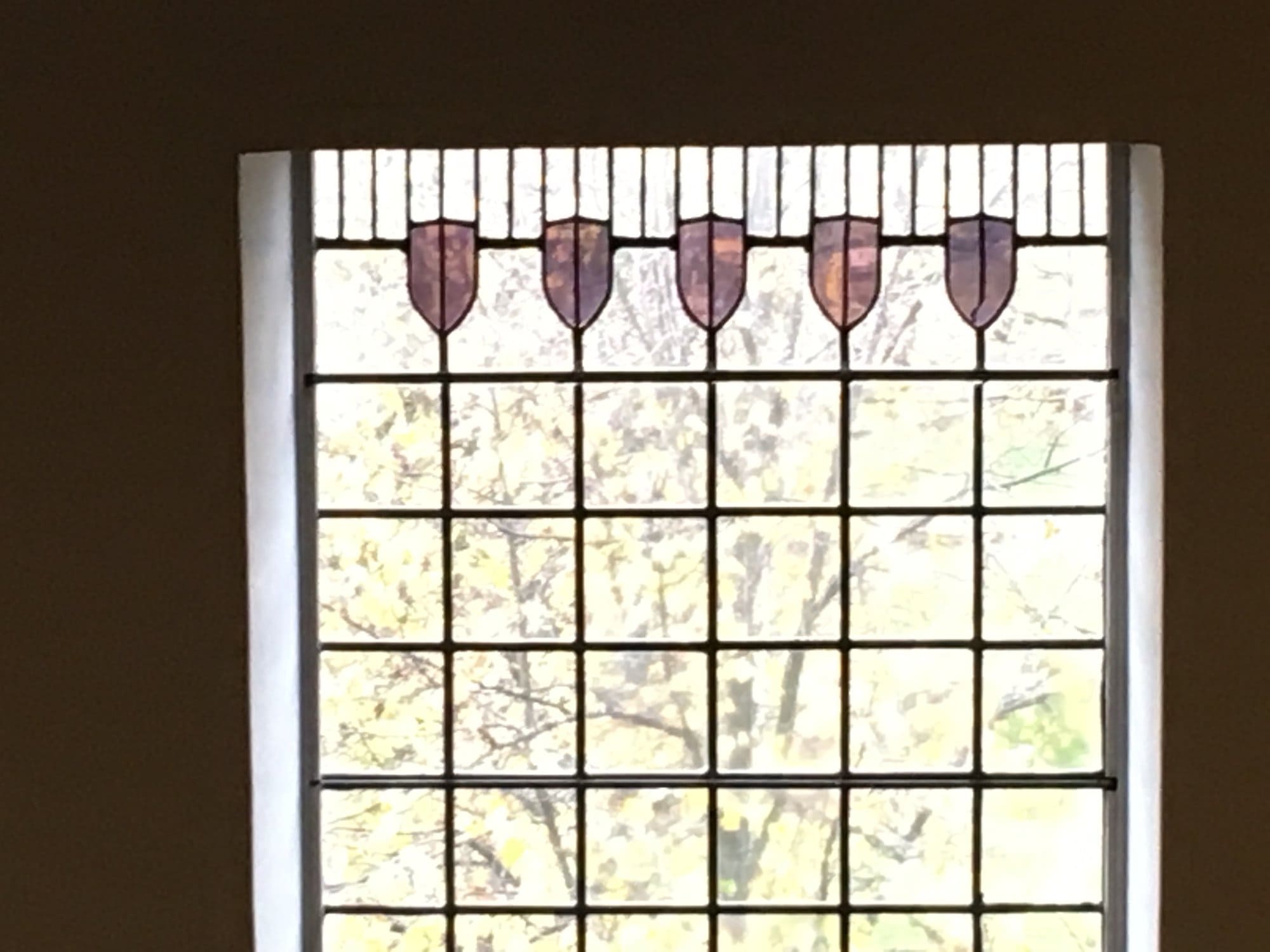
Because the glass was made for the new building, it follows Mackintosh’s way of drawing very closely: roses on long stems inside rounded outlines, bold leaded patterns in clear and coloured glass, small coloured shapes in a grid, and glass set into doors and panelling at eye height. If you want to study how his rose is drawn and how the lead lines carry the pattern, this is a good place to do it. The photographs on this page were taken in October 2017.
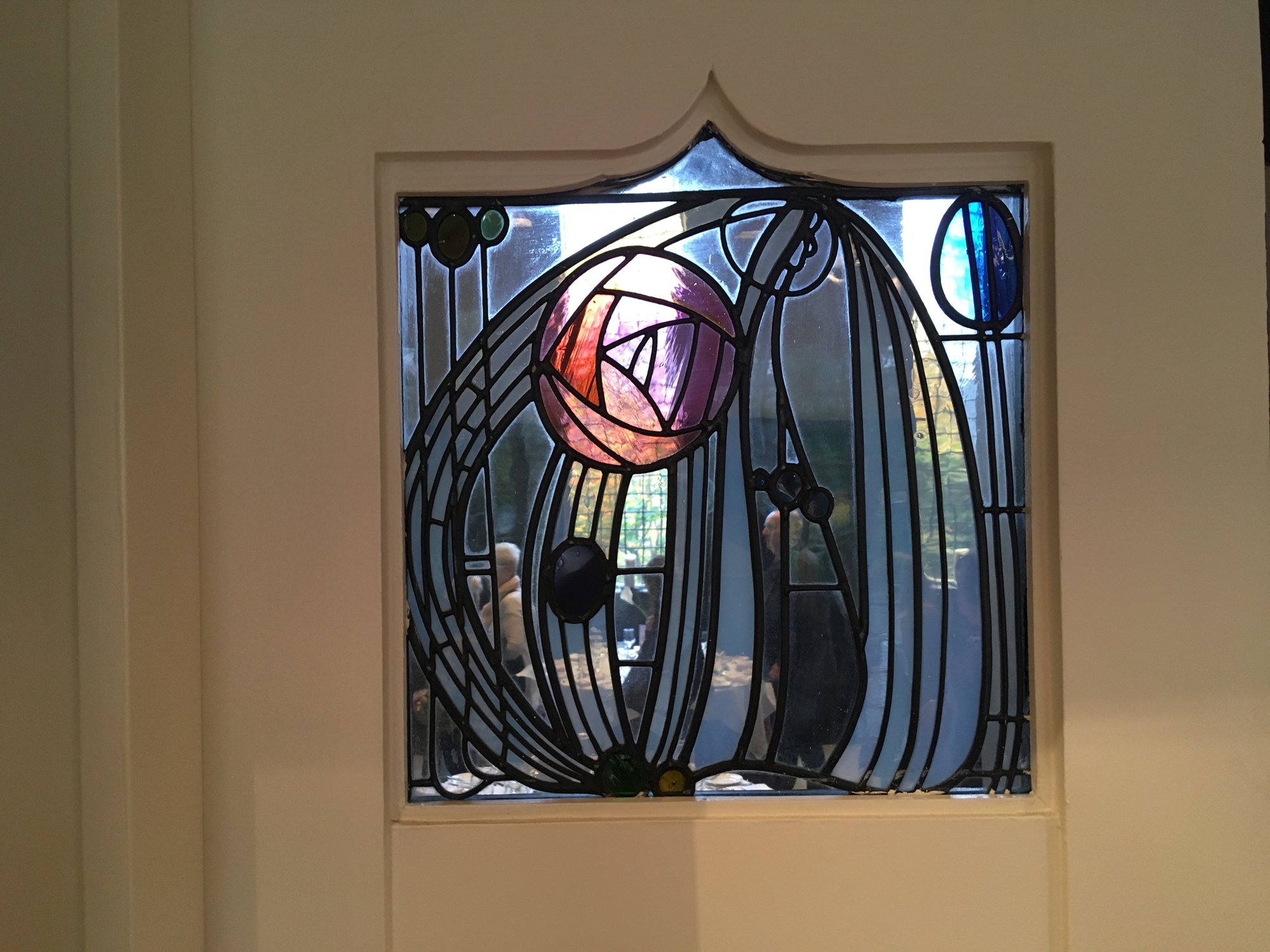
Furniture and more glass
Not everything here is on a window. These are some of the doors, a window and a cabinet photographed there, where the same rose and circle shapes turn up in the glass and the dark timber around it.
Where it is and what to expect
The house is in Bellahouston Park in Glasgow, beside Dumbreck and just east of where the Festival Tower stood for the 1938 Empire Exhibition. The photographs on this page date from a visit in October 2017. It is run by a charity and also hosts a café and restaurant, exhibitions, concerts and private events.
Sources and further reading
- Mackintosh Architecture, University of Glasgow: the competition design
- Europeana: House for an Art Lover
More Mackintosh
Read about Charles Rennie Mackintosh, Hill House, Willow Tea Rooms and 78 Derngate. For how leaded glass is made, see leaded lights.