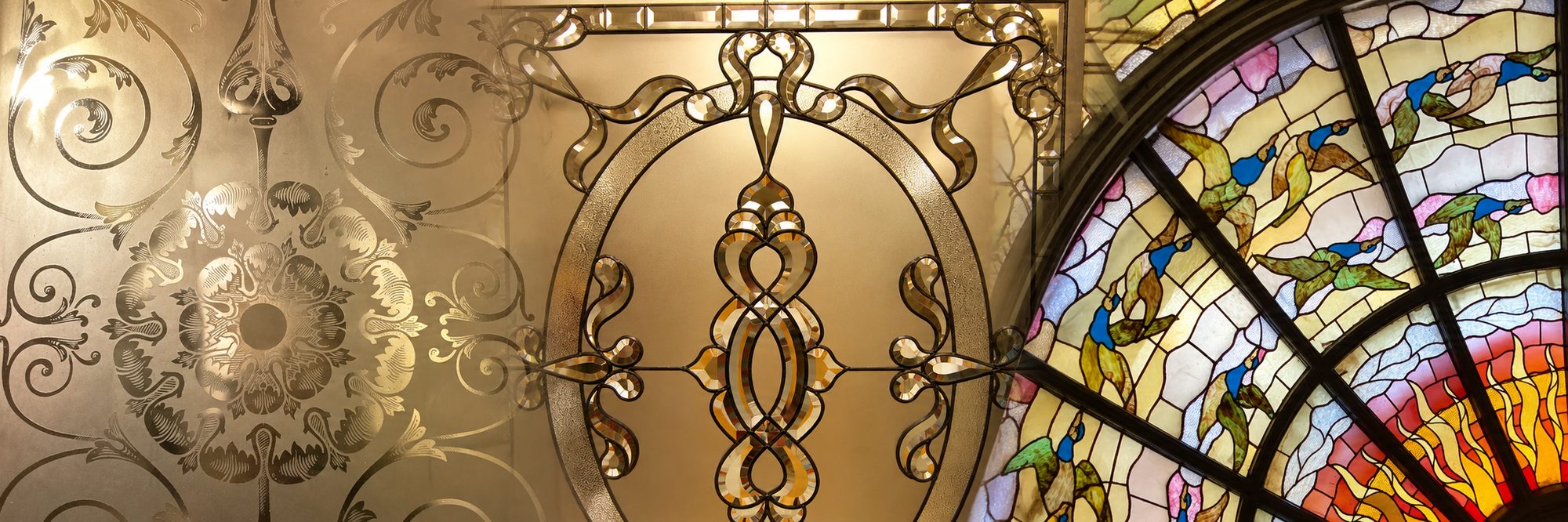

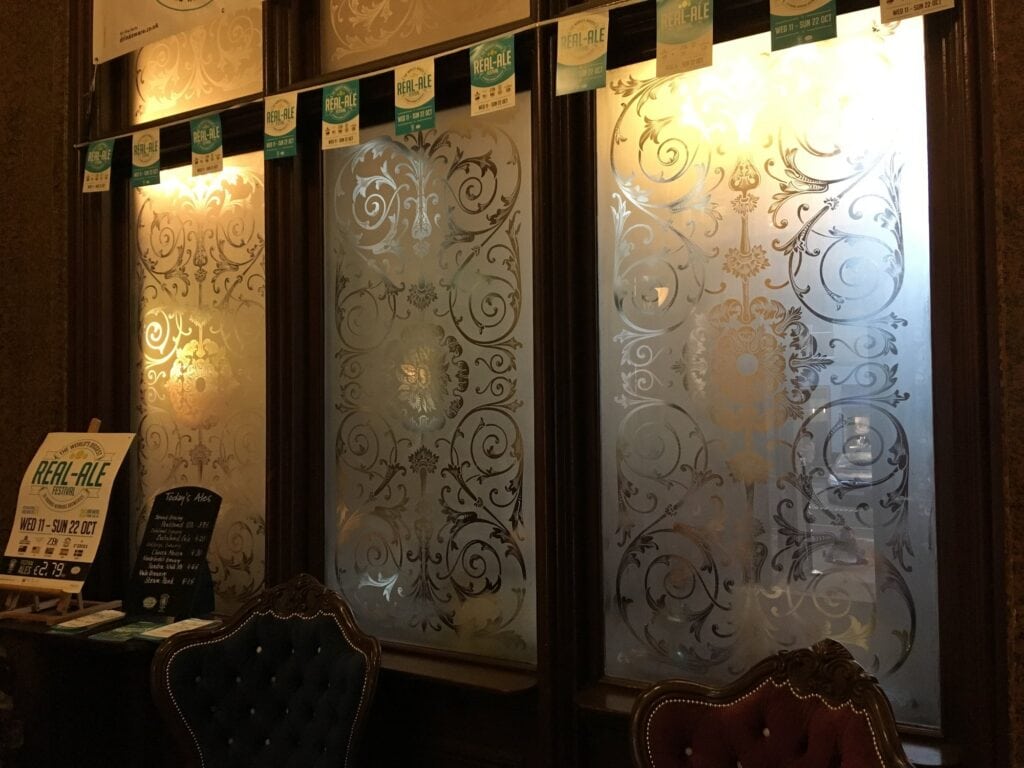
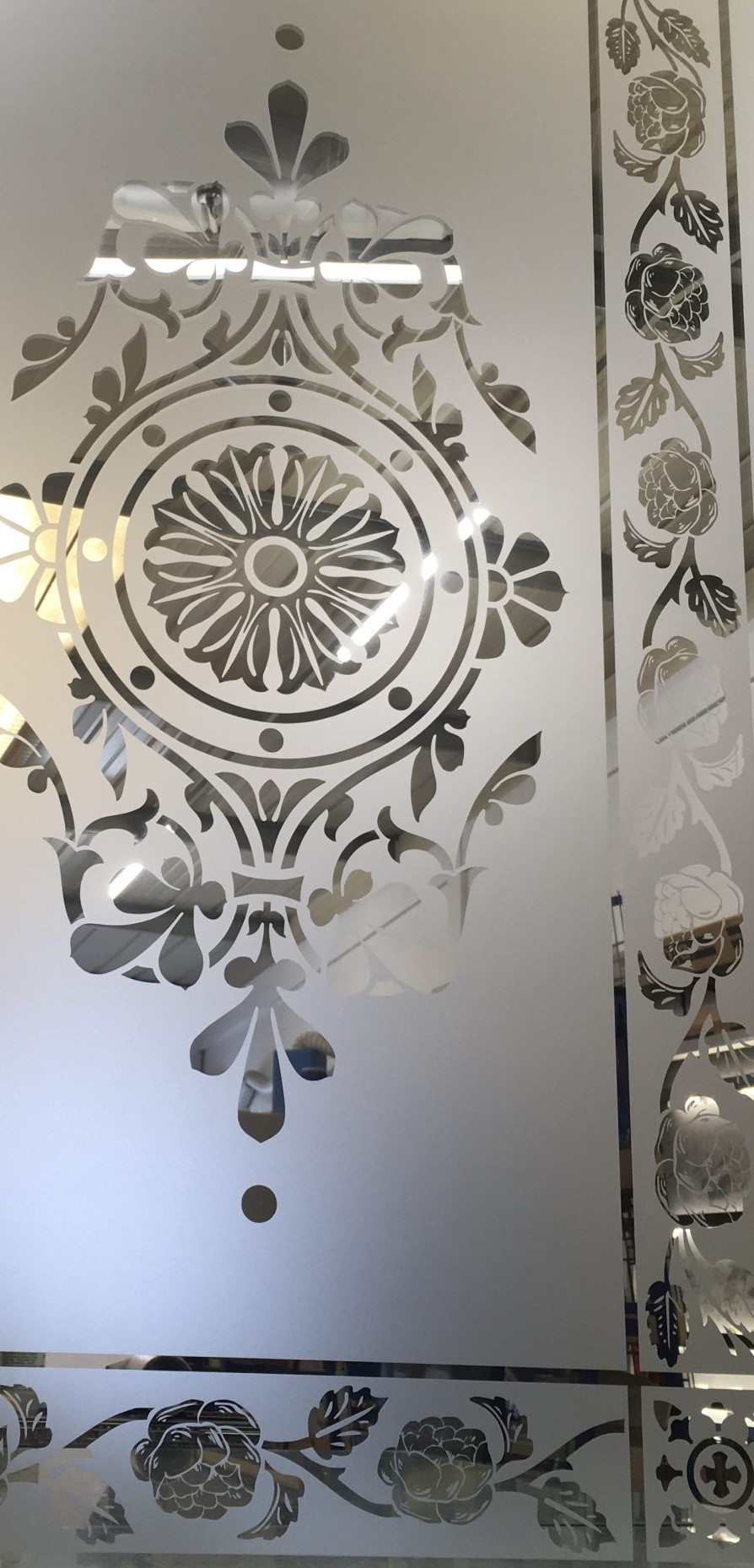
Etched glass is clear or tinted glass with a frosted pattern on its surface. The pattern may be a fine line drawing or a bold shape, and the contrast between frosted and clear areas is what shows the design. It is one of the most popular decorative glasses for homes, because it gives privacy without losing light and suits old and new houses alike. A design can be chosen from examples or commissioned as a one-off to suit a particular door or screen.
Two ways to etch glass
Etched glass is produced by two different processes, and it helps to know which has been used.
- Sandblasting. A stream of fine abrasive is blasted at the glass through a stencil. It can frost the surface lightly or cut deeper, and carving at several depths creates shading and relief.
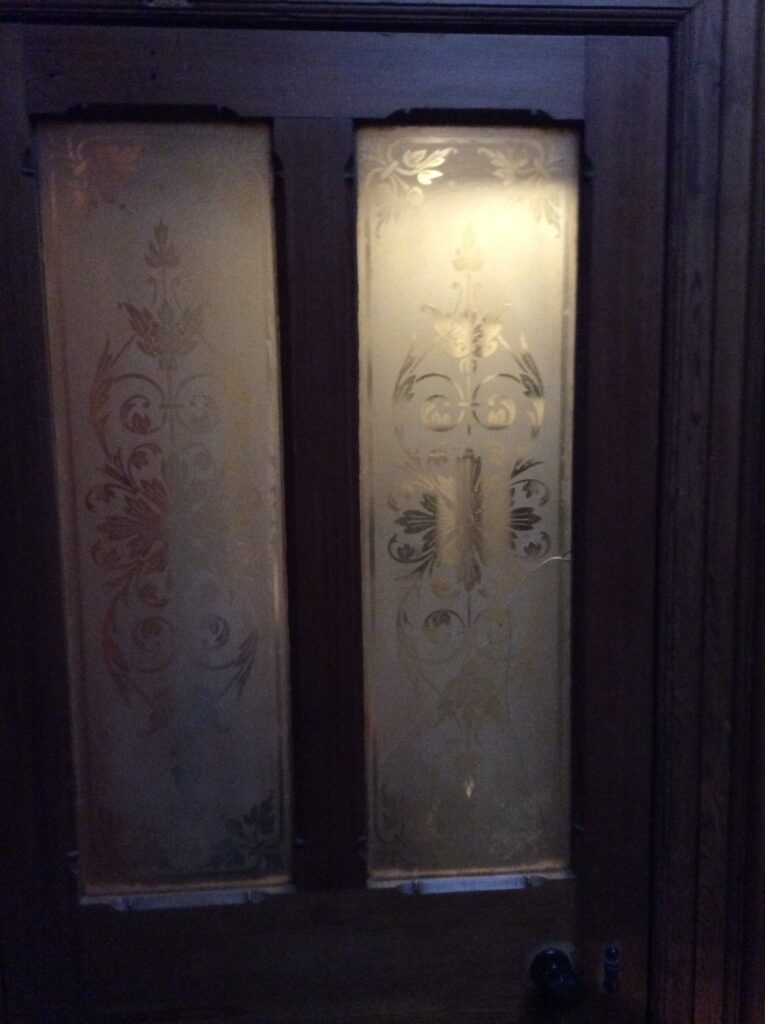
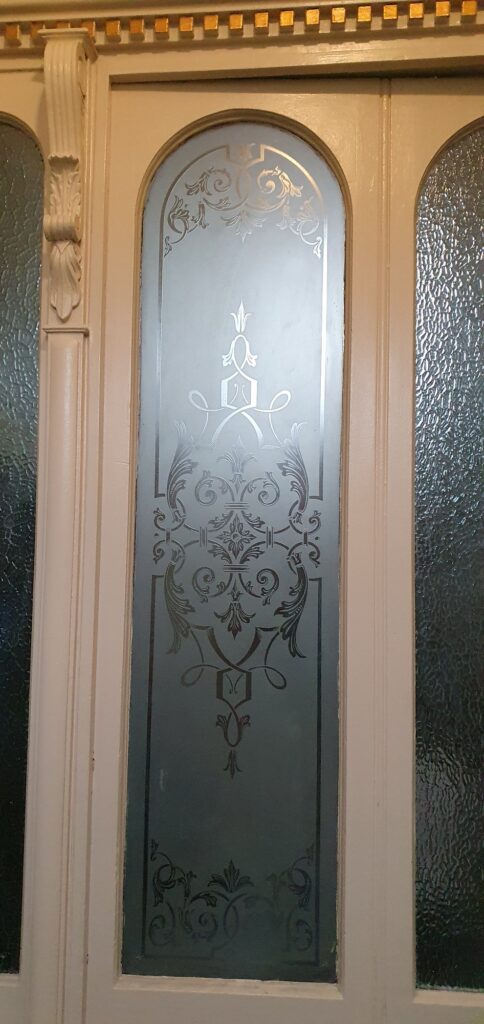
- Acid etching. Acid is used to give a smooth, even, satin frost. This is the finish seen in many Victorian doors and panels.
Both leave clear glass beside the frosted areas. Sandblasting allows more depth and detail, while acid etching gives a smoother, more uniform finish.
Where etched glass works well in the home
- Front and internal doors. Light passes through while the view in is hidden.
- Sidelights and fanlights. Repeating a pattern across a door and its surrounding glass gives the entrance a coordinated look.
- Bathrooms and shower screens. Privacy with daylight.
- Kitchens. Cupboard doors, room dividers and pass-through windows.
- Stair and landing windows. A pattern that does not block the light.
- Glass partitions. Etched detail adds interest to plain glass.
Choosing a design
- Proportion. Large, simple shapes work best on narrow panels, while finer detail suits larger ones.
- Privacy. A design with large clear areas gives less privacy than one that is mostly frosted.
- Position. Look at a sample where it will be fitted, because the light changes the effect.
- Combinations. Etching can be combined with bevelled edges or leaded lines for a richer look.
Looking after etched glass
Etched glass has two faces that need different treatment. The smooth face can be cleaned like any other glass. The etched face is a roughened surface, and the texture that gives the frosted look also holds dirt, grease and fingermarks, so it needs more care. How much depends on the type of etching.
Which side is which
Run a fingertip over each face. The etched side feels slightly rough or velvety and looks matt, while the other side is smooth and shiny. A drop of water on the etched face makes it look clear for a moment, which confirms which side is which. In a sealed double glazed unit the etching is often placed on an inside face, where it never needs cleaning, so it is worth asking about this when a panel is ordered.
For every type of etched glass
- Clean the whole panel rather than just the mark, because spot cleaning can leave a patch that looks different from the rest.
- Use plenty of clean warm water with a few drops of mild, pH-neutral washing-up liquid, and a soft, lint-free or microfibre cloth.
- Rinse with clean water and dry with a second lint-free cloth, stopping while the surface is slightly damp to reduce streaks.
- Avoid scouring powders, scouring pads, razor blades, steel wool and metal tools. They scratch the surface, and scratches cannot be repaired.
- Avoid ammonia, vinegar and other acids, bleach, strong alkalis and solvents, and anything marked water-repellent or containing polish or wax, which can leave a film in the texture.
- Keep silicone sealant, adhesive tape and hand cream away from the etched face. Silicone in particular can leave a stain that is very hard to remove.
- Do not clean glass that is hot or in direct sun, and do not pour hot water onto cold glass.
- Test any new cleaning product on a small corner first.
Acid etched glass
Acid etching gives a fine, even, satin finish and is usually the easiest type to look after. Fingermarks show clearly on it, so it suits places where the etched face will not be touched. Wipe it with a damp soft cloth and mild cleaner as described above. A greasy mark usually comes off with warm soapy water applied across the whole panel, then rinsed.
Sandblasted glass
Sandblasting leaves a coarser, deeper texture than acid etching, which would otherwise pick up fingermarks and grease very easily. For that reason sandblasted glass is usually given a clear protective coating during manufacture. The coating is applied to the etched face only and buffed clear, and the plain face is left as ordinary glass. Coatings of this kind are described as resisting fingermarks and staining, which makes the glass easier to clean, and some leave the surface smoother and more satin, closer to acid etched glass.
The coating is thin, and it is what protects the surface, so the aim is to avoid wearing it away. Use soft cloths and mild soapy water, and avoid abrasives, solvents, polishes and harsh chemicals, which can damage or strip it. Some coatings are not suited to outdoor use or to shower enclosures, so ask the supplier where a treated panel can be used. Some can be reapplied if the surface wears, and coating manufacturers supply their own care products. On an untreated panel, or where the coating has worn, a soft brush with soapy water works better than rubbing with a cloth, which can leave fibres behind. Rinse well and pat dry. Ask the supplier whether a coating has been used, and what they recommend.
Deep carved glass
Deep carving has real relief, with recesses that collect dust and are hard to reach with a cloth. Use a soft brush with soapy water, and a cotton bud for finer detail, then rinse and dry. Avoid polishes and sprays that dry in the recesses and leave a white residue.
If in doubt
The general rules for all decorative glass are on the page how to clean decorative glass safely. Methods and finishes vary between manufacturers, and some panels are combined with leaded lights, bevels or painted detail. Ask the supplier for care instructions when a panel is ordered, and keep them. On panels with lead, avoid soaking the joints.
Related pages
- Acid etched glass
- Sandblasted and deep carved glass
- Decorative bevelled glass
- Glass for a front door
- The history of acid etched glass
- The history of sandblasted and deep carved glass
- Glass Glossary
Published 20 October 2026 · Last updated