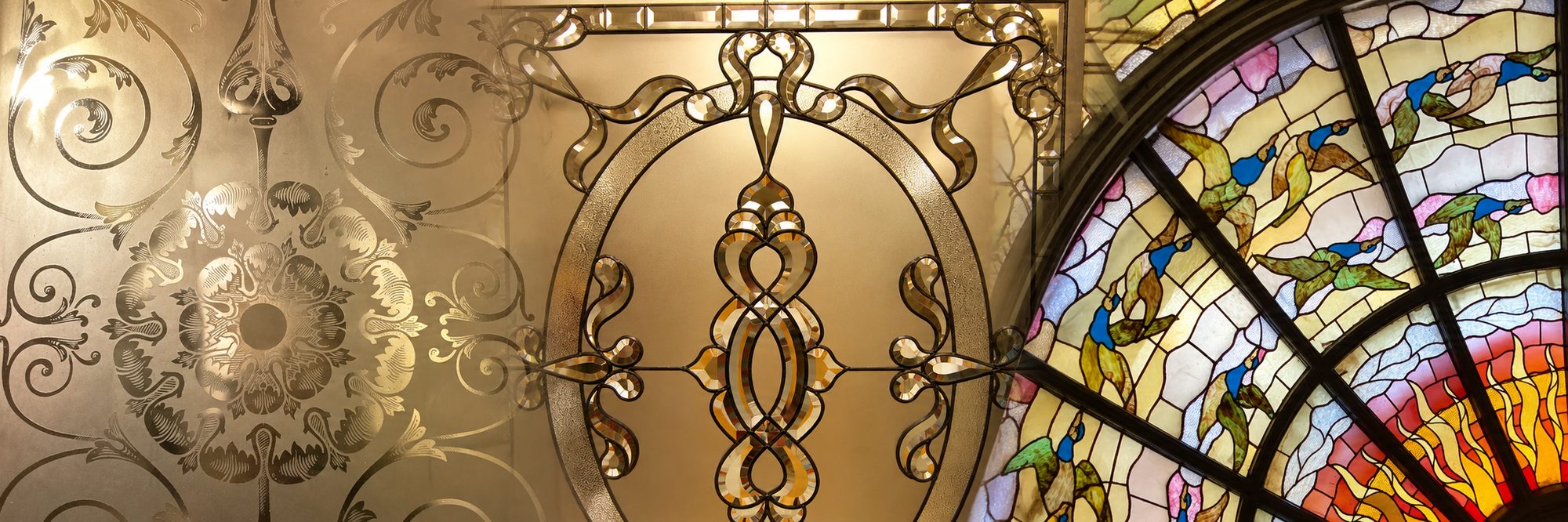

Sandblasting propels an abrasive at a surface at high speed. Where the surface is left uncovered it is worn away, and where a stencil protects it, it is untouched. On glass the result is a frosted pattern that looks much like acid etching without the hazards of acid.
The invention
The process was patented in the United States by Benjamin Tilghman of Philadelphia on 18 October 1870. The patent covers cutting, grinding and engraving stone, metal, glass and other hard materials by firing grains of sand at them, driven by a jet of steam, air or water. Tilghman noted that glass could be frosted either over its whole surface or through stencils, and that an air blast worked better than steam for engraving because the sand stayed dry and the pattern was clean. Finer sand at lower pressure gave a finer frost. He also described cutting patterns through a thin coloured layer on glass.
Adoption in decorative glass
Early sandblasting was done with steam or compressed air in workshops, and decorators adopted it alongside acid etching, particularly as the dangers of acid became clear. The dust was itself a risk, and in 1920 a London glass decorator patented an improved machine designed to reduce the dust circulating in the workroom. Sandblasting did not displace acid etching immediately, and many Victorian and Edwardian decorative windows use both. In the twentieth century, with compressed air and better resists, it became the usual method of frosting and patterning new glass.
How it is done
- A design is cut as a stencil from a rubber or adhesive resist, which is stuck to the glass.
- Abrasive is blasted across the glass in a cabinet or booth. The resist absorbs the grains and protects the glass beneath.
- Time and pressure determine the depth. Light blasting gives an even frost. Longer exposure at higher pressure cuts deeper.
- The resist is removed, leaving clear glass and frosted glass in the pattern.
Deep carving
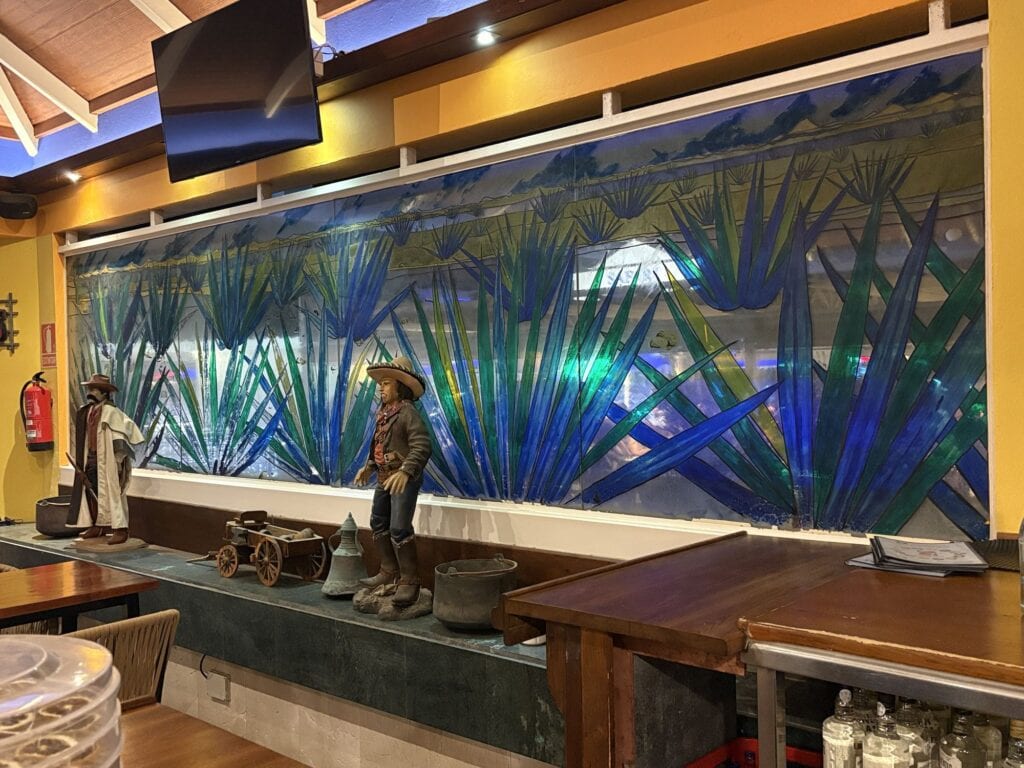
Deep carving or sand carving uses the same process taken further. By blasting for longer and building the resist in stages, carvers cut the glass to different depths, creating relief, modelling and shaded effects that look three-dimensional. Frosted glass is still the base, but varying depth changes how light passes through, so deeper areas look darker or brighter. Carved panels are used for doors, screens, windows and signs, and can also carry colour.
Compared with acid etching
Seen under a microscope, acid etching leaves a smooth surface, while blasting leaves a surface of tiny chips and cracks. Blasted glass can hold dirt more easily, which is why it is often sealed or finished with a coating, particularly on glass in kitchens and bathrooms. Sandblasting is not limited to flat glass: it can pattern curved and shaped items. Acid etching remains the usual choice for faithful restoration of Victorian panels.
Modern sandblasted pieces appear throughout the gallery. The glass types page explains the differences between sandblasted, acid etched and deep carved glass.
On this site, see the glass type page for Sandblasted Glass.
More glass history
- A Short History of Stained Glass
- Medieval Stained Glass and the Origins of Leaded Lights
- How Window Glass Was Made: Crown, Cylinder, Plate and Float
- Stained Glass from the Gothic Revival to the Twentieth Century
- Opalescent Glass, Tiffany and the Copper Foil Method
- The History of Brilliant Cut and Bevelled Glass
- The History of Acid Etched Glass
- The History of Sandblasted and Deep Carved Glass
- The History of Fused and Kiln Formed Glass
- Where Overlay Stained Glass Came From
Terms are explained in the Glass Glossary. The tools and methods used today are covered in Glass Tools and Equipment, and the types of glass themselves under Glass Types.