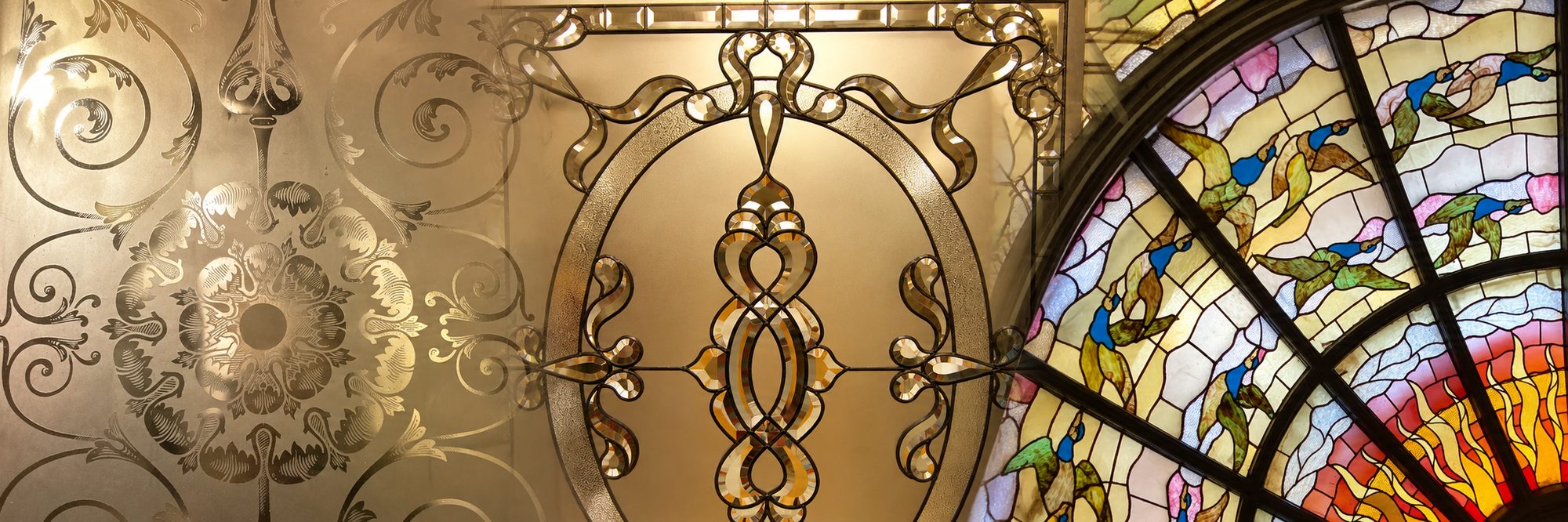

American stained glass has a short history compared with Britain’s, but it is a lively one. The colonists who crossed the Atlantic in the seventeenth century came from a country that already had five centuries of window glass behind it, and for a long time they imported both the glass and the taste for it. It was only in the nineteenth century that the United States began to make windows of its own, and in the 1880s it produced something new that went back across the Atlantic.
The colonial period
Glassmaking was one of the first industries tried in the English colony at Jamestown, Virginia, in 1607, but it did not last. Its main products were bottles and window glass, not coloured windows. A Dutch glazier and painter, Evert Duyckingh, who arrived in New Amsterdam (now New York) in the late 1630s, is the first maker of decorative glass recorded in America. He made small house-window panels with coats of arms painted in enamel and silver stain, in the Dutch tradition, and was paid for glass fitted to a church in 1656. No work of his is known to survive.
Most colonial churches were plain meetinghouses of wood or brick. Many of the settlers belonged to Protestant churches that distrusted images, and money was short, so coloured glass was rare. Gloria Dei, the Old Swedes’ Church in Philadelphia, opened with shutters and no glass in its windows at all. The result is that almost nothing of the colonial period remains, and the history of American stained glass really begins in the nineteenth century.
The Gothic Revival crosses the Atlantic
The Gothic Revival that brought stained glass back in Britain, described in A Short History of Stained Glass, reached the United States in the 1830s and 1840s. Architects began to build churches in the Gothic style, and these needed windows. For a time most of the glass was imported from Europe, and the first American glass businesses struggled. One in New York City, founded around 1834, is the earliest known, and it did not last.
The first known American-made figural window was a Nativity made by the Bolton family for Christ Church in Pelham, New York, in 1843. The Boltons went on to make windows for Holy Trinity Church in Brooklyn the following year, and figurative altar windows were made in the 1840s for Trinity Church in New York. By the 1850s a small number of studios had been established in New York and elsewhere, and in the 1870s the Scottish designer Daniel Cottier opened a branch of his firm in New York, an example of British taste crossing the Atlantic. In Boston, the church of Trinity, whose interior was designed by John La Farge in the 1870s, holds windows by the British firm of Morris and Co. to designs by Edward Burne-Jones, alongside American glass.
Opalescent glass and the Gilded Age
In 1879 and 1880 two American artists, La Farge and Louis Comfort Tiffany, each developed opalescent glass for windows. Instead of painting folds and faces onto clear or pale glass, they chose milky, streaked glass whose natural colour made the picture, and they layered it to vary the colour. Both took out patents within months of each other, and the rivalry between them is told on the pages about each man. The method is covered in Opalescent Glass, Tiffany and the Copper Foil Method.
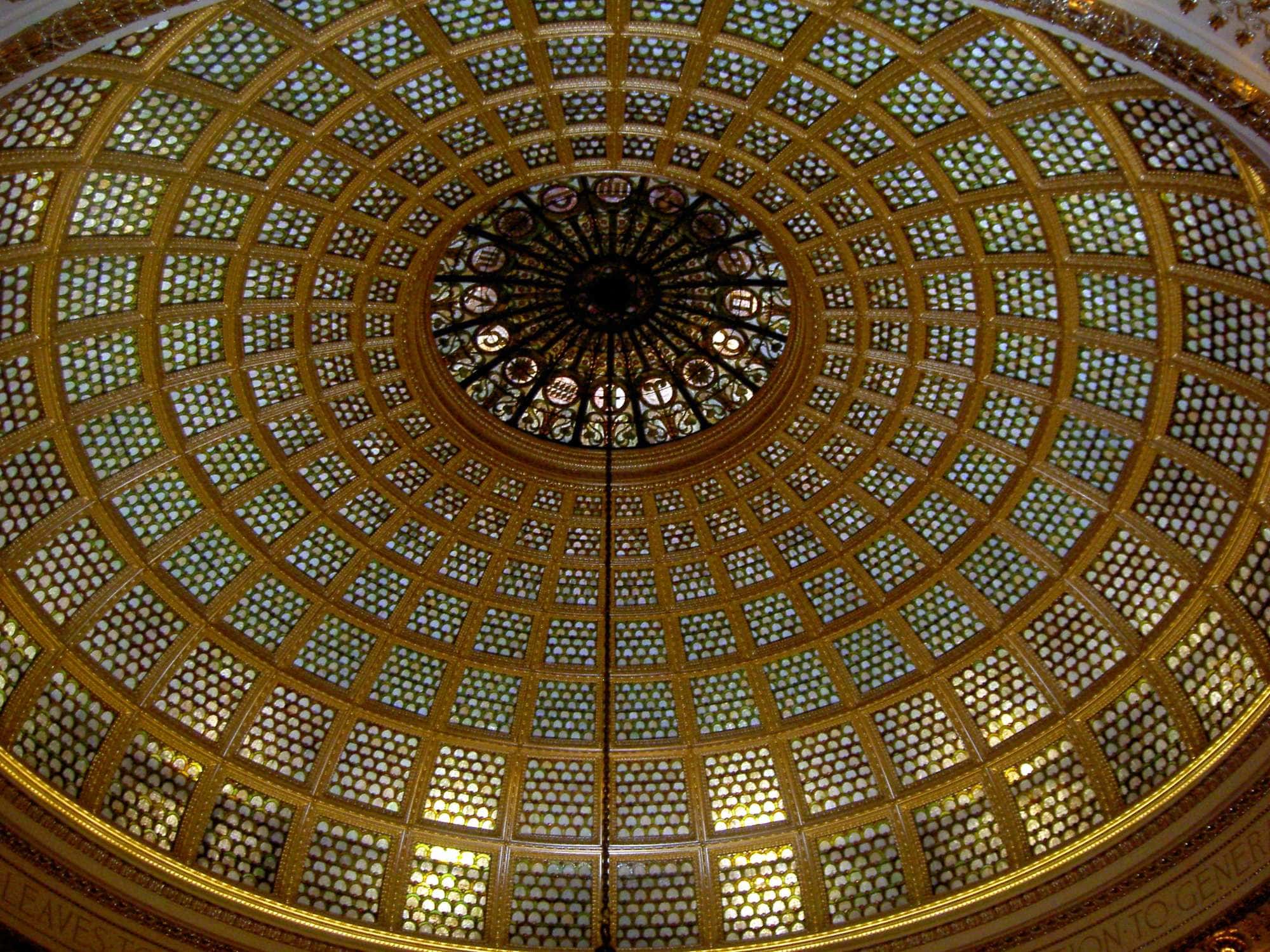
It was this American glass that Europe noticed. Tiffany’s company supplied windows, mosaics, lamps and whole interiors to churches, hotels, houses and public buildings, and in 1893 showed a chapel at the World’s Columbian Exposition in Chicago that is now in the Morse Museum in Florida. The glass dome of 1897 in the Chicago Cultural Center is a rare chance to see the scale of work being done for public buildings in the period.
The Prairie School and the home
Not all American glass of the period was religious or ornate. In the Midwest, Frank Lloyd Wright designed abstract leaded windows for houses such as the Dana-Thomas House and the Robie House, in which a pattern of clear glass with touches of colour ran as a band along a wall. This was a domestic glass, made for ordinary rooms, and it is one reason stained and leaded glass remained part of American homes. The surviving examples can be found on the trail of stained glass in the USA.
The twentieth century
- Early twentieth century. Large new cathedrals, such as Washington National Cathedral, were glazed in traditional medieval-style glass, made by workshops that revived older methods.
- 1950s. Dalle de verre, a method of setting thick slabs of coloured glass in concrete or resin, was brought to American studios after French windows made in this way were shown in Philadelphia in 1950. The first American installation was made in California in 1954.
- 1960s. The studio glass movement began, in which artists worked with molten glass in small studios. It is told in The History of Fused and Kiln Formed Glass.
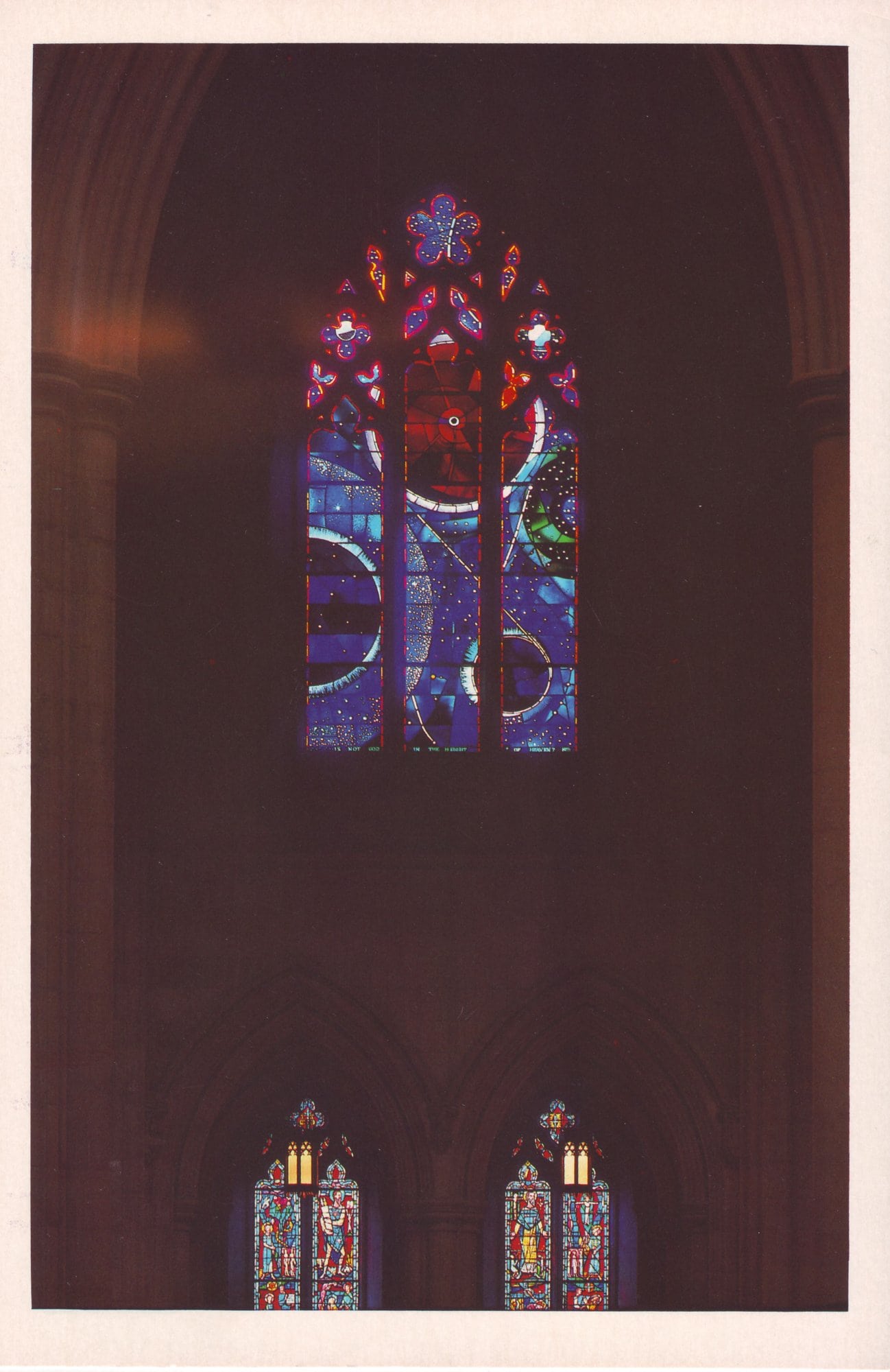
- 1970s. Two well-known windows date from the decade: the Space Window of 1974 at Washington National Cathedral, and Marc Chagall’s America Windows of 1977 in the Art Institute of Chicago, made for the bicentennial.
Stained glass in America today
American makers now work in every method described on this site, from leaded and bevelled panels to fused and kiln formed glass, and architectural glass is used in homes, restaurants, hotels and public buildings as well as in churches. The European makers who once supplied the American market are still active, which is why the story of glass in the United States cannot be told without Britain and the rest of Europe.
Related pages
- A Short History of Stained Glass
- Stained Glass in the USA: Places to See
- Louis Comfort Tiffany
- John La Farge
- Frank Lloyd Wright
- Studying Glass in the USA
- Where Is the Oldest Stained Glass in the World?