
The glass a maker can buy shapes what can be built with it. Medieval windows are built of small pieces because medieval glass came in small, uneven sheets. Victorian decorators could work in large panes because the manufacture of sheet glass had changed. The main processes are described below in rough order of introduction.
Crown glass
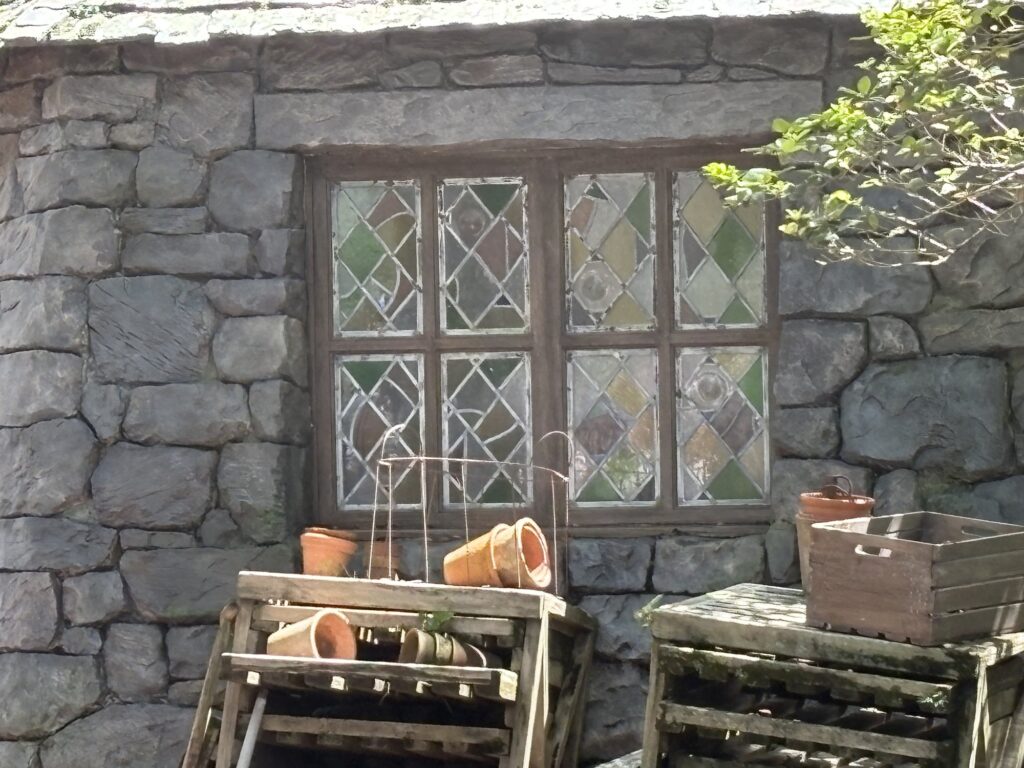
A glassblower blew a bubble, opened it and spun it quickly until it flattened into a disc. The result was bright and had a fire-polished surface, but it was slightly distorted and the round shape wasted glass when cut into rectangles. The centre of the disc kept a thick mark where the rod had been attached, called the bullion, or bullseye. Bullions are still used for decorative effect in pub windows and traditional leaded lights. The St Helens glassworks began as the St Helens Crown Glass Company, which started production in 1826.
Broad sheet and cylinder glass
A cylinder of glass was blown, cut along its length and flattened in a furnace into a sheet. This produced larger rectangular panes with less waste than crown, and later machines drew cylinders of great height. The flattening could mark the surfaces, which gives some cylinder glass the faint ripples that are characteristic of old windows. Hand-made antique glass for stained glass is still made this way.
Plate glass
Plate glass was cast, then ground and polished to a flat transparent surface. It could be produced in large and thick sheets, but the cost was high until the middle of the nineteenth century. The abolition of the glass tax in 1845 and the window tax in 1851 made it affordable. Within a few years large plain panes were being used in shops, public buildings, pubs and homes, and decorative techniques such as brilliant cutting and acid etching developed to decorate them.
Drawn sheet and rolled glass
In the drawn sheet process, glass was pulled upwards from a molten bath through a tall tower and cooled as it rose. The sheet was clear but slightly distorted. Rolled glass, where molten glass is passed between rollers, produced the patterned and textured glasses that became very popular in Victorian and Edwardian buildings, and it is the basis of most of the cathedral and opalescent sheets sold to stained glass makers today. The roller can impress a texture such as hammered, ripple or granite.
Patterned glass for leaded lights
Rolled patterned glass has been made at St Helens, Lancashire, since 1852, and the range is still made there. Many of the clear textured sheets that leaded light makers use come from it, with patterns such as Arctic, which dates from 1907, as well as Stippolyte, Flemish, Cotswold, Autumn, Sycamore and Minster. They are the clear and obscure textures seen in doors, side windows and bathroom lights, and they are also sold toughened and laminated. The sheets are made in 4 mm and thicker, whereas much coloured sheet glass is nearer 3 mm, so 4 mm patterned glass is leaded with came that has a deeper channel. Coloured glass for stained glass work is mostly made by specialist makers, not on these lines.
Float glass
In the float process, molten glass is poured onto a bath of molten tin and spreads out into a perfectly flat ribbon. It was introduced by a St Helens glassmaker in the late 1950s and replaced plate and drawn sheet within two decades. It is the plain, flat glass of modern windows, and it is the base glass for etched, bevelled and fused work today.
Toughened glass
Thermal toughening heats a sheet of glass and cools its surfaces quickly so that the outer layers are under compression. The effect of rapid cooling on glass was noticed in the seventeenth century, and toughened glass became commercially available in the 1930s. When it breaks it crumbles into small blunt pieces instead of sharp shards, which is why it is used where people might fall against glass. Toughened glass cannot be cut or drilled after it has been treated, so every shape, hole and edge has to be completed beforehand. This has had a major effect on decorative glass, because traditional leaded lights cannot be toughened and a decorative panel in toughened glass has to be built differently. See where overlay stained glass came from.
What this meant for stained glass
- Small sheets of hand-made glass meant small pieces and leading.
- Cheap plate glass meant large decorated panes in pubs and shops, and a market for etching and cutting.
- Rolled glass supplied the textured and opalescent sheets used by artists from the late nineteenth century.
- Float and toughened glass made flat, strong panels possible, and shaped modern decorative glass.
More glass history
- A Short History of Stained Glass
- Medieval Stained Glass and the Origins of Leaded Lights
- How Window Glass Was Made: Crown, Cylinder, Plate and Float
- Stained Glass from the Gothic Revival to the Twentieth Century
- Opalescent Glass, Tiffany and the Copper Foil Method
- The History of Brilliant Cut and Bevelled Glass
- The History of Acid Etched Glass
- The History of Sandblasted and Deep Carved Glass
- The History of Fused and Kiln Formed Glass
- Where Overlay Stained Glass Came From
Terms are explained in the Glass Glossary. The tools and methods used today are covered in Glass Tools and Equipment, and the types of glass themselves under Glass Types.
The thick centres of crown glass discs became bullseyes, and small spun discs became roundels. See Roundels and Bullseyes in Leaded Lights.