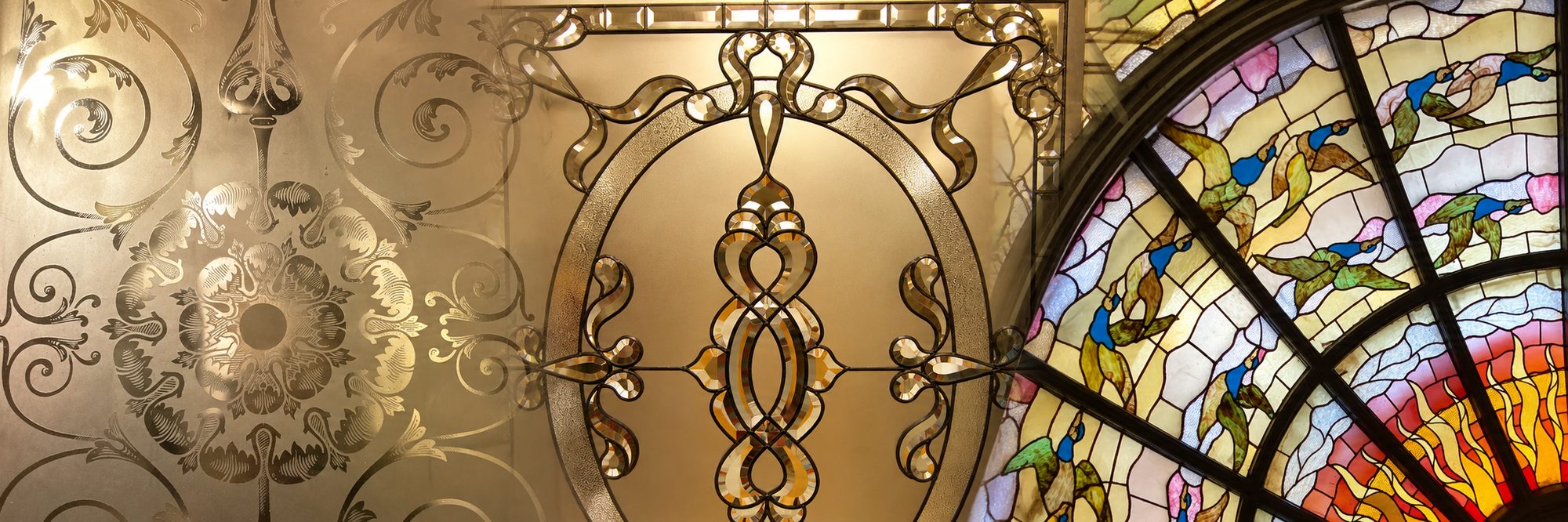

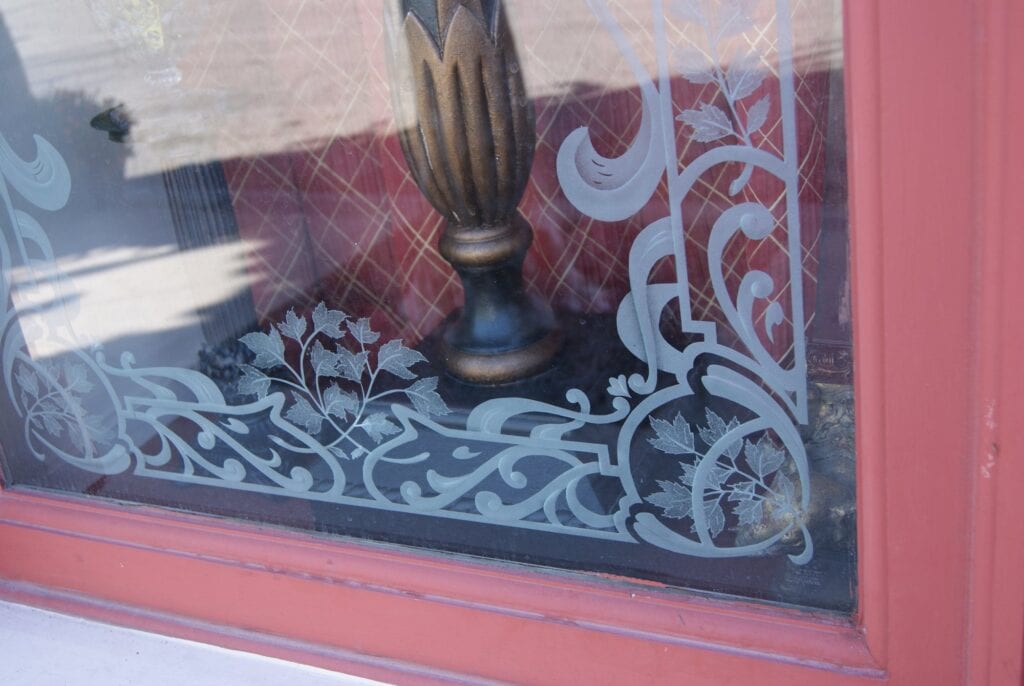
Acid etching removes the surface of glass wherever it is exposed to hydrofluoric acid, leaving a frosted, translucent finish. The parts that are protected by a resist stay clear and polished. It is the technique behind most of the decorative frosted glass in Victorian and Edwardian pubs, shops and houses.
Early methods
In the early nineteenth century glass workers made their own hydrofluoric acid. The first method used only the fumes of the acid. The design was painted on with an acid-resistant coating, traditionally Brunswick black, and the fumes frosted the exposed glass. This was later replaced by liquid acid. A wall of tallow around the edge of the sheet held the acid on the surface for about an hour, and etched it to a depth of roughly half a millimetre.
Variations
- Clear etching, where the glass is etched and stays clear and polished in the pattern.
- Emboss and ground, which combined the acid with grinding of the raised areas using emery.
- Stipple embossing, using fine mica flakes in the resist to give a sparkling texture.
- White acid, in which hydrofluoric acid was mixed with washing soda to give a dense white frost. Dilute acid then gave softer satin tones, in a process called French or triple embossing, and was often combined with brilliant cutting.
The Victorian boom
From the 1860s etched glass was common on shop fascias, advertising boards and delivery vans, and sign writers took up the craft. Pubs used etched glass for windows, screens and doors, often with lettering naming the rooms, such as saloon, snug and smoke room. The combination of etching, brilliant cutting, silvering and gilding is what gives the great Victorian pubs their appearance, and many of these are listed buildings today.
Danger and decline
Hydrofluoric acid is hazardous: it burns deeply and can poison. Acid was later bought ready made in containers, but the process remained dangerous, particularly without proper fume extraction. Sandblasting, which achieves a similar frosted effect without acid, became widespread in the twentieth century and replaced acid etching in most workshops. See sandblasted and deep carved glass. Acid etching survives today in specialist workshops, in industrial products and in the restoration of old panels, and in a milder form as the satin finish on mass-produced glass. Under the microscope the two techniques are different: acid etching leaves a smooth, even surface, while blasting chips the surface and leaves fine cracks that can trap dirt.
Etched panels can be recognised in the gallery, where several Victorian pub windows are shown.
Skills that have been lost
In Victorian and Edwardian Britain, many glass companies produced acid etched, embossed, hand painted and kiln-fired decorative glass, and most large towns had a decorator who could do the work. Mass production and lower-cost imports reduced demand through the twentieth century, workshops closed, and some of these skills were lost. Skilled glass artists are harder to find today and are in demand, especially for restoration. The overview on the history hub covers this in more detail.
On this site, see the glass type page for Acid Etched Glass.
More glass history
- A Short History of Stained Glass
- Medieval Stained Glass and the Origins of Leaded Lights
- How Window Glass Was Made: Crown, Cylinder, Plate and Float
- Stained Glass from the Gothic Revival to the Twentieth Century
- Opalescent Glass, Tiffany and the Copper Foil Method
- The History of Brilliant Cut and Bevelled Glass
- The History of Acid Etched Glass
- The History of Sandblasted and Deep Carved Glass
- The History of Fused and Kiln Formed Glass
- Where Overlay Stained Glass Came From
Terms are explained in the Glass Glossary. The tools and methods used today are covered in Glass Tools and Equipment, and the types of glass themselves under Glass Types.