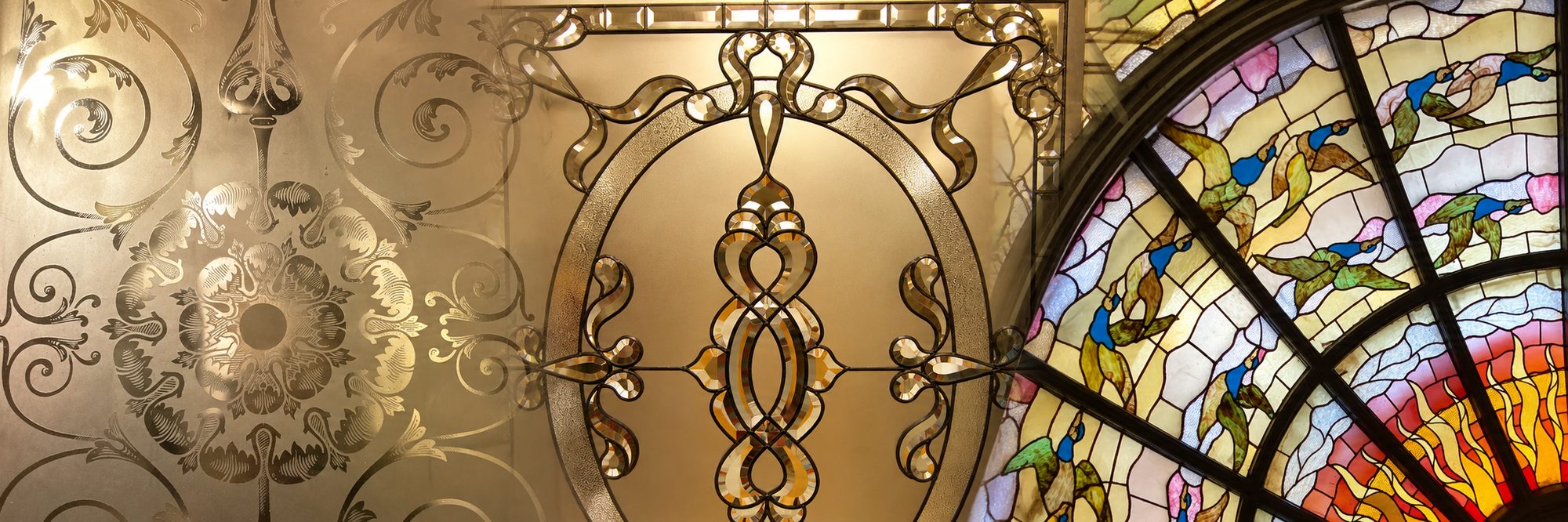

A bevel is the angled, polished edge ground around a piece of glass. Light entering the sloped edge is split into the colours of the spectrum, so bevelled glass throws small rainbows across a hall or landing on a sunny day. It looks rich without any colour, which is why it has been a favourite for front doors and sidelights for well over a century. Examples can be discovered in the gallery, and a panel can be commissioned to fit any door or sidelight.
Where bevelled glass is used in the home
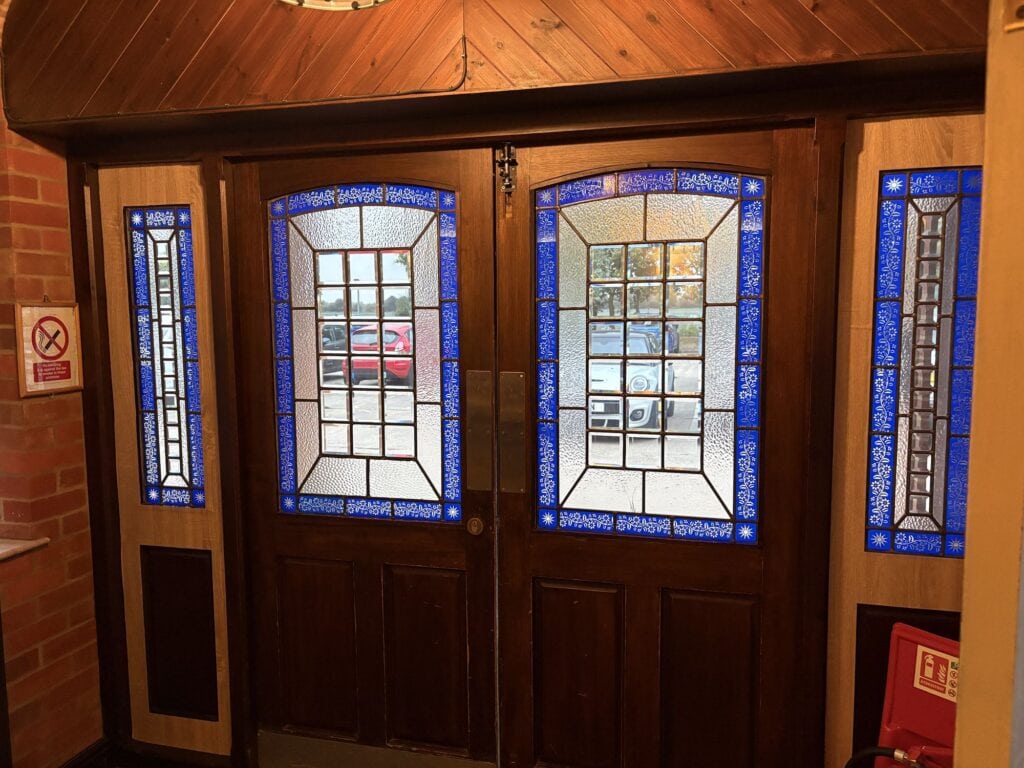
- Front doors and sidelights. A central cluster of bevels, or a panel with a polished border, brings light into the hall and gives the entrance a distinctive character.
- Fanlights and internal doors. Bevels carry light between rooms while keeping the doors and screens decorative.
- Windows. Landing, stair and cloakroom windows suit bevelled panels, particularly where the glass catches direct sun.
- Furniture. The doors of display cabinets, dressers and other glazed furniture are often fitted with bevelled glass.
- Leaded designs. Individual bevels in squares, rectangles, triangles, diamonds and curves are arranged as clusters within a leaded light, usually surrounded by clear or textured glass.
Traditional and overlay bevelled glass
Bevelled glass is a leaded light, and it is produced in two ways. In the traditional form, each bevel is set in lead came. In the overlay form, the bevels are bonded to a single sheet of glass, which can be ordinary or toughened, and lead is applied around them, together with any overlay colour or texture, to give the leaded look on a rigid base. The page how bevelled glass is made explains the grinding, polishing and bonding stages.
The difference matters when double glazing is needed. A traditional leaded bevelled panel has to be encapsulated: it is sealed inside the cavity of the double glazed unit, between two sheets of glass, where it cannot be touched. In an overlay panel the bevels and lead sit on the outside of the unit, so the bevels can be touched and felt, and the unit can be supplied as single, double or triple glazed.
What suits which home
- Victorian and Edwardian homes. Clusters of bevels in a leaded door or screen are the classic choice, often framed by a coloured or textured border.
- 1930s homes. Geometric bevel arrangements and sunburst designs reflect the period.
- Modern homes. A bevelled border, or a small cluster set in a plain panel, adds sparkle without looking ornate.
Choosing a design
- Privacy. Bevelled glass is clear, so where the view into the hall matters, combine it with textured glass, an etched panel or a coloured border.
- Scale. Large clusters create a bold feature, while small bevels add a quiet sparkle.
- Light. The effect depends on the light. Bevels show best in doors and windows that receive some direct sun or are brightly lit from inside.
- Framing. Dark lead gives a traditional look, while a thin, pale frame looks lighter and more modern.
- Safety. Glass in and beside doors is a critical location under the building regulations. Ask the supplier how the glass will meet the current requirements.
Looking after bevelled glass
Bevelled glass needs only normal cleaning with a soft cloth and a mild glass cleaner. The general guidance for every type is on the page how to clean decorative glass safely.
Related pages
- Decorative bevelled glass
- How bevelled glass is made
- Leaded lights
- Glass for a front door
- The history of brilliant cut and bevelled glass
- Glass Glossary
Published 20 October 2026 · Last updated