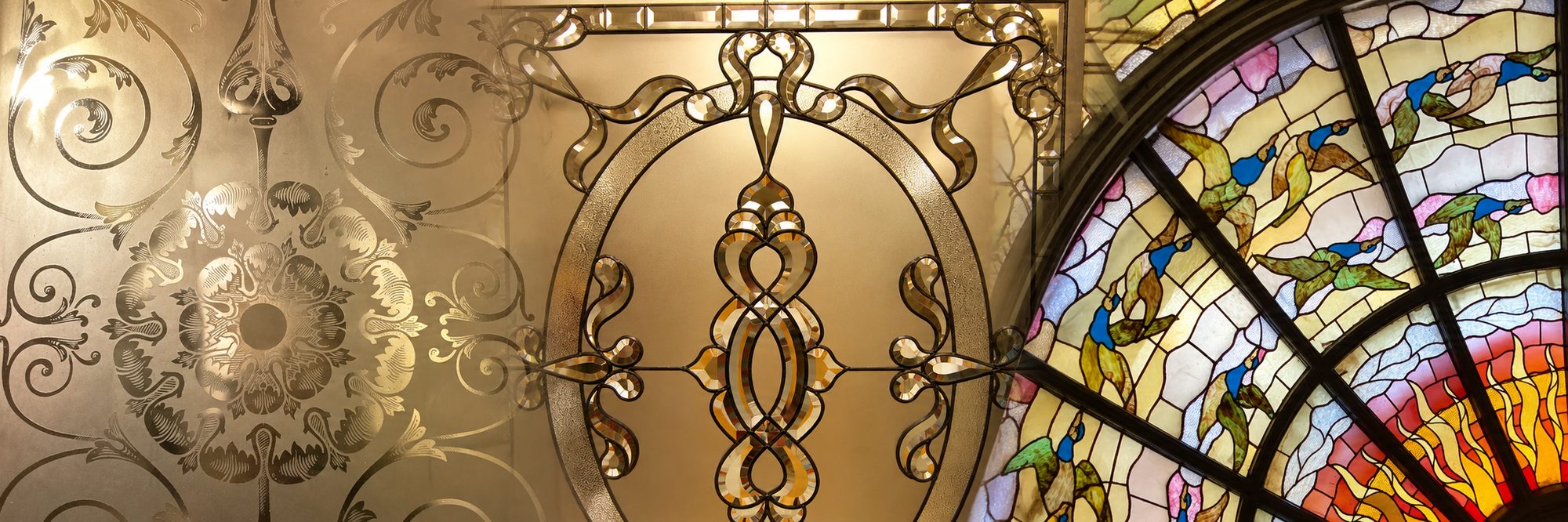

Decorative glass is more delicate than plain window glass. The wrong cleaner can strip paint, damage a film, dull an etched surface or attack the lead. This page gives the safest approach for each type. The general rule is the same throughout: use the gentlest method that works, test it on a small hidden area, and if the glass is old, painted or valuable, ask a specialist first.
Rules for every type
- Start dry. Dust with a soft brush or a dry microfibre cloth before using any water. Grit rubbed across glass scratches it.
- Use clean water and a very small amount of pH-neutral washing-up liquid. Distilled or de-ionised water leaves no marks and is best for old glass.
- Use soft materials. Soft cotton, microfibre cloths, soft brushes and cotton buds. Wring cloths out until barely damp.
- Work from the top down and dry the glass with a clean, lint-free cloth.
- Avoid ammonia, vinegar and other acids, solvents, abrasive creams and powders, scouring pads, wire wool, razor blades, steam cleaners and pressure washers. Each of these can cause damage that cannot be reversed.
- Do not drench the window. Water getting behind lead, putty or cement loosens it.
- Protect yourself. Lead is toxic. Wear gloves, do not eat or drink while cleaning, and wash your hands afterwards (see Working Safely With Glass). Take care with ladders and tall windows.
Traditional stained glass and painted glass
Painted details are fired on, but over time the paint can become fragile, particularly on old windows. Test by lightly dusting. If paint flakes, smudges or lifts, stop.
- Dust gently with a soft, dry brush or a feather duster. Do not let a duster rub painted glass.
- If more is needed and the paint is sound, use a barely damp cotton bud or cloth with distilled water and a trace of mild detergent, rolling it instead of rubbing.
- Do not polish painted glass.
- For medieval or valuable glass, a trained conservator should do any cleaning. If in doubt, do not clean.
Outside, algae, lichen, mineral crusts and bird droppings are best removed by specialists, and bird droppings are a health risk.
Leaded lights
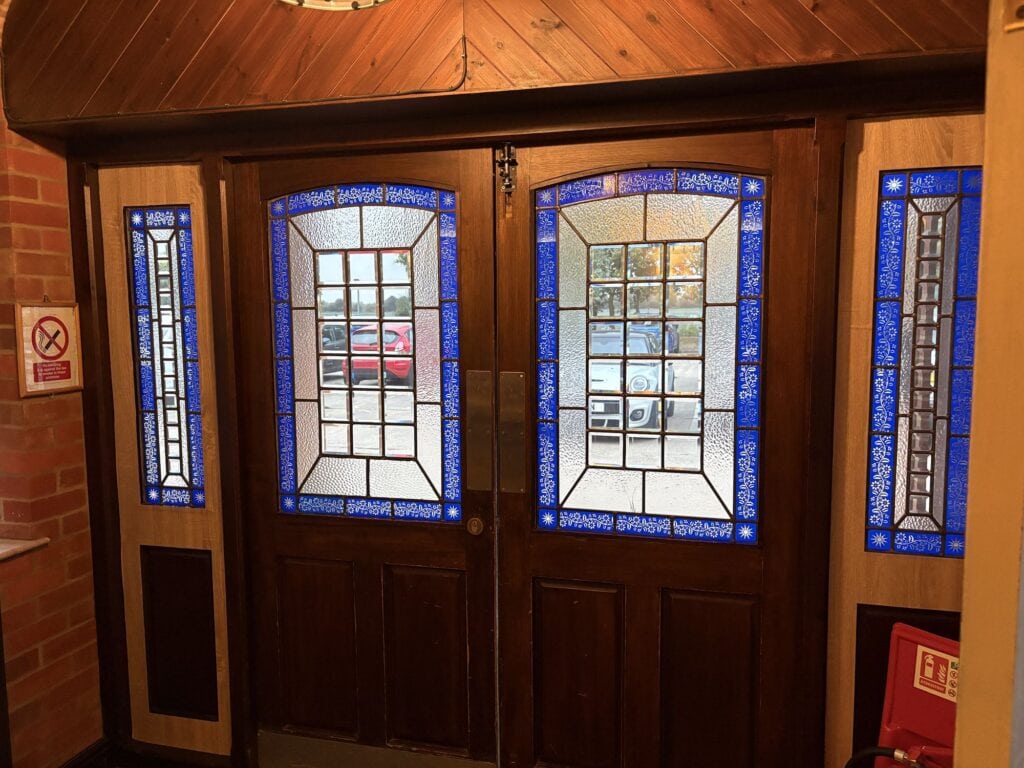
Unpainted leaded lights, such as those in doors and house windows, can be cleaned more freely.
- Brush off dust, paying attention to the corners where it collects.
- Wipe the glass with a damp cloth and mild detergent, keeping the cloth out of the lead and putty as far as possible.
- Dry thoroughly.
- Leave lead alone, or wipe it gently with a dry cloth. The grey colour is a protective oxide. Do not scrub it or use metal polish.
- Watch for warning signs: bowing or sagging panels, daylight showing through the lead, cement missing or crumbling, loose putty and white powdery bloom on lead or glass. These need a specialist.
Overlay stained glass
Overlay is made of toughened or standard glass with a lead line on the front and colour film on the back. The glass is robust, but the lead and film are not.
- Clean the face with lead using a soft cloth or soft brush and mild soapy water. Follow the lines instead of scrubbing across them.
- Coated lead resists fingerprints and cleaners better than bare lead, but it can still be scratched or dulled by abrasives and solvents.
- In a sealed double glazed unit, the film is inside and does not need cleaning.
- If the film is exposed on a single glazed panel, wipe it with a damp soft cloth only. Do not use solvents, blades, abrasives or ammonia-based products. They can lift the edges of the film or dissolve its adhesive. Follow any guidance supplied by the maker.
- Do not use steam or hot water, which can soften adhesive.
Bevelled glass and brilliant cut glass
- The bevels and cuts hold dust and grease. A soft brush, such as a soft paintbrush or toothbrush, will lift dirt out of the grooves.
- Wash with warm water and mild detergent, rinse and dry with a lint-free cloth. Dry thoroughly to avoid water marks, because the angled surfaces show them clearly.
- Brilliant cut glass is polished by hand or by acid, and abrasives will dull the polish and scratch it.
- Clean the glass and not the lead, if the bevels are set in lead.
- Handle large bevels with care, because they are thick and heavy and the edges are sharp.
Acid etched glass
The surface of acid etched glass is a smooth frost, and it shows fingerprints and oils.
- Clean the whole pane, not just the mark, because spot cleaning can leave halos.
- Use plenty of clean warm water with a drop of mild detergent and a soft sponge or cloth, with even, medium pressure.
- Rinse thoroughly and dry with a soft, lint-free cloth.
- Never use abrasives, scouring pads or razor blades. Do not use any cleaner containing hydrofluoric acid or fluorides. They can damage the frosted surface permanently.
- For hard water marks, a little diluted white vinegar can be used on plain glass, but not near lead, putty or painted glass, and it should be rinsed off at once.
Sandblasted and deep carved glass
Sandblasting leaves a surface that is microscopically rough, so it holds dirt, oils and fingerprints more readily than polished glass.
- Use a soft nylon brush or soft sponge and warm water with mild detergent, working in small circles over the frosted area to lift dirt out of the surface.
- Rinse well and dry with a lint-free cloth.
- Do not use wax, oily polishes or aerosol sprays that leave a film, because the residue gets into the frost.
- Deep carved panels have recesses that collect dust. A soft brush or a low suction vacuum brush will clear them.
- Some sandblasted glass is sealed or coated at the factory. Follow the supplier’s advice and avoid solvents.
Fused and kiln formed glass
- Smooth fused glass can be cleaned like ordinary glass, with warm water, mild detergent and a soft cloth.
- Textured, cast or slumped pieces collect dust in their relief, so use a soft brush.
- Avoid sudden changes of temperature. Do not pour boiling water on glass, and do not put it in a dishwasher unless the maker says it is safe.
- Table tops can be cleaned with standard glass cleaner, but it is better to use a mild detergent and wipe dry. Never drag a heavy object across a textured surface.
- On decorated pieces, check whether the design is on the surface. If it is, avoid abrasives.
Laminated, toughened and fire-resistant glass
- Clean the faces as for any glass type.
- Do not scrape toughened glass with blades or sharp tools, because surface scratches can lead to breakage.
- Keep water and detergent away from the edges of laminated glass, because edge damage can cause the interlayer to deteriorate.
- Fire-resistant glass is part of a tested system, so follow the manufacturer’s instructions before using any chemical.
When to call a specialist
- Any historic, medieval or painted window.
- White bloom on lead, bowing panels, cracked glass, missing cement or light showing through the lead.
- Corroded or pitted glass.
- Heavy staining that does not respond to mild washing.
- Anything at height.
Related pages
- Conservation and restoration
- Does coloured stained glass fade?
- Working safely with glass
- Glass types
Terms are explained in the Glass Glossary.