
Fused glass is created by heating pieces of glass in a kiln until they soften and join into a single piece. The glass does not melt into a puddle. It is taken just far enough that the edges flow together, and then it is cooled very slowly. The result is solid, with the colour and pattern built into the glass itself.
It sits next to kiln formed glass, which is the wider family of techniques that shape glass in a kiln. Fusing is the flat, joining part of that family, and a fused piece can then be shaped in the same kiln by slumping or casting.
How glass is fused
Everything starts with glass cut and arranged on a base sheet. The pieces can be sheet glass, ground-up glass called frit, or thin rods and threads called stringers. The arrangement is the design, so a fused panel is, in effect, a design painted in coloured glass, with the kiln doing the joining.
The kiln is then heated in stages, following a schedule. Three stages matter:
Tack fuse comes at the lower end of the range, around 730 to 780°C. The pieces stick together but keep their shapes and edges, so the layered texture of the design is still visible.
Full fuse goes higher, to around 800°C and above. The surfaces flatten and the pieces merge into one level sheet with rounded edges.
Annealing is the slow cooling that follows, and it is the part that cannot be skipped. Glass cooled quickly traps stress inside it and later breaks. The kiln is held at an annealing temperature for a time, and then brought down gradually. A thin piece might take several hours, and a thick piece a day or more.
The exact temperatures depend on the glass and the kiln, and they are worked out by testing as much as by tables.
Compatibility
Fusing only works if the glasses involved shrink at the same rate as they cool. That property is known as the coefficient of expansion, or COE. If two glasses with different COEs are joined, they pull against each other as they cool and crack, sometimes days later. Fusing glass is therefore sold with a COE number, such as 90 or 96, and sheets from different systems should not be mixed. For the same reason, a window pane cannot be fused to a bottle and be expected to survive.
What it looks like
Fused glass has a depth that painted or printed glass does not. Colours can be layered, so that one shows through another. Bubbles, trails of frit and irregular edges are part of its character, and some of the most striking pieces make a feature of them. It is used for panels, bowls and dishes, tiles, jewellery, and in larger architectural pieces such as screens, doors and splashbacks.
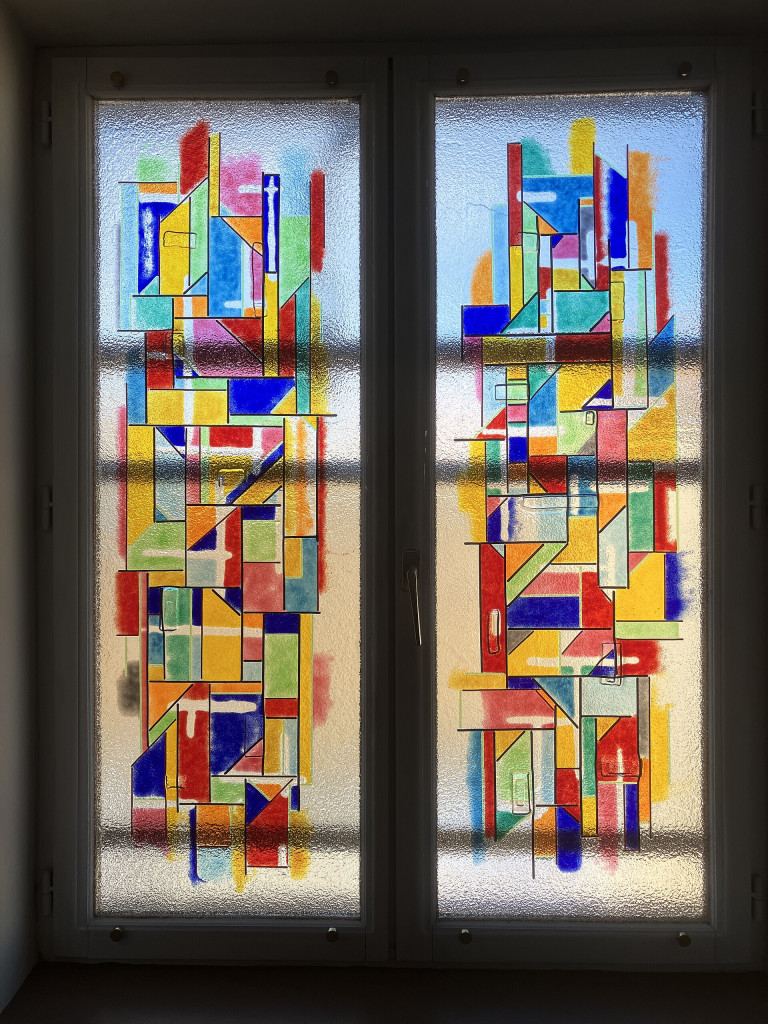
Fused glass tiles on toughened glass
Fused glass can also be produced as tiles. Pieces of cut, coloured glass are heated slowly in a kiln until they fuse into a single piece, using only glass that has been tested as compatible. The tiles can be produced in many sizes and colours. Fused tiles can then be bonded with UV-cured adhesive to a sheet of toughened safety glass, over an etched pattern that is sandblasted into the glass behind them. The result combines the colour and depth of kiln fusing with a toughened base that suits doors and windows, and the panel can be supplied single glazed or as a sealed double-glazed unit. The etched backgrounds are sandblasted, which is explained on the sandblasted glass page.
Discover more fused glass
The fused glass gallery collects photographs, with notes on each one.
Questions people ask
What is the difference between fused glass and stained glass?
Stained glass is built from separate pieces of coloured glass joined with lead or copper foil. Fused glass is joined with heat and ends up as a single piece. See traditional stained glass for the other method.
Is fused glass strong?
A properly annealed piece is as strong as ordinary glass of the same thickness. It is not toughened, so it can still crack if knocked hard or heated unevenly.
Can you fuse glass at home?
Yes, with a small kiln and plenty of patience. Use glass sold as compatible, and follow a schedule from the supplier. The working safely with glass page has the basics on eye and lung protection.
History and related reading
The History of Fused and Kiln Formed Glass. See also A Short History of Stained Glass.
Care: see How to Clean Decorative Glass Safely.
Temperatures, hold times and annealing schedules for each glass system are in Firing Temperatures and Schedules for Fused and Kiln Formed Glass.
Related glossary terms: Fusing, Slumping, Annealing, Devitrification.
Frequently asked questions
What is fused glass?
Fused glass is made by heating pieces of compatible glass in a kiln until they join into a single piece, without any lead or solder.
What is the difference between fusing and slumping?
Fusing joins pieces together, while slumping lets a sheet of heated glass sag into a mould to take its shape. Both are part of kiln formed glass.
Why does the glass have to be compatible?
Different glasses expand and contract at different rates. If they are mixed, stresses build up as the piece cools and it can crack, so manufacturers supply glass designed to match.
What temperatures are used?
They depend on the glass and the effect wanted, from a gentle tack fuse to a full fuse. The article on fused glass firing temperatures and schedules explains the ranges.
Help improve this page
Have you worked with this type of glass, or have specialist knowledge or experience you would like to share? Corrections, additional information and practical observations that could help make this guide more useful are welcome. Photographs of this kind of work or how it is produced are welcome too.
Suggest an improvement
Photographs of fused glass
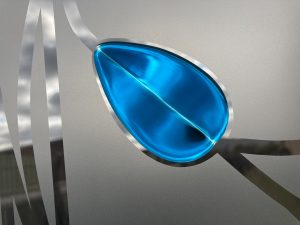 Blue Fused Glass Leaf Set in Frosted Glass with Mirrored Scrolls
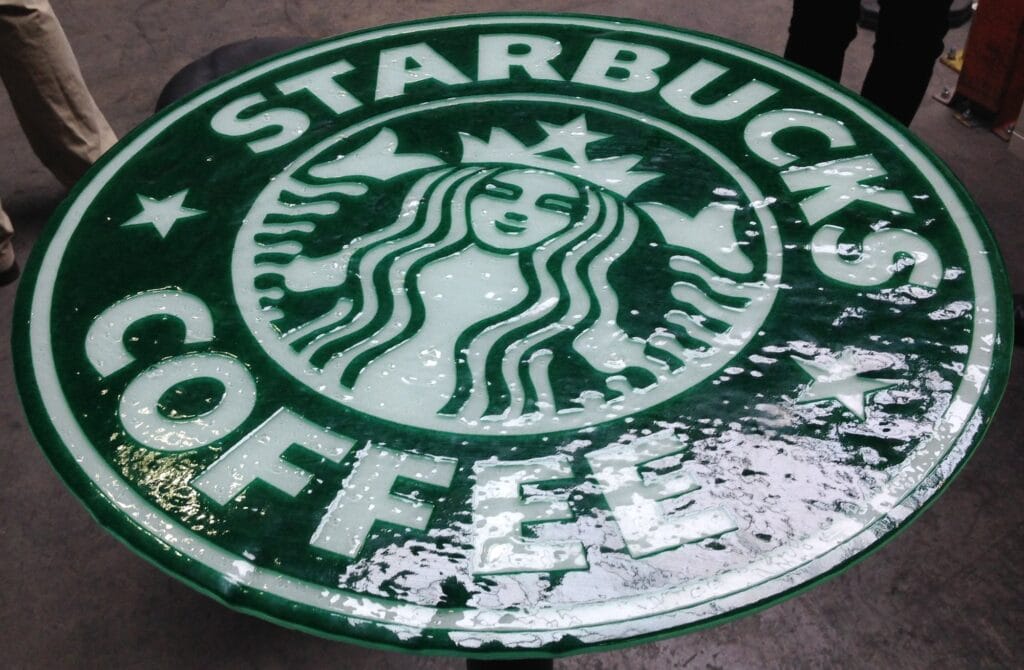
 Three Fused Glass Round Table Tops with Logo Designs
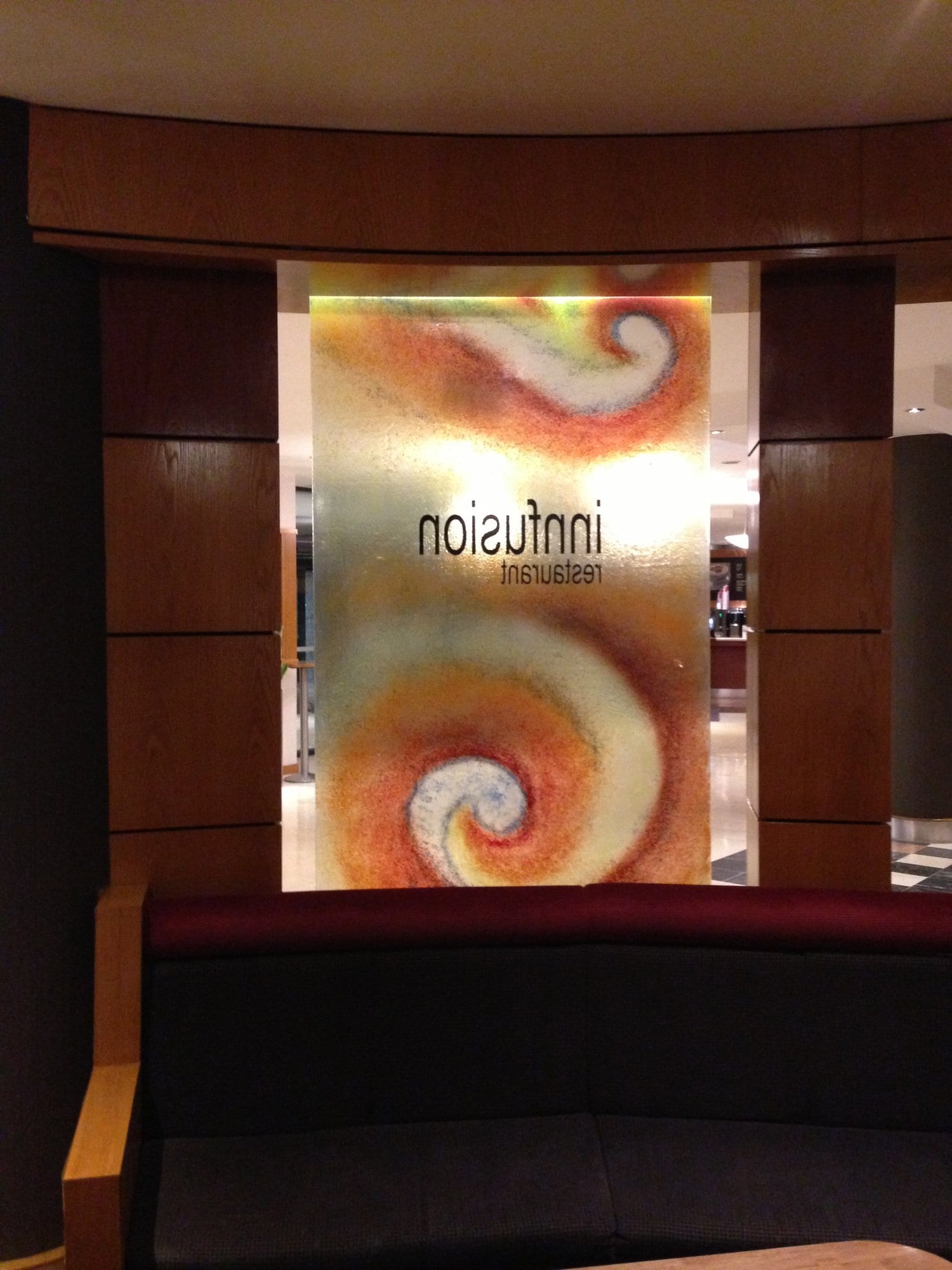
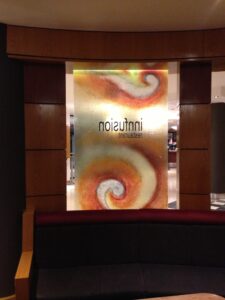 Orange Swirl Panel, Fused Glass
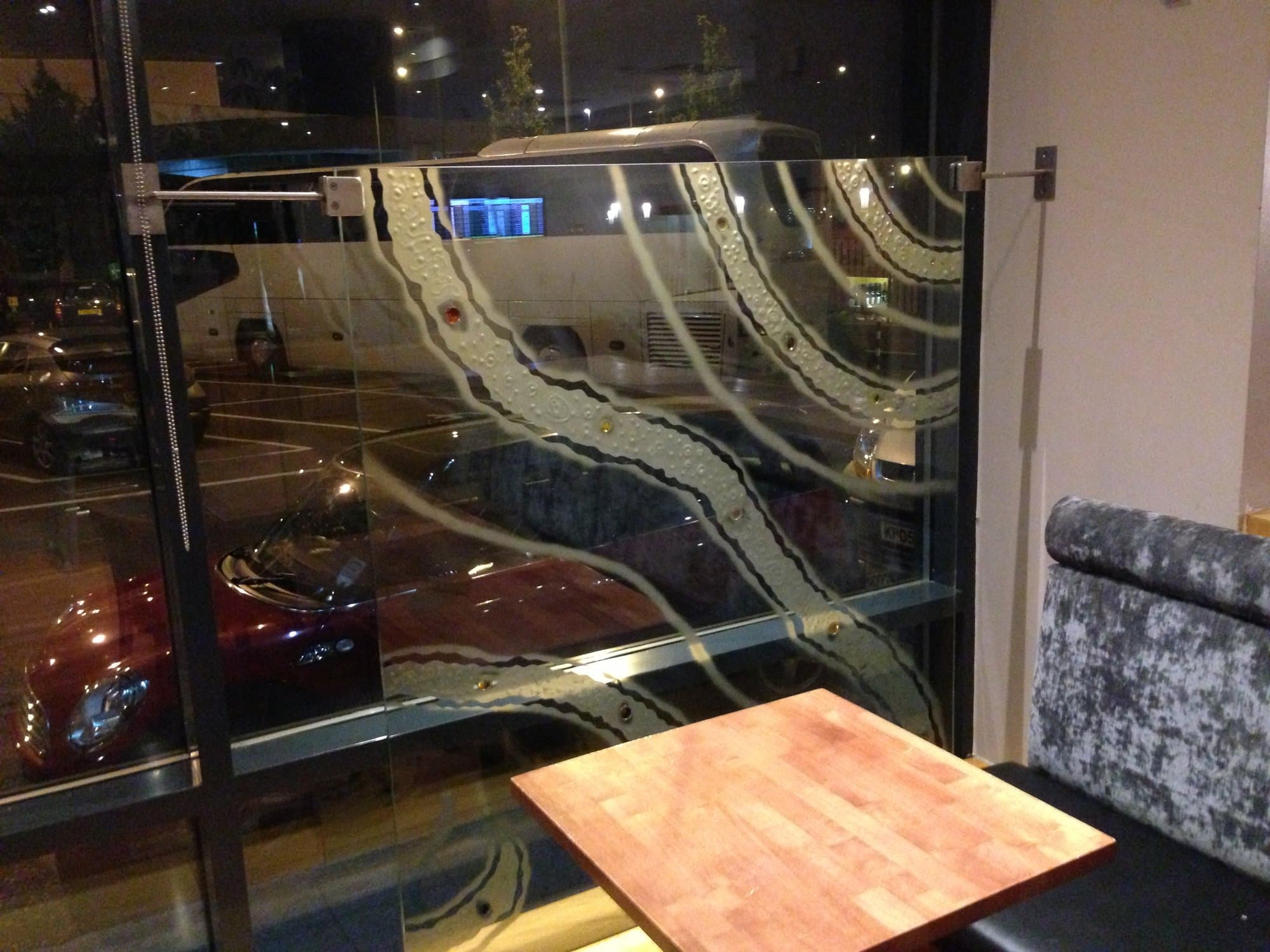
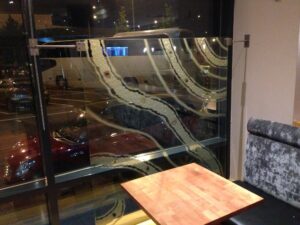 Glass Screen with Ribbon Pattern and Glass Jewels, Fused Glass
See every photograph of fused glass in the gallery →
Published 8 July 2026 · Last updated