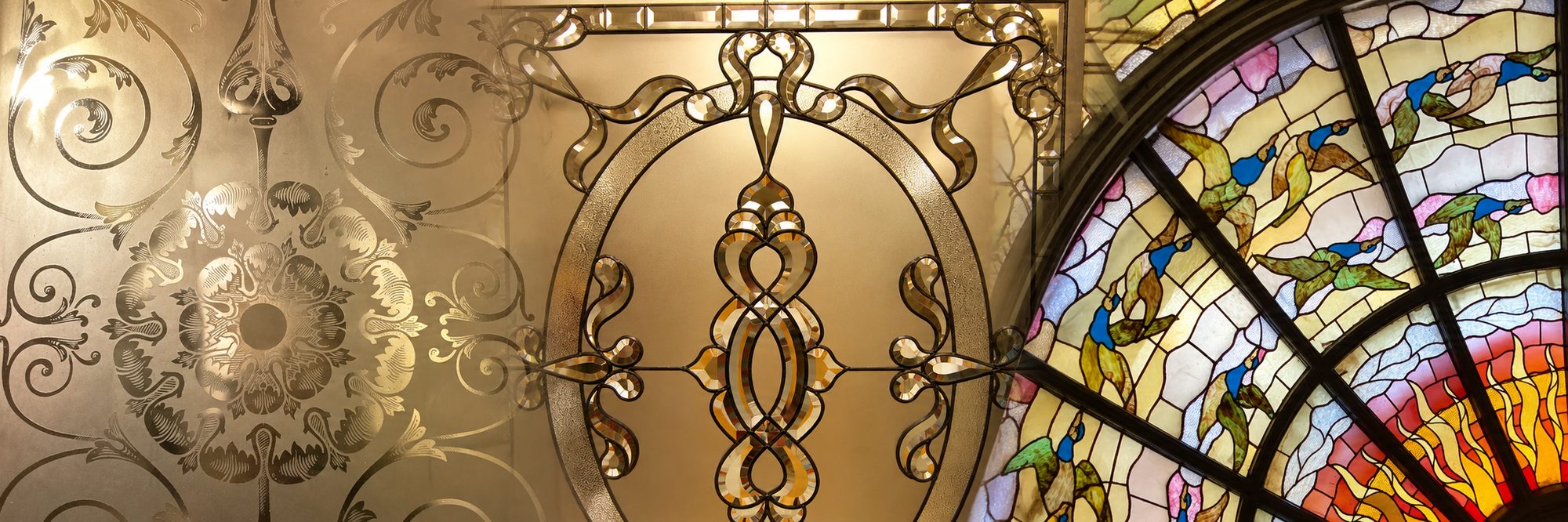

Kiln formed glass is any glass that has been shaped by heat in a kiln instead of being cut and joined cold. Fusing, slumping, casting and several related techniques all come under the heading. What they share is that the glass is taken up to a temperature where it softens, takes the form of its surroundings, and is then cooled slowly so that it holds the shape without cracking.
Most people see the results without realising it. The thick, textured panels in a restaurant wall, the heavy sculptural block on a shelf, and the curved dish on a table are all kiln formed.
The main techniques
Fusing joins flat pieces of glass into one. The process is described on the fused glass page, and in practice much kiln forming starts as a fused sheet.
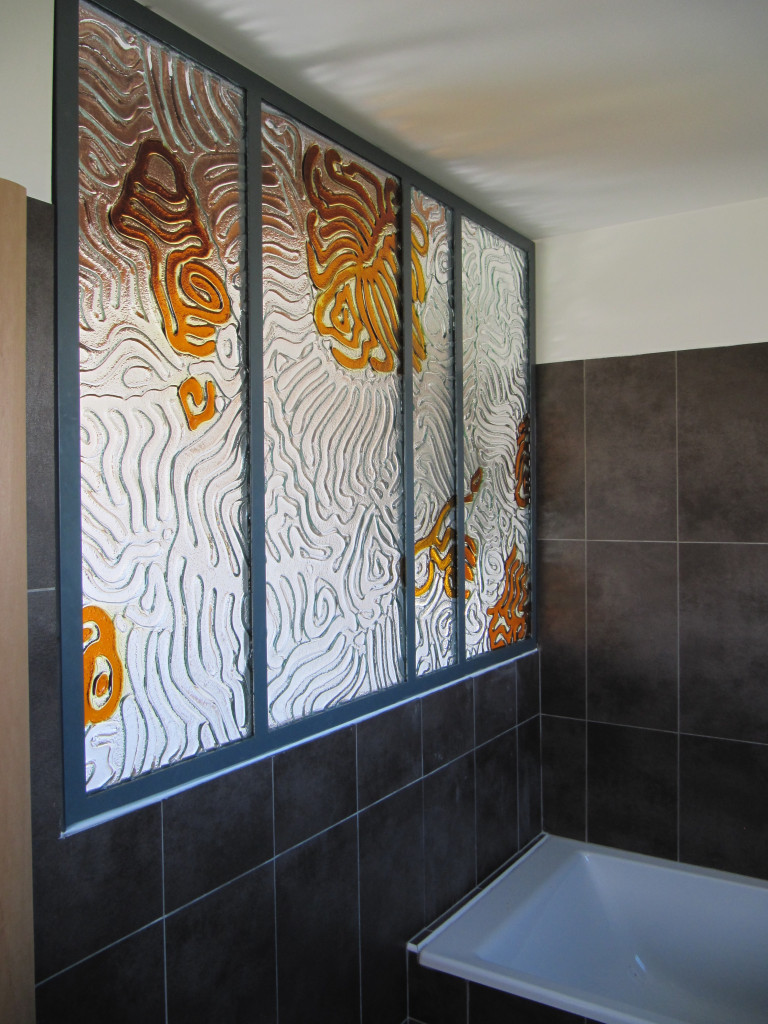
Slumping bends a flat sheet over or into a mould. The glass is heated until it sags into the mould, then cooled. Bowls, curved panels and wavy decorative sheets are produced in this way. The temperature is lower than for fusing, so the surface keeps its sheen.
Casting forms glass by filling a mould with molten or softened glass. In lost-wax casting, a wax model is surrounded with a heat-resistant mould, the wax is melted out, and glass is melted into the space it leaves. Casting can produce thick, three-dimensional objects that no other method can. Glass crushed into a mould and heated until it fuses is called frit casting, and a very fine version using glass paste, built up in layers, is called pâte de verre.
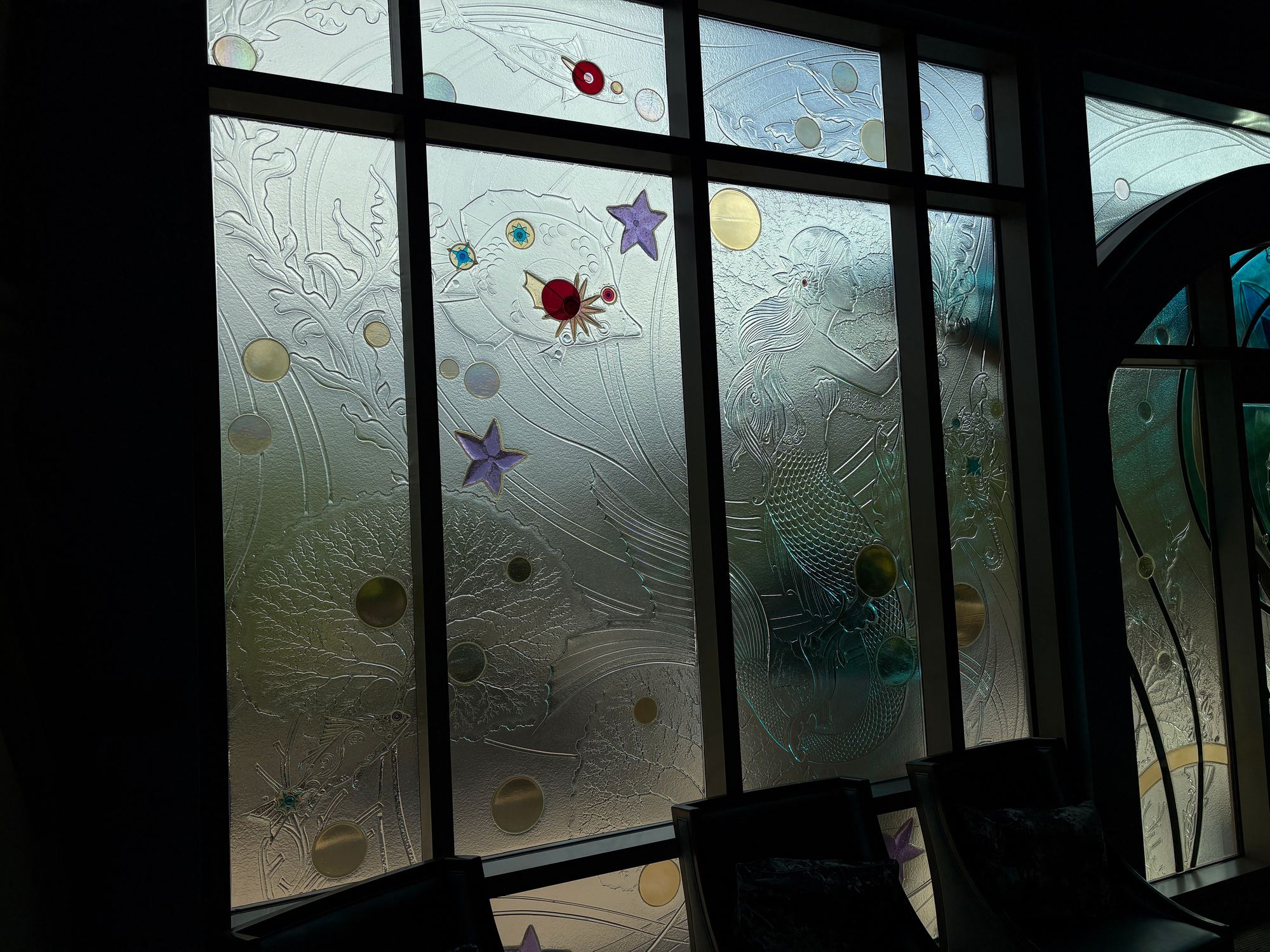
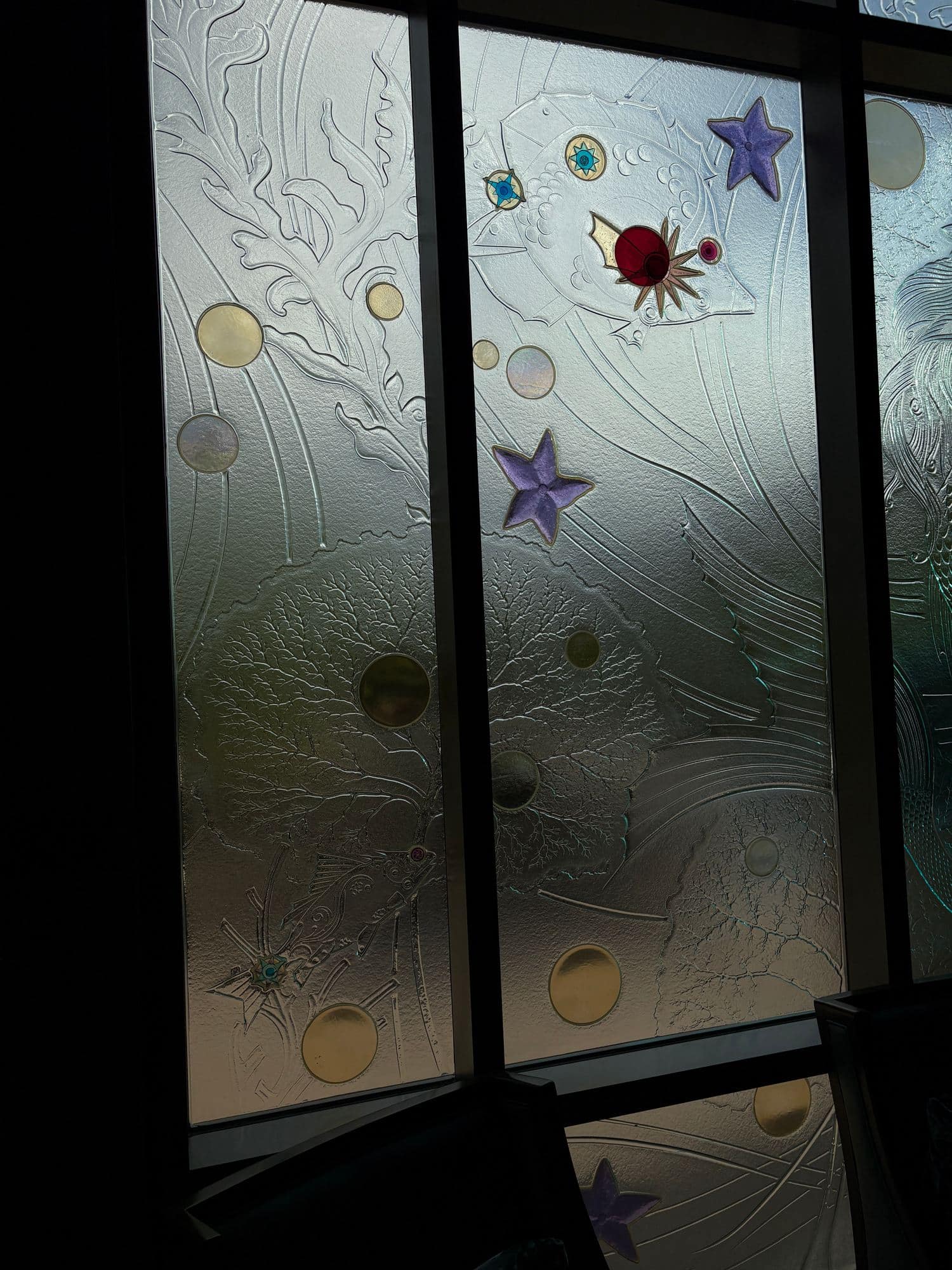
Texturing uses the same process on a flat scale. A sheet of glass is laid on a patterned mould, or has frit or fibre paper laid on it, and heated until it picks up the pattern. The result is a panel with a relief surface, such as a ripple, a cracked-ice texture or a sea-creature pattern.
Why slow cooling matters
Glass is a poor conductor of heat. When it cools, the surface hardens first, and the inside is still hot and contracting. Without enough time, that mismatch creates stresses that show up later as cracks. Kiln forming deals with this by annealing, which means holding the glass at a set temperature so that the stresses even out, and then cooling it in stages. Thin sheet may need an hour or two. A thick casting can need days, or even weeks.
What it looks like
Kiln formed glass has a weight and handmade character that machine-produced glass lacks. Surfaces can be rippled, bubbled or deeply modelled, and edges are often softly rounded where the glass has flowed. Light passing through a thick piece is bent and scattered, which gives a depth that thin sheet cannot match.
Where it is used
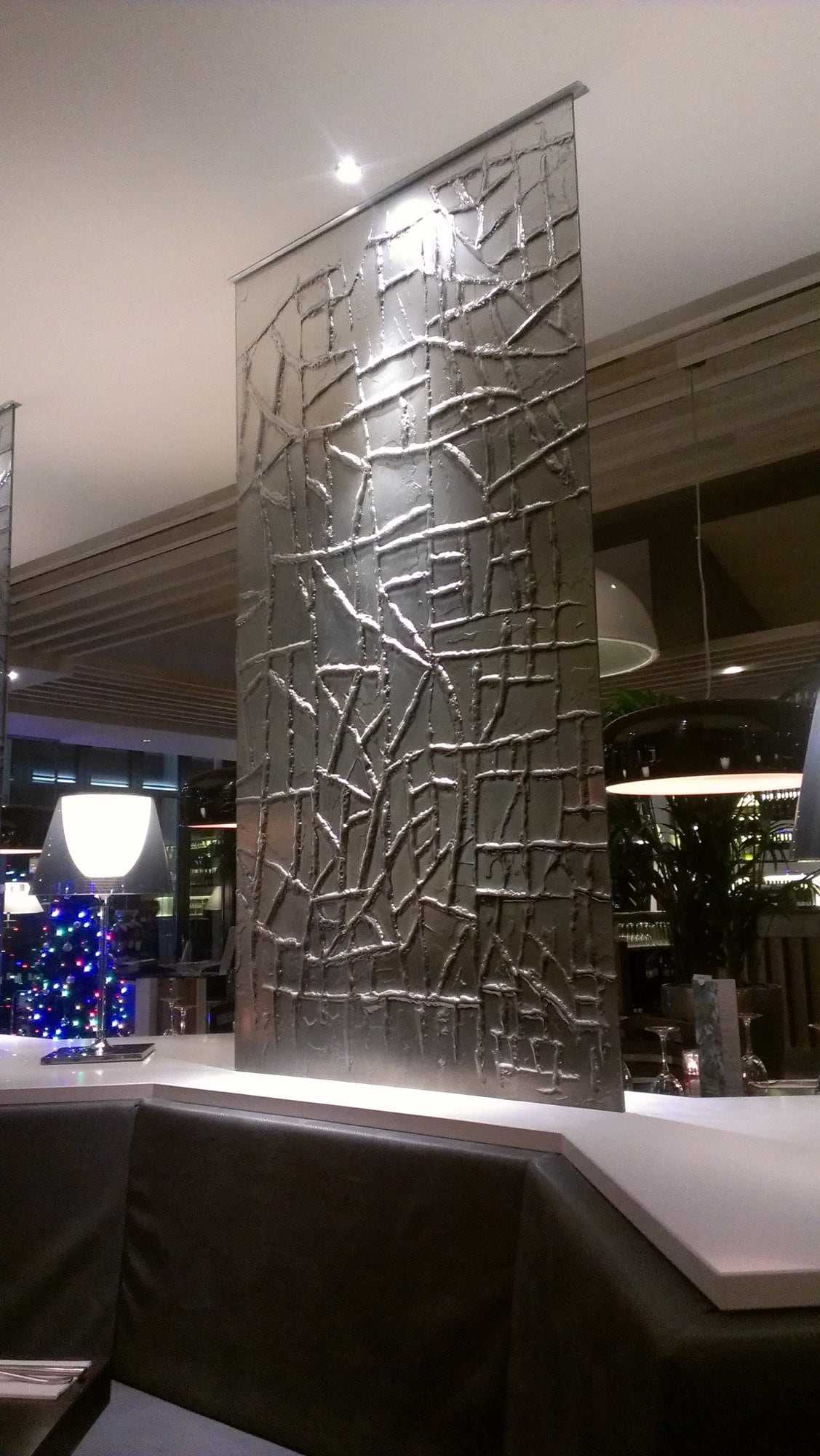
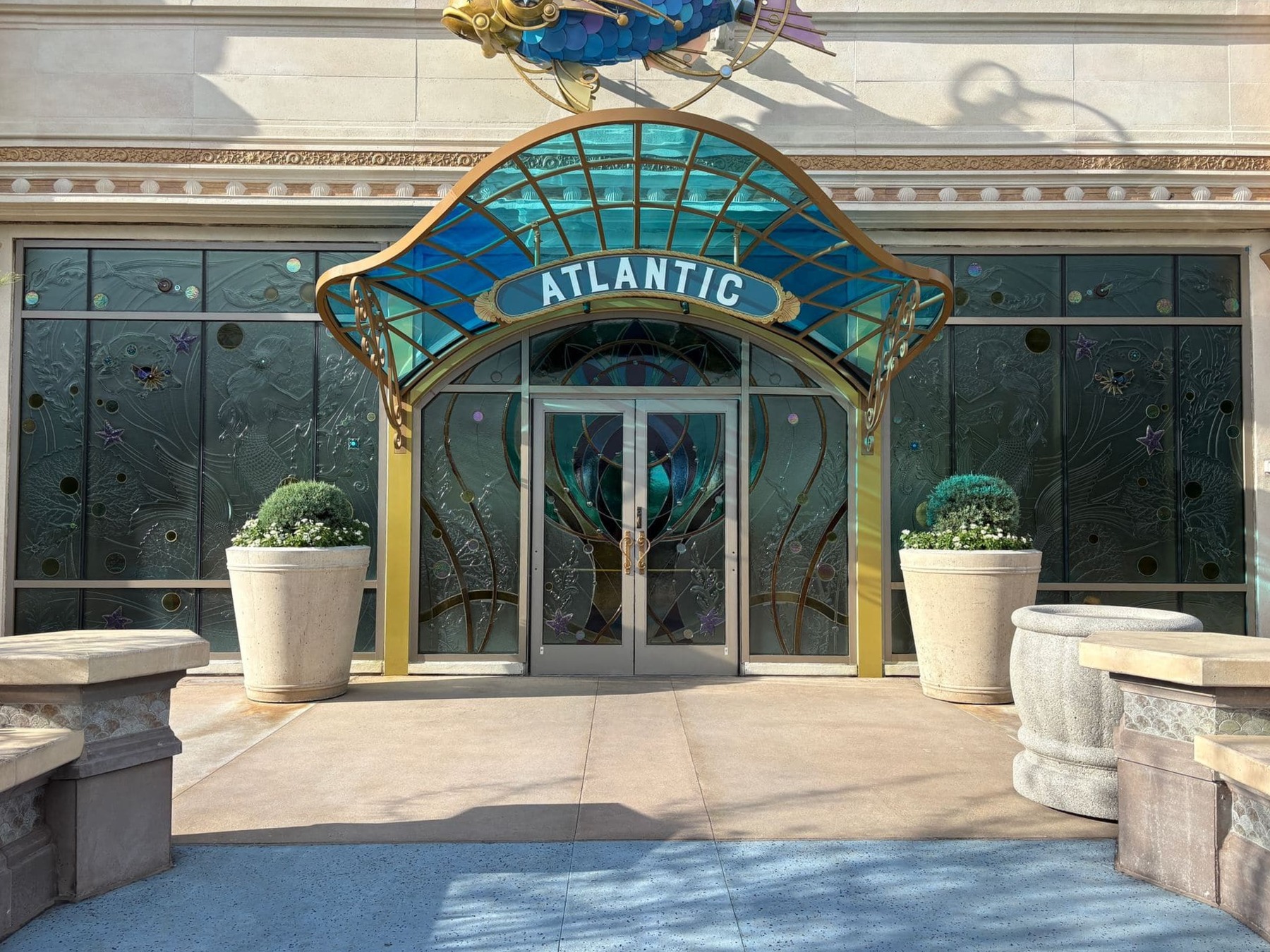
Architectural kiln forming has grown steadily over recent decades. Textured panels are used as wall features, dividers and entrance glazing, where the relief provides privacy while still passing light. Curved and slumped glass is used for bowls, basins and balustrade infill. Cast pieces are used for art glass and sculpture, and for decorative blocks and lenses.
Discover more kiln formed glass
The kiln formed glass gallery collects photographs, with notes on each one.
Questions people ask
What is the difference between kiln formed and fused glass?
Kiln forming is the umbrella term for shaping glass in a kiln. Fusing is one of those techniques, where flat pieces are joined. Many fused pieces are also slumped or cast, so the two overlap.
Is kiln formed glass strong?
When properly annealed, yes. Thick cast pieces can be very strong, but they are not toughened, so a hard knock can still break them.
Can kiln formed glass be used in windows and doors?
Yes, but check the safety requirements. Glazing in doors and low-level windows normally has to be safety glass, which means it is laminated or toughened. A glazier can advise how a textured panel can be built into a compliant unit.
History and related reading
The History of Fused and Kiln Formed Glass, How Window Glass Was Made: Crown, Cylinder, Plate and Float. See also A Short History of Stained Glass.
Care: see How to Clean Decorative Glass Safely.
Temperatures, hold times and annealing schedules for each glass system are in Firing Temperatures and Schedules for Fused and Kiln Formed Glass.
Related glossary terms: Kiln casting, Pâte de verre, Slumping, Annealing, Dalle de verre.
Frequently asked questions
What is kiln formed glass?
Kiln formed glass is any glass shaped by heat in a kiln, including fusing, slumping, casting and pâte de verre.
How is it different from fused glass?
Fused glass is one kind of kiln forming, in which pieces are joined flat. Kiln forming also covers shaping glass into moulds and casting it into solid forms.
What is annealing?
Annealing is slow, controlled cooling that lets stress out of the glass. Without it, a piece can crack hours or days after it leaves the kiln.
Can kiln formed glass be used in doors and windows?
Yes. Textured and cast panels can be set into doors and screens, and are often combined with clear or leaded glass.
Help improve this page
Have you worked with this type of glass, or have specialist knowledge or experience you would like to share? Corrections, additional information and practical observations that could help make this guide more useful are welcome. Photographs of this kind of work or how it is produced are welcome too.
Suggest an improvement
Photographs of kiln formed glass
 Textured Cast Glass Panel, Kiln Formed Glass
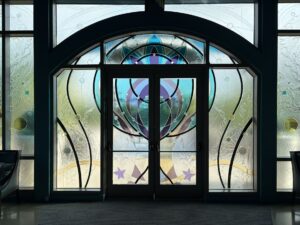 Entrance Door with Lotus Fanlight and Sea Life Glass Panels, Kiln Formed Glass
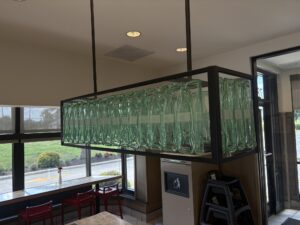 Bottle-Shaped Kiln Formed Glass Light Box, Kiln Formed Glass
See every photograph of kiln formed glass in the gallery →
Published 8 July 2026 · Last updated