Traditional stained glass is coloured glass cut to a design, painted where detail is needed, and held together in a framework of lead. It is the technique of the great medieval cathedral windows, and it is still practised in much the same way today. Its pictures are formed from separate pieces of glass, each a single colour, and the lead lines that join them become part of the design.
How a traditional stained glass window is built
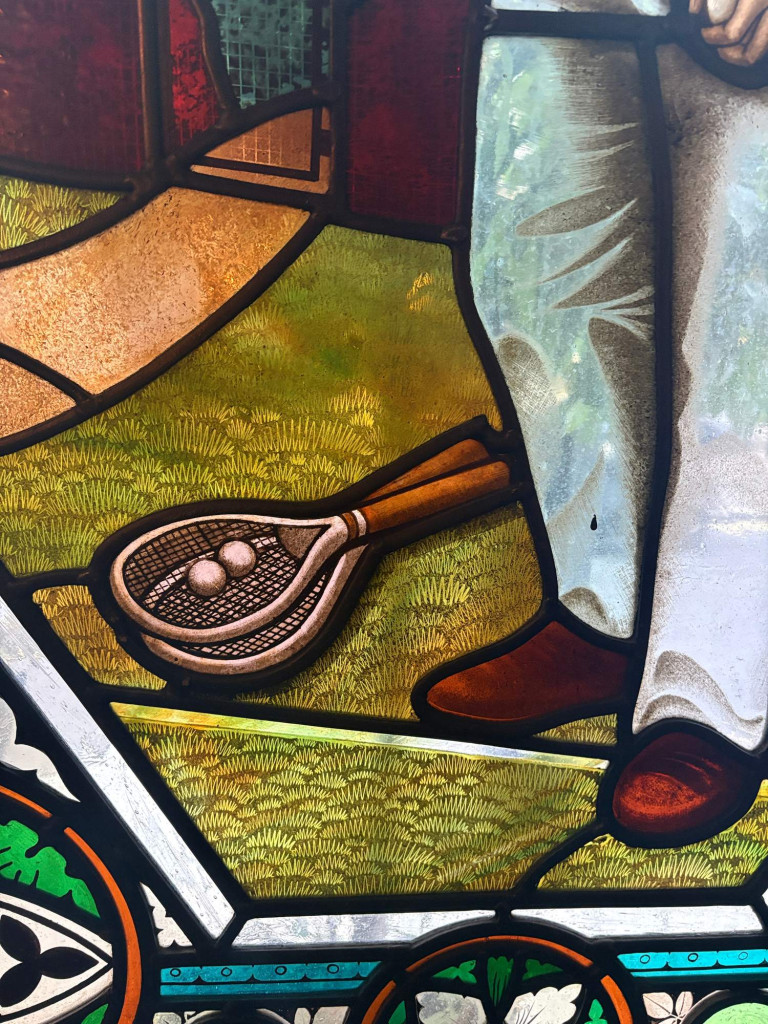
The window begins as a full-size drawing, called a cartoon, which shows every piece of glass and every lead line. The glass is chosen for colour and cut to shape, and details such as faces, hands and folds of cloth are painted onto it with a dark glass paint that is fired in a kiln so that it becomes permanent. The pieces are then fitted into grooved strips of lead, known as lead came, and the joints are soldered. Finally the panel is sealed with cement so that it is weatherproof, and it is supported by bars in the window opening.
This is the method behind leaded lights in general. The difference is one of emphasis: a leaded light describes the construction and may use clear glass, while traditional stained glass refers to coloured glass with painted and pictorial decoration.
The glass and the colour
The colour is part of the glass itself. Metal oxides are added to the molten glass, which produces a coloured sheet known as pot metal. Flashed glass has a thin layer of strong colour over clear glass, which allows the surface to be abraded to reveal the clear glass beneath. A silver-based stain, applied and fired, gives yellows and golds on clear glass, and a grisaille window uses painted pattern on clear or pale glass rather than strong colour. The sheet types used by stained glass artists are described in the article on types of stained glass sheet.
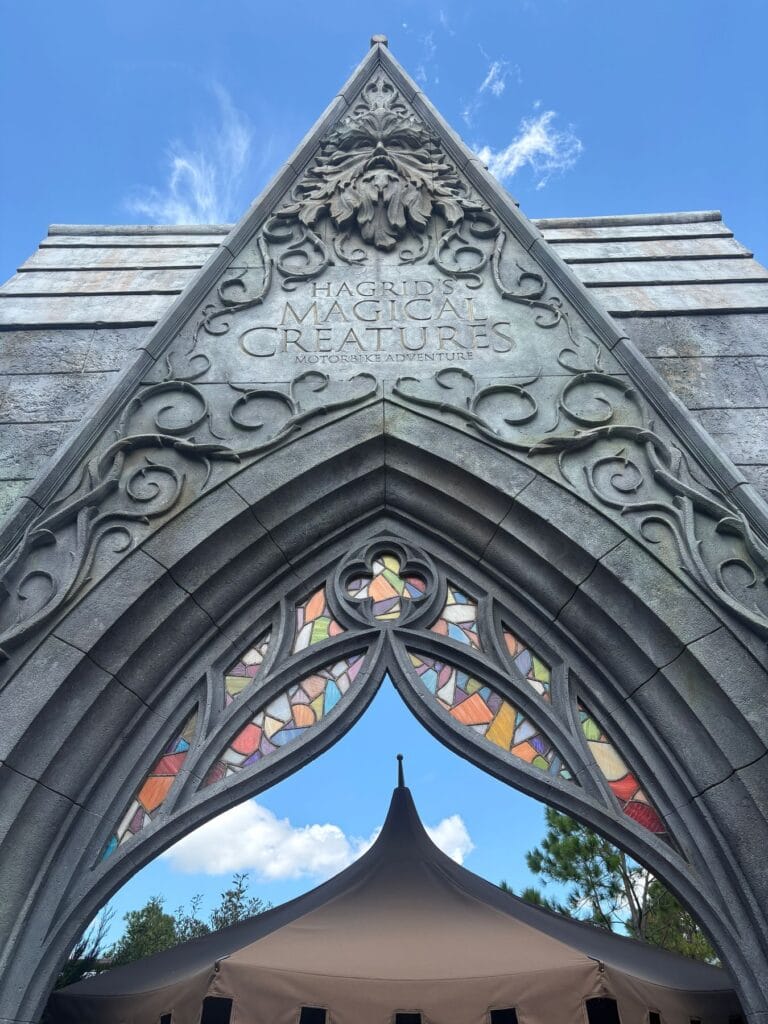
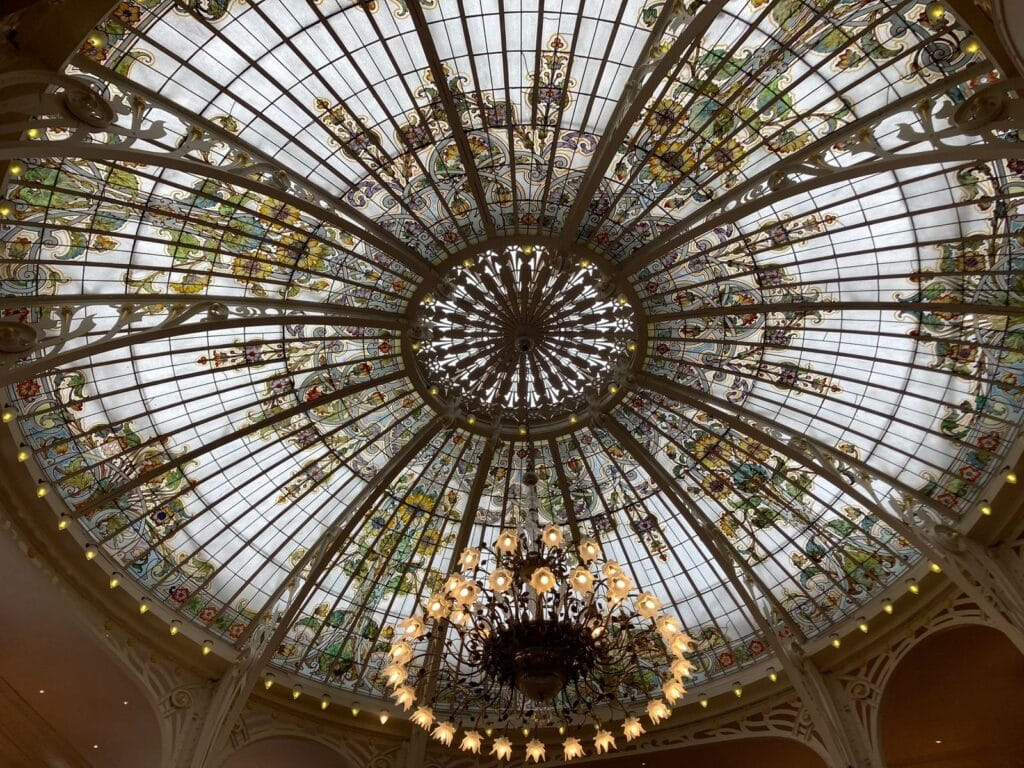
Where traditional stained glass is found
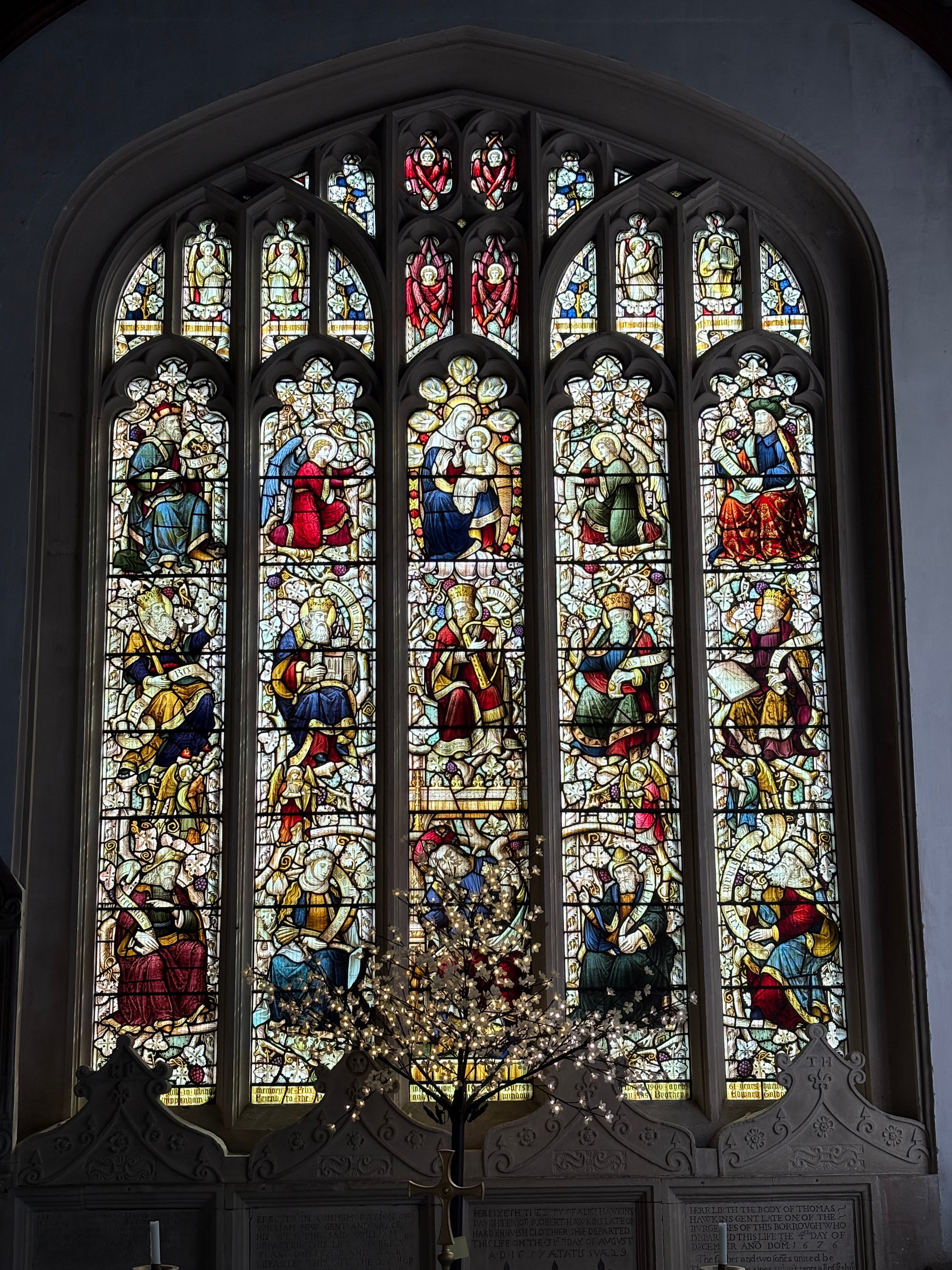
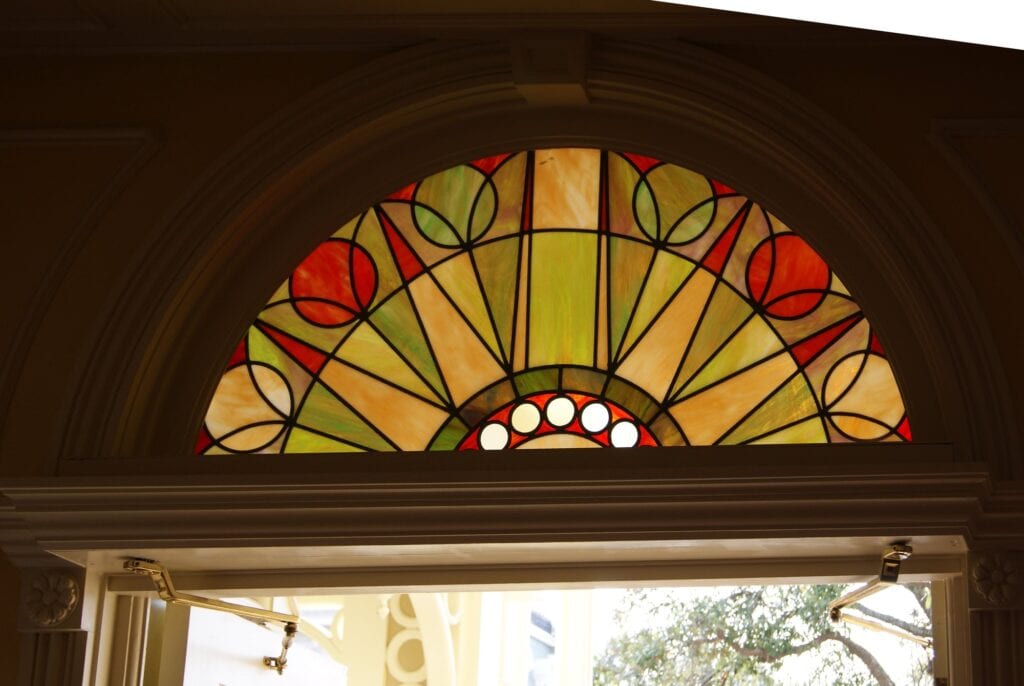
Most surviving examples are in churches, cathedrals and chapels, and the subject is covered in more detail on the page for ecclesiastical stained glass. The same methods were used in the nineteenth and early twentieth centuries for houses, libraries, civic buildings and pubs, where coloured panels in doors and windows were a sign of care and expense. Many Victorian and Edwardian front doors still contain a small stained glass panel, usually in a geometric or floral design.
Traditional stained glass compared with other methods
Lead came is flexible, and it suits large windows with broad shapes and bold outlines. Copper foil stained glass joins the pieces with solder instead, which allows finer detail and tighter curves, and it is the method used for lamps. Modern overlay stained glass reproduces the appearance of a leaded window with applied materials on a sheet of glass, without the cut and leaded construction.
Old windows need specialist care. The page on conservation and restoration explains the common faults and how they are dealt with.
History and related reading
Medieval Stained Glass and the Origins of Leaded Lights, Opalescent Glass, Tiffany and the Copper Foil Method. See also A Short History of Stained Glass.
See also How Coloured Glass Is Made.
Care: see How to Clean Decorative Glass Safely. Whether coloured glass fades is answered in Does Coloured Stained Glass Fade?.
Firing: see How Painted and Silver Stained Glass Is Fired. Another way of joining glass is Copper Foil Stained Glass.
See also stained glass styles by period and types of stained glass sheet.
Related glossary terms: Pot metal, Antique glass, Flashed glass, Vitreous paint, Silver stain, Grisaille, Lead came, Cathedral glass, Opalescent glass.
Frequently asked questions
What is traditional stained glass?
Traditional stained glass is made from pieces of coloured glass, cut to a design, often painted and fired, and joined with lead came. Medieval windows were made this way, and the method is still used.
How is coloured glass made?
Colour comes from metal oxides added when the glass is melted. The article on how coloured glass is made explains the process.
Does stained glass fade?
Coloured glass itself is very stable, but painted detail can wear over centuries. See does stained glass fade.
What is the difference between stained glass and leaded lights?
Leaded lights describes the construction, and the glass may be clear. Stained glass refers to the coloured glass and its decoration.
Help improve this page
Have you worked with this type of glass, or have specialist knowledge or experience you would like to share? Corrections, additional information and practical observations that could help make this guide more useful are welcome. Photographs of this kind of work or how it is produced are welcome too.
Suggest an improvement
Articles featuring traditional stained glass
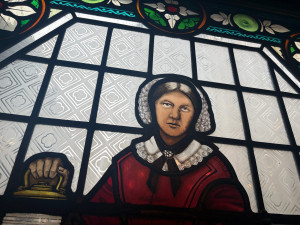
Photographs of traditional stained glass
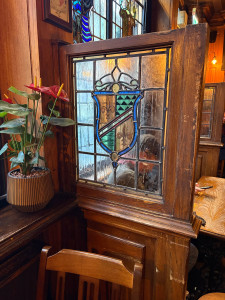 Heraldic Shield in a Small Leaded Window above Panelling, The Bloomsbury, London
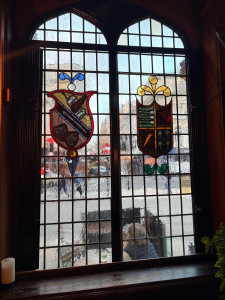 Pair of Heraldic Shields in Leaded Windows, Stained Glass, The Bloomsbury, London
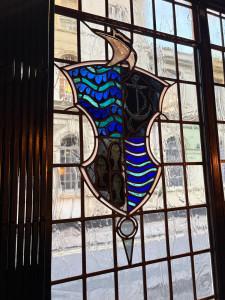 Heraldic Shield with Blue Wave Pattern, Stained Glass, The Bloomsbury, London
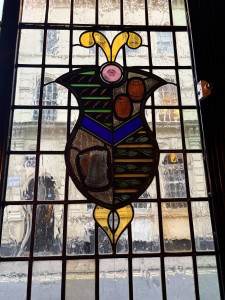 Heraldic Shield with Green and Blue Bands and Yellow Crest, Stained Glass, The Bloomsbury, London
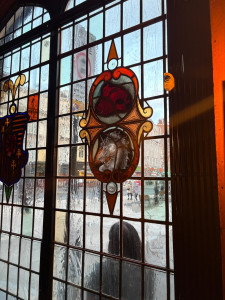 Heraldic Shield with Red Rose in a Leaded Window, Stained Glass, The Bloomsbury, London
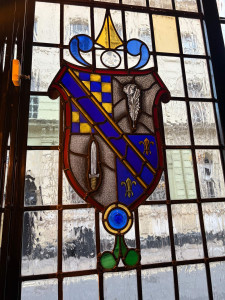 Heraldic Shield with Blue and Gold Chequers and Diagonal Band, Stained Glass, The Bloomsbury, London
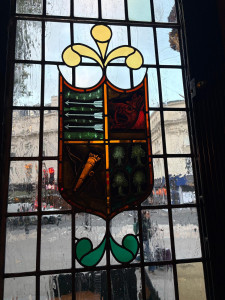 Heraldic Shield with Yellow Fleur-de-Lis Crest and Green Bands, Stained Glass, The Bloomsbury, London
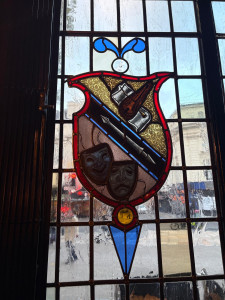 Heraldic Shield with Theatrical Masks and Blue Fleur-de-Lis Crest, Stained Glass, The Bloomsbury, London
See every photograph of traditional stained glass in the gallery →
Published 8 July 2026 · Last updated