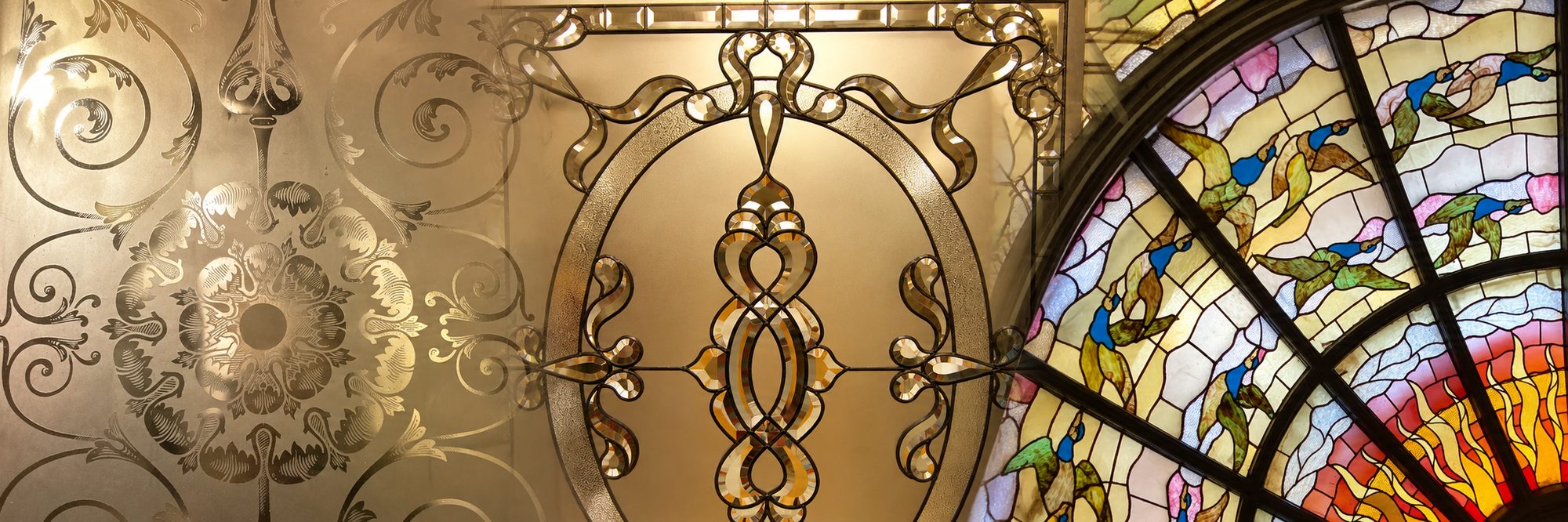

Brilliant cutting is the craft of cutting deep, polished grooves into the surface of glass with spinning wheels. Where the cut lines catch the light they flash like jewels, and that sparkle gives the craft its name. It was the great showpiece decoration of Victorian pubs, hotels, banks and grand shops, and it is still found in doors, mirrors and screens from that period.
The cut glass most people know from decanters and tumblers is produced in a related way, but brilliant cutting is a flat-glass craft, done on windows, panels and mirror plates.
How it is done
The glass is held against a rotating wheel while a stream of abrasive and water is fed onto it. Different wheels do different jobs. A coarse stone wheel removes the bulk of the material. A finer wheel smooths the cut. A wooden or cork wheel fed with a fine polishing powder brings the surface up to a clear shine, so that what began as a rough grey groove ends up as clear as the glass around it.
The cutter works freehand, following a pattern marked on the glass. A V-shaped wheel cuts a sharp groove, a flat wheel produces a broad flat face, and a rounded wheel a scooped cut. A skilled cutter combines them to build up stars, fans, diamonds, feathered borders and arches, following pattern books that were handed down within workshops.
Many workshops brighten the finished cut with an acid polish, a process that was also widely used on cut crystal in the past. Its use depends on the workshop and the glass.
Brilliant cutting and other decoration
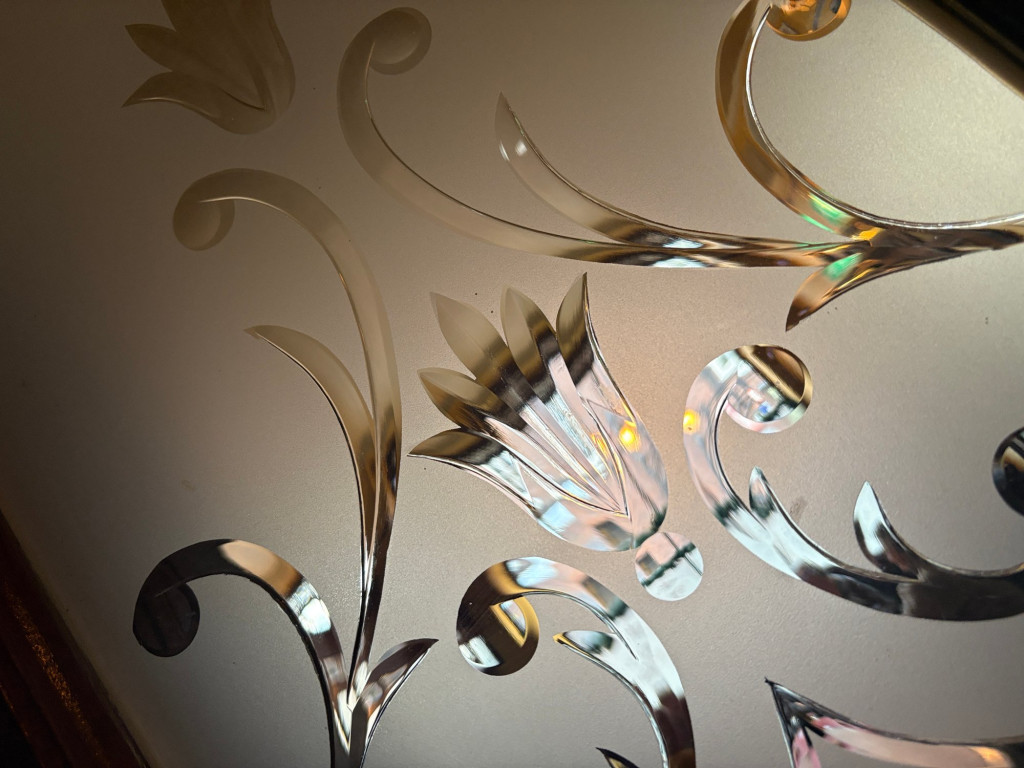
Brilliant cutting is rarely used alone. A typical Victorian pub window combines it with acid etching, with the cut lines bright against a smooth frosted ground, and often with silvering, coloured glass or bevels. It is also easily confused with bevelling. A bevel is a sloped, polished edge around the border of a piece of glass. A brilliant cut is a groove cut into the face of a sheet.
Where you find it
The heyday ran from the middle of the nineteenth century to the First World War. Pub mirrors and snob screens, hotel doors, bank counters, department-store windows and the glazed panels in grand Edwardian front doors all carry brilliant cutting. In many pubs the surviving glass is the main safeguard against the original interior being stripped out, and some of it is recorded in the building’s listing.
Cutting glass today
The number of people who can brilliant-cut by hand has fallen sharply. Heritage Crafts places brilliant cutting in the Endangered category of its Red List of Endangered Crafts and estimates that between 11 and 20 professionals earn their main income from it. The history of brilliant cutting traces how the trade grew and why it declined. Machine and computer-controlled cutters are now used to produce reproductions, and diamond wheels have replaced the older stone and iron ones in many workshops. Hand-cut work is still produced, mainly for restoration. If a pane is damaged, the usual repair is a new pane cut to match the old pattern. The conservation and restoration page covers how that is handled.
Questions people ask
Is brilliant cut glass the same as cut crystal?
The two are close relatives. Both are wheel-cut and polished. Cut crystal is lead crystal, formed into vessels. Brilliant cut glass is flat glass used in windows, doors and mirrors.
Can brilliant cut glass be repaired?
Small chips on the edge of a cut can sometimes be re-polished. A cracked pane normally has to be replaced.
How can a pub window be identified as brilliant cut?
Run a fingernail across the pattern. V-shaped grooves with clear, smooth sides indicate brilliant cutting. A flat, frosted surface suggests glass that is etched or sandblasted.
History and related reading
The History of Brilliant Cut and Bevelled Glass. See also A Short History of Stained Glass.
Care: see How to Clean Decorative Glass Safely.
For the related craft of bevelling, see How Bevelled Glass Is Made.
In business: decorative glass for pubs, shops and restaurants.
Related glossary terms: Brilliant cutting, Bevel.
Frequently asked questions
What is brilliant cut glass?
Brilliant cut glass is decorated with cut and polished grooves, stars and facets that catch the light. It was popular in the late nineteenth and early twentieth centuries.
How is it made?
The pattern is cut into the surface with abrasive wheels and then polished, so that the lines shine instead of looking frosted.
How does it differ from bevelled glass?
Bevelled glass has an angled, polished edge, whereas brilliant cutting works on the face of the glass. They often appear together in the same door.
Where is it found?
It is common in front doors, interior doors, cabinets and mirrors, and in pubs and hotels from the Victorian and Edwardian periods.
Help improve this page
Have you worked with this type of glass, or have specialist knowledge or experience you would like to share? Corrections, additional information and practical observations that could help make this guide more useful are welcome. Photographs of this kind of work or how it is produced are welcome too.
Suggest an improvement
Articles featuring brilliant cut glass
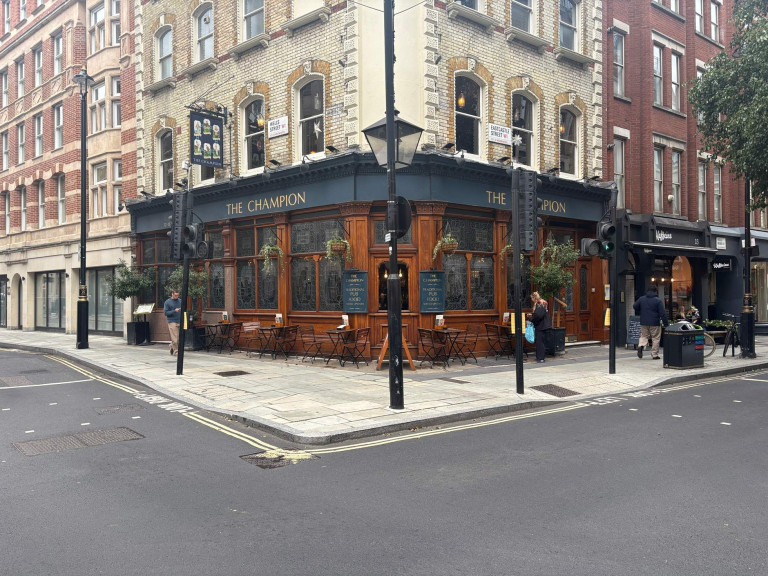
 PubsThe Champion, Wells Street: a Victorian pub with stained glass championsA Grade II listed Fitzrovia corner pub whose 1989 painted glass portraits of Victorian champions sit within a mid-Victorian building.Read the article →
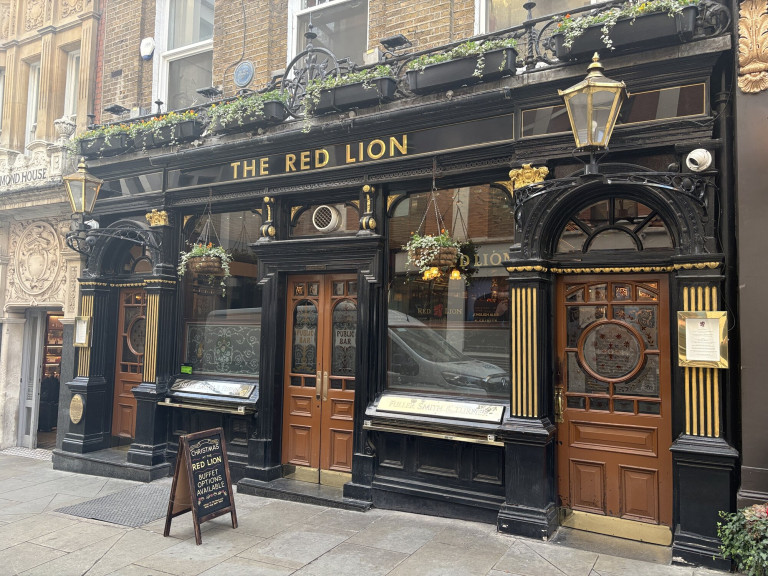
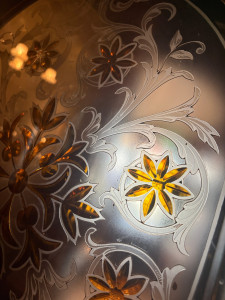 PubsThe Red Lion, Duke of York Street: Victorian etched, cut and gold glassHow a small St James's pub kept its gold-lettered etched doors and a rare scheme of Victorian brilliant cut and etched mirrors.Read the article →
Photographs of brilliant cut glass
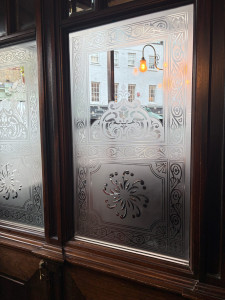 Acid Etched Window Panels with Brilliant Cut Rosettes, The Fitzroy Tavern, London
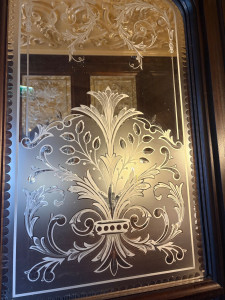 Acid Etched and Brilliant Cut Urn and Foliage Screen Panels, The Fitzroy Tavern, London
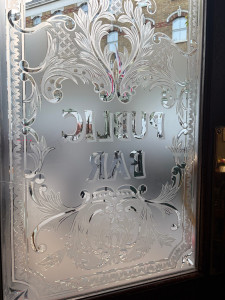 Acid Etched Public Bar Windows with Brilliant Cut Lettering, The Fitzroy Tavern, London
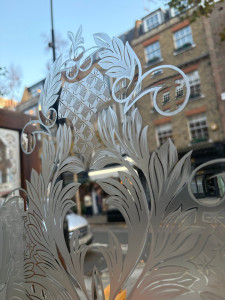 Acid Etched Front Windows with Acanthus and Diamond Trellis, The Fitzroy Tavern, London
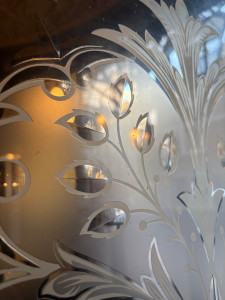 Brilliant Cut Tulip Buds, Fleur-de-Lis and Acanthus on Acid Etched Glass, The Fitzroy Tavern, London
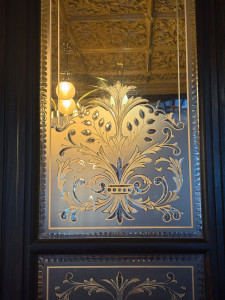 Acid Etched Fleur-de-Lis Wall Screen Panels, The Fitzroy Tavern, London
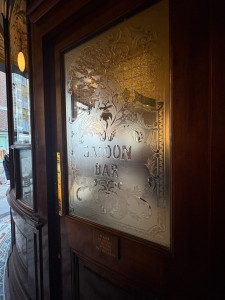 Acid Etched Saloon Bar Door Panel with Lettering, The Fitzroy Tavern, London
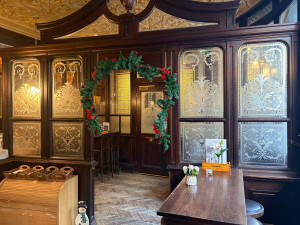 Snug Interior with Acid Etched Screen Panels, The Fitzroy Tavern, London
See every photograph of brilliant cut glass in the gallery →
Published 8 July 2026 · Last updated