
Ecclesiastical stained glass is glass created for churches, cathedrals, chapels and other places of worship. It is the oldest and best-known use of stained glass, and for many centuries it was the main use. The pictures in the glass told Bible stories and saints’ lives to people who could not read, and they also transformed the interior, since the light that entered was coloured and, quite literally, filtered through the story.
The term describes where the glass is, not how it is made. Most of it is built the way traditional stained glass is, with pieces of coloured glass held together in lead, but the setting has shaped the subjects, the scale and the way it has to be looked after.
The parts of a church window
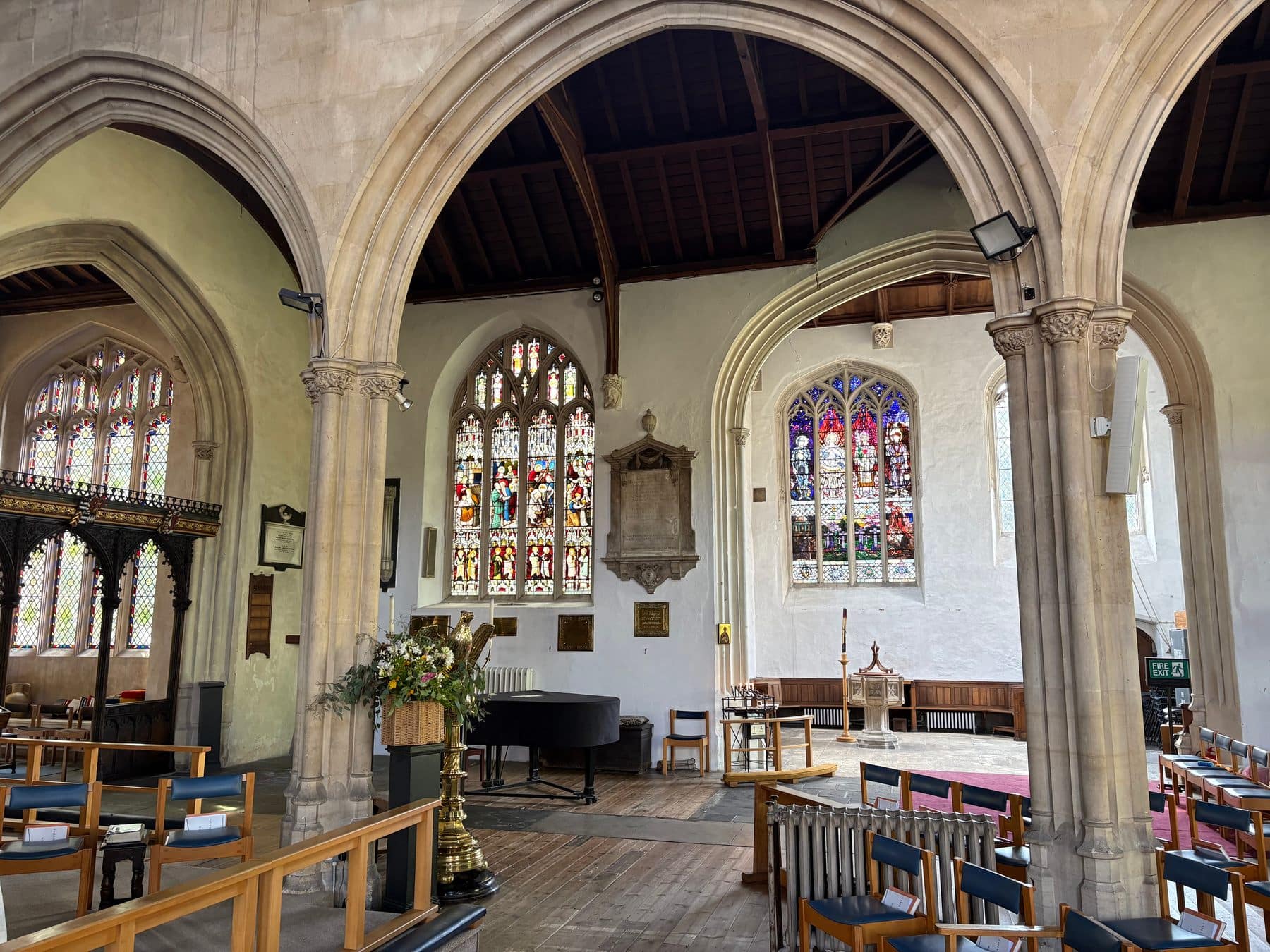
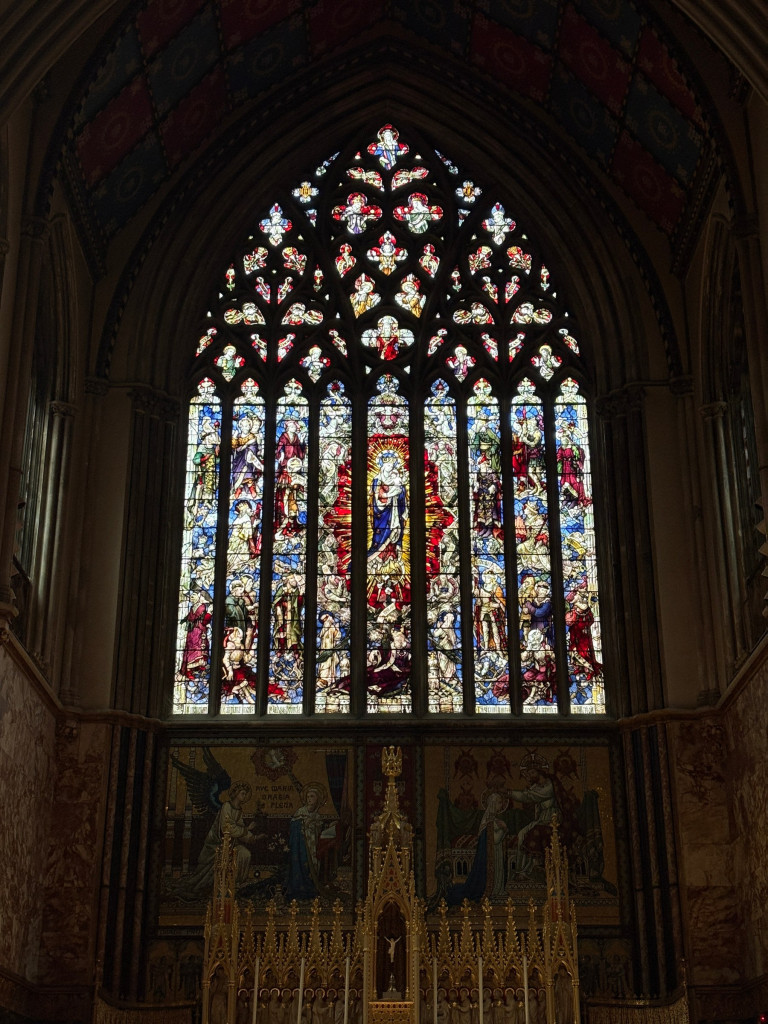
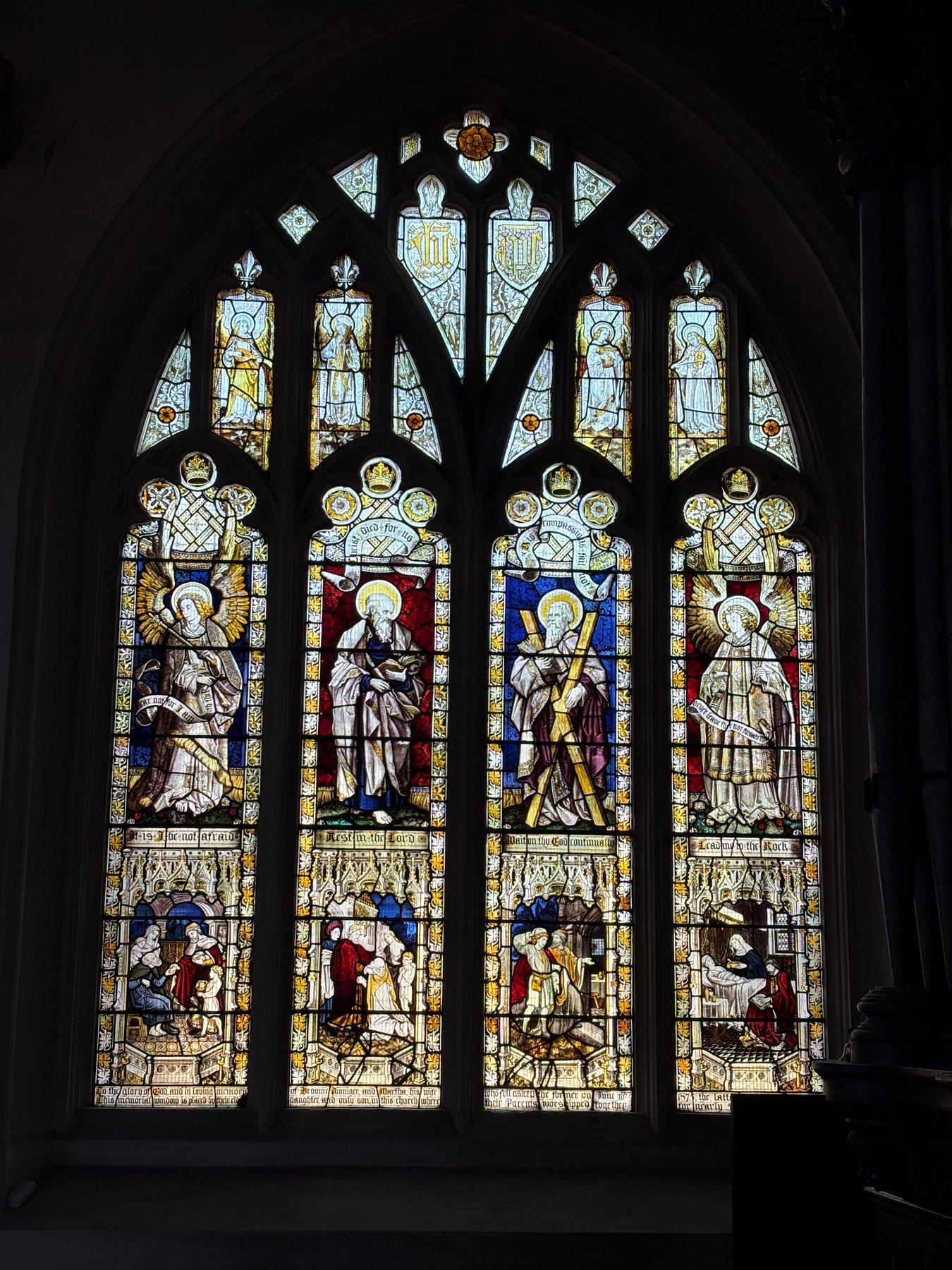
Church windows have their own vocabulary, and a few terms make a window much easier to read. The vertical divisions are called lights, so a window with four of them is a four-light window. Stone bars that separate the lights are mullions. The decorative stonework in the arch at the top is tracery, and in Gothic architecture the shapes it forms, such as trefoils, quatrefoils and flowing curves, are one of the clearest clues to the date of the building. A tall, narrow, pointed window without tracery is a lancet.
Outside, many church windows have a protective layer of clear glass or plastic in front of the original glass. From the inside this can often be recognised, because the window looks slightly distant and flat.
What is in the pictures
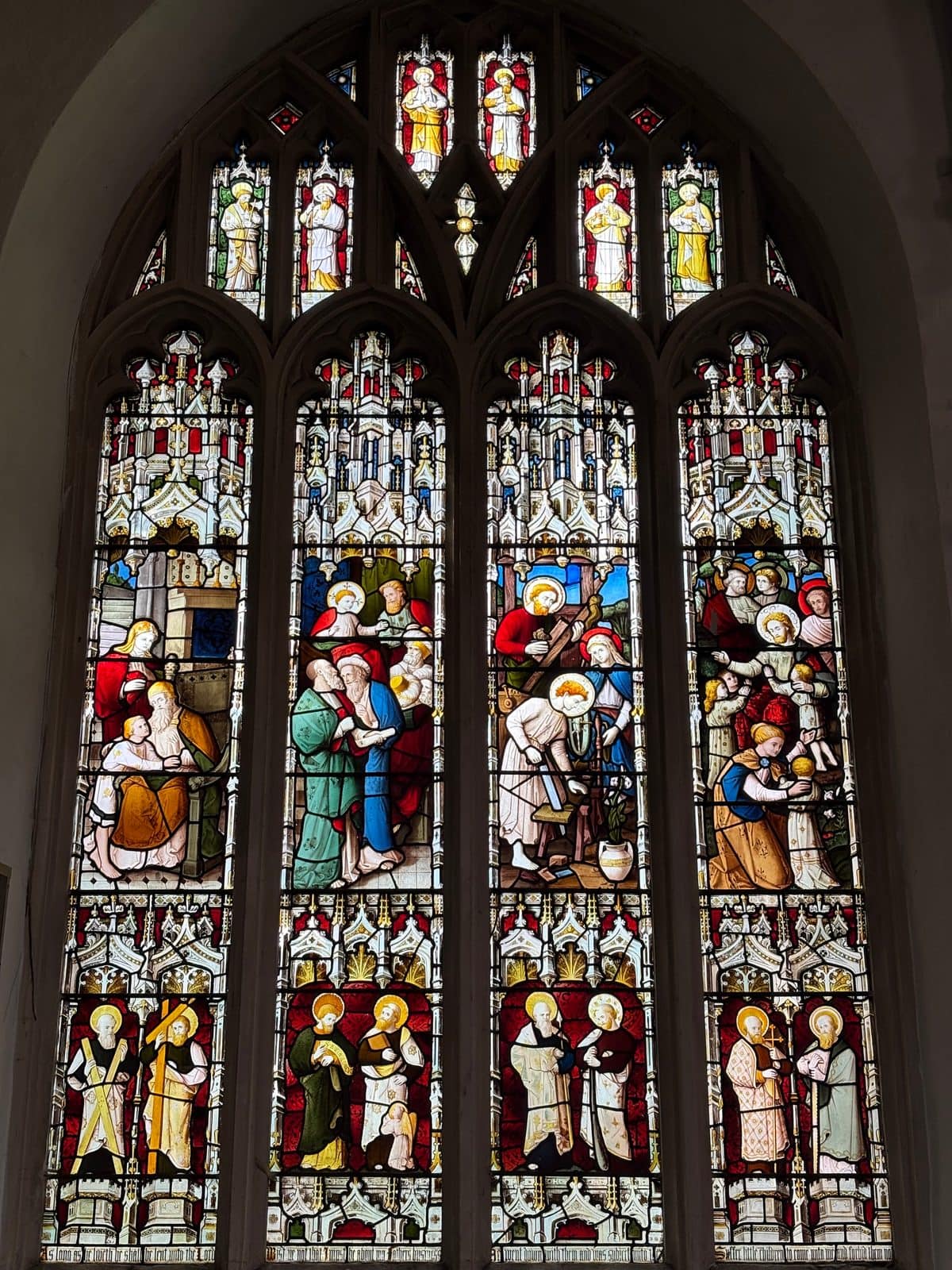
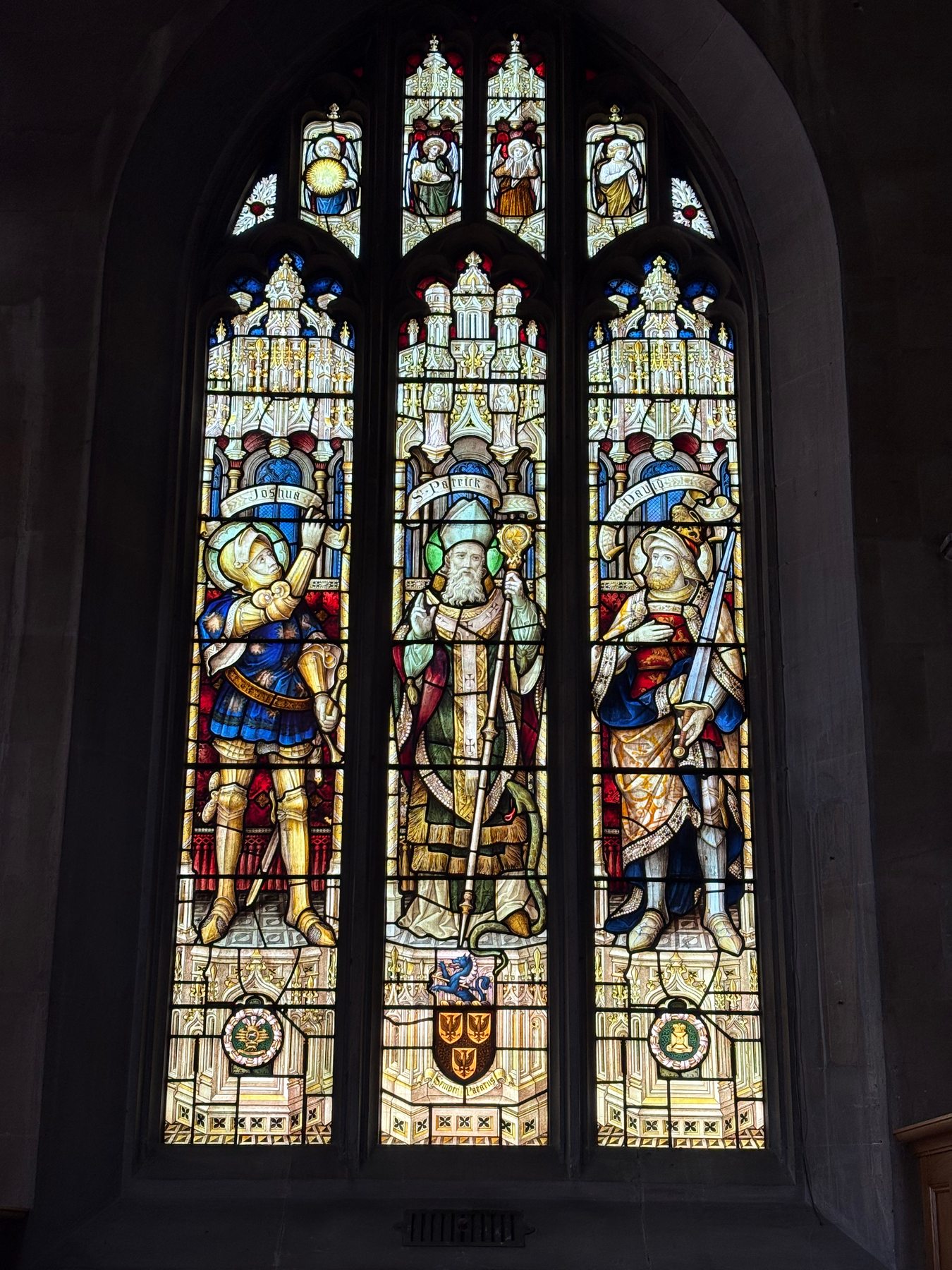
The subjects fall into a few groups. Biblical scenes run in rows, often reading from the bottom upwards, with the life of Christ the most common. Single standing figures, such as saints and apostles, are usually identifiable by their attributes. St Peter holds keys, for example, and St Catherine is shown with a wheel. Many windows are memorials, given by a family in memory of someone, and the dedication is often written on a panel at the bottom. Heraldic shields, symbols of the Evangelists and flower patterns fill the smaller spaces, especially in the tracery at the top.
Medieval glass and the Victorian revival
Surviving medieval windows are rare, because glass is fragile and much of it was lost to weather, war and changes in religious fashion. The medieval glass painter worked with coloured glass cut to shape and joined with lead, then painted details such as faces, hands and folds of cloth onto it with a dark paint that was fired in a kiln. From around the fourteenth century, a silver-based stain gave a clear yellow, which allowed a gold crown to be painted on a piece of white glass.
The nineteenth century brought a major revival. The Gothic Revival made medieval-style windows fashionable again, churches were being built and restored in great numbers, and many studios, some of them large commercial firms, produced windows in a version of the medieval manner. That is why most church glass you see in Britain is Victorian or Edwardian, and why the style is described under traditional stained glass. For more of the background, there is a short history of stained glass.
Clear glass in churches
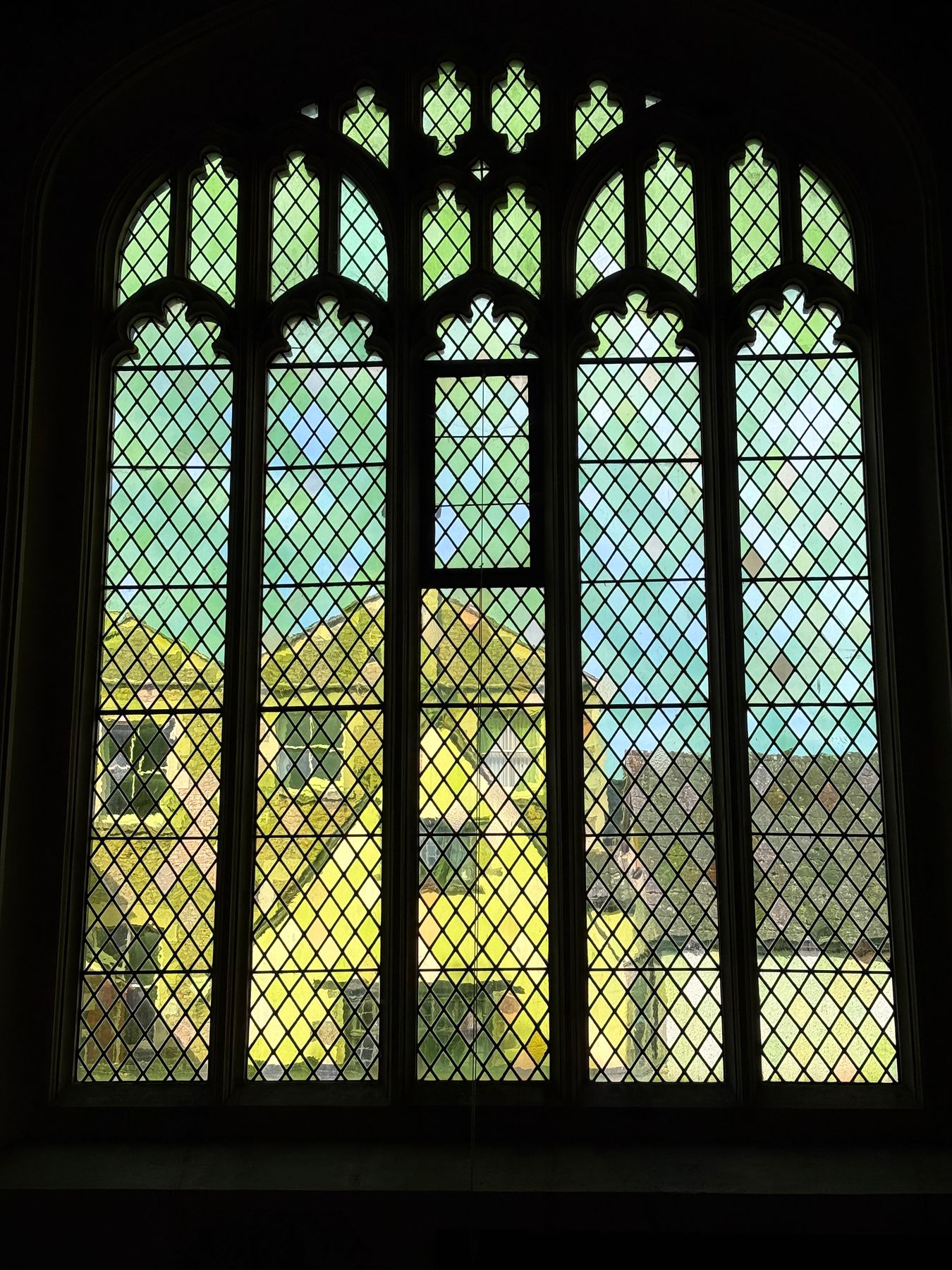
Not every church window is coloured. Many of the oldest parish churches are lit through clear leaded glass, in diamond or square panes, often set in plain stone frames. It is easily overlooked, but it is a leaded light in the full sense and is often the oldest glass in the building.
Caring for church windows
Church windows are exposed to the weather, to condensation inside and to the slow movement of old lead. A window that is bulging or has lost its protective glazing should be looked at by a specialist. The process for having work done on a church is usually controlled, so permission should be sought before anything is touched. The conservation and restoration page explains what is usually involved.
Discover more church glass
The ecclesiastical stained glass gallery collects photographs of church windows, with notes on each one.
You can also look at church glass one building at a time in Churches and Cathedrals, which starts with St Andrew’s Church in Chippenham, where Victorian windows by several London firms survive, and a small hospice chapel in Northampton with modern panels.
Questions people ask
What is the difference between stained glass and ecclesiastical stained glass?
Ecclesiastical means belonging to a church. The glass is generally the same kind of material and construction, but it is made for a religious setting and often carries religious subjects.
How old is the stained glass in a local church?
Most likely Victorian or Edwardian. Medieval glass survives in a smaller number of buildings, and modern windows, from the twentieth century onwards, are also common. The style of the figures and the date on a memorial panel are the quickest clues.
Can church windows be photographed?
Usually, but ask first, since rules vary from church to church. Recent windows by living artists may also be protected by copyright, so check before publishing a photograph of one.
History and related reading
Medieval Stained Glass and the Origins of Leaded Lights, Stained Glass from the Gothic Revival to the Twentieth Century. See also A Short History of Stained Glass.
Care: see How to Clean Decorative Glass Safely. Whether coloured glass fades is answered in Does Coloured Stained Glass Fade?.
Painted detail on church glass is fixed by firing in a kiln. How Painted and Silver Stained Glass Is Fired gives temperatures, schedules and the order of firings for a painted scene.
To see windows like these in place, follow the stained glass tour of the UK, and learn to read a church window.
Related glossary terms: Clerestory, Tracery, Lancet window, Rose window, Grisaille.
Frequently asked questions
What is ecclesiastical stained glass?
It is stained glass made for churches, cathedrals and chapels, usually showing saints, Bible stories or heraldry.
How can a church window be read?
Figures can be recognised by what they carry and wear, and scenes follow set patterns. The guide to reading a church window explains how.
What is the oldest stained glass?
The earliest surviving windows date from the early medieval period. See oldest stained glass.
Can church windows be restored?
Yes. Historic windows are cleaned, repaired and protected by specialist conservators. See conservation and restoration.
Help improve this page
Have you worked with this type of glass, or have specialist knowledge or experience you would like to share? Corrections, additional information and practical observations that could help make this guide more useful are welcome. Photographs of this kind of work or how it is produced are welcome too.
Suggest an improvement
Photographs of ecclesiastical stained glass
 Green and Clear Diamond Leaded Lights in a Gothic Window, Farm Street Church, London
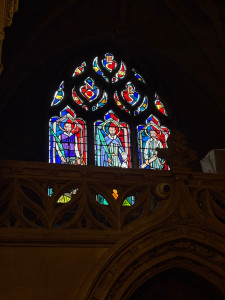 Stained Glass Window with Figures above the Gallery, Farm Street Church, London
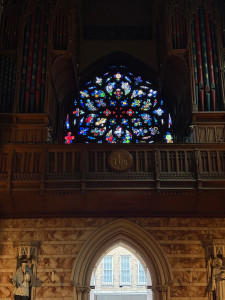 Round Stained Glass Window above the Organ Gallery, Farm Street Church, London
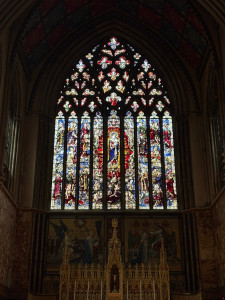 Gothic East Window with Stained Glass Figures, Farm Street Church, London
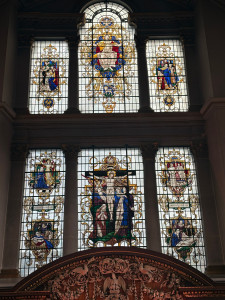 Stained Glass Window Group above the Carved Reredos, St James’s Church, Piccadilly, London
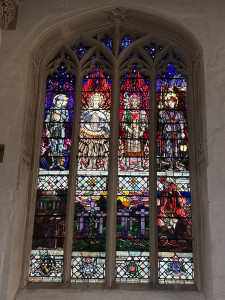 Four-Light War Memorial Window with Heraldic Badges, Ecclesiastical Stained Glass, Chippenham
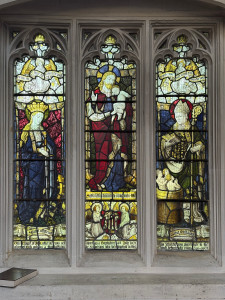 Three-Light Baptistry Window with St Katherine and St Nicholas, Ecclesiastical Stained Glass, Chippenham
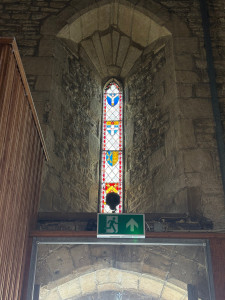 Narrow Lancet Window with Coloured Glass, Ecclesiastical Stained Glass, Chippenham
See every photograph of ecclesiastical stained glass in the gallery →
Published 8 July 2026 · Last updated