
The Champion, Wells Street: a Victorian pub with stained glass champions
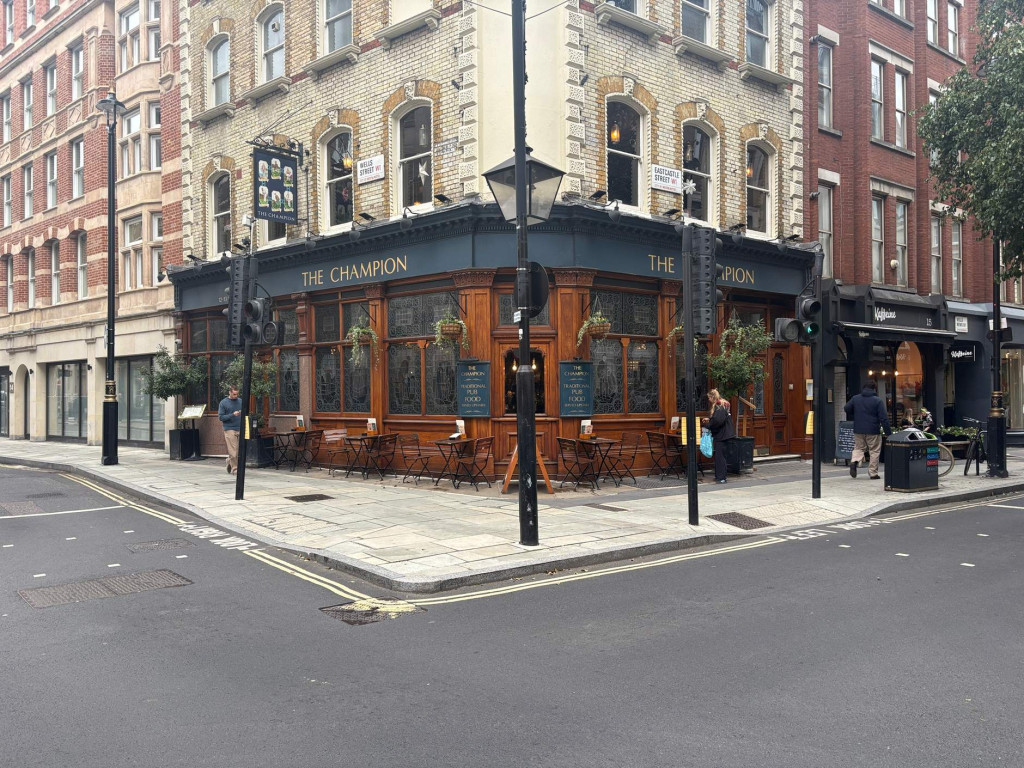
The Champion on the corner of Wells Street and Eastcastle Street, with its dark timber bar front and leaded windows. See it in the gallery.
Visited and photographed by stainedglass.co.uk on 10 November 2026.
The pub and its glass
The Champion stands on the corner of Wells Street and Eastcastle Street in Fitzrovia, a short walk north of Oxford Street. The building is a mid-Victorian corner house with a curved corner, stucco-trimmed upper floors and a dark timber bar front at street level. Its reputation rests on a set of painted stained glass figure panels that fill the ground-floor windows: portraits of Victorian champions of sport, exploration and public life, framed by borders of coloured roundels. These panels look as old as the building, but they are a modern scheme, designed and installed in 1989. Inside, the glass is completed by leaded lights in the entrance doors, small framed screens along the bar counter and frosted, cut panels in the timber partition doors.
History of the building
Historic England dates the building to about 1860 to 1870. The list entry describes four storeys of gault brick with stucco dressings under a slate roof, three windows to each street front, segmental-arched sashes to the upper floors, a heavy moulded cornice and an inset quadrant corner. A large ornamental cast-iron lamp bracket is fixed to the corner. The building was listed at Grade II on 5 February 1970 (list entry 1267696), and the entry records that the bar fittings, including screens, survive in part, with some renewal.
Trade directories first record the pub in 1869, with William Buer as licensee, and the address is given as 12 and 13 Wells Street. By 1874 the house was substantial enough to be fitted with fifty gas lights spread over three floors, according to a report of that year by the company that installed them.
The pub was refitted in the mid-1950s for the brewers Barclay Perkins, a firm long since absorbed into larger groups. The designers were John and Sylvia Reid, known chiefly for interiors, furniture and lighting, and the scheme followed a competition promoted by the Architectural Review. Photographs of the refitted saloon bar, dated 1955, are held in the RIBA Collections. The Reids divided two bars into three, added buttoned leather seating, restored the counter and some original iron tables, and painted a large name in shaded Roman lettering down the curved corner. Accounts of the scheme describe frosted, acid-cut glass in the lower windows and etched glass between the bars. The corner lettering has since been lost.
The pub later passed to a Yorkshire brewery, and CAMRA records that the stained glass was added in 1989 as part of its restoration.
The champions in the windows
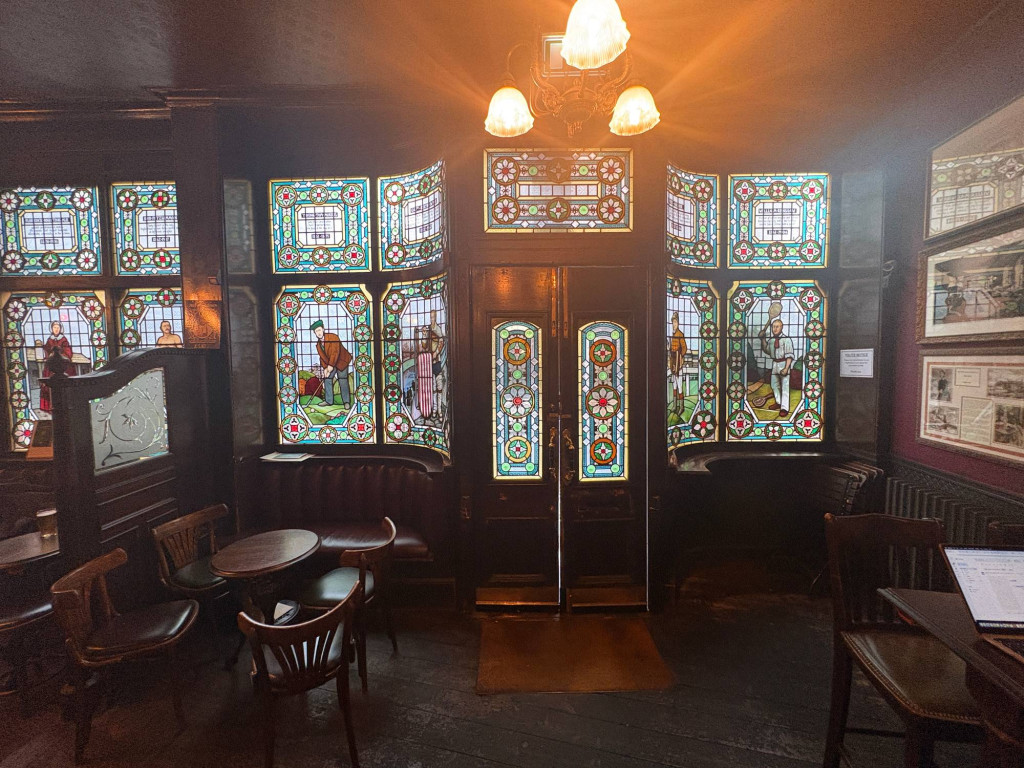
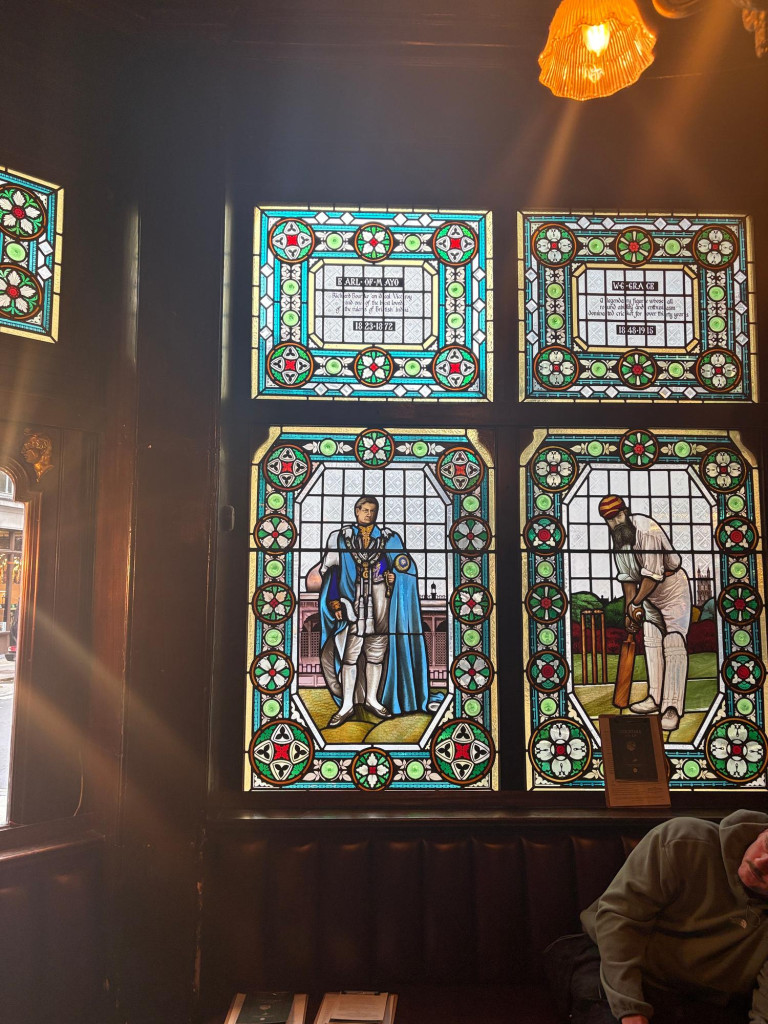
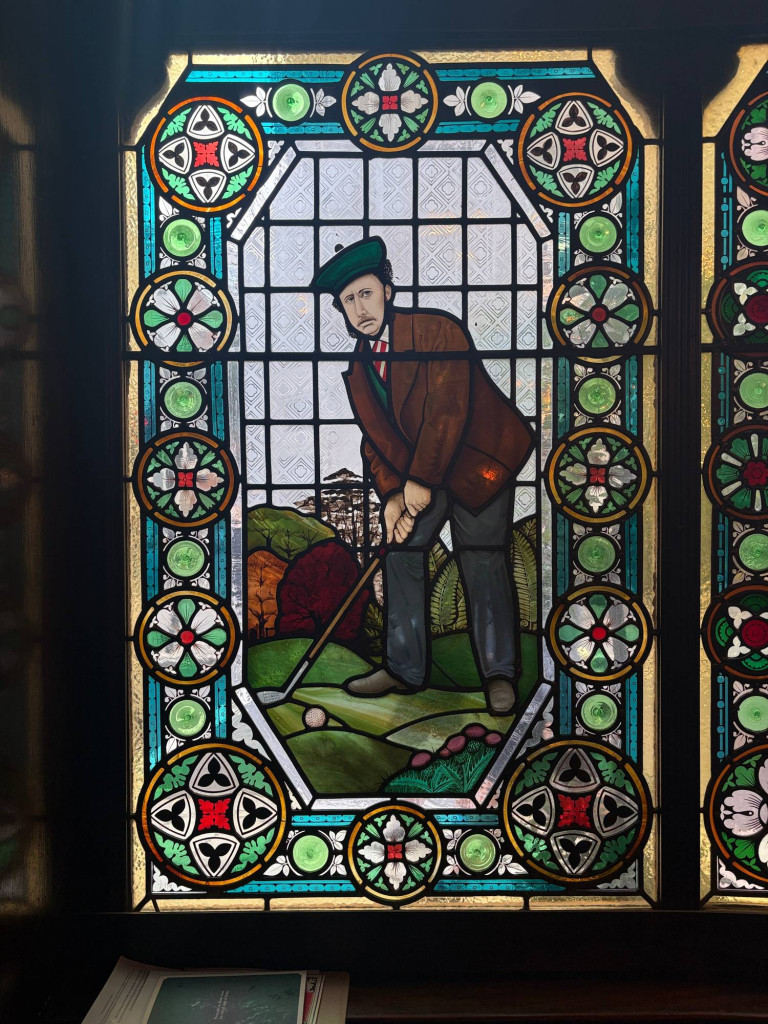
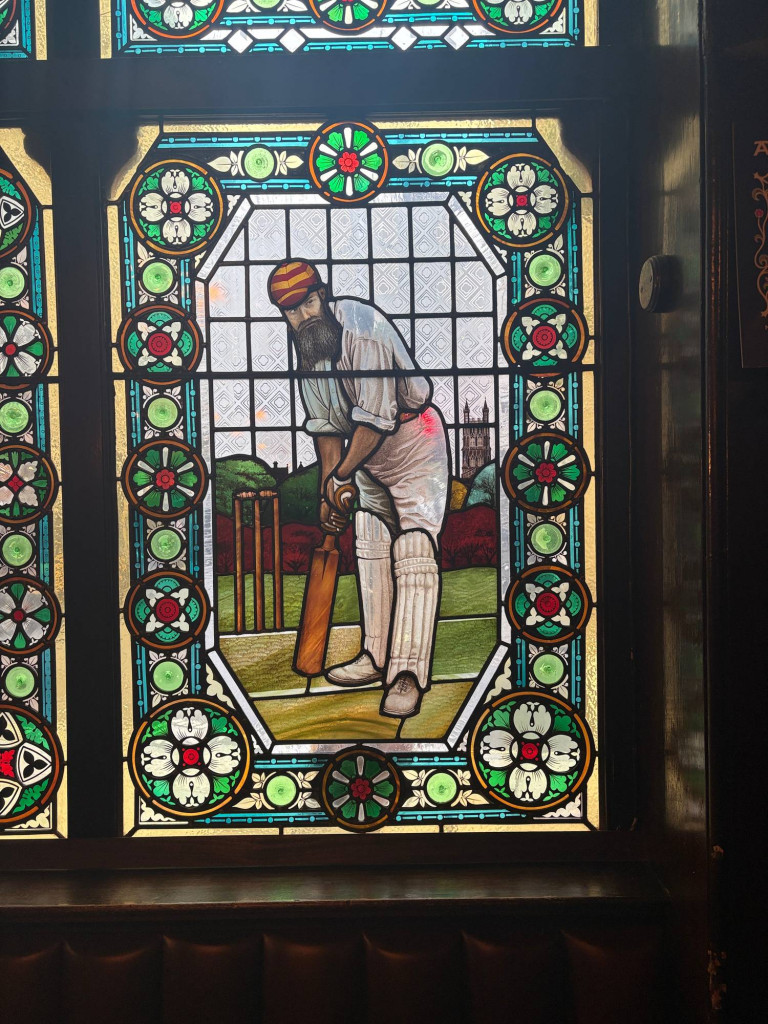
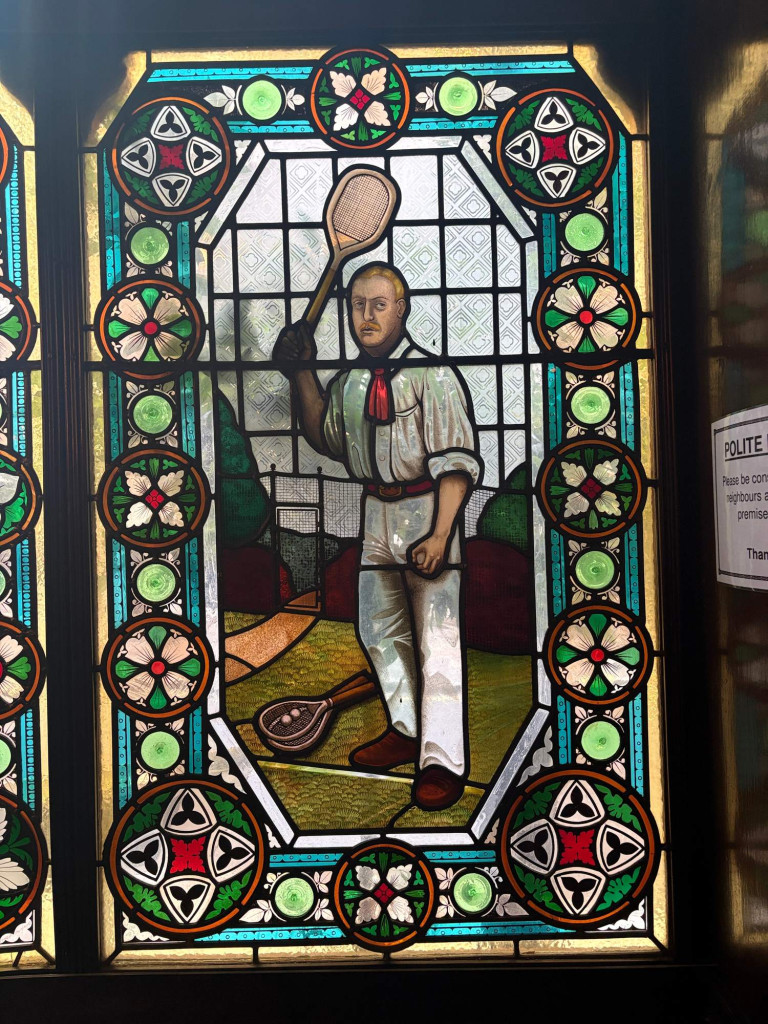
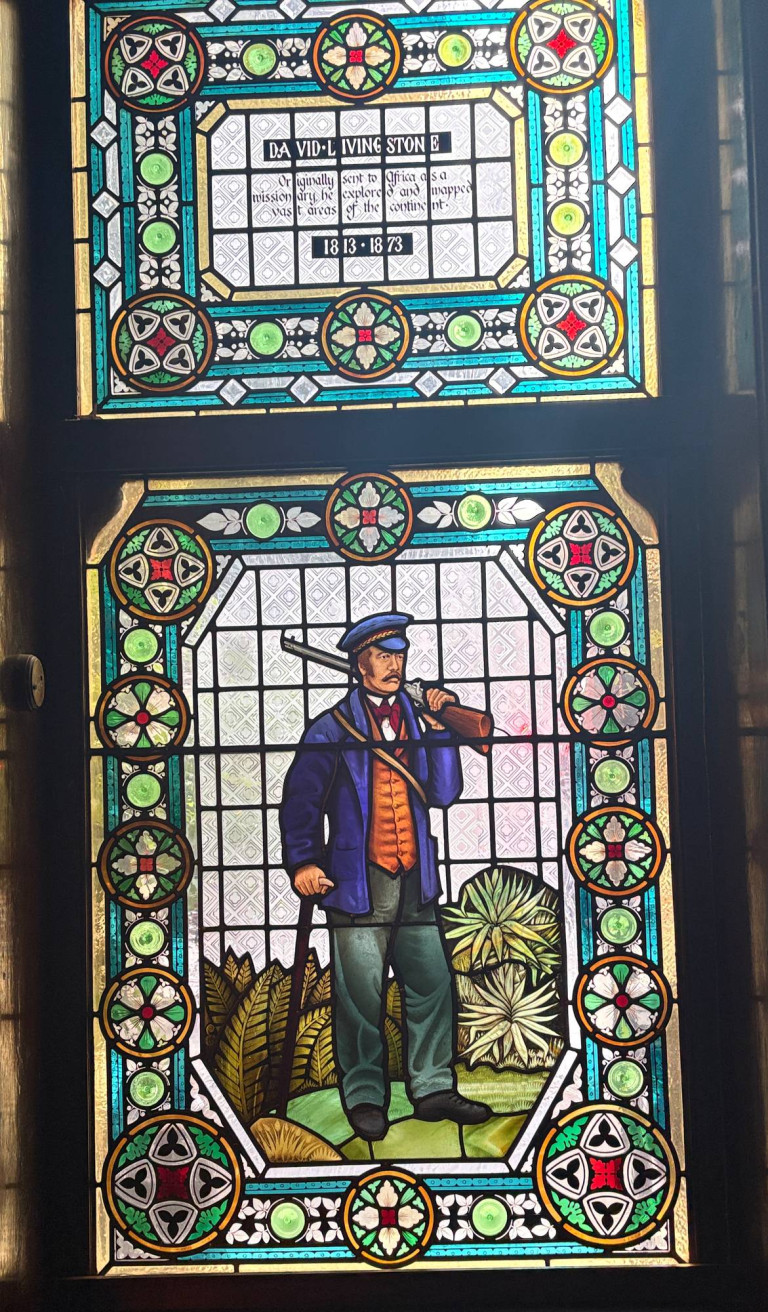
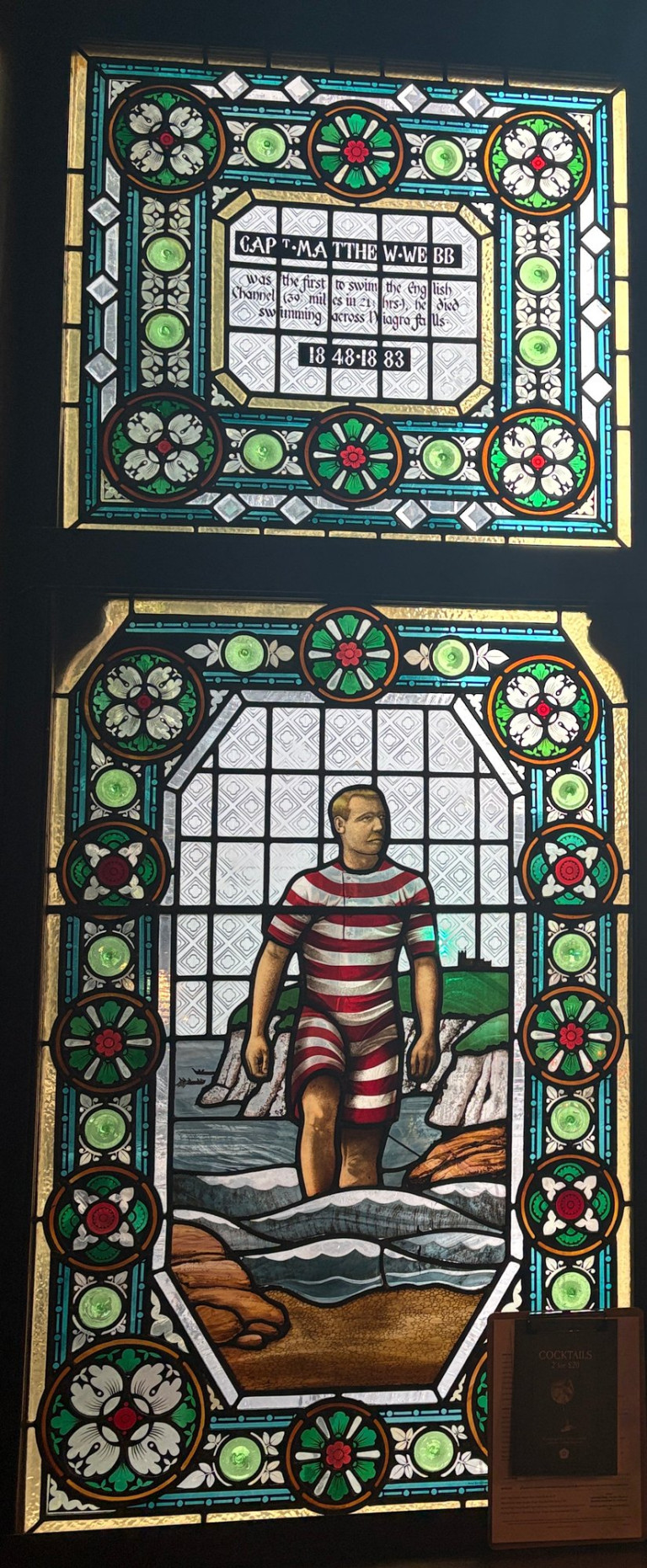
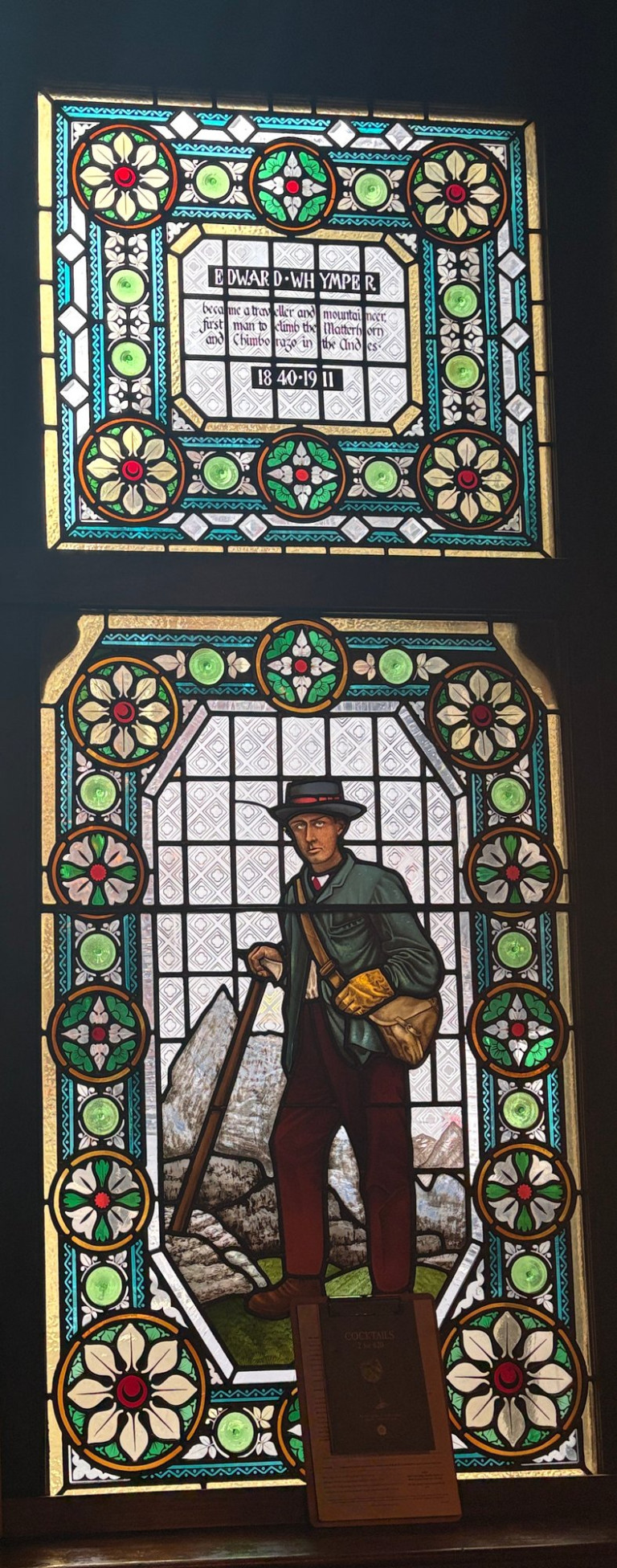
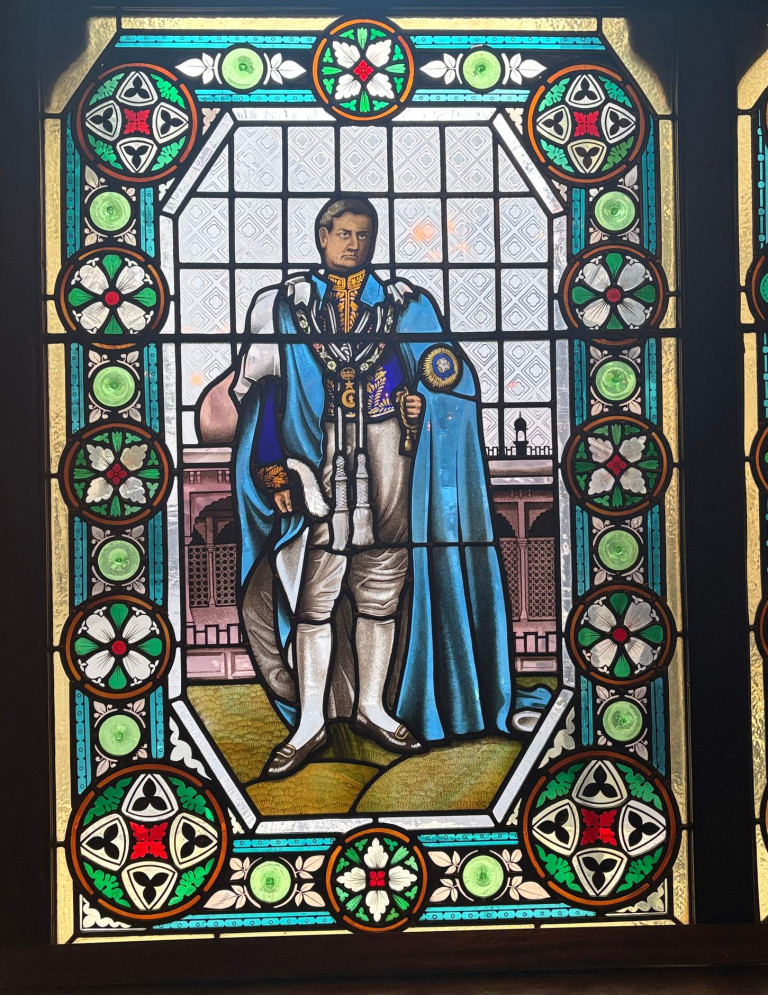
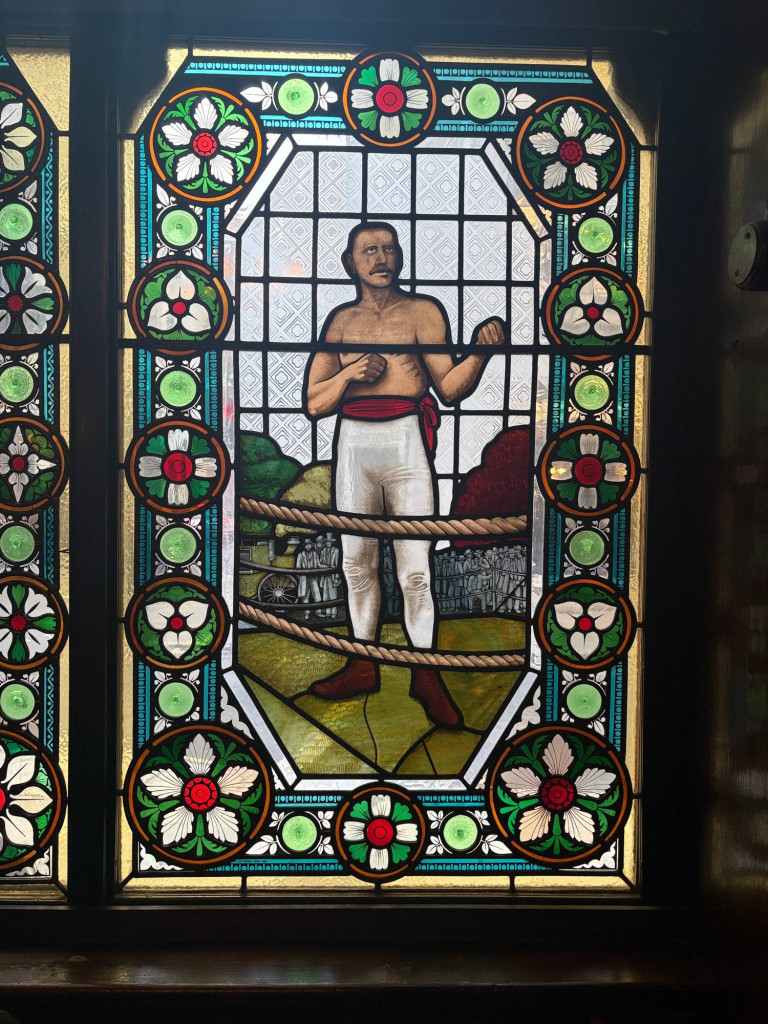
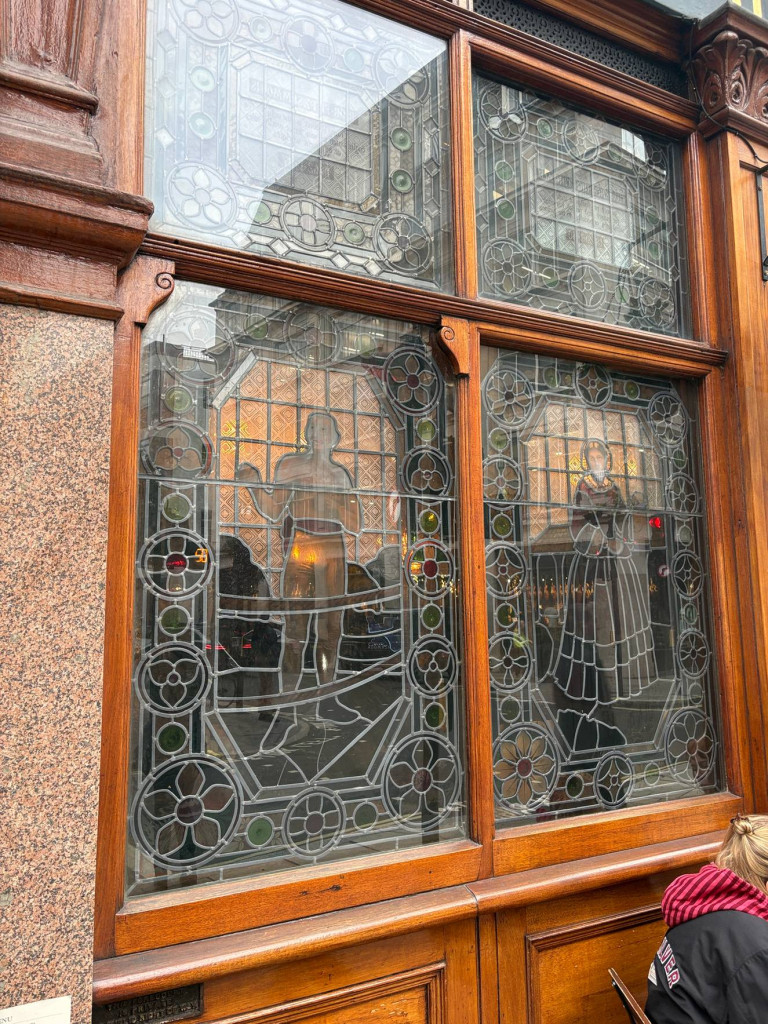
The figure panels run around the ground-floor bay and continue into the rounded corner, where several panels are curved to follow the line of the frame. Each figure stands on a painted landscape or sporting ground against a lattice of pale textured squares, inside a border of red-and-white rose roundels, green roundels and turquoise beading. Above each figure a smaller top light carries a decorative panel. Captions identify the subjects and give their dates. The figures recorded in the windows are:
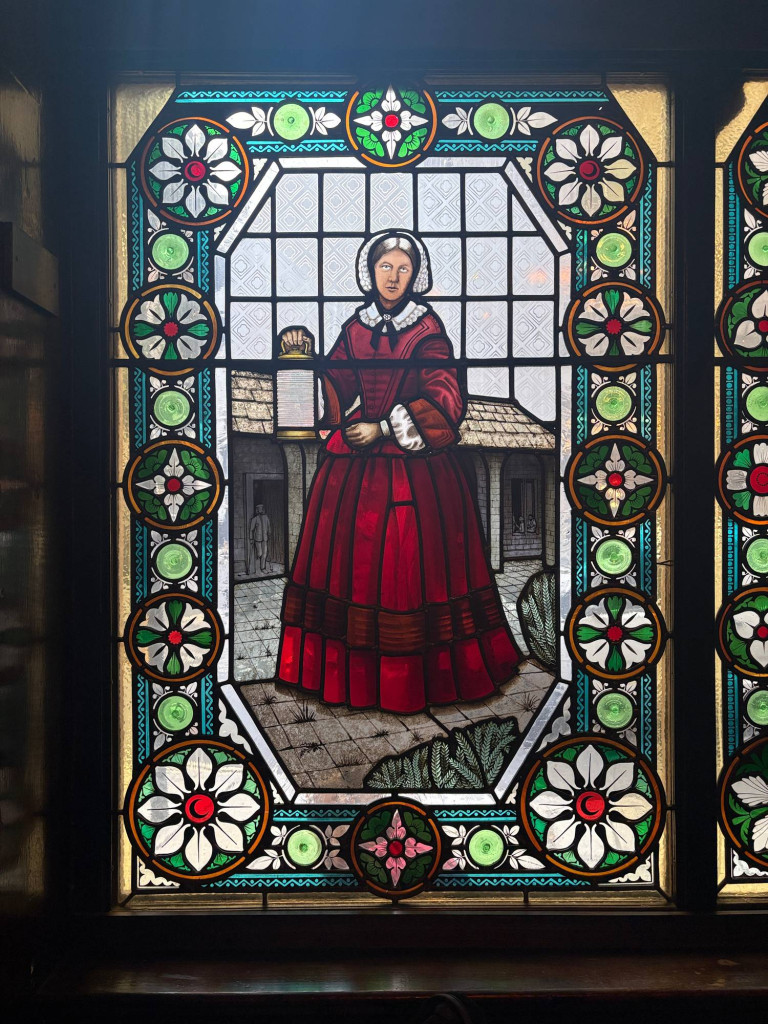
- Florence Nightingale (1820–1910), the nursing reformer whose work in the Crimea raised standards in hospitals. She is shown in a vermilion dress.
- W. G. Grace (1848–1915), the cricketer who dominated the English game for more than thirty years, shown at the crease.
- Captain Matthew Webb (1848–1883), who in August 1875 became the first person to swim the English Channel, crossing from Dover to Calais in nearly twenty-two hours. He died attempting to swim the rapids below Niagara Falls.
- Edward Whymper (1840–1911), a wood engraver by profession, who led the first ascent of the Matterhorn in 1865; the caption also credits him with the first ascent of Chimborazo in Ecuador.
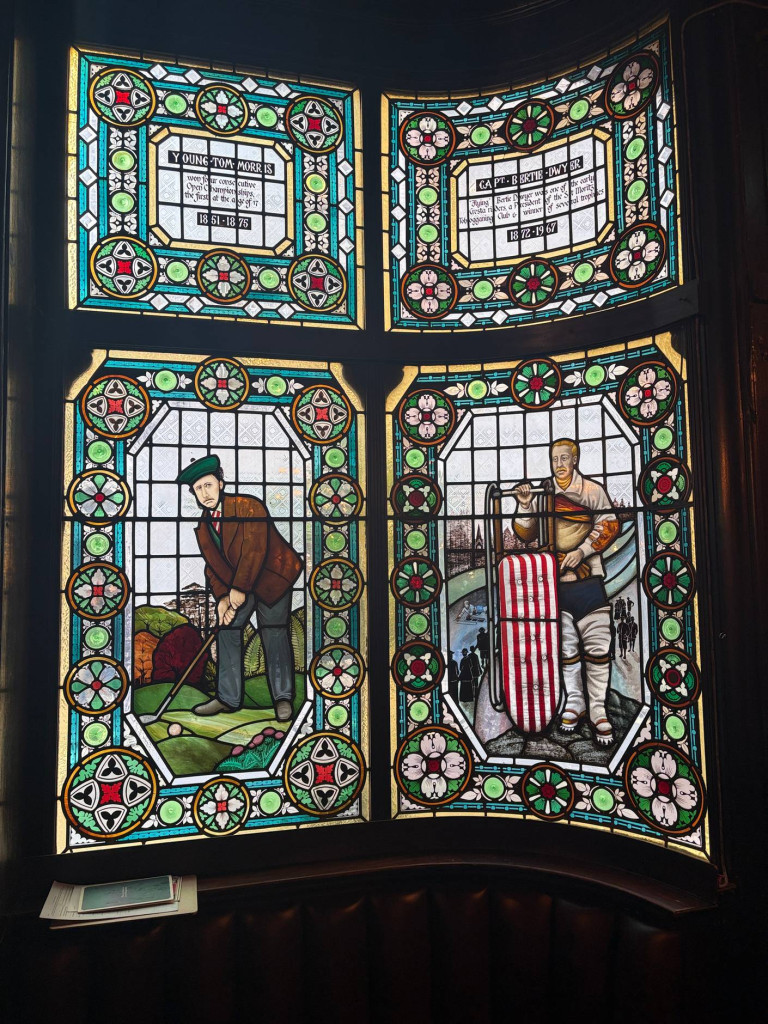
- Young Tom Morris (1851–1875), the St Andrews golfer who won the Open Championship four times in succession (1868, 1869, 1870 and 1872; no Open was held in 1871), the first at seventeen. He died on Christmas Day 1875, aged twenty-four.
- David Livingstone (1813–1873), the missionary who explored and mapped large areas of southern and central Africa.
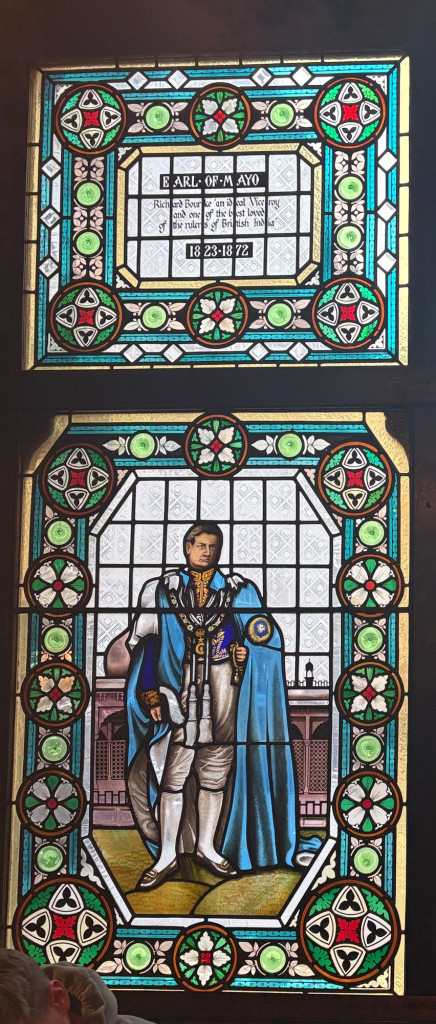
- Richard Bourke, 6th Earl of Mayo, Viceroy of India from 1869, who was assassinated during a visit to Port Blair in the Andaman Islands in 1872. He is shown in a long blue robe of state.
- Captain Bertie Dwyer, whose caption gives his dates as 1872–1967 and describes him as “Flying” Bertie Dwyer, an early Cresta Run rider and a President of the St Moritz Tobogganing Club.
- Bob Fitzsimmons, the boxer, born in Helston, Cornwall, who became the first man to hold world titles at three weights: middleweight (1891), heavyweight (1897) and light-heavyweight (1903). He is shown in the ring, with the ropes and spectators behind.
- Fred Archer (1857–1886), the jockey who was Champion Jockey for thirteen consecutive seasons from 1874 and rode twenty-one Classic winners. He is shown in racing silks with a grandstand behind.
- William Renshaw (1861–1904), the lawn tennis player who won seven Wimbledon singles titles (1881–86 and 1889) and, with his brother Ernest, a series of doubles titles. He stands with a racket raised, with a second racket and balls at his feet.
Published accounts also record a panel for Queen Victoria, marked with the royal cipher VRI, and a panel bearing the pub’s name.
Who designed the windows
The figure panels are the work of Ann Sotheran, a stained glass artist based in York and a Fellow of the British Society of Master Glass Painters. She studied three-dimensional design at the art school in York and worked as studio assistant to the York glass painter Harry Harvey before setting up her own workshop in 1987, so the Champion commission came early in her independent career.
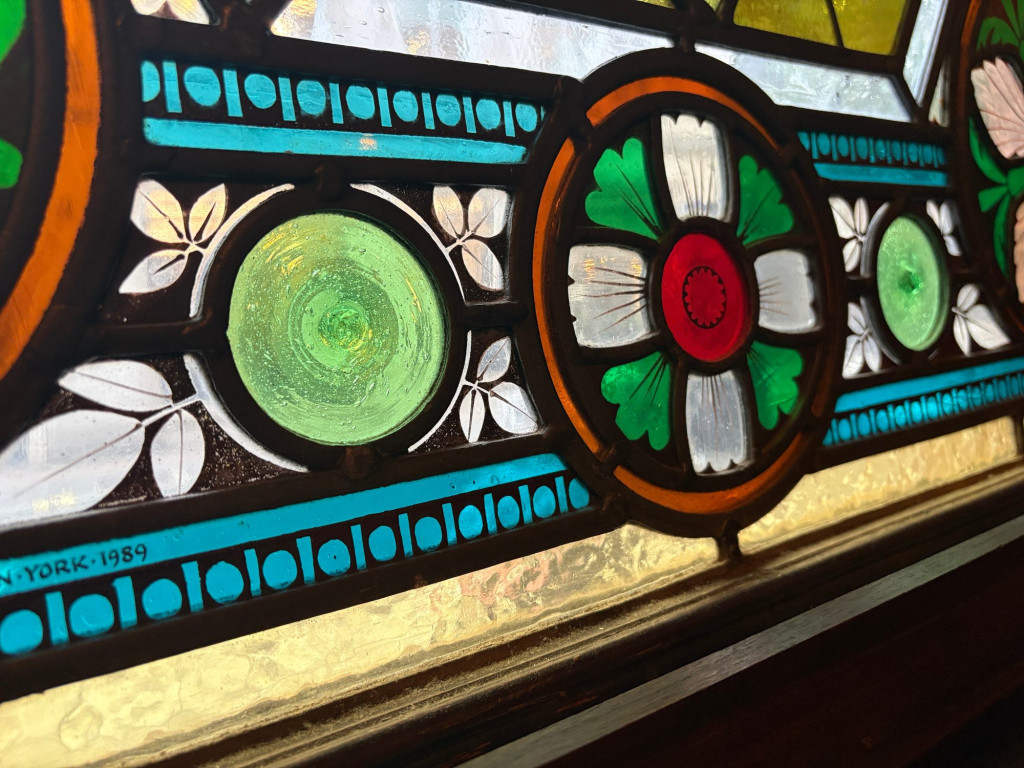
Published accounts agree that the windows were designed and installed in 1989 and were commissioned by a member of the brewery’s owning family. A border strip in one of the windows carries a painted inscription ending with the words York and 1989, which matches that date. In a comment attributed to the artist and published online, Sotheran explained that the original brief asked for Victorian champions of social and cultural history. She argued that such a list would be dominated by men in dark suits, which would produce dull glass, and chose subjects for whom good contemporary photographs survived, so that clothing and equipment could be drawn accurately. The same comment connects the idea with stained glass the chairman had admired at the Café Royal in Edinburgh, which has a set of stained glass windows of British sportsmen by the Edinburgh firm of Ballantine and Gardiner. She also acknowledged some freedom with colour: Florence Nightingale is unlikely to have worn vermilion.
How the glass was produced
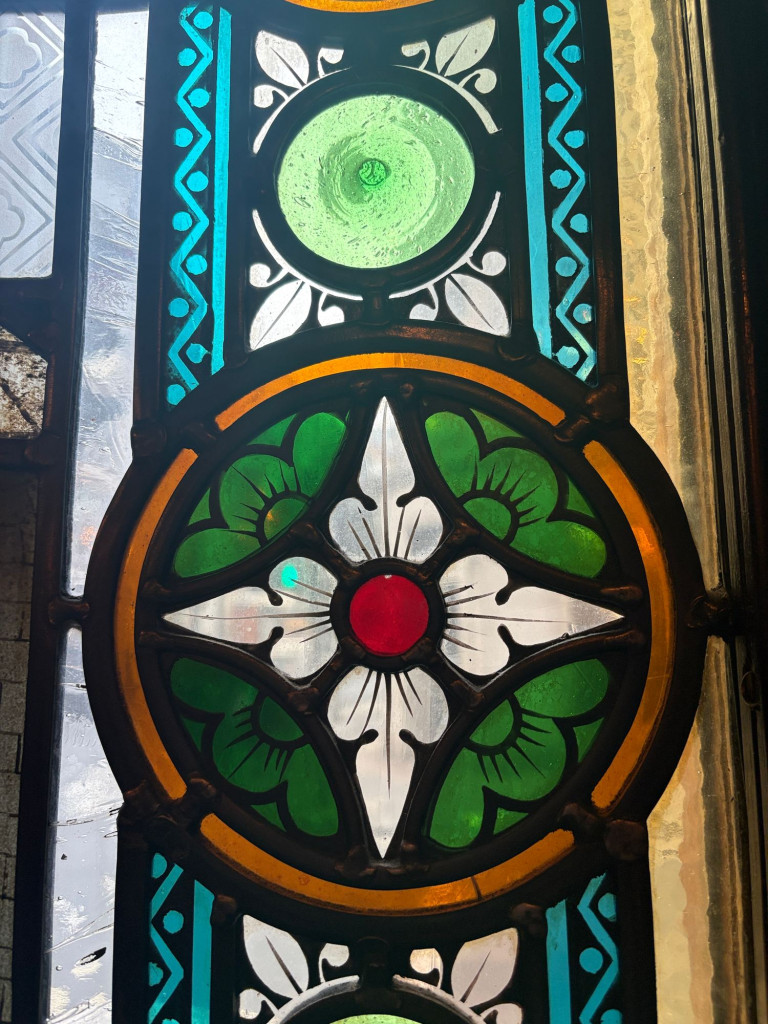
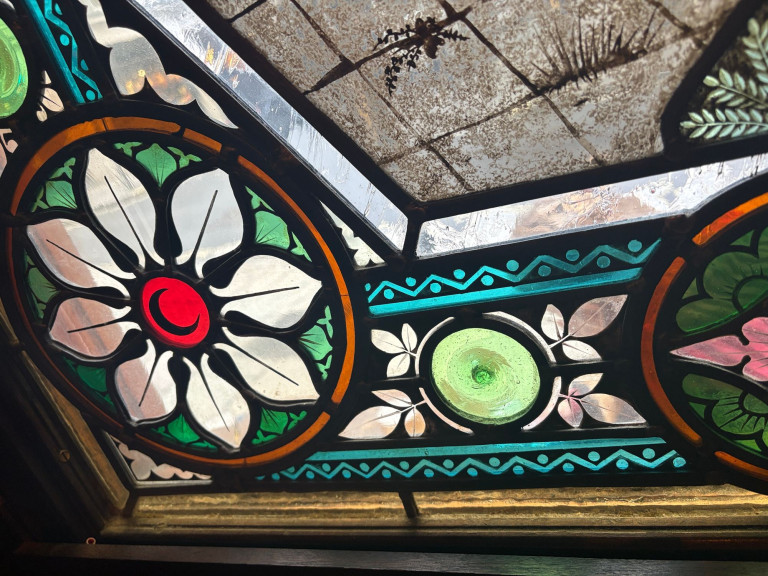
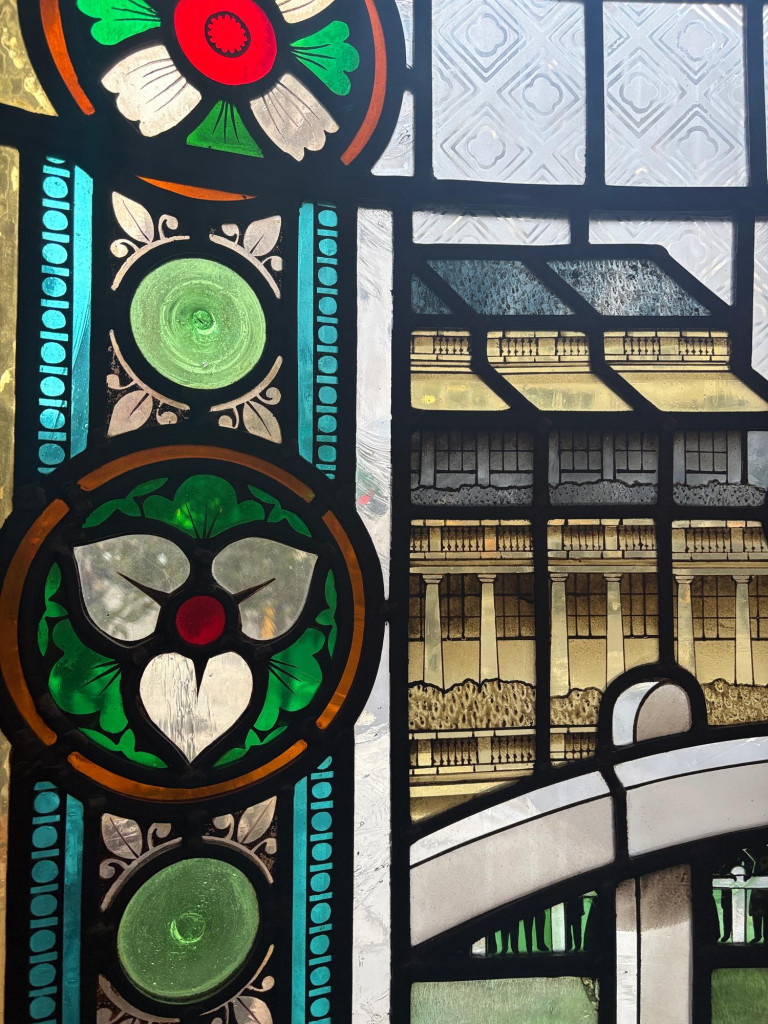
The figure panels follow the methods of Victorian figurative glass. The faces, hands, folds of clothing and the details of each sporting setting are painted on the glass in vitreous paint, a mixture of finely ground glass and metal oxides, and then fired in a kiln so that the paint fuses permanently to the surface. The close-up photographs show the characteristic layering of glass painting: a darker line for the features and outlines, with lighter washes and highlights scraped back to model the form. The method is explained further in firing painted and silver-stained glass. The coloured pieces are then assembled in lead came, and the curved panels in the corner of the bay were formed to the curve of their frames.
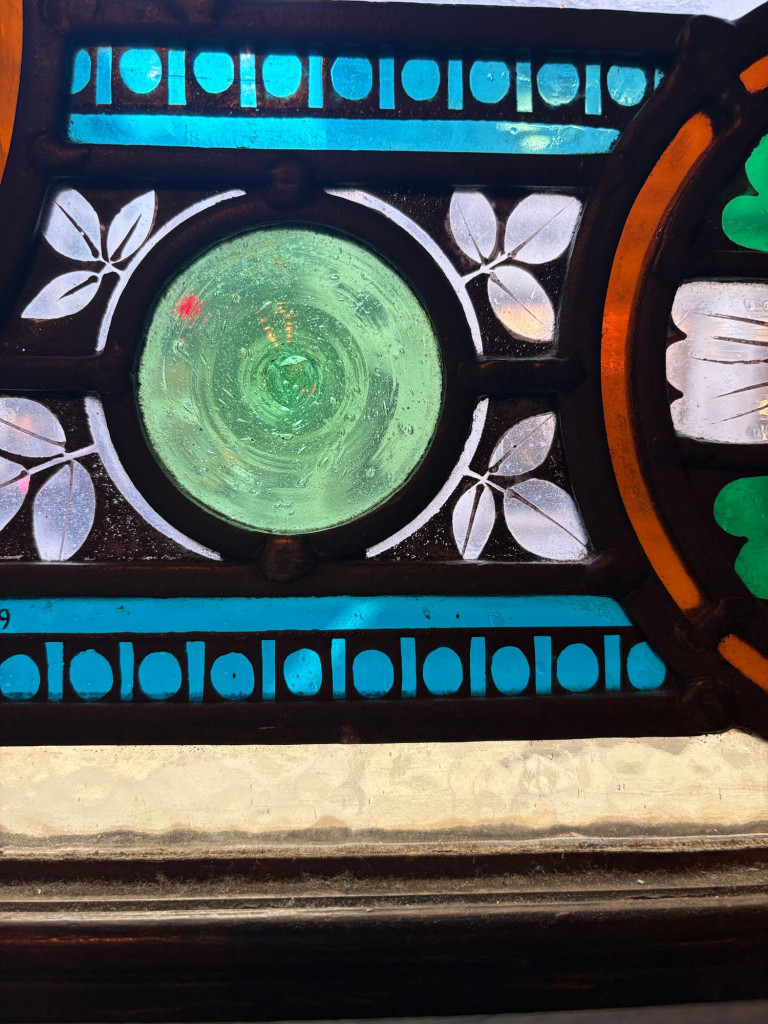
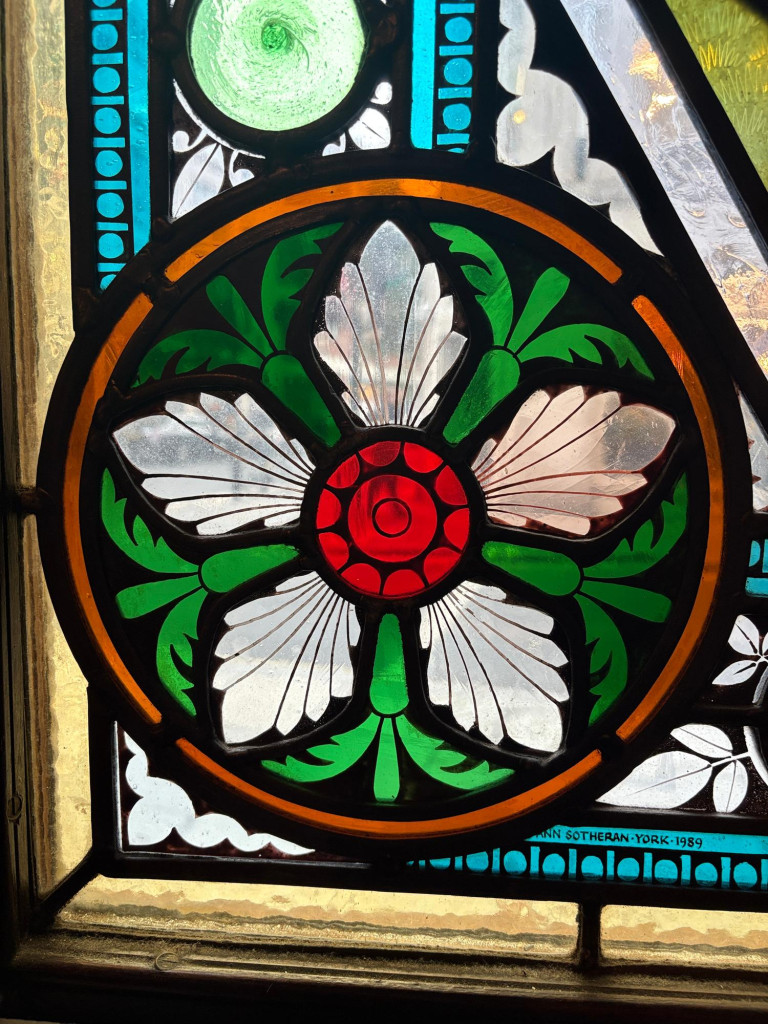
The borders draw on the vocabulary of late Victorian domestic and pub glazing. The green circles are roundels with a raised, rippled centre, set in turquoise beading, and the larger rose roundels combine painted white petals with a red centre; the background to these motifs is explained in roundels and bullseyes. Pale grey ears of wheat, painted and fired, fill the spaces between the roundels in the upper borders.
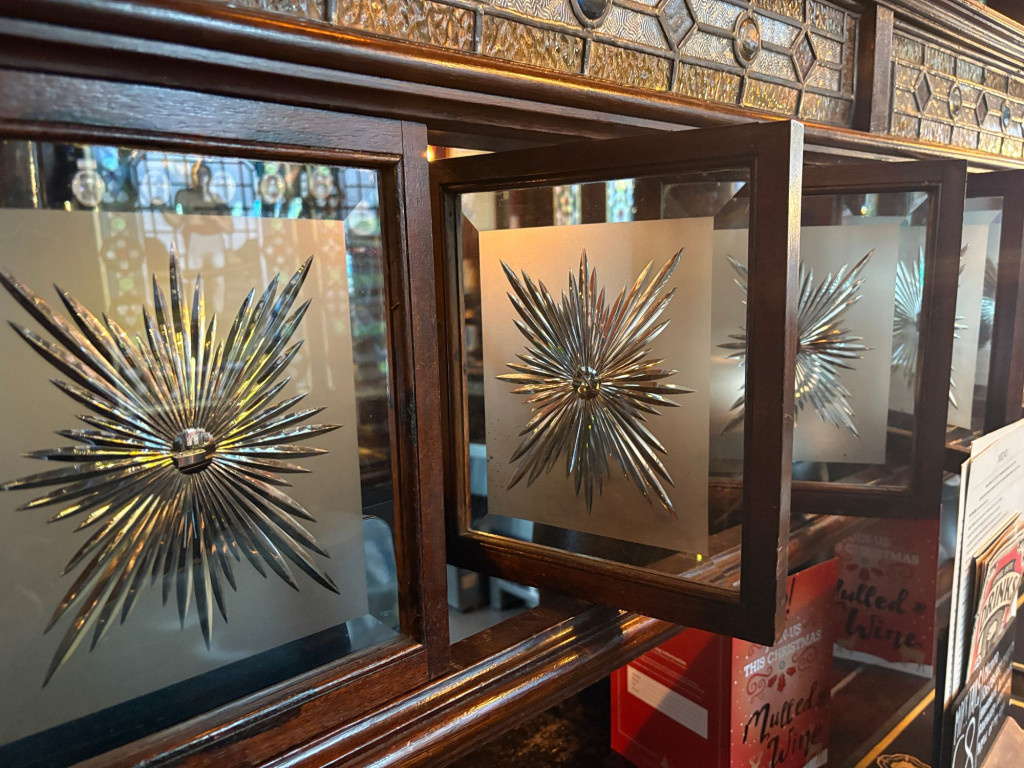
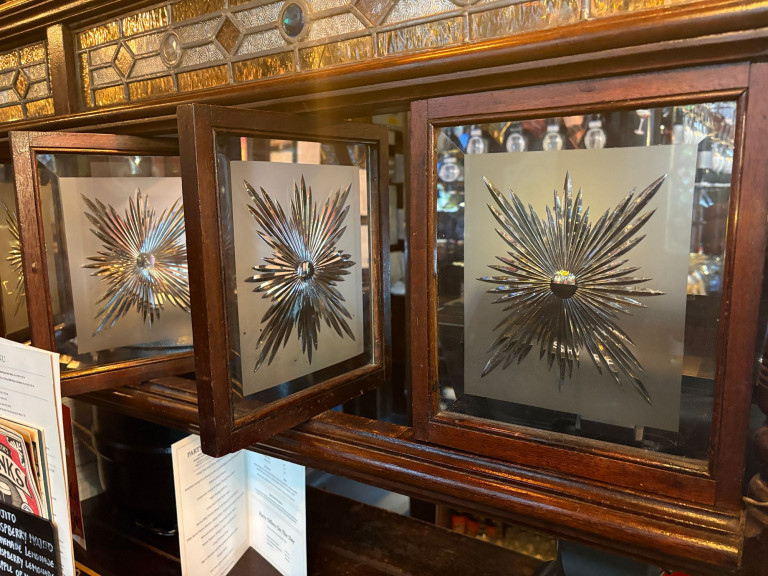
The screens and doors use different techniques. Acid etched glass is produced by protecting the design with a resist and exposing the rest of the sheet to hydrofluoric acid, which leaves a frosted or satin surface. Brilliant cut glass is cut with stone wheels of different sizes and profiles, then smoothed and polished until the cuts shine. Victorian pubs used both together for privacy and for sparkle under artificial light, a development traced in the history of acid etched glass and brilliant cut and bevelled glass.
The doors, partitions and bar screens
The entrance doors hold tall, narrow leaded panels with a vertical chain of roundels and flower motifs in the same colours as the figure windows, so the doors and bay read as one scheme. On the bar counter, a row of small framed screens carries a radiating starburst, cut deep into a frosted ground with a polished boss at the centre. Screens of this kind recall the Victorian snob screen, which gave drinkers a measure of privacy from the staff.
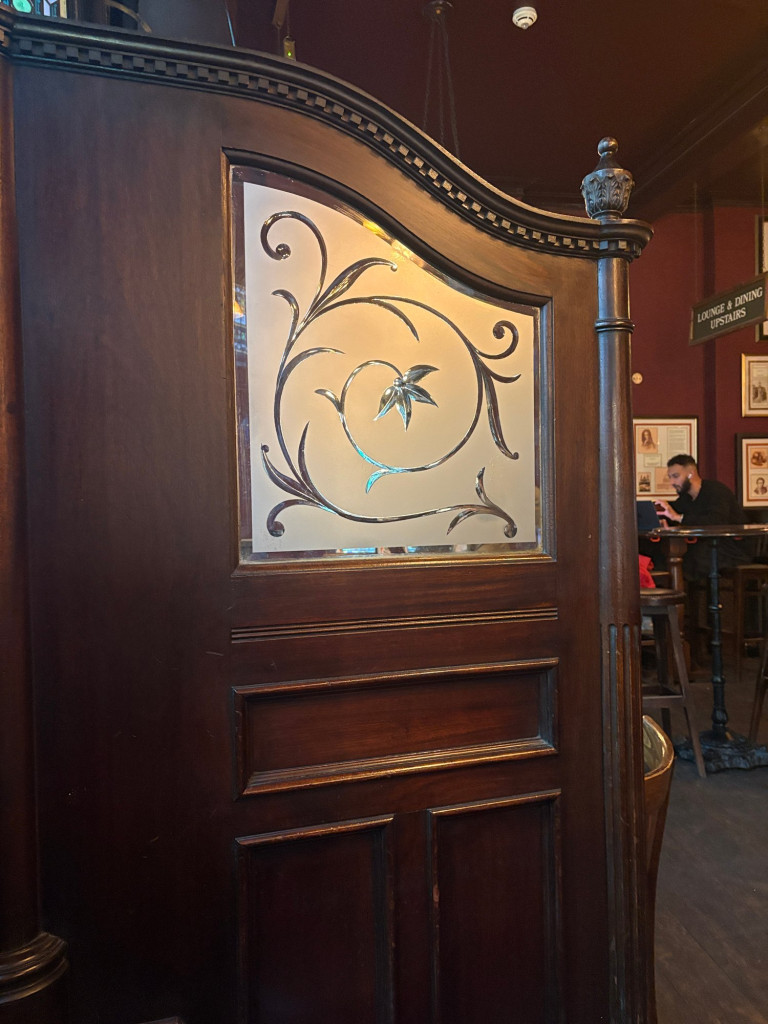
The timber partition doors within the pub have shaped heads and frosted panels decorated with a flowing scroll and a central leaf. The scroll lines are brilliant cut, catching the light as clear polished grooves against the white ground, and the leaf is cut more deeply so that it appears darker. The available sources do not date the cut and etched panels; they may belong to the Victorian fittings, the 1950s refit or the later restoration, and the list entry notes only that some fittings have been renewed. Lettered door glass marks the lavatories.
More of the glass
Further photographs from the visit show more of the glass at the Champion, from the details of individual panels to the way the windows and screens work together in the rooms.
Seeing the glass today
The figure panels are best seen from inside by daylight, when the painted detail and the colour of the borders are clearest. From the pavement the same windows read mainly as a pattern of lead lines and dark glass, with the diamond and lattice leading visible on the curved corner. After dark the position reverses, and the lit interior makes the figures visible from Wells Street and Eastcastle Street. The cut screens on the bar and the partition doors respond to the pub’s lamps rather than to daylight, and the starbursts show their full effect when seen at an angle. Photographs of the panels, doors and screens are in the photo gallery, and the broader context of glass in licensed premises is covered in decorative glass for pubs, shops and restaurants. Advice on care is given in how to clean decorative glass.
The Champion shows how a late twentieth-century commission can sit within a Victorian building, with windows that look far older than they are.
Every photograph of the glass at the Champion is in the stainedglass.co.uk gallery, with the details of each panel.