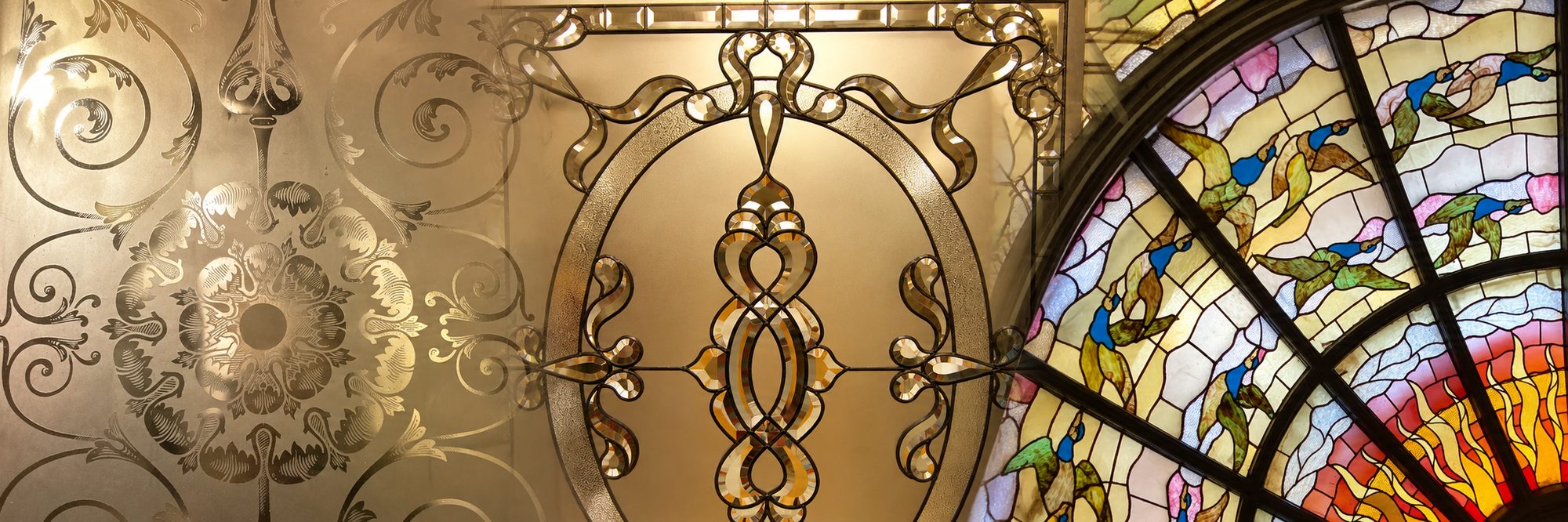
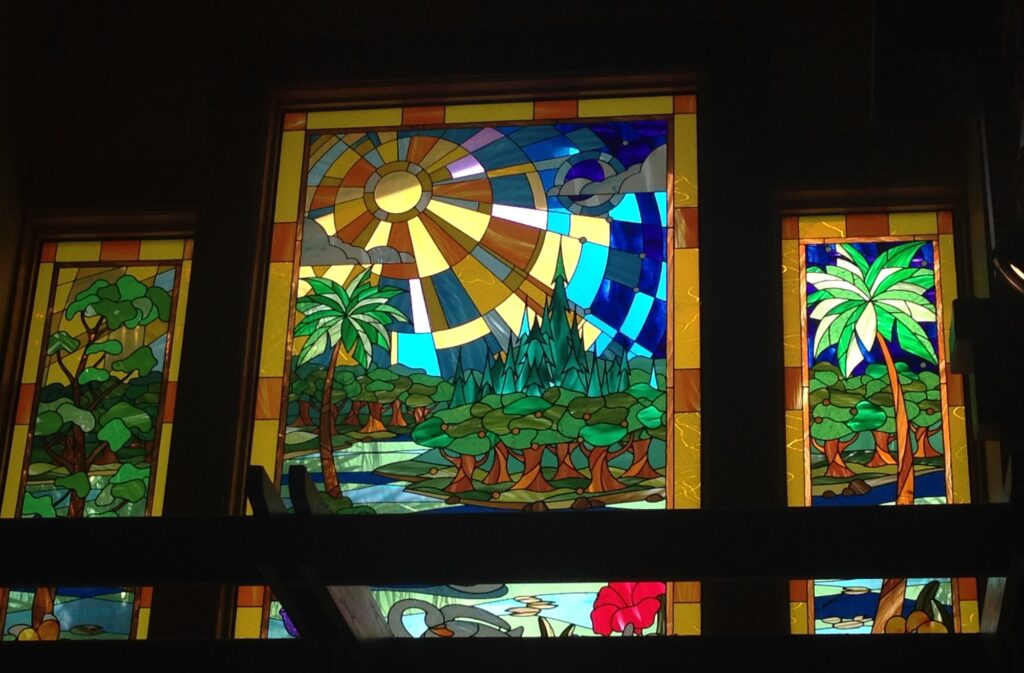
Decorative architectural glass covers many different crafts. Each page below explains one type, how it is made and where it is used, and links to photographs of real examples.
- Traditional Stained Glass: coloured glass, painted and held together with lead, as in the great church windows.
- Leaded Lights: windows made of many small pieces of clear or coloured glass held in lead.
- Copper Foil Stained Glass: glass joined with copper foil and solder, known as the Tiffany method.
- Ecclesiastical Stained Glass: glass made for churches and cathedrals.
- Overlay Stained Glass: a modern way of getting the look of a leaded window using applied materials.
- Decorative Bevelled Glass: thick glass with its edges ground and polished at an angle, used in doors and windows.
- Acid Etched Glass: a frosted, smooth surface made by acid eating into the glass.
- Sandblasted Glass: frosted and carved designs made by firing abrasive at the surface.
- Brilliant Cut Glass: deep, polished grooves cut into glass with spinning wheels.
- Fused Glass: pieces of glass heated in a kiln until they join.
- Kiln Formed Glass: glass shaped by heat, by slumping, casting or fusing.
- Conservation and Restoration: keeping and repairing old glass.
The history of each technique is covered in A Short History of Stained Glass and its articles, and the methods used today in Tools and Equipment.
Not sure what a word means? The glass glossary explains over 250 terms used in stained glass, decorative glass and glass making.
Looking for places to see stained glass? Try the stained glass tour of the UK.
Ideas for homes and businesses: glass for a front door, etched glass for homes, bevelled glass for homes, decorative glass for kitchens, bathrooms and stairs and decorative glass for pubs, shops and restaurants.