
Crown glass
Crown glass is produced by blowing a bubble of glass, transferring it to a rod, and spinning it rapidly until it opens and flattens into a large disc. The disc is cut into panes. At the point where the rod was attached, a thick lump called the bullseye is left, which is the origin of the round glass pieces used in the lights of old doors and windows.
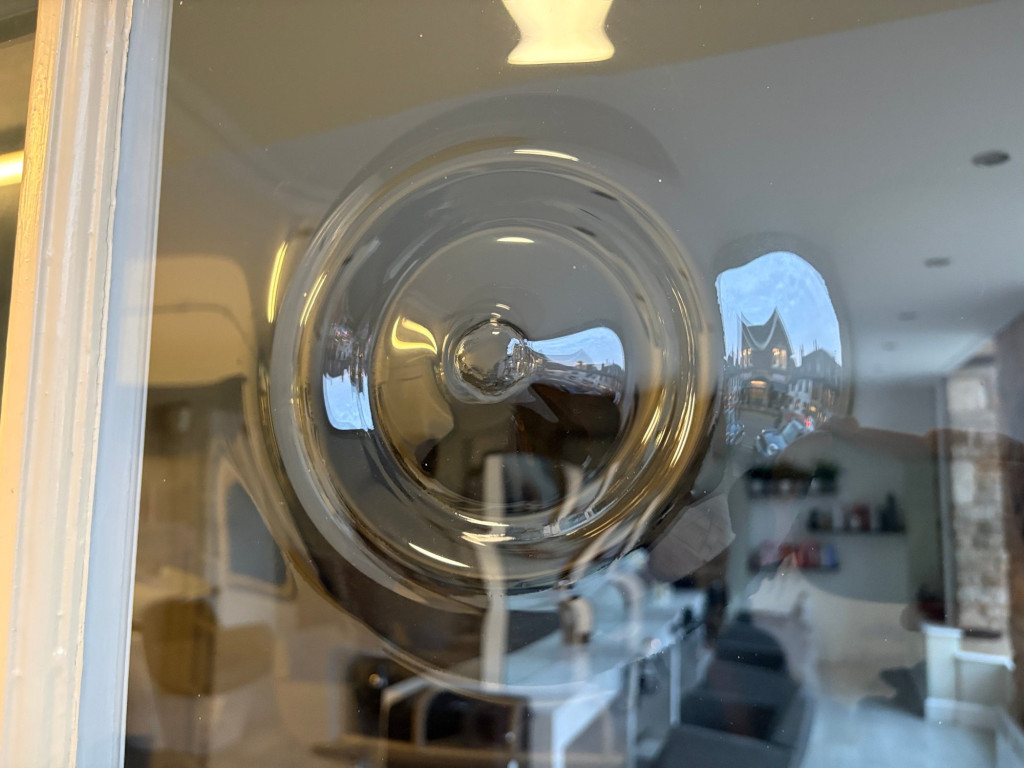
Crown glass was the main way window glass was made in Britain from the medieval period until the early nineteenth century. It has a fire-polished brilliance and a faint swirled pattern, and the panes are limited in size by the size of the disc, which is why old windows are composed of small panes.
It was replaced first by cylinder glass and later by plate and float glass. Small quantities are still produced by hand for restoration.