
Float glass
Float glass is flat glass made by pouring molten glass on to a bath of molten tin, where it spreads out and floats. The result is glass with a flat, very uniform surface and parallel faces. The process was developed in Britain in the 1950s and is now how almost all ordinary window glass is made.
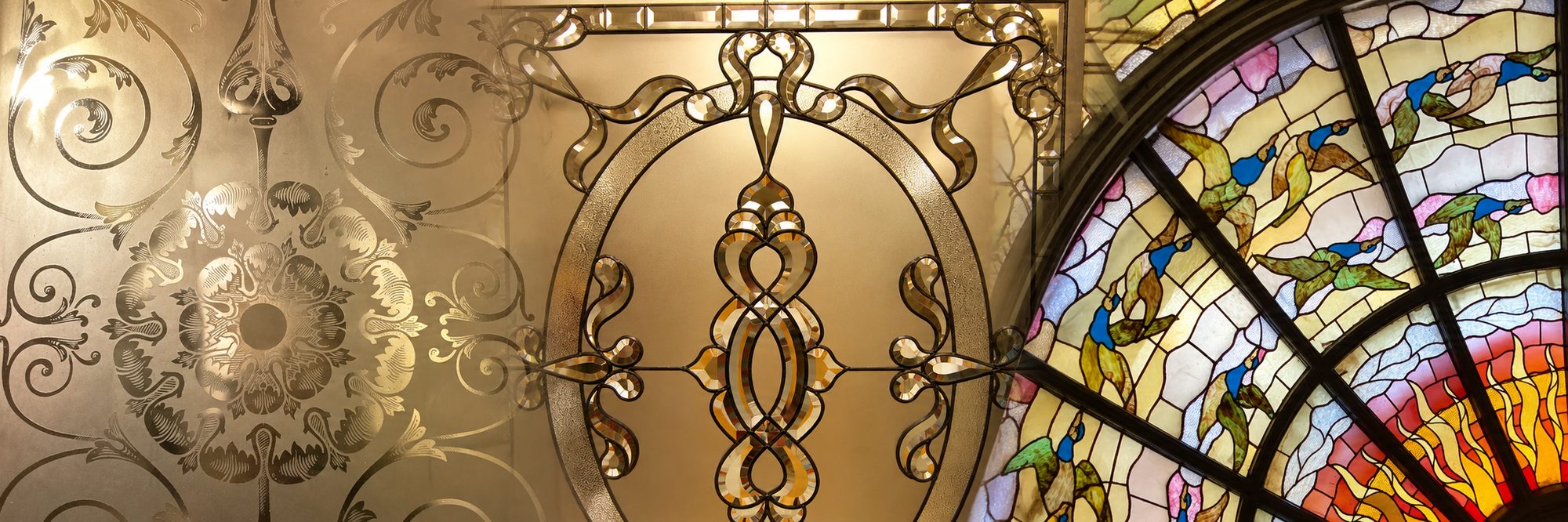
Float glass is the starting point for much of today’s decorative glass. It is the clear glass that is bevelled, acid etched, sandblasted, engraved and laminated, and the base for mirrors and toughened or double glazed units.
One face of float glass has been in contact with tin, which can affect how paint, adhesives and fusing behave on it. For that reason, makers of fused and painted work check which side is which.