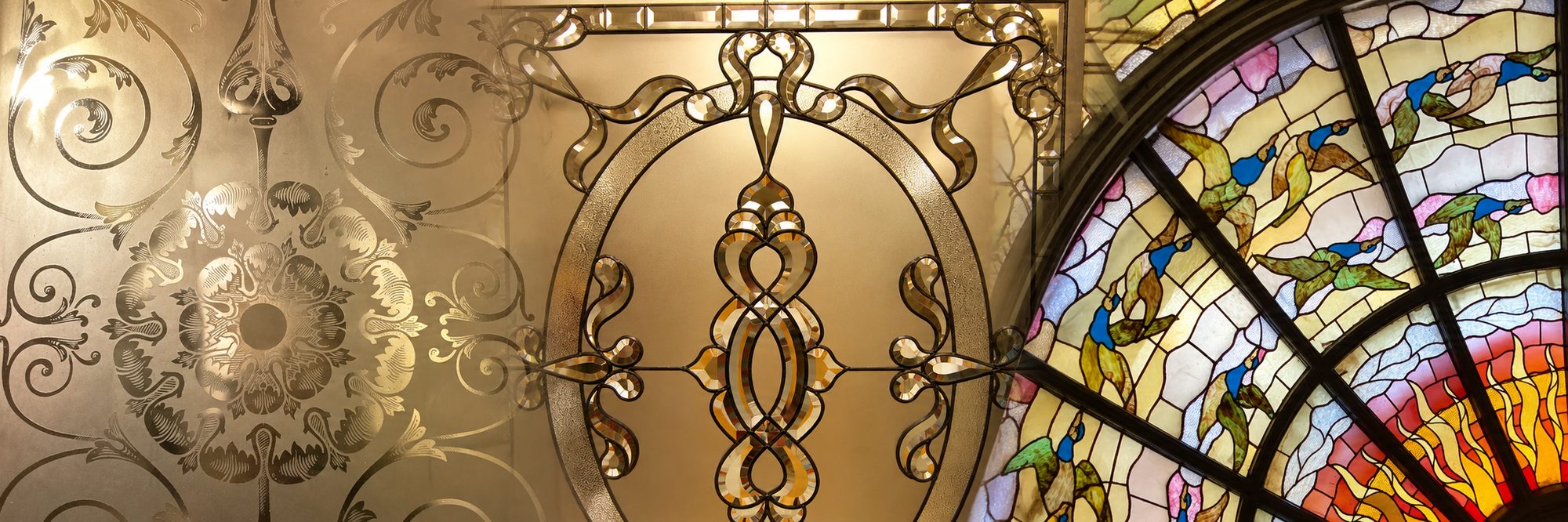

Acid etching
Acid etching is the process of frosting or patterning glass with hydrofluoric acid. The areas that are meant to stay clear are protected by a resist, such as a vinyl stencil, wax or a printed film, and the acid is applied as a cream or a bath. Where it touches the glass it leaves a smooth, soft, satin surface.
The depth is controlled by the strength of the acid and the time, so a light etch gives an even frosted finish and a longer treatment produces deeper relief, called acid embossing. Acid etching is smoother and more delicate than sandblasting, which cuts the glass physically and leaves a coarser texture.
It was widely used in the Victorian period for pub windows, doors and screens and is still used for privacy glass, signs and decorative panels. Hydrofluoric acid is extremely hazardous and must only be used with proper training and protective equipment.
Related terms
- Etched glass
- Acid embossing
- Acid polishing
- Hydrofluoric acid
- Etching cream
- Resist
- Sandblasting
- Frosted glass