
Durham Cathedral, begun in 1093 and a World Heritage Site together with the neighbouring castle, is known mainly for its Romanesque stonework rather than its glass. The windows nevertheless cover more than a century of work, from the Victorian period to commissions of the last few years, and they make a useful contrast with the older glass at York and Canterbury.
Windows to look for
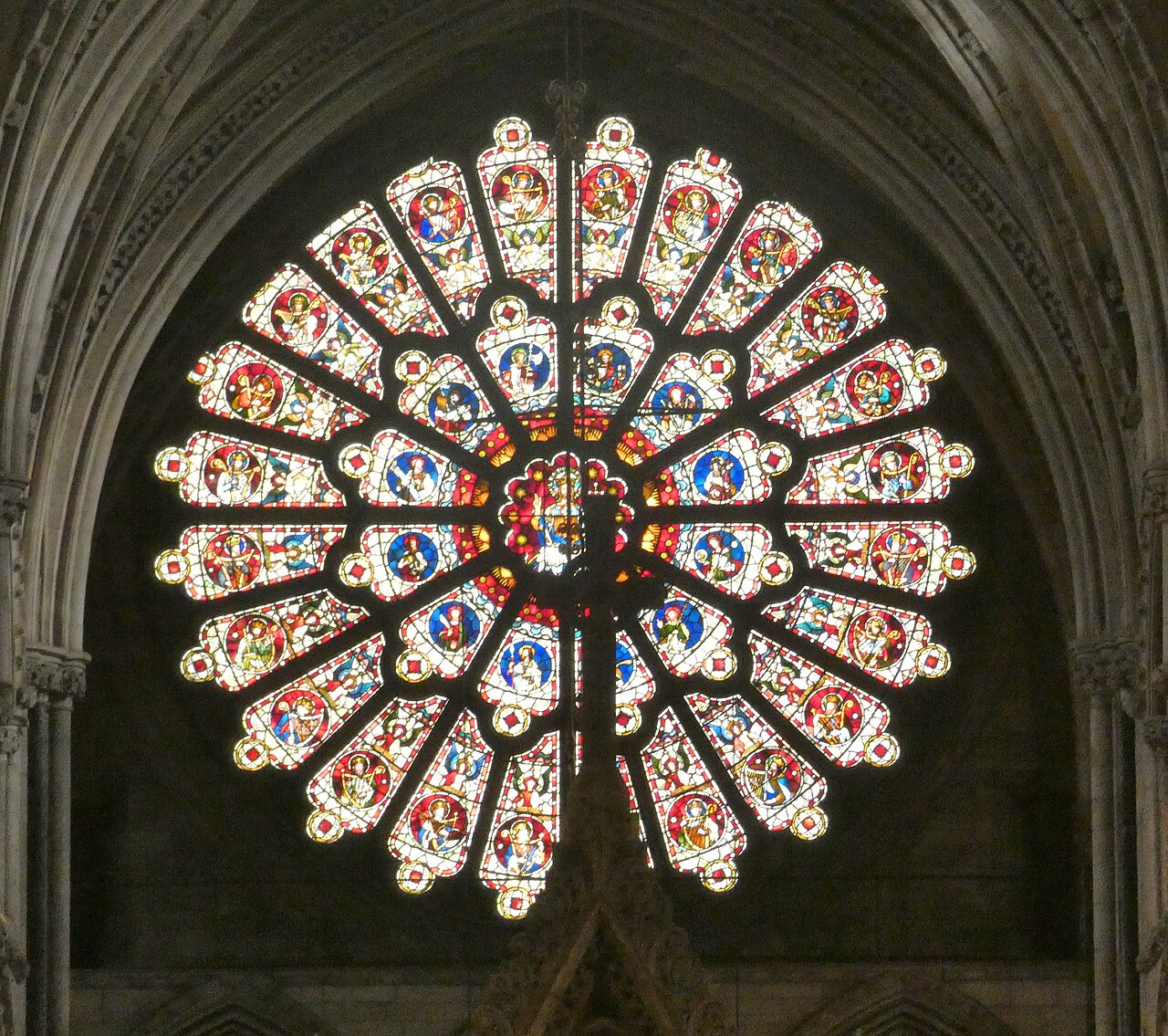
The great rose window at the east end of the Chapel of the Nine Altars is the cathedral’s best-known piece of ecclesiastical stained glass. In the south transept, Henry Holiday’s Moses window dates from 1895 to 1896. The Daily Bread window in the nave, by Mark Angus (1984), shows the Last Supper from above, with Christ at the head of the table.
More recent work includes Thomas Denny’s Transfiguration window, installed in 2010, and the Illumination window of 2019 by Mel Howse, a memorial in the form of a seascape made from etched and enamelled glass plates.
| Place | Details |
|---|---|
| Location | Durham, County Durham, England |
| Type | Cathedral |
| Period | Victorian to modern |
| Glass artists | Henry Holiday; Mark Angus; Thomas Denny; Mel Howse |
Are you responsible for this building?
If you are connected with the administration of this location, you are welcome to supply StainedGlass.co.uk with photographs so that a detailed page can be written about the location. Where photographs are provided and approved, a link to the location’s own website is added to the page. Approval is checked before anything is published.
The building and its glass can also be covered in a Location Article: invite StainedGlass.co.uk to visit you. Visits are limited, so not every invitation can be taken up.
Related pages
- Stained glass tour of the UK
- How to read a church window
- Churches and Cathedrals
- Famous workshops and makers
- Ecclesiastical stained glass
- York Minster
Published 4 November 2026