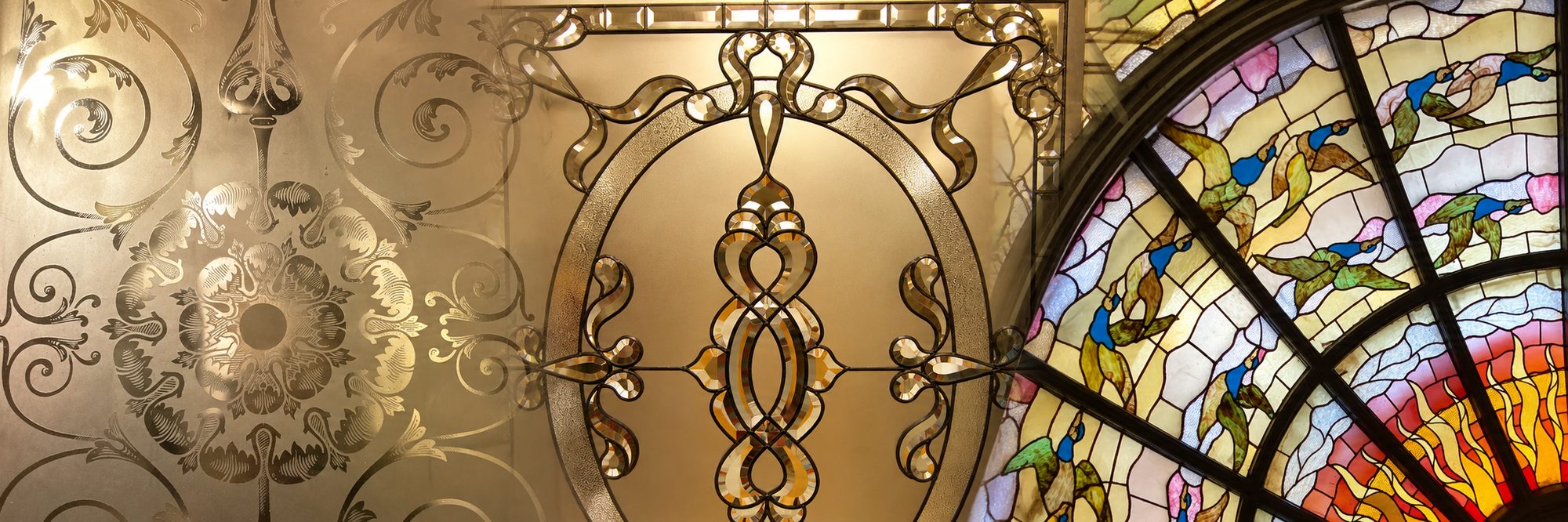

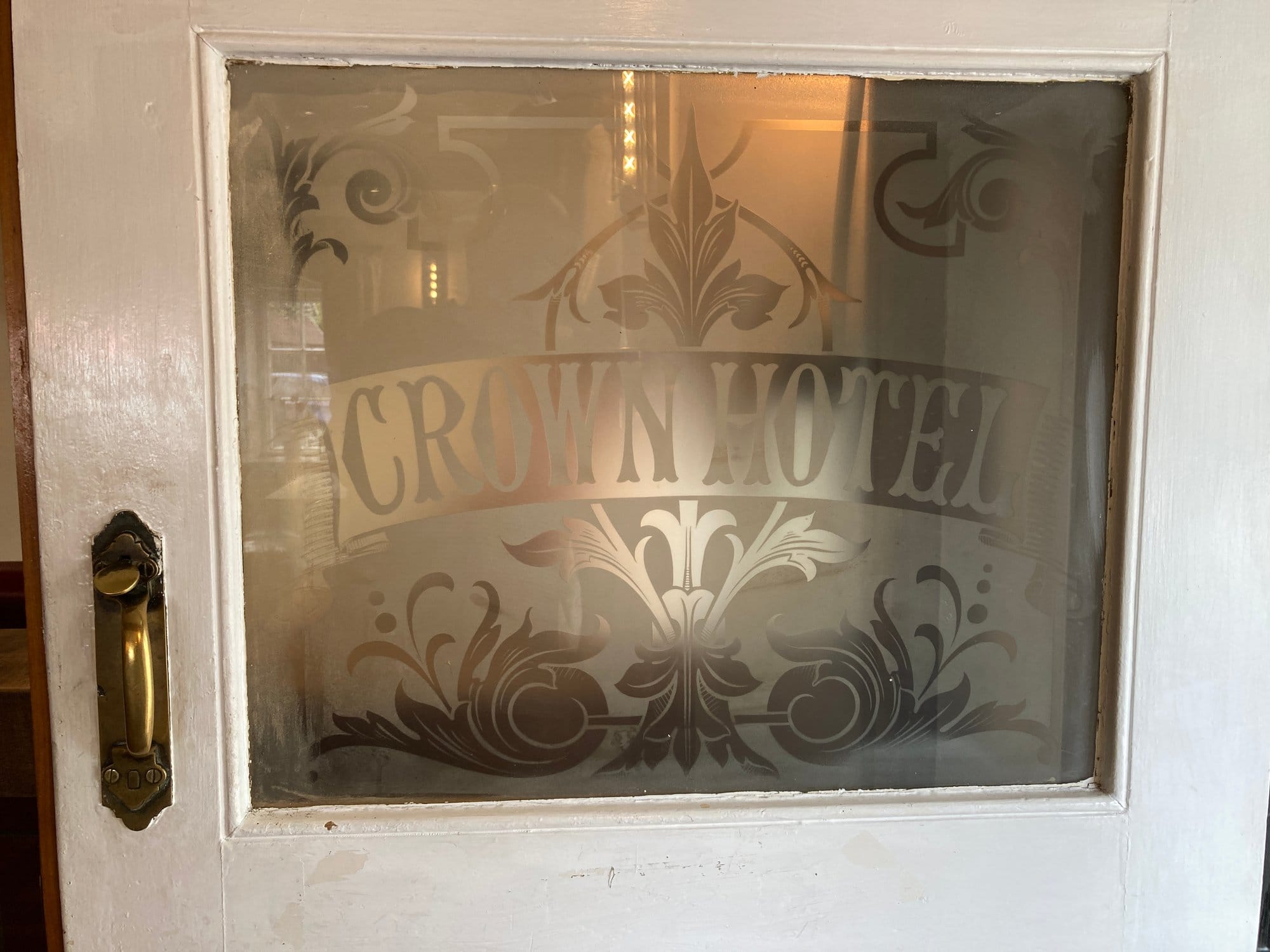
Acid etching is the process of eating away the surface of glass with acid, so that the treated areas turn from clear to a soft, milky white. Wherever the glass has been protected, it stays clear. Done well, the result is a pattern that seems to float in the glass, bright when light hits it and almost invisible from some angles.
It is the look most people picture when they think of a Victorian pub window or the glass in a hotel door. It is also the finish behind the plain frosted glass used in office partitions and bathroom windows, though that is the same chemistry used to a very different purpose.
How acid etching works
The principle is simple. Glass is mostly silica, and hydrofluoric acid dissolves silica. Anywhere the acid touches, it roughens the surface on a microscopic scale. A rough surface scatters light instead of letting it through, which is why the etched areas look frosted.
To get a pattern, the parts of the glass that should stay clear are covered with a resist, a coating that the acid cannot get through. Traditionally this was wax or bitumen, painted or transferred on in the shape of the design. Today a stencil cut from a self-adhesive vinyl or a similar film is more common. The glass is then exposed to acid, either by dipping, or by laying a thick acid paste or cream on the exposed areas. After a set time the acid is rinsed away and the resist is removed, leaving a sharp-edged pattern of frosted and clear glass.
How long the glass is left in the acid decides the result. A short exposure gives a light, even frost. A longer one cuts deeper, and where the design allows it, the effect can be controlled so that some areas are lightly frosted and others heavily, which gives shading to the pattern.
What the finish looks like
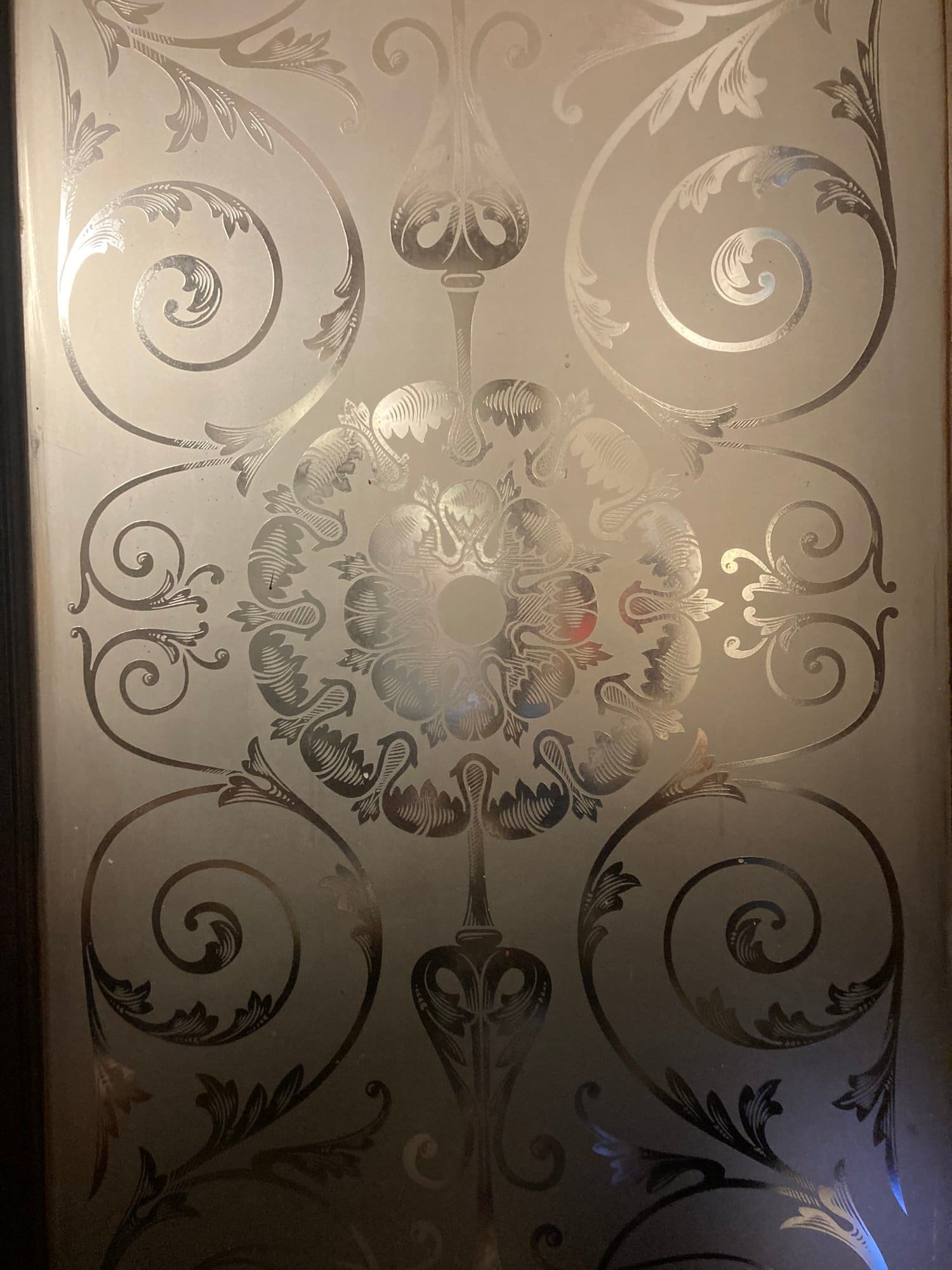
A well-etched surface feels smooth, almost silky. It has a fine, even grain, with no visible dots or texture, which is the quickest way to tell it from sandblasting. A sandblasted surface is slightly harder and more granular, and it can be cut much deeper. If you are comparing the two, the page on sandblasted glass explains the difference in more detail.
Because the frosted areas take on dirt less readily than a deep-cut surface does, etched glass is a good choice for doors that are touched often. It does show fingerprints and grease, though, and a damp cloth is usually all it takes to clean it.
Where you find it
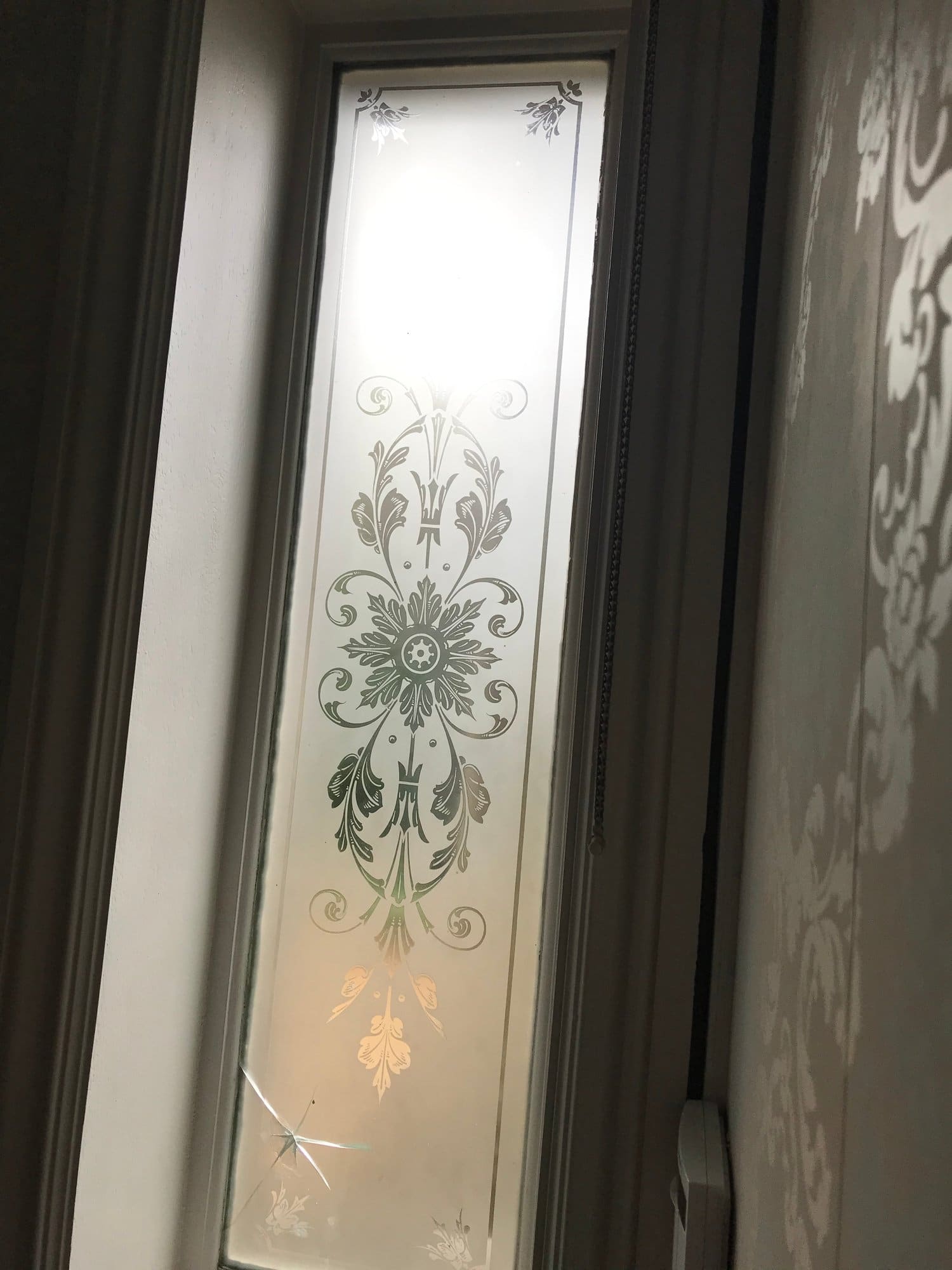
The great age of etched glass in Britain was the second half of the nineteenth century. Pubs, hotels, banks and shops used it for windows, doors and internal screens, often with lettering, crests and scrolled borders. It was frequently combined with other decoration, such as brilliant cutting, silvering and coloured glass. Snob screens in pubs are the best-known example. These were etched panels set in the bar front or in the windows so that customers could see out without being seen from the street.
Today acid etching turns up in front doors, internal glass doors, shower screens and room dividers, and in restoration work where a broken pane needs to be matched to its neighbours.
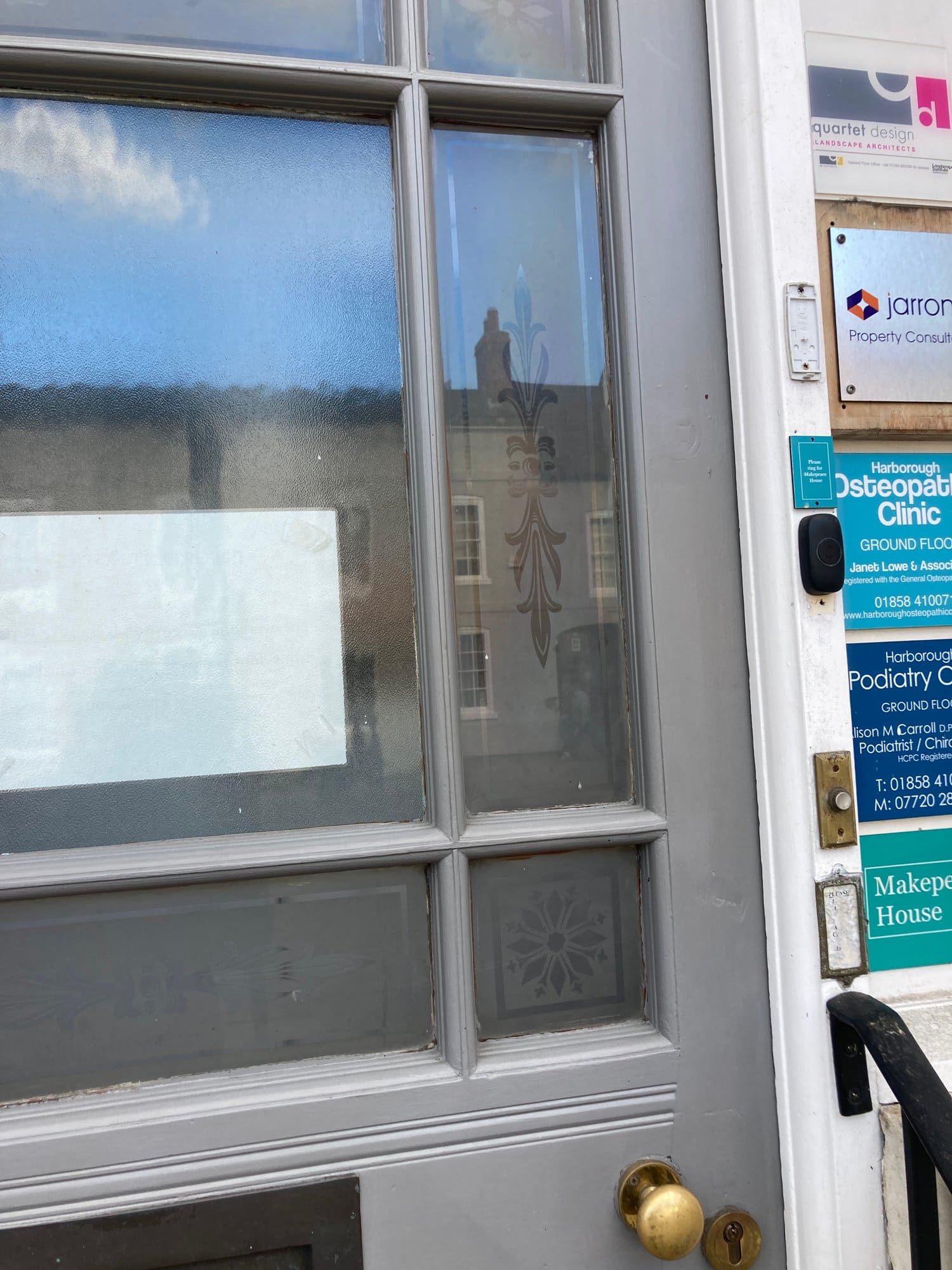
The safety problem
Hydrofluoric acid is one of the more dangerous chemicals in use anywhere. It can burn through skin without causing immediate pain, and it can do serious harm to the body even from small splashes. Professional etchers handle it under strict controls, with proper protective equipment, ventilation and a plan for emergencies. It is not something to try at home. The milder etching creams sold to hobbyists contain related chemicals and also need careful handling, with gloves and eye protection. Read the label and follow it.
For anyone who simply wants a frosted pattern on a window, there are safer ways to get the same look, such as a self-adhesive frosted film or sandblasting, which is a physical process with no acid involved.
Restoring etched glass
A broken etched pane cannot be mended. The glass has to be replaced, and the pattern copied from what is left of it or from a neighbouring panel. Pattern copying is a skill in itself, and it is one of the reasons old etched glass is valued. If you are weighing up what to do with a damaged panel, see the conservation and restoration page.
See more etched glass
The acid etched glass gallery collects photographs, with notes on each one.
Questions people ask
What is the difference between acid etched and sandblasted glass?
Both give a frosted finish, but they get there differently. Acid etching dissolves the surface chemically and gives a smooth, even frost. Sandblasting wears the surface away with fine grit fired from a nozzle, which gives a slightly coarser finish and allows deeper carving.
Is acid etched glass safe to have in a home?
Yes. Once the acid has been washed off, the finished glass is as safe as any other glass. The hazard is in the making, not in the product.
Can you etch glass at home?
Small craft projects with etching cream are possible, but follow the instructions closely and wear protection. Hydrofluoric acid itself should be left to professionals.
History and related reading
The History of Acid Etched Glass. See also A Short History of Stained Glass.
Care: see How to Clean Decorative Glass Safely.
At home: etched glass for homes, glass for a front door and decorative glass for kitchens, bathrooms and stairs.
Related glossary terms: Acid etching, Sandblasting.
Frequently asked questions
How is acid etched glass made?
The glass is covered with a protective resist, the design is cut or exposed, and acid then attacks the unprotected areas to leave a smooth, frosted finish. The resist is washed away afterwards.
What is the difference between acid etched and sandblasted glass?
Acid etching gives a fine, smooth satin surface. Sandblasting uses abrasive grit and can cut deeper, so it is better for textured and carved designs.
Does etched glass give privacy?
Yes. Frosted areas obscure the view while clear areas let light through, so a design can be planned to give privacy at the right height.
How should etched glass be cleaned?
A soft cloth and ordinary glass cleaner are normally enough. Abrasive pads and powders should be avoided because they can scratch the surface.