
Glasgow is to gain a museum devoted entirely to stained glass, which its backers describe as the first of its kind in Scotland. Announced on 7 October 2026, the project centres on Alf Webster, a stained glass artist who died in 1915, aged 31, in the second year of the First World War.
The home for the museum is Lansdowne Church, a former place of worship on Great Western Road near Kelvinbridge. Since 2013 the building has been in the care of Fact Three, a heritage charity that has repaired and conserved it, and other uses have been found for the premises alongside the museum. The museum will take the gallery level, while a comedy club currently rents the ground floor.
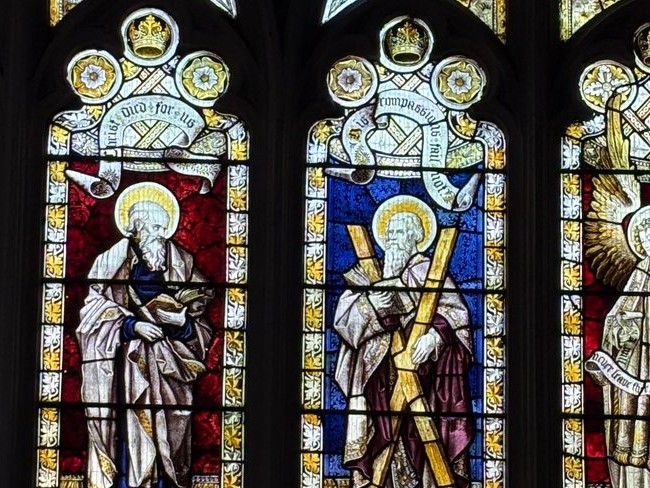
Two Webster windows remain in the church. The Templeton window, which shows the life of Christ in eight scenes, is still where it was installed. The McCowan window, put in during 1913 and 1914 and showing Holy Week across three lancets and a trefoil, was taken out in 2007 and stored because of its condition. Conservators have since repaired the 21 panels of one of the two windows, and secondary glazing has been fitted to protect it. A viewing platform has been built beneath the window, with a small room below for displays on Webster’s life.
Born in Glasgow in 1883, Webster attended the city’s School of Art and learned his trade in the studio of Stephen Adam Senior, which he took over following Adam’s death in 1910. Research carried out for the project suggests that his output was larger than has generally been recognised. Further examples of his windows survive elsewhere in Scotland, including a George Street church in Edinburgh.
The first phase attracted £132,000 from Glasgow City Heritage Trust, £15,000 from the Architectural Heritage Fund and £250,000 from the National Lottery Heritage Fund. A funding gap of about £25,000 remains for this phase, according to the charity, which expects the viewing platform and interpretation space to receive visitors from early 2027. A second phase, expected within five years and estimated at a seven-figure sum, would add windows by other Scottish artists, possibly displayed on a rotating basis.
Training is part of the project. The conservation team includes an ICON-accredited conservator-restorer and one of Historic Environment Scotland’s stained glass craft fellows, and the charity says that traditional skills, including glasswork, have been passed to newer members of the team. Historic stained glass window making is listed as endangered on the Heritage Crafts Red List, which gives that emphasis on skills wider significance.