Sandblasting is a way of decorating glass by firing fine grit at it under pressure. Wherever the grit hits, it wears away the surface and leaves a frosted finish. Wherever the glass is covered, it stays clear. Because the effect is physical, there are no chemicals involved, and the depth of the cut can be controlled, from a light frost to a carving that you can feel with a fingertip.
Sandblasting can be done by hand or by machine, and the main methods are described below.
How it works
A compressed air supply drives abrasive through a nozzle at the glass. The usual abrasives are aluminium oxide and silicon carbide, which are hard enough to cut glass cleanly. A smaller job might use a cabinet, which keeps the grit and dust enclosed. Larger pieces are blasted in a booth or a purpose-built room, and on a production line the nozzles are fitted to an automatic machine.
The pattern comes from a resist, which is a protective mask that stops the grit reaching the glass in the areas that should stay clear. Simple designs can be cut from self-adhesive vinyl and stuck on. Finer detail, such as lettering or a delicate border, is usually made with a photo-resist film. This is exposed to ultraviolet light through the artwork and washed out, leaving a tough rubbery stencil that holds fine lines.
Once the mask is on, a hand blaster passes the nozzle over the glass in even strokes. Speed and distance decide how deep the cut goes, and a steady hand is what stops the frost looking patchy. On a large panel you can see where somebody has hesitated.
How a sandblasted panel is made
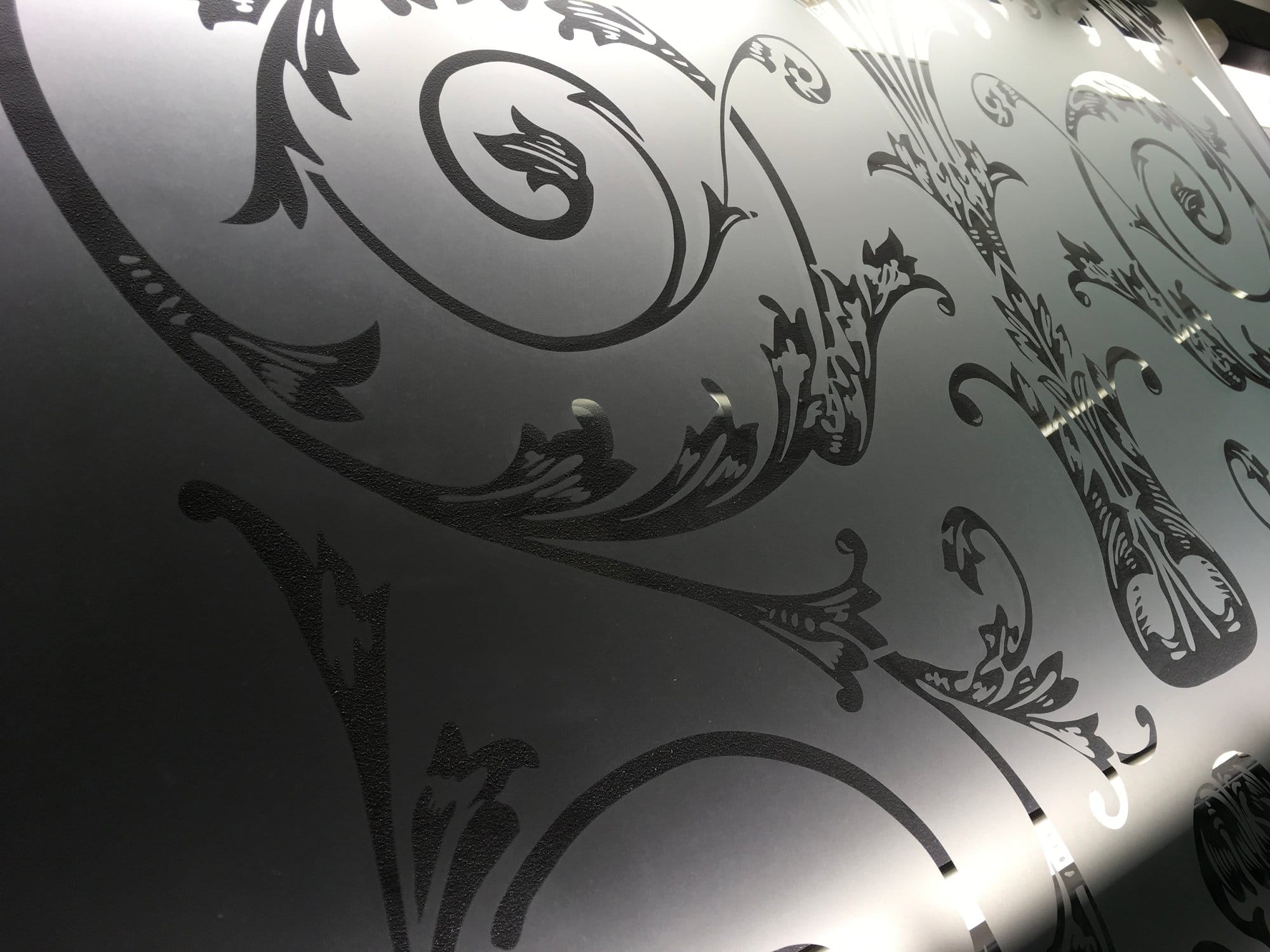
In a common production method, the design is drawn on a computer and sent to a mask-cutting machine, which cuts it into a temporary mask. The mask is laid over the whole sheet and the areas that are to be etched are peeled away, leaving bare glass exposed. The sheet then goes through an automatic sandblasting machine, which fires abrasive at the surface under high pressure. When it comes out, the glass is cleaned and the remaining mask is peeled off. The blasted areas have turned a light grey and the protected areas are still clear.
Two refinements make a noticeable difference. A sharp, clear lettering or number on an etched background looks crisper than etched lettering on a clear background, because the edges are cleaner against a large frosted area. And on a textured glass such as Stippolyte, the pattern can be etched and the textured background left untouched. Unlike a vinyl sticker or a screen-printed imitation, a blasted pattern is part of the glass and does not fade, discolour or peel.
Frosting, carving and shading
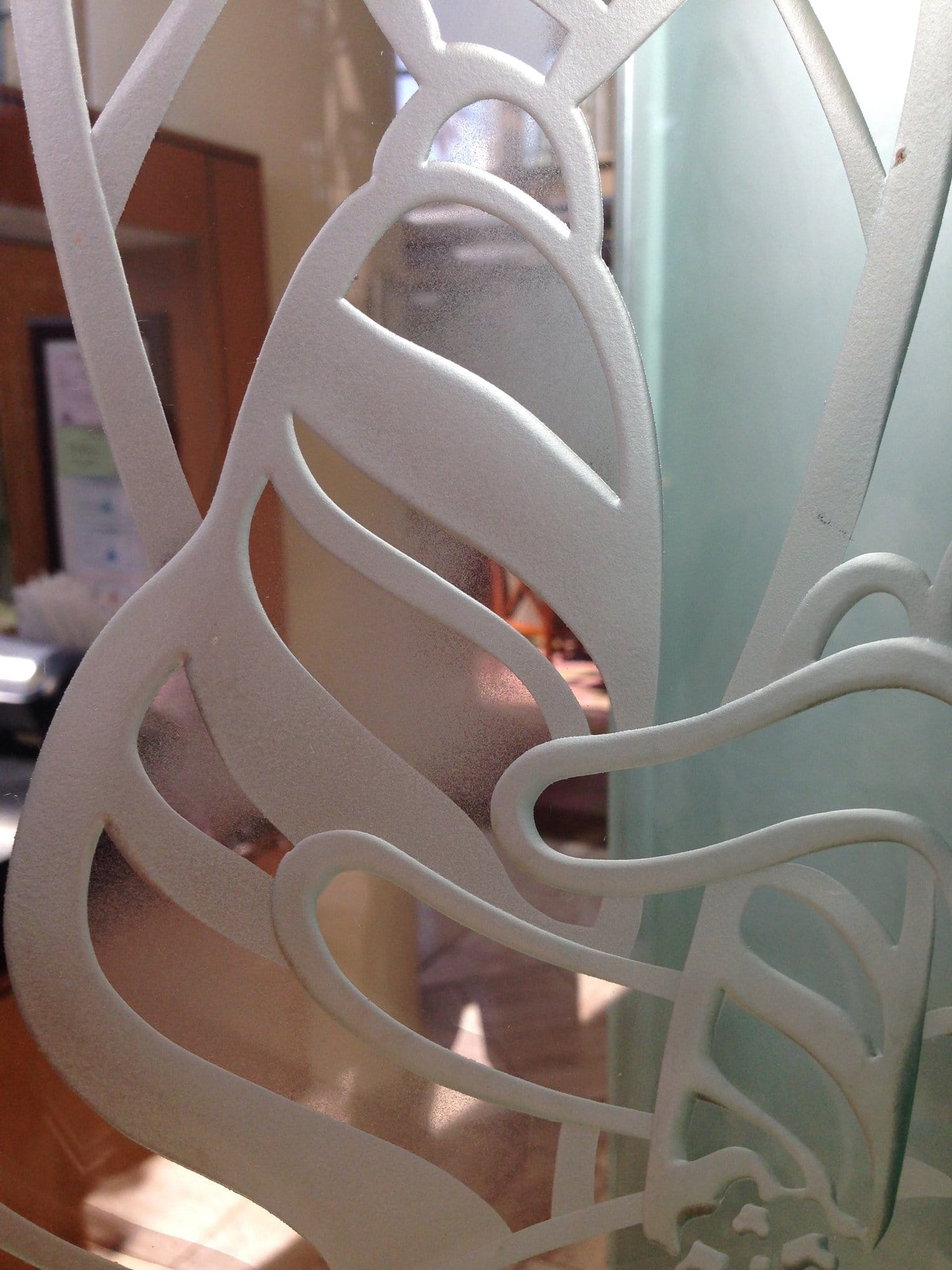
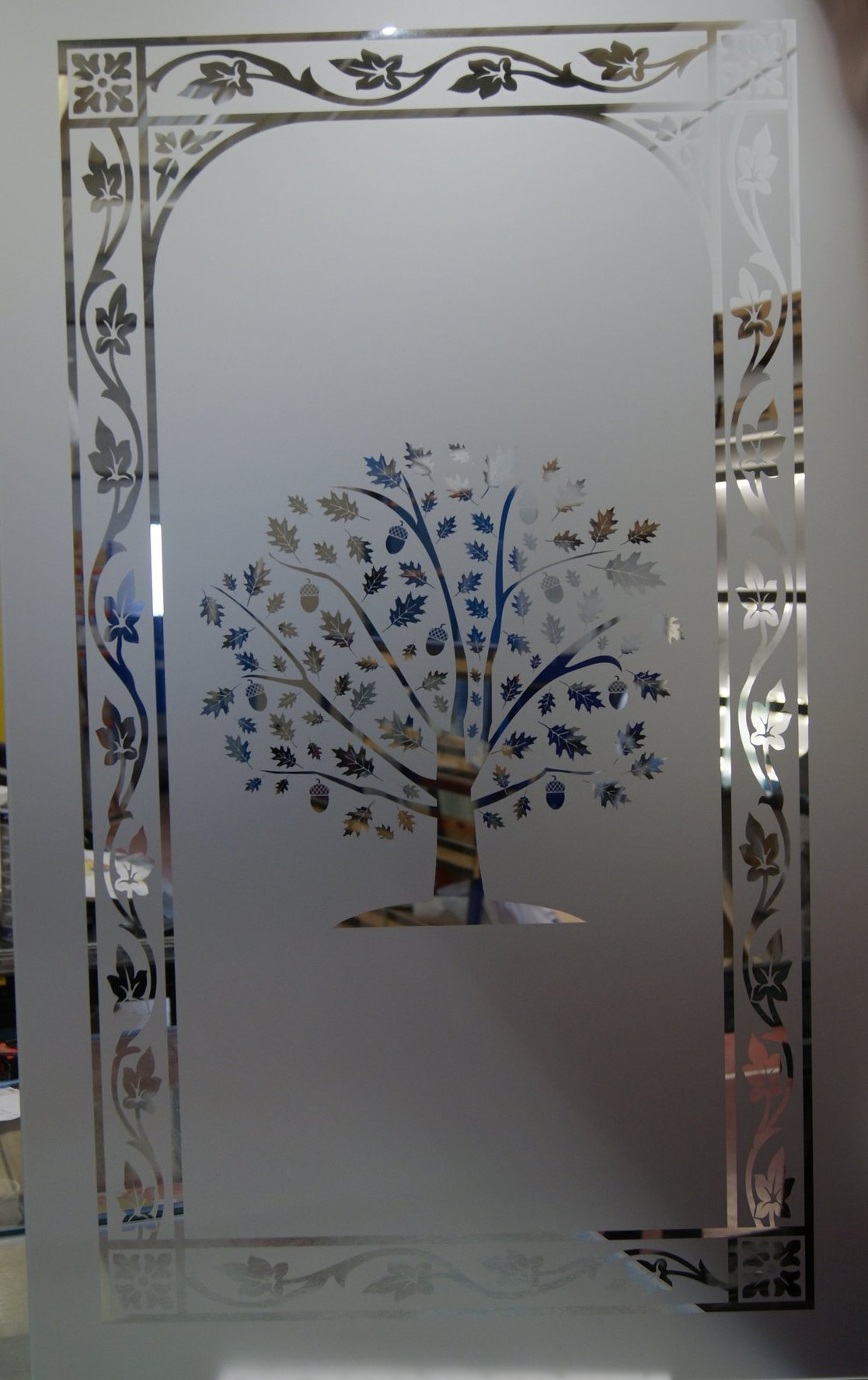
The simplest sandblasted work is a flat frost. That is what you see on privacy panels, shop signs and door glass: crisp edges and an even matt finish. Add depth and the same technique can produce relief.
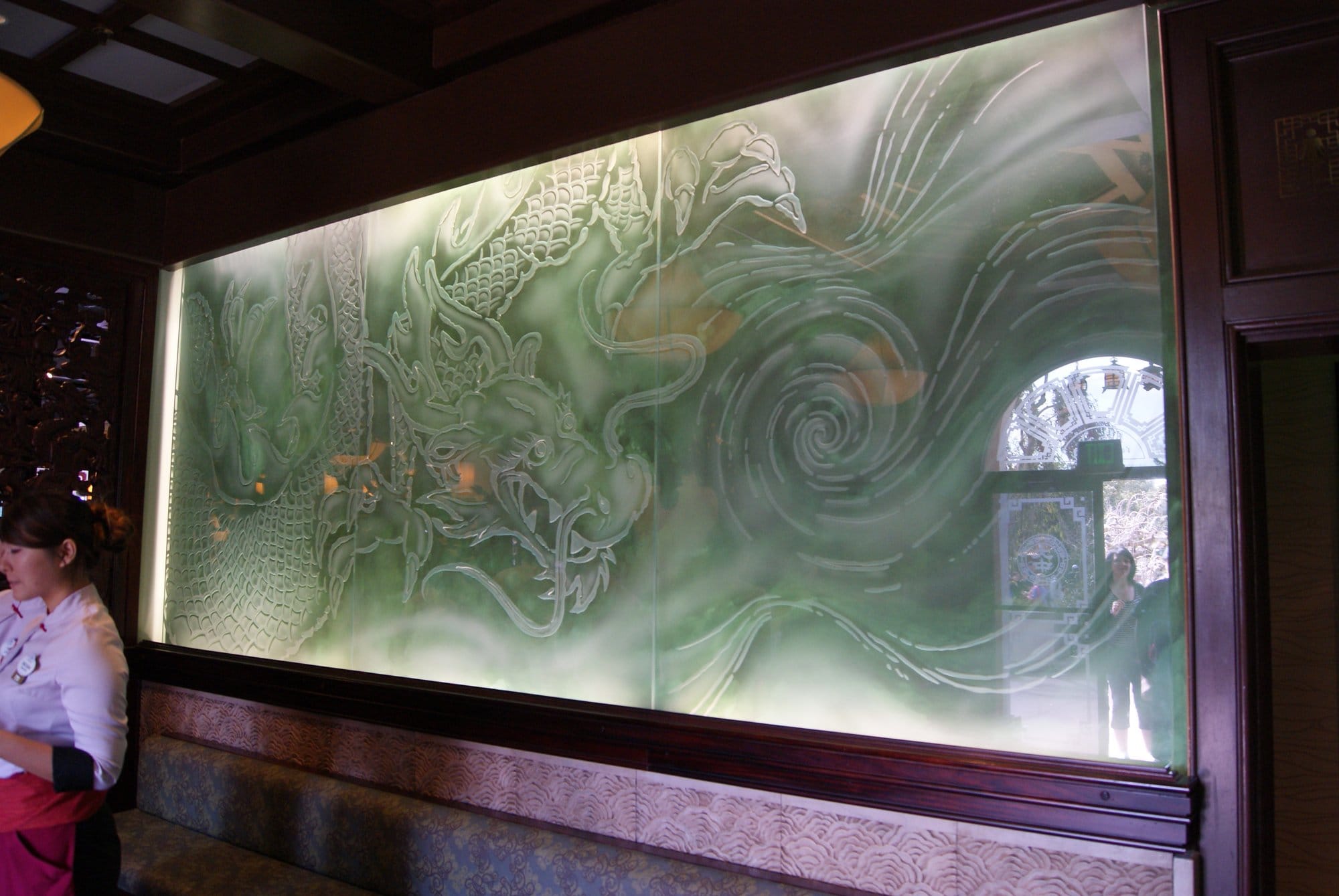
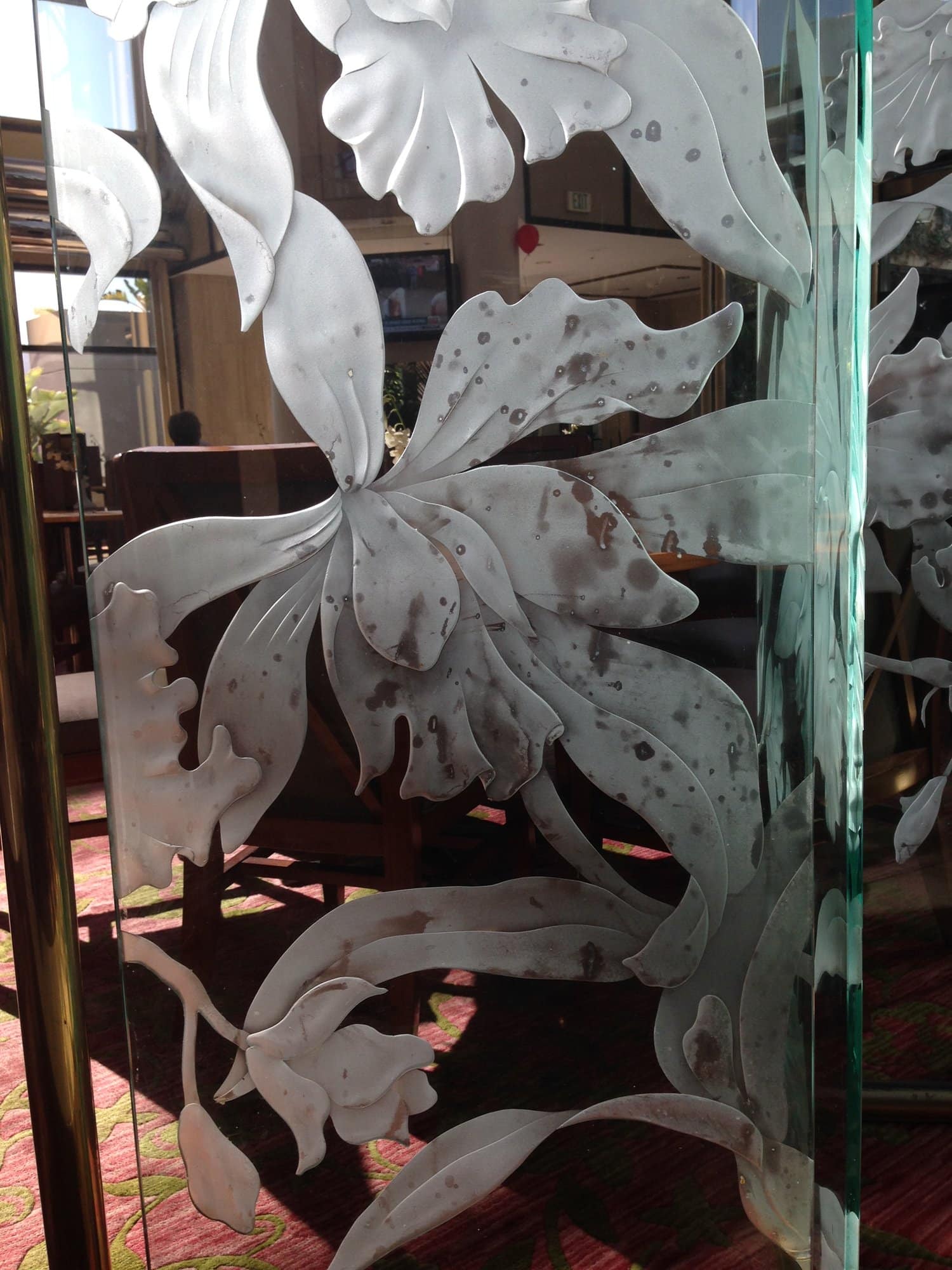
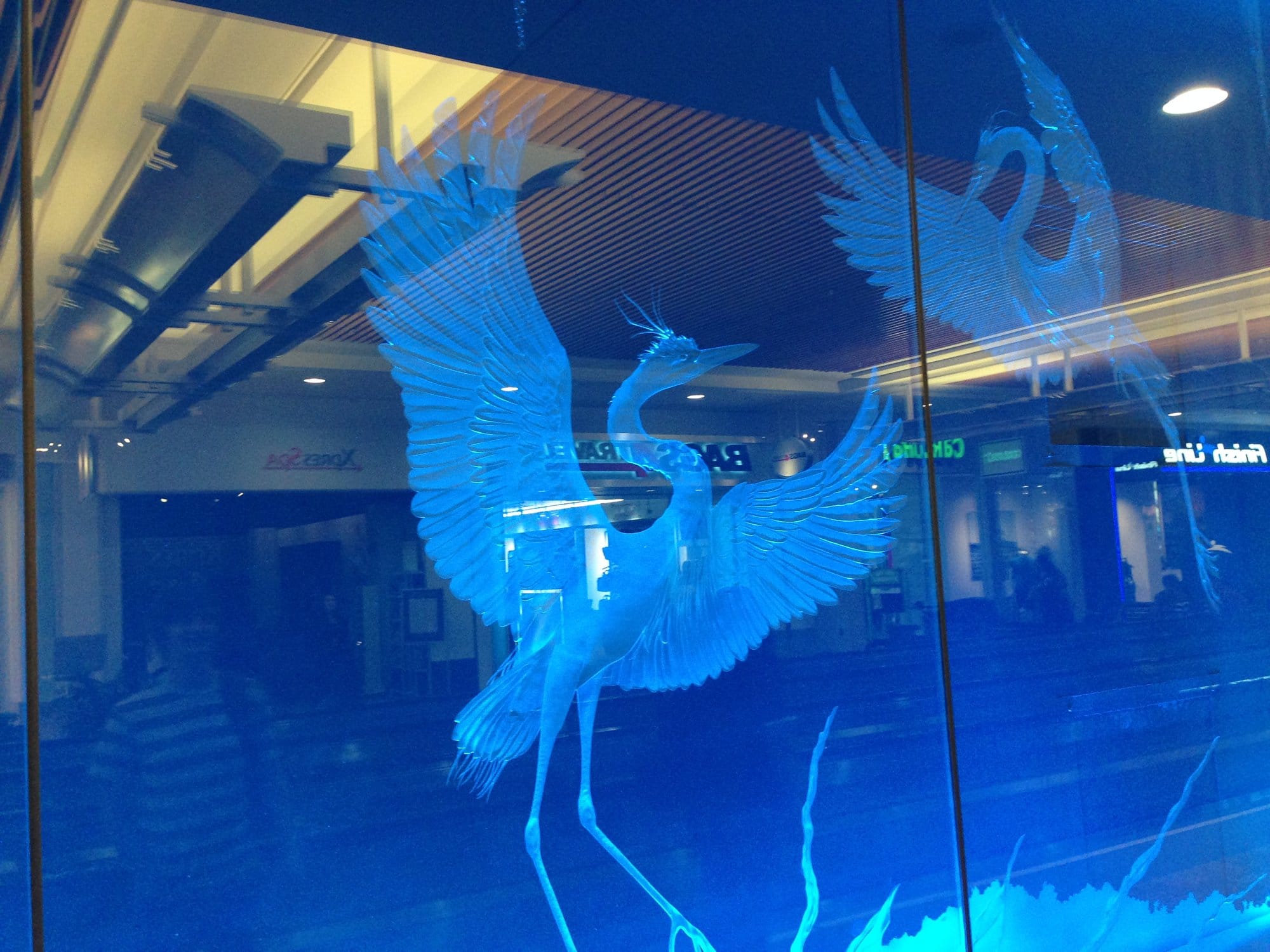
In deep carving the blaster works in stages, taking areas down to different levels. Leaves overlap, petals curve, and a figure gets a rounded body. Shaded work is done by blasting lightly in some places and heavily in others, so that a pattern gradually fades from clear to white. Both need a more experienced hand, and they take noticeably longer.
Sandblasted or acid etched?
At a glance the two can look the same, and it is common to find one described as the other. The difference is easier to feel than to see. Acid etching, covered on the acid etched glass page, gives a very smooth, even finish. Sandblasting leaves a finer grain you can sometimes feel with your fingertip, and it is the only one of the two that can carve deeply. If you see relief, with parts of the pattern sitting at different heights, it is almost certainly sandblasted.
What it is used for
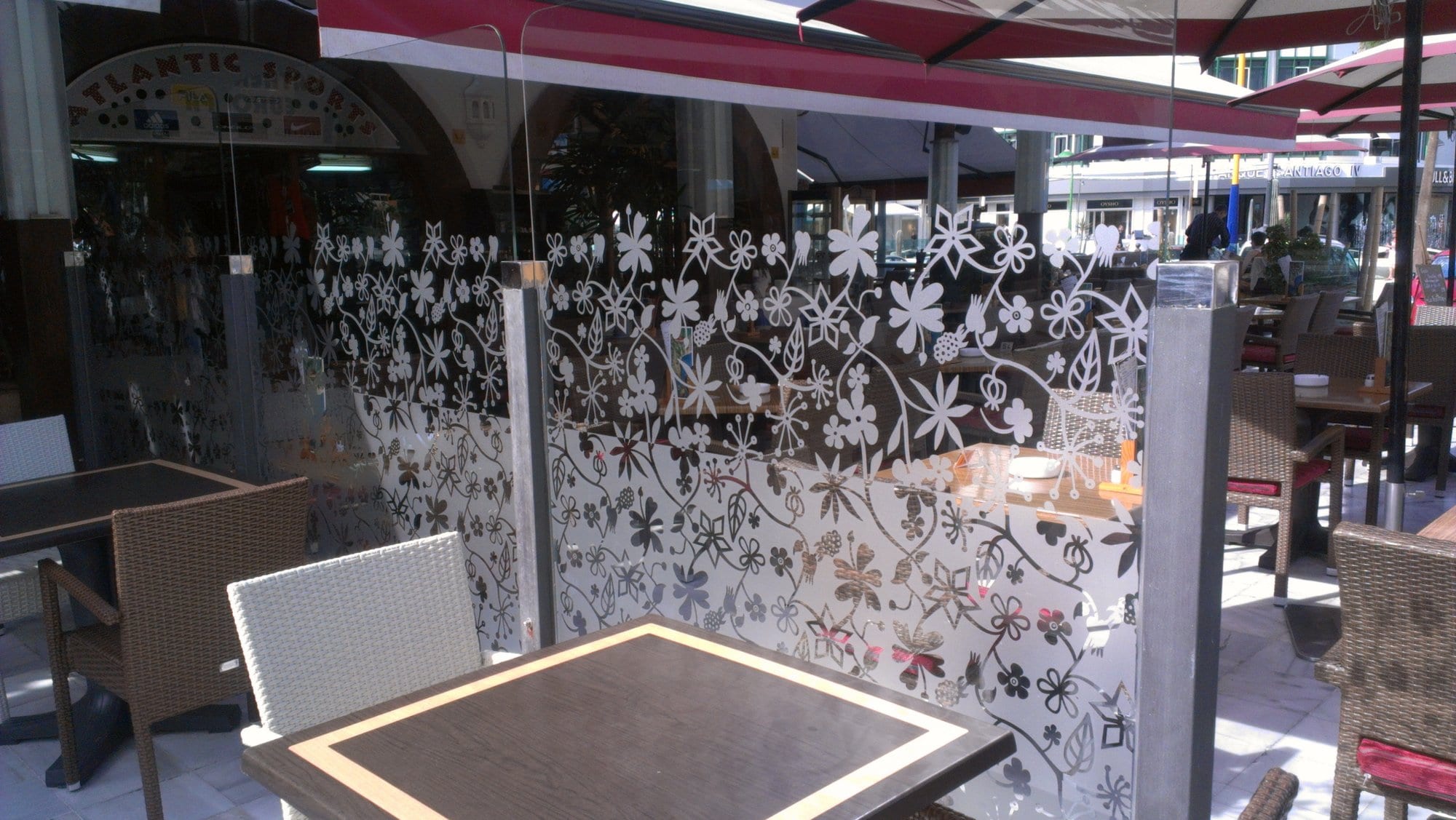
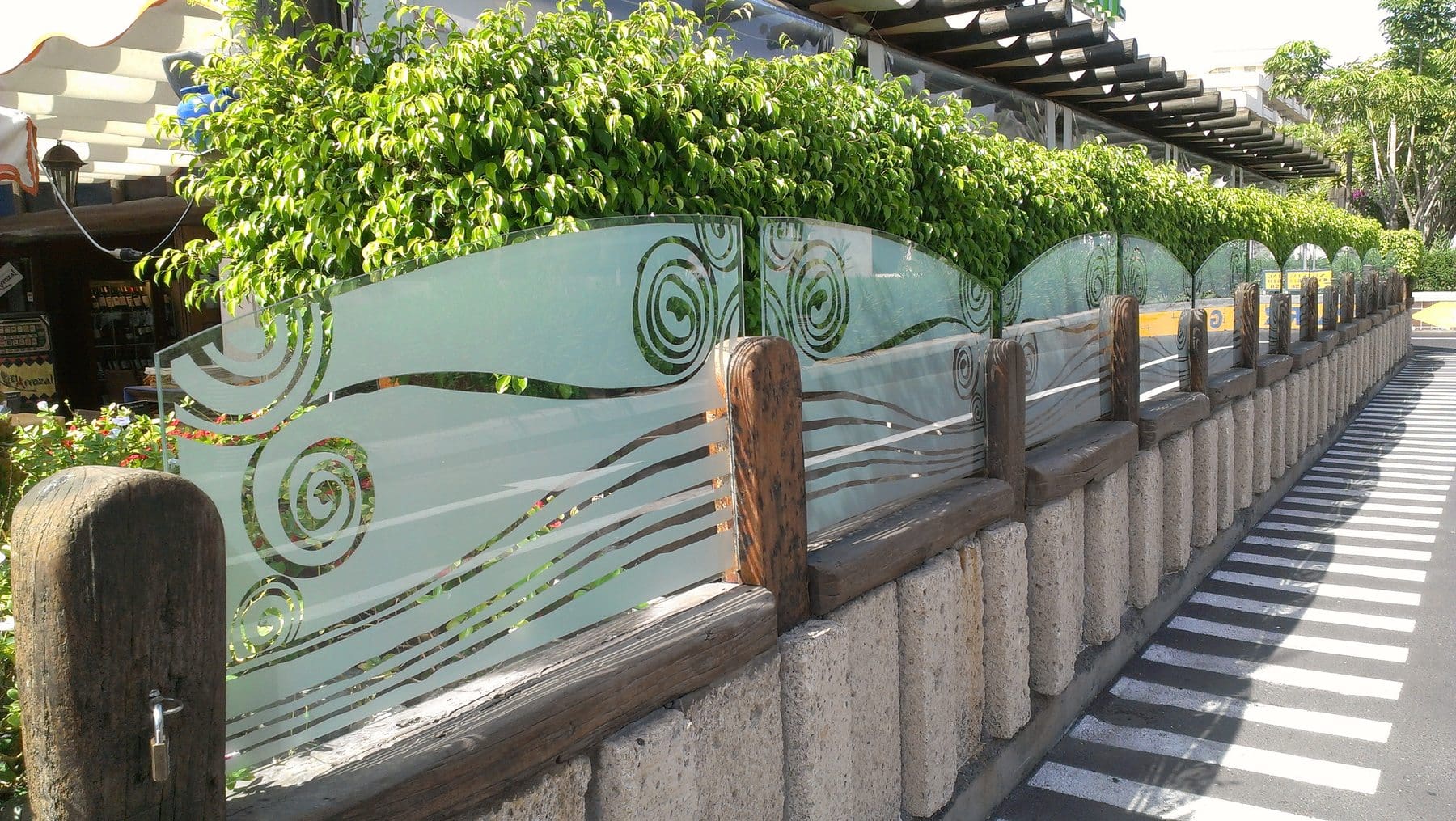
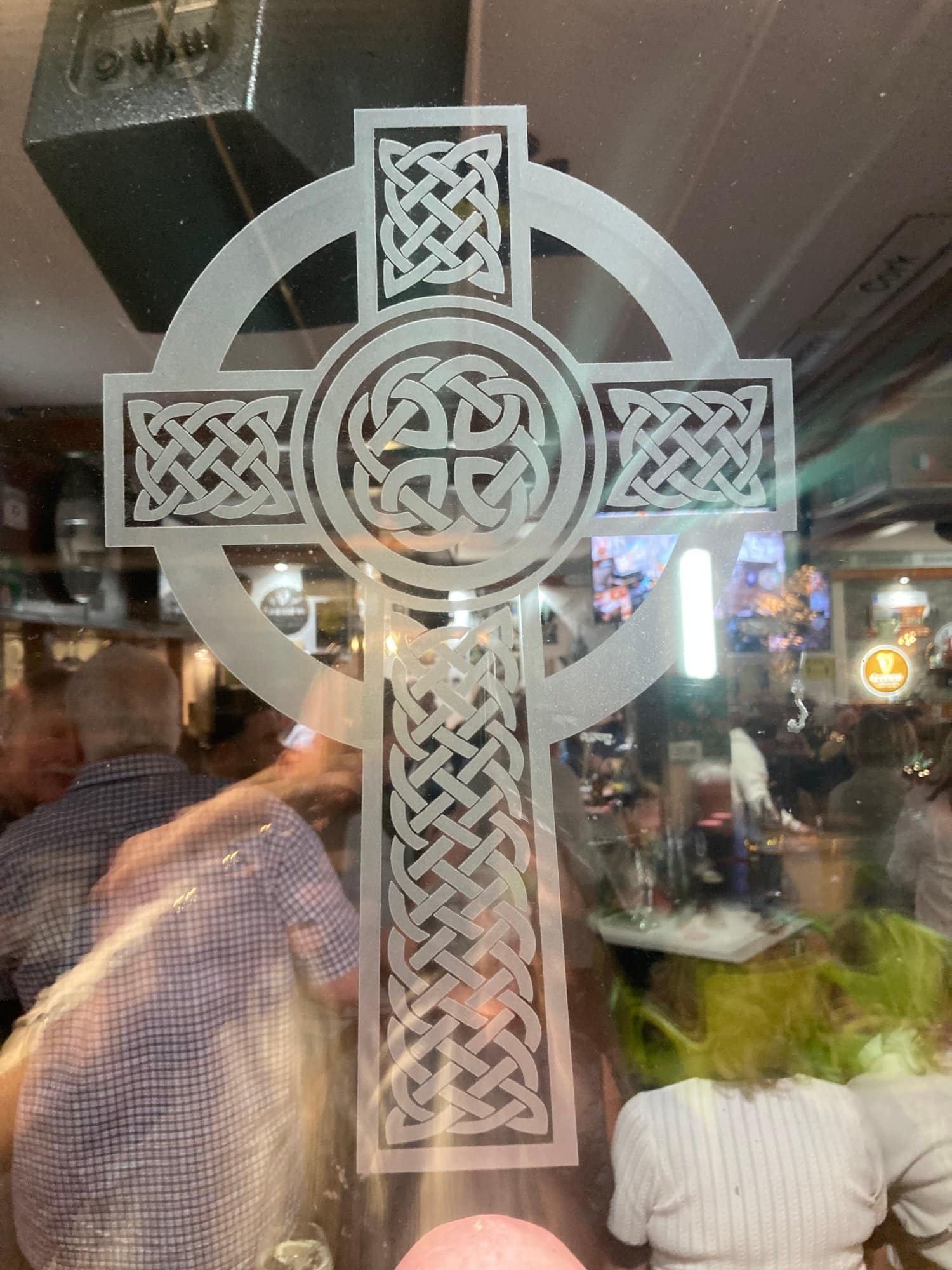
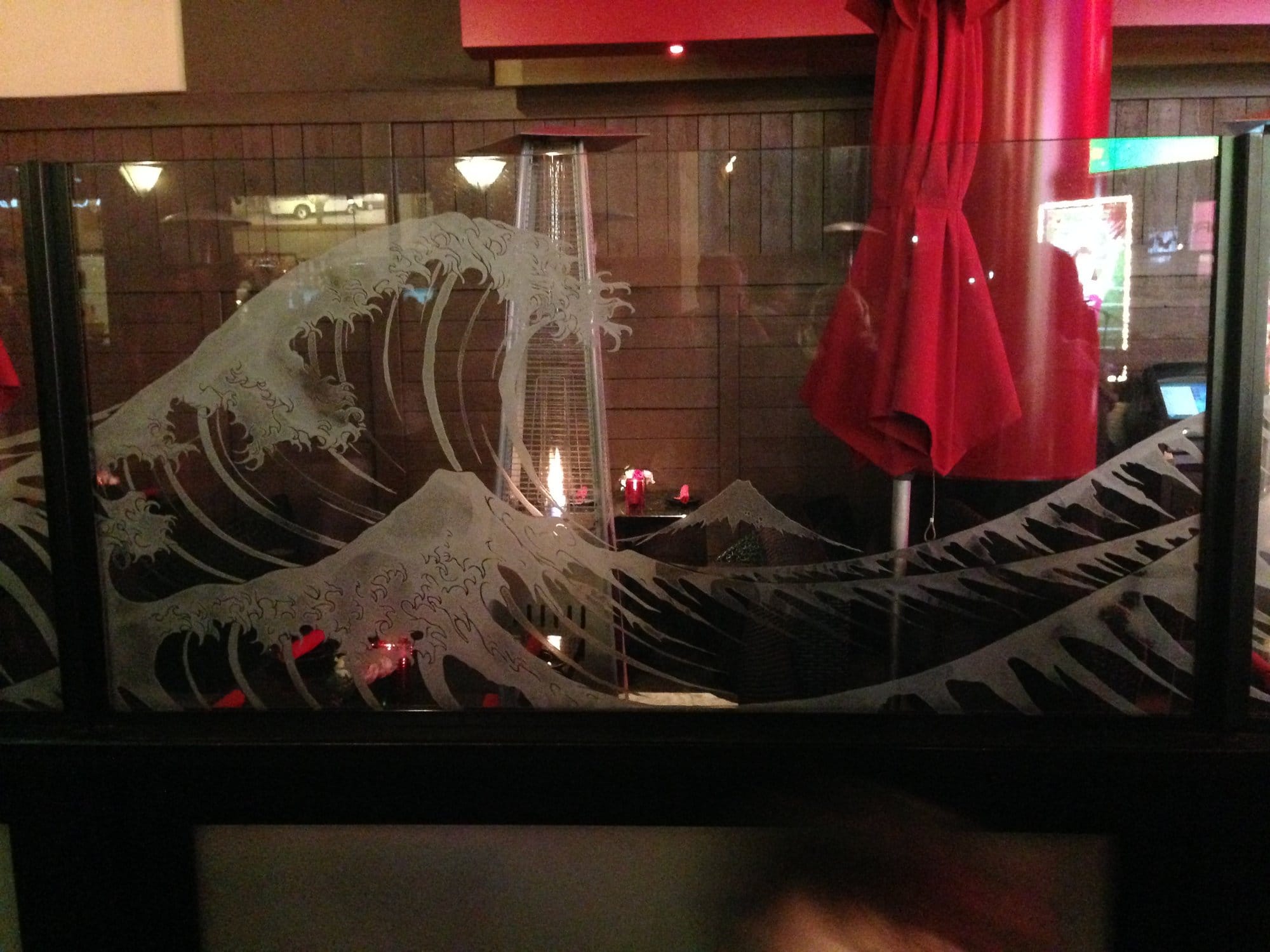
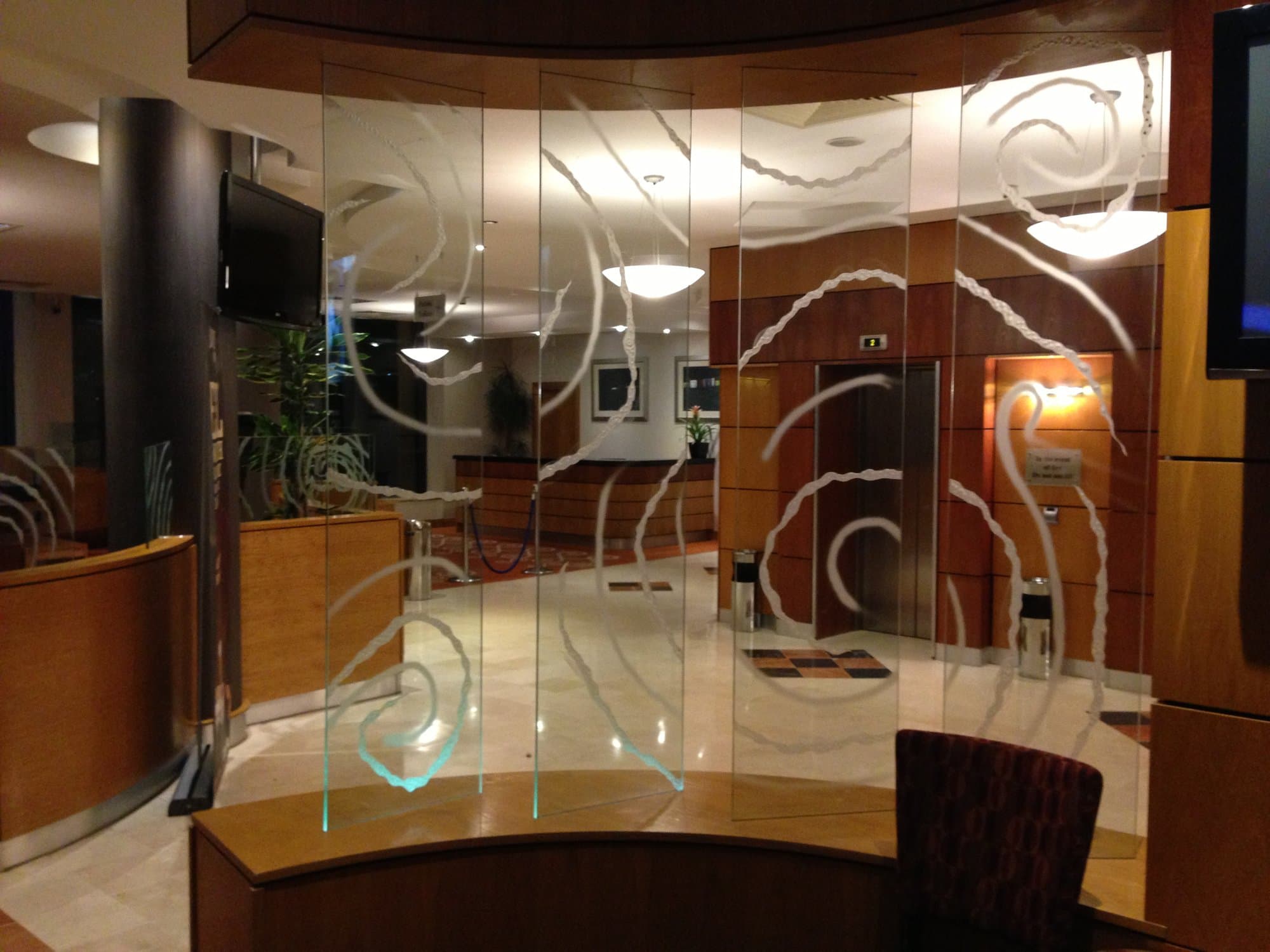
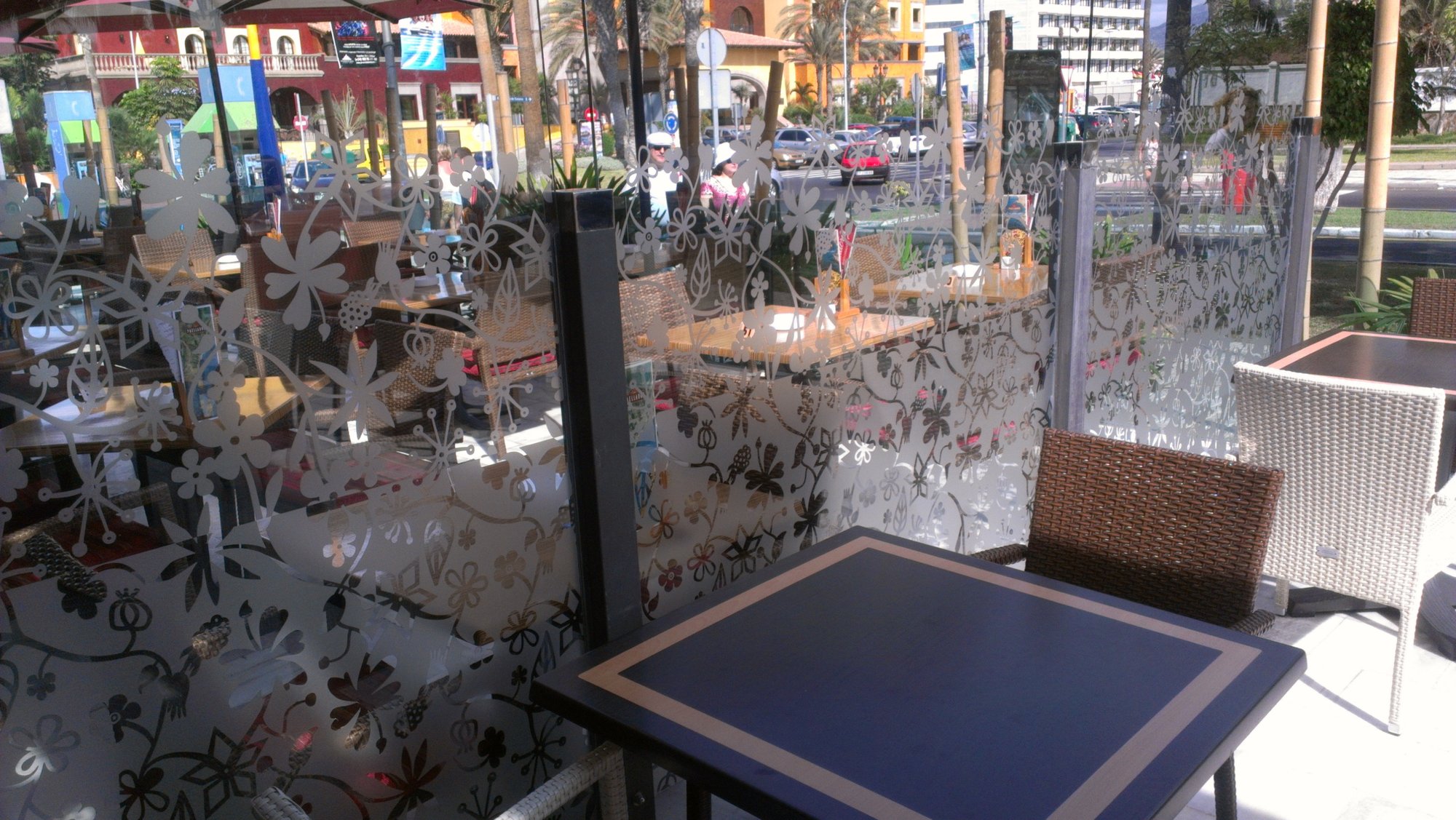
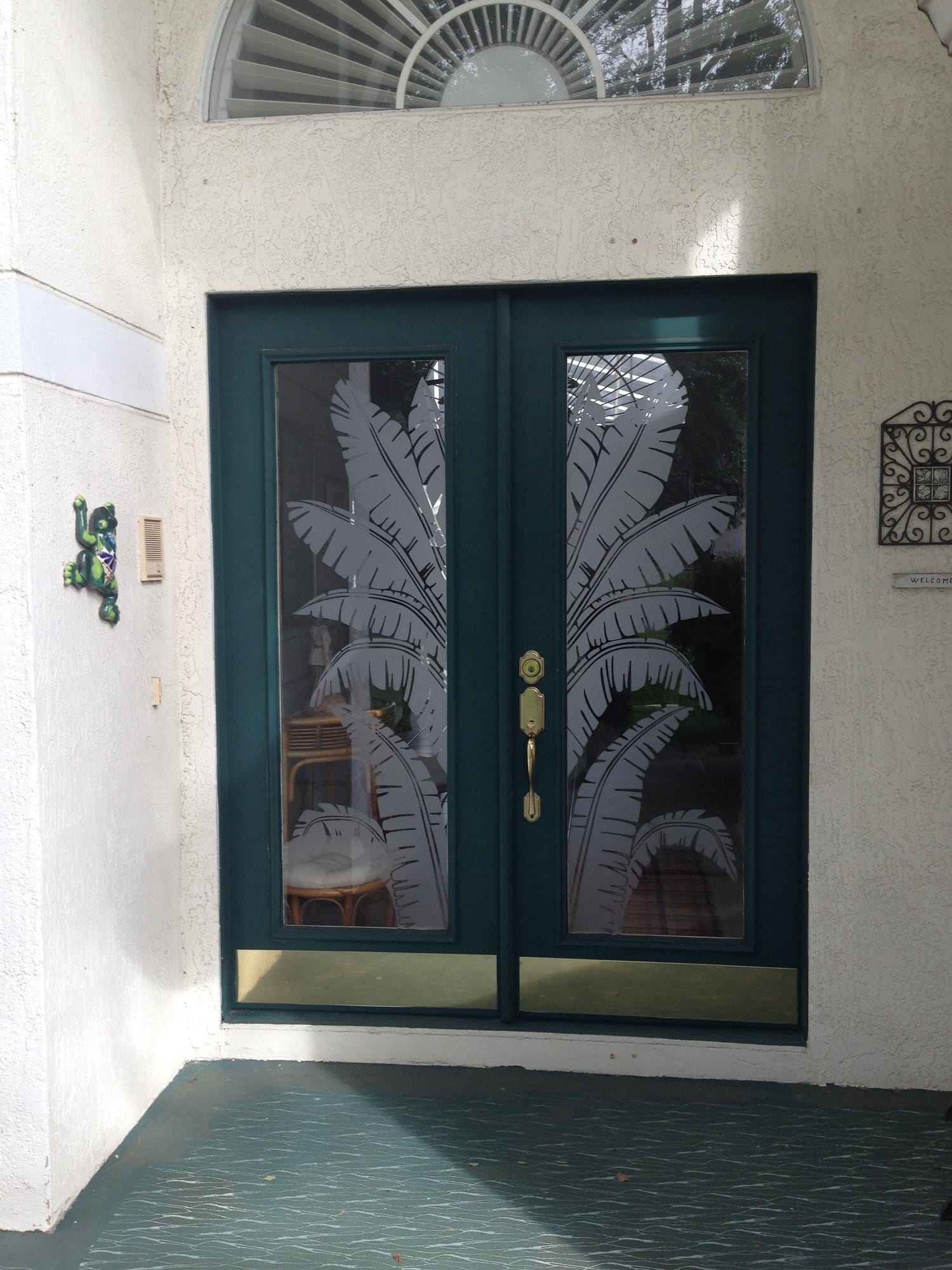
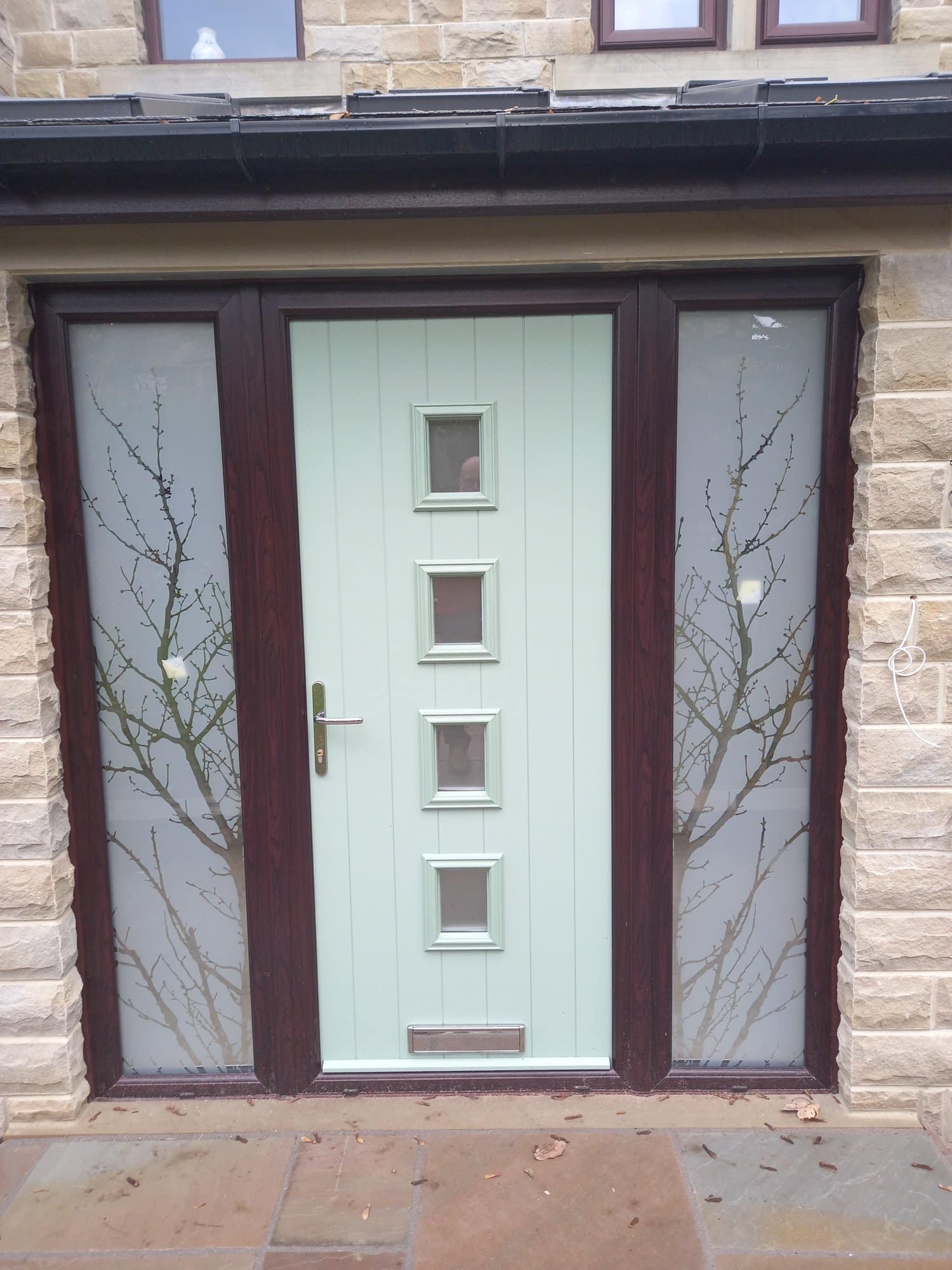
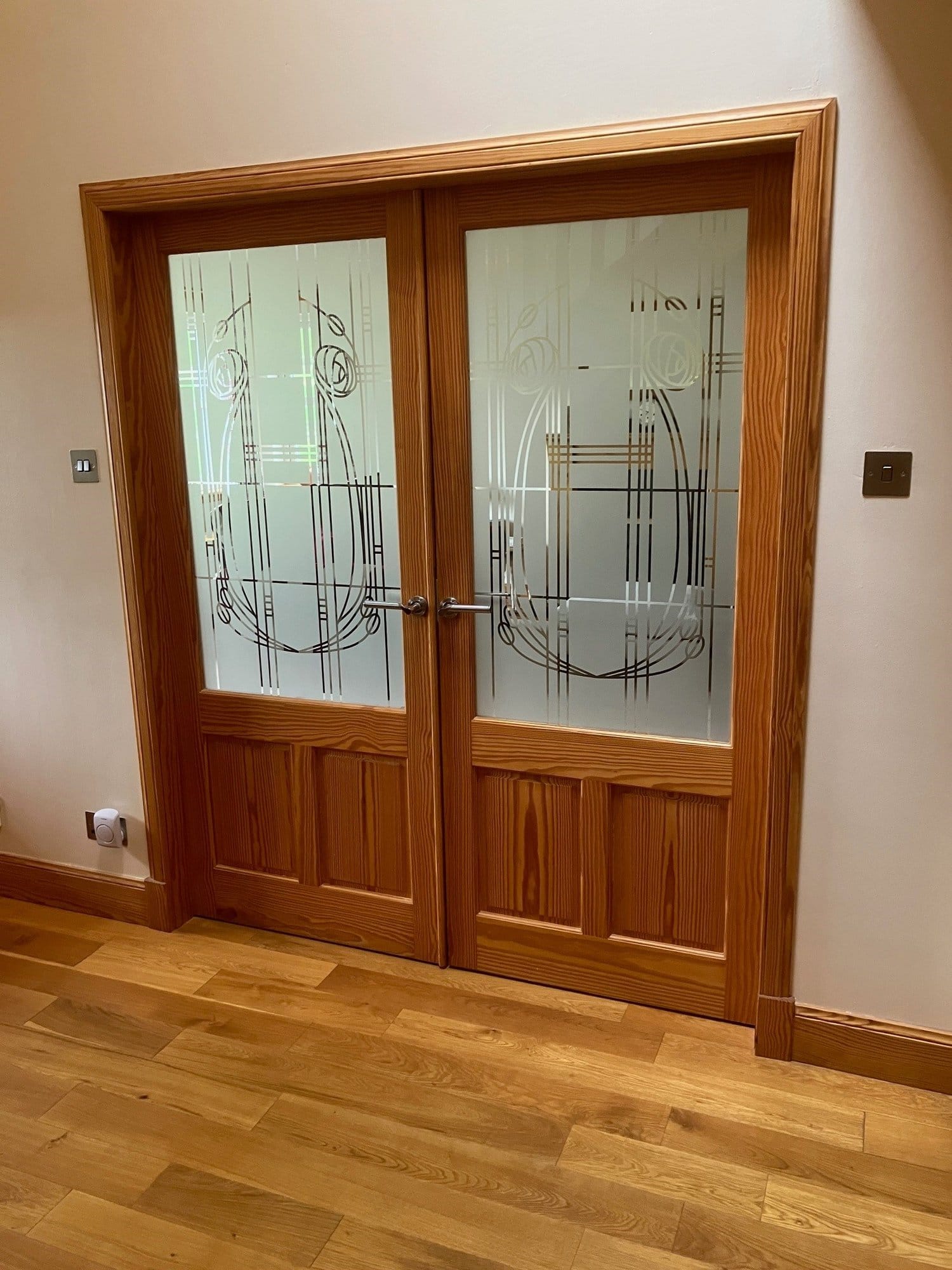
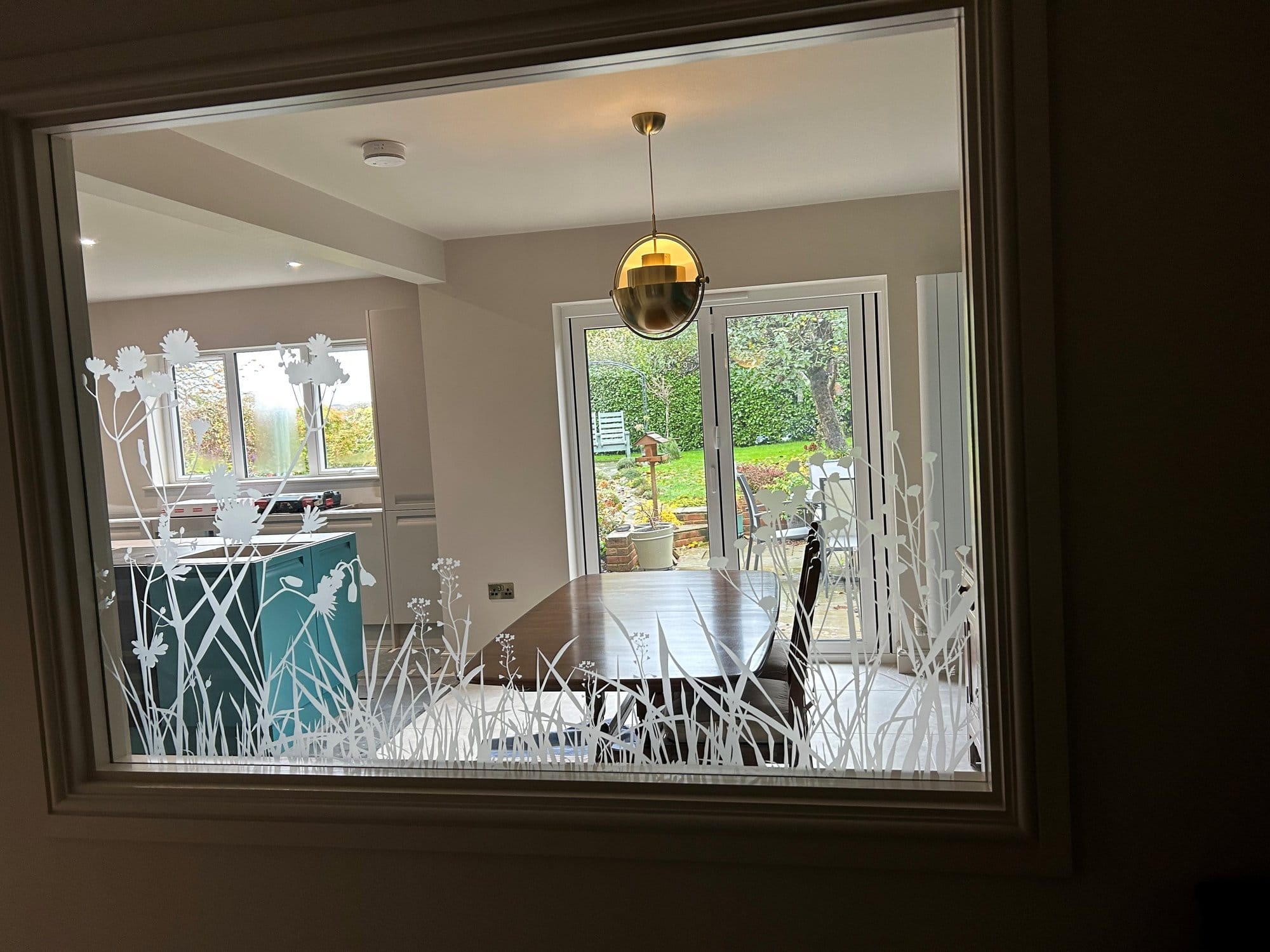
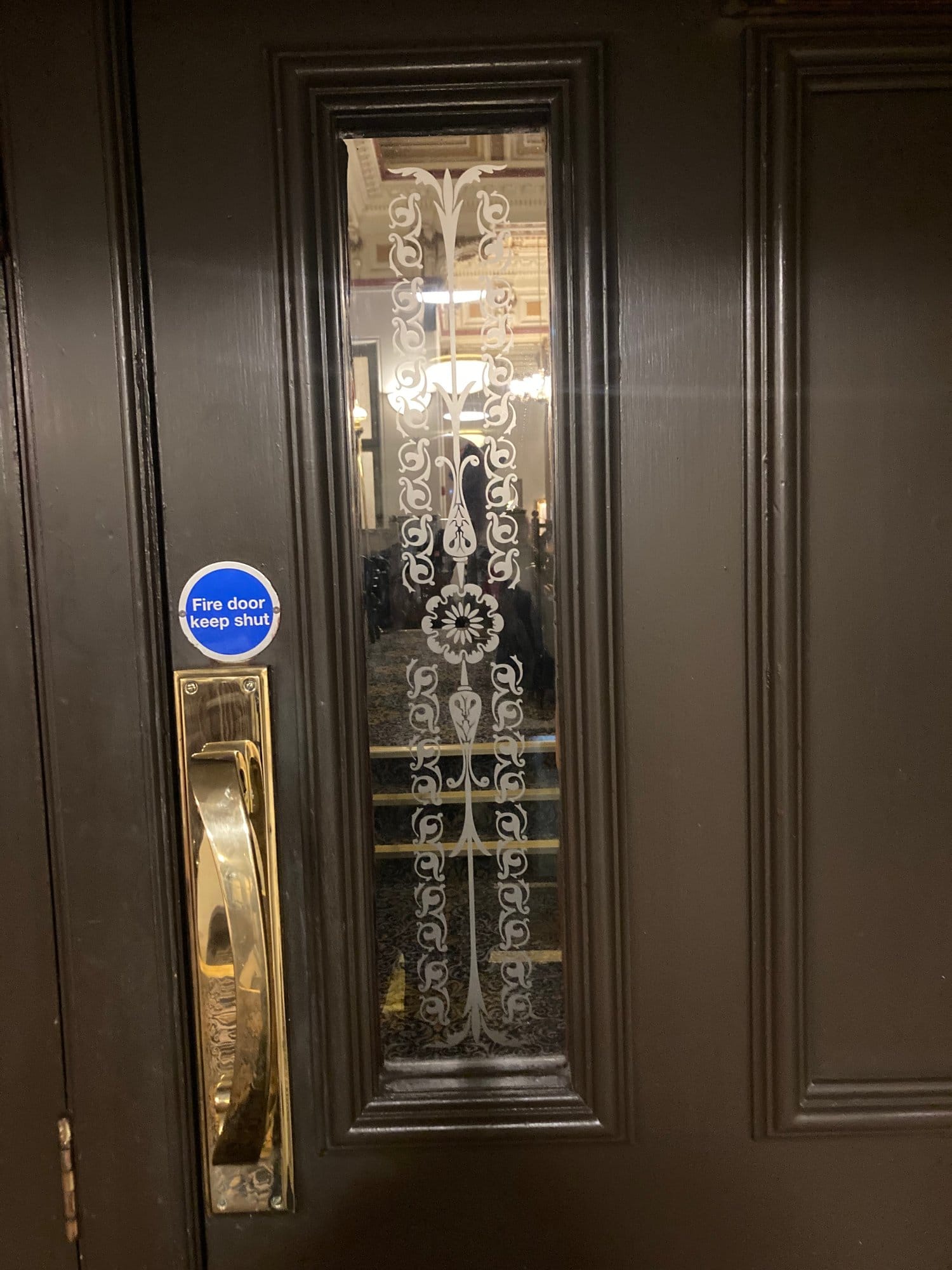
Sandblasting is one of the most flexible ways to decorate glass, and it is used for a lot of everyday jobs. Privacy panels and frosted borders on shop fronts and offices are everywhere. Glass doors, internal partitions and shower screens often carry lettering or a company logo. Windbreaks and screens on pub and restaurant terraces are sometimes blasted all over with a pattern of leaves or flowers. It is also used on mirrors, and on bespoke pieces such as the cross above, where carved detail is the whole point.
Toughened glass
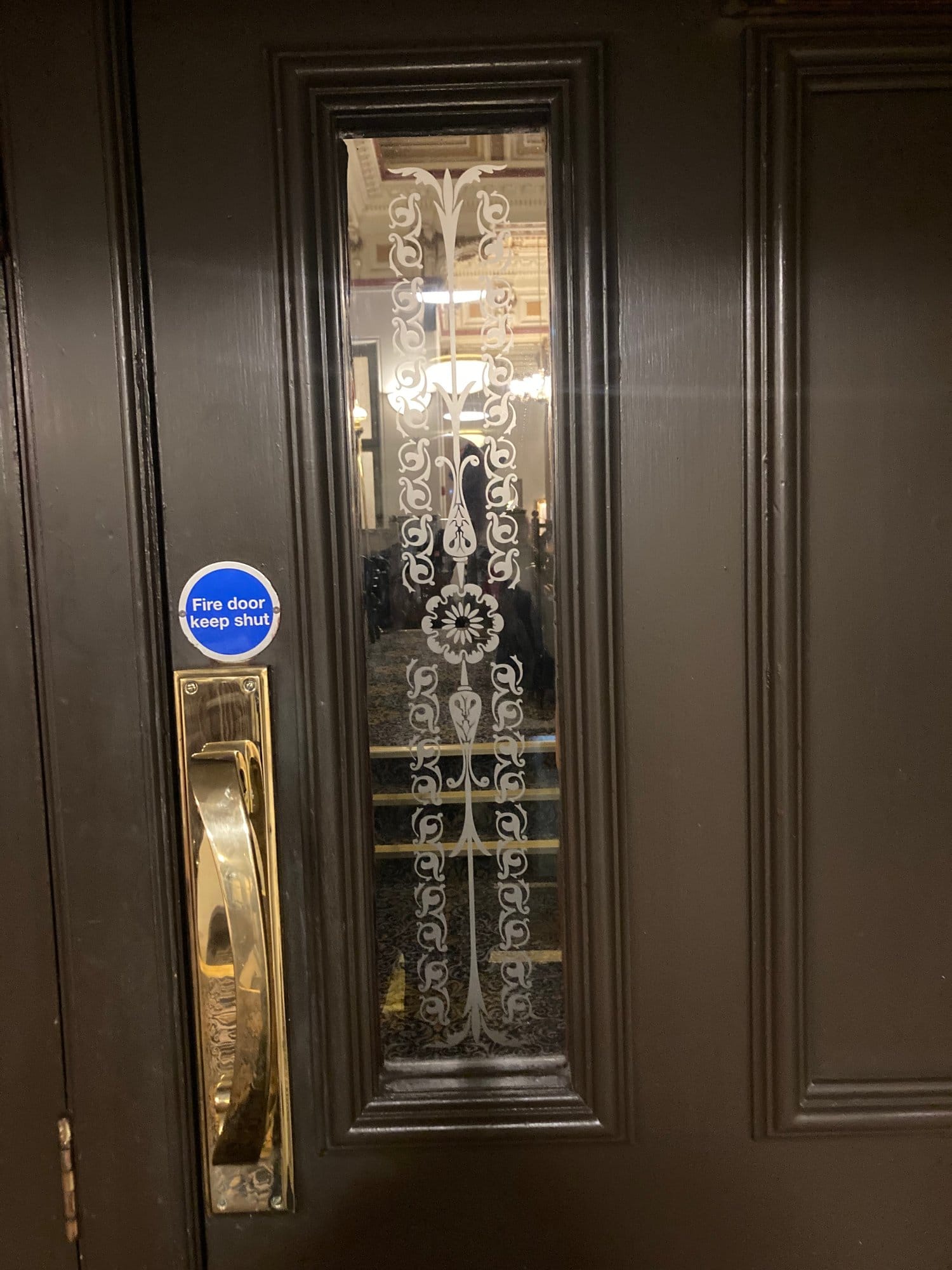
If a panel is going to be toughened for safety glazing, the usual advice is to do the blasting first and toughen afterwards. Toughened glass gets its strength from a stressed outer skin, and cutting deeply into that skin can weaken it. A light surface frost is much less of a worry than deep carving, but if you are unsure, ask the supplier before you start.
Safety
Sandblasting makes dust. That dust is a mix of glass particles and spent abrasive, and the fine part of it is easily breathed in. A cabinet or a booth with extraction is the sensible way to work, and anyone blasting should wear a properly rated respirator and eye protection. Hearing protection is worth having as well, since the compressor and the blast are loud. The working safely with glass page covers general precautions.
See more sandblasted glass
The sandblasted glass gallery collects photographs, with notes on each one.
Questions people ask
Does sandblasted glass scratch easily?
Not much more than any other glass. The frosted surface can collect marks from grease and dirt, and a damp cloth removes most of them.
Can sandblasted glass be removed or changed afterwards?
Not really. The material has been worn away, so the frost is permanent. The glass can only be replaced.
How deep does the carving go?
It depends on the job. A flat frost only takes the very top of the surface. Deep carving goes much further, which is why it is done on thicker glass.
History and related reading
The History of Sandblasted and Deep Carved Glass. See also A Short History of Stained Glass.
Care: see How to Clean Decorative Glass Safely.
At home: etched glass for homes and glass for a front door.
Related glossary terms: Sandblasting, Acid etching.
Frequently asked questions
What is sandblasted glass?
Sandblasted glass has been blasted with abrasive grit through a stencil, which removes the surface in the open areas to leave a frosted or carved design.
What is deep carving?
Deep carving continues the blasting for longer, cutting into the glass to create several levels of relief. The result can have real depth and shading, as in the panels with animals and plants in the gallery.
How does it differ from acid etching?
Acid etched glass has a smooth satin finish, while sandblasting leaves a slightly rougher surface and can be carved much deeper.
Where is sandblasted glass used?
It is common in doors, screens, partitions, shopfronts and signage, where it can combine privacy with lettering or pictures.