
The Willow Tea Rooms on Sauchiehall Street are the only one of Catherine Cranston’s tea rooms that still survives, and they are the best place to see Mackintosh’s leaded glass in a public room. He designed them in 1903, and the willow shape runs through the windows, the doors and the furniture.
Miss Cranston and Mackintosh
Catherine Cranston, always called Kate, ran tea rooms in Glasgow at a time when a respectable place to meet for a cup of tea was not easy to find. She supported the temperance movement, so her rooms were an alternative to the pub, and she wanted them to be worth the visit. She met Mackintosh in 1896 and over the next twenty years he worked on interiors in all four of her Glasgow tea rooms, often alongside Margaret Macdonald.
The earlier ones were smaller commissions. In Buchanan Street he painted murals and stencilled friezes, in Argyle Street he designed the furniture, and that is where his tall-backed chair first appeared. In Ingram Street he redesigned a room that became the White Dining Room. Sauchiehall Street, which opened in October 1903, was the first time he had the whole job, from the front of the building to the chairs. It is also the only one of the four that survives.
The building
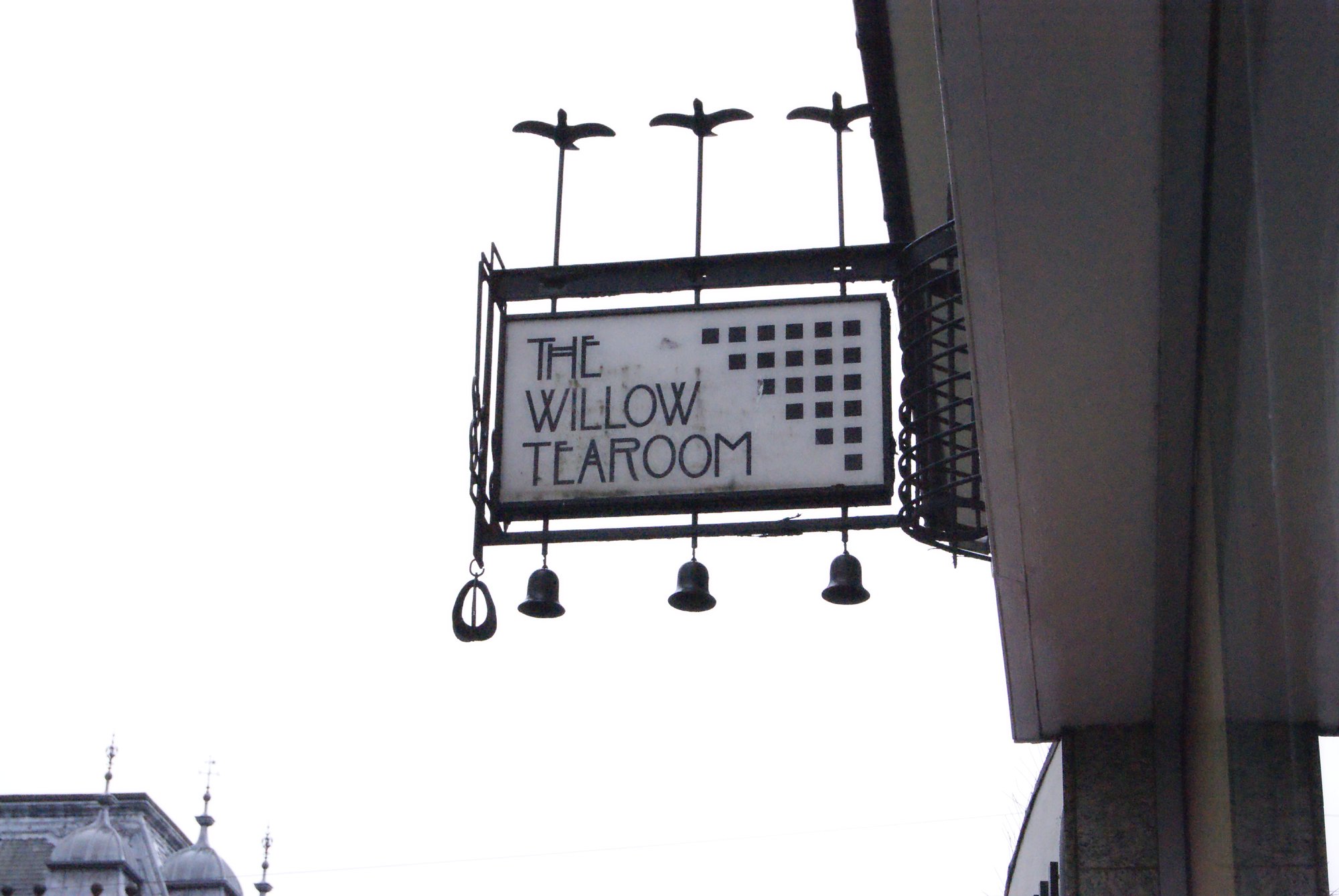
Before Mackintosh worked on it, the building was an ordinary four-storey warehouse from about 1870. He gave it a white, smooth-rendered front that stood out against the stone buildings either side, with shallow curves, windows set back and a wide first-floor bay that tells you where the best room is. Small panes and a chequered band of tiles finish it off. Inside, he treated the floors like a plan of the day. The ground floor front room was for ladies, in white, silver and rose. At the back, a lunch room in oak and grey. Above, the tea gallery in pink, white and grey, and on the second floor the billiards and smoking rooms for men, which were darker. In his scheme, pale rooms were for women and dark rooms for men.
Why Willow
Sauchiehall comes from the Scots saugh, a willow, and haugh, a meadow, so the name of the street was the name of the theme. The willow shape runs through the tea room in the motifs and the timber, which is why you keep seeing long thin stems with a curve at the top.
The glass
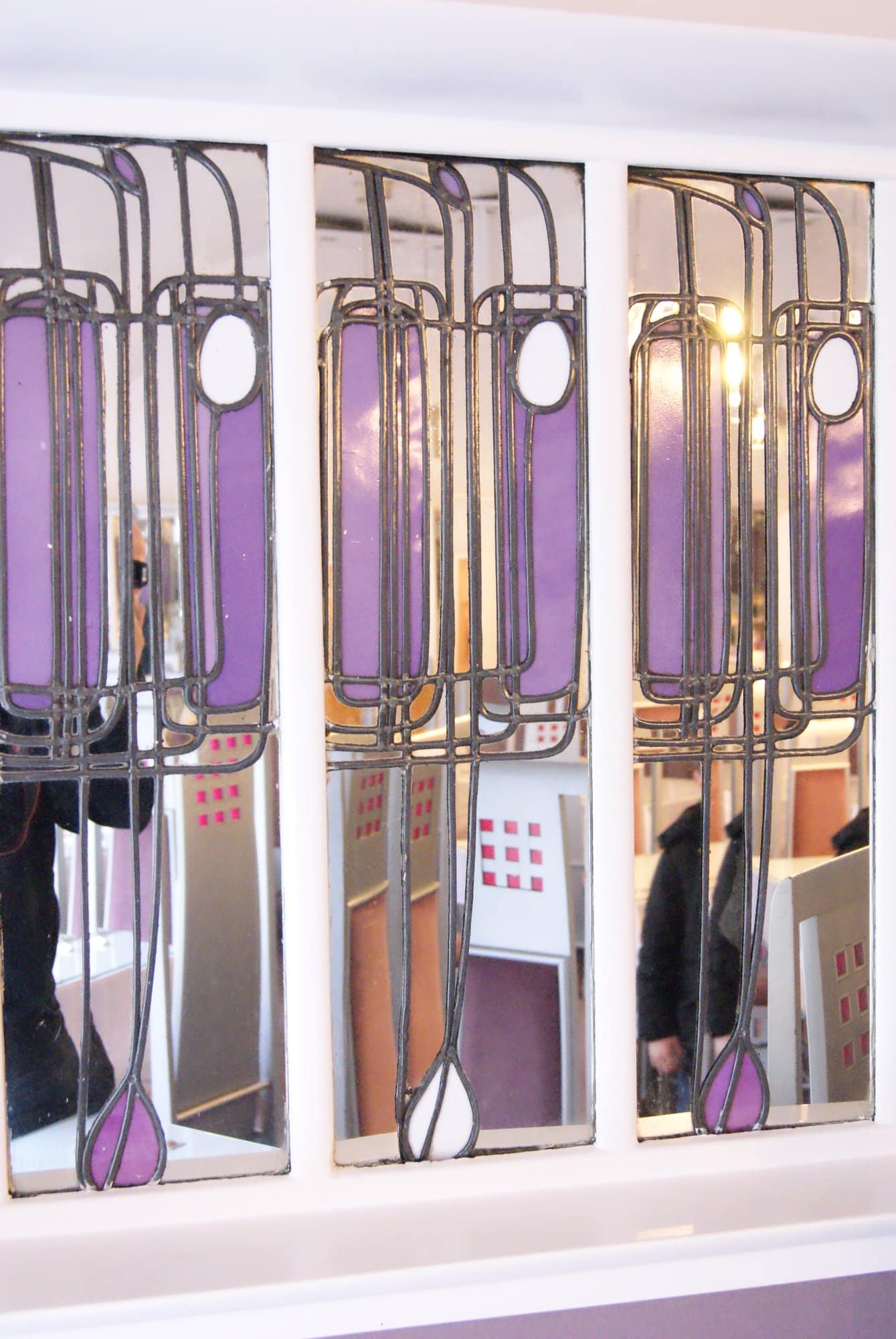
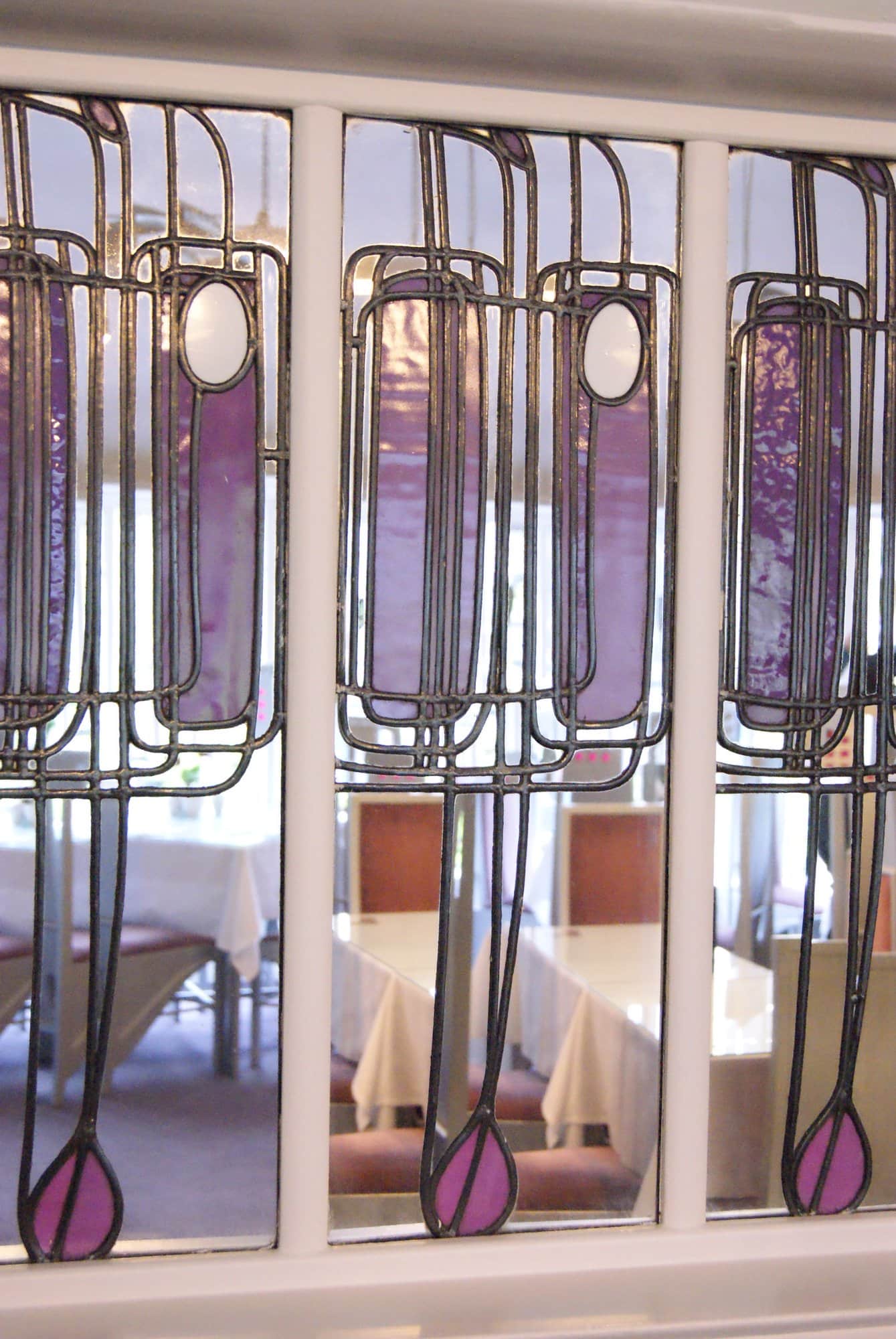
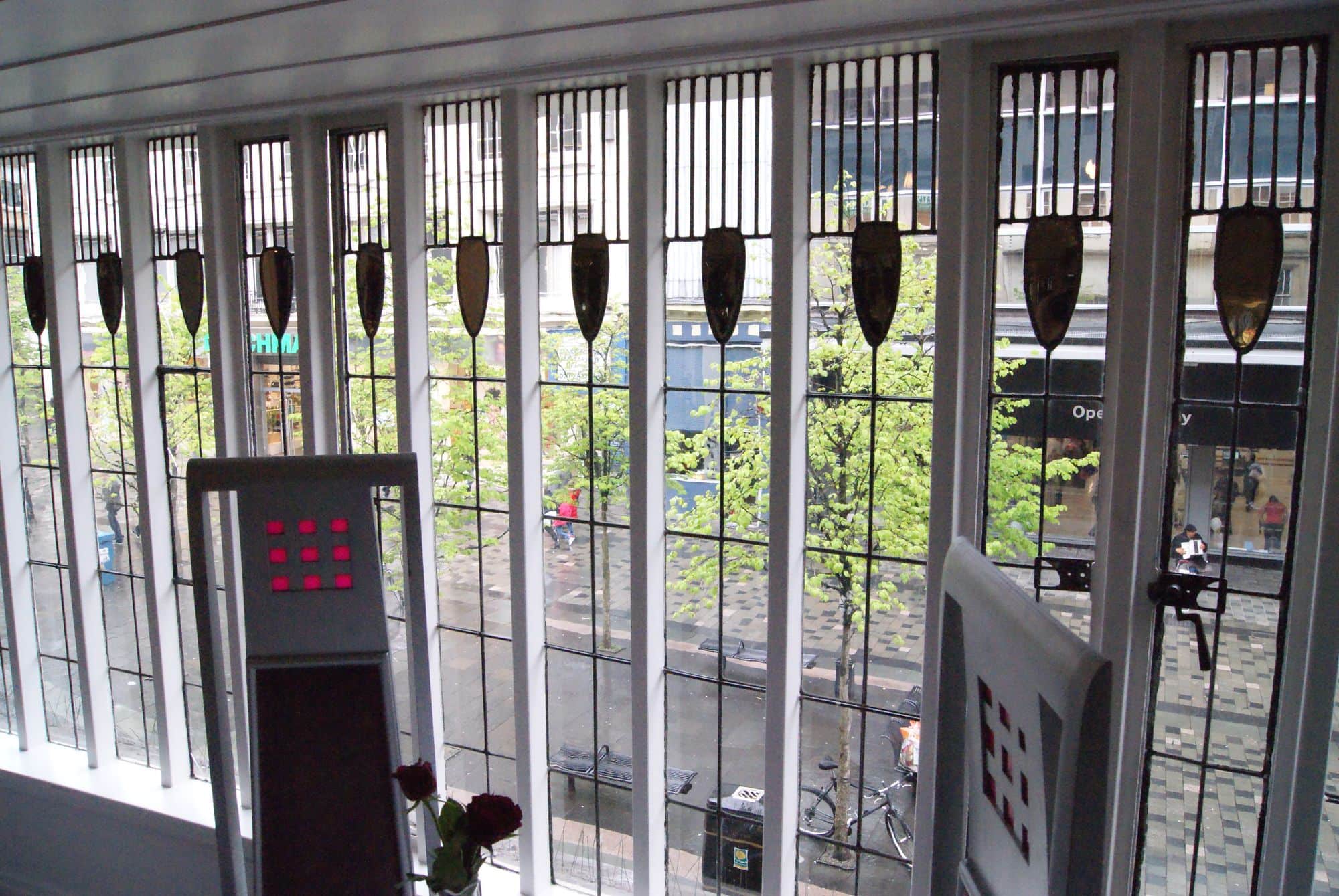
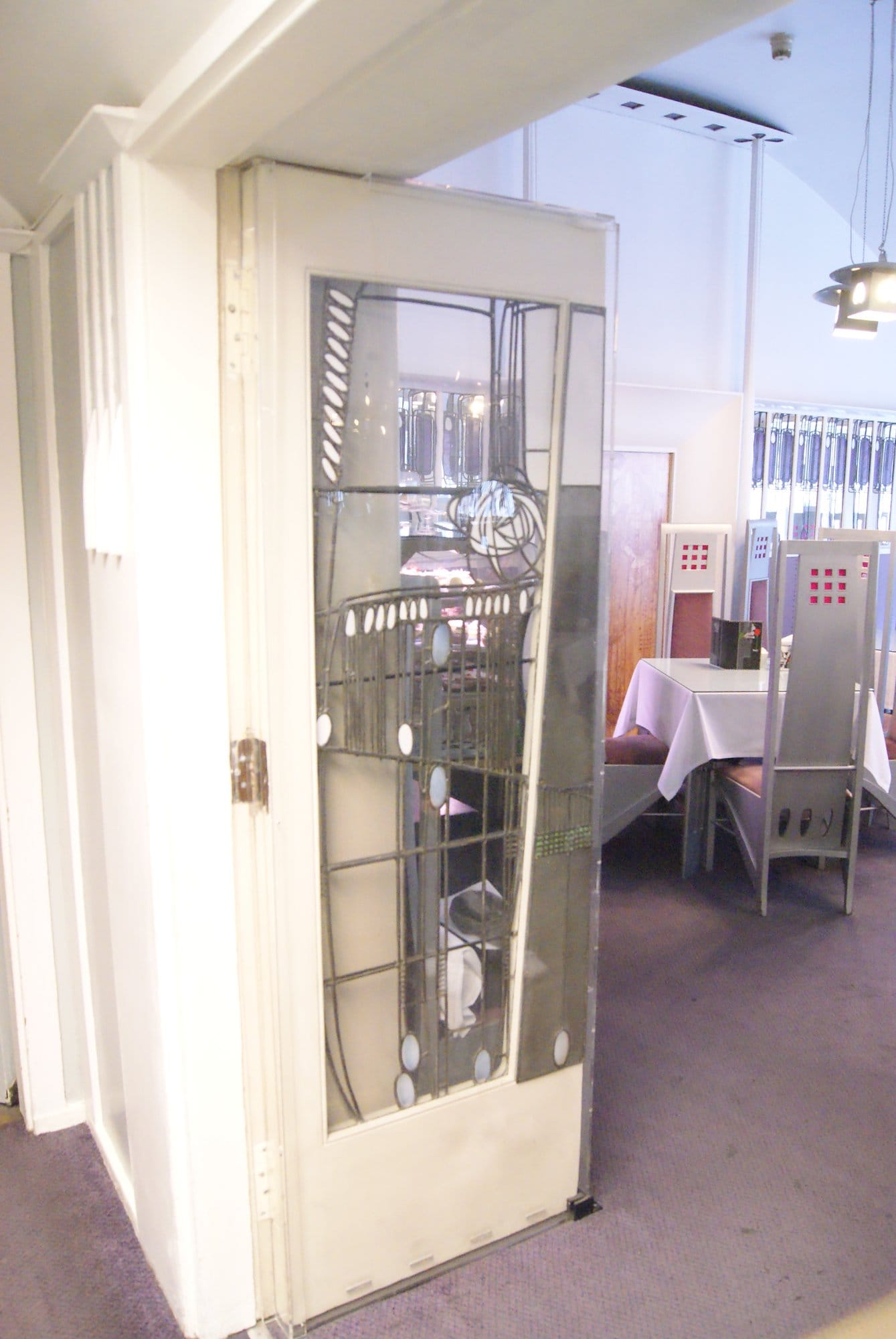
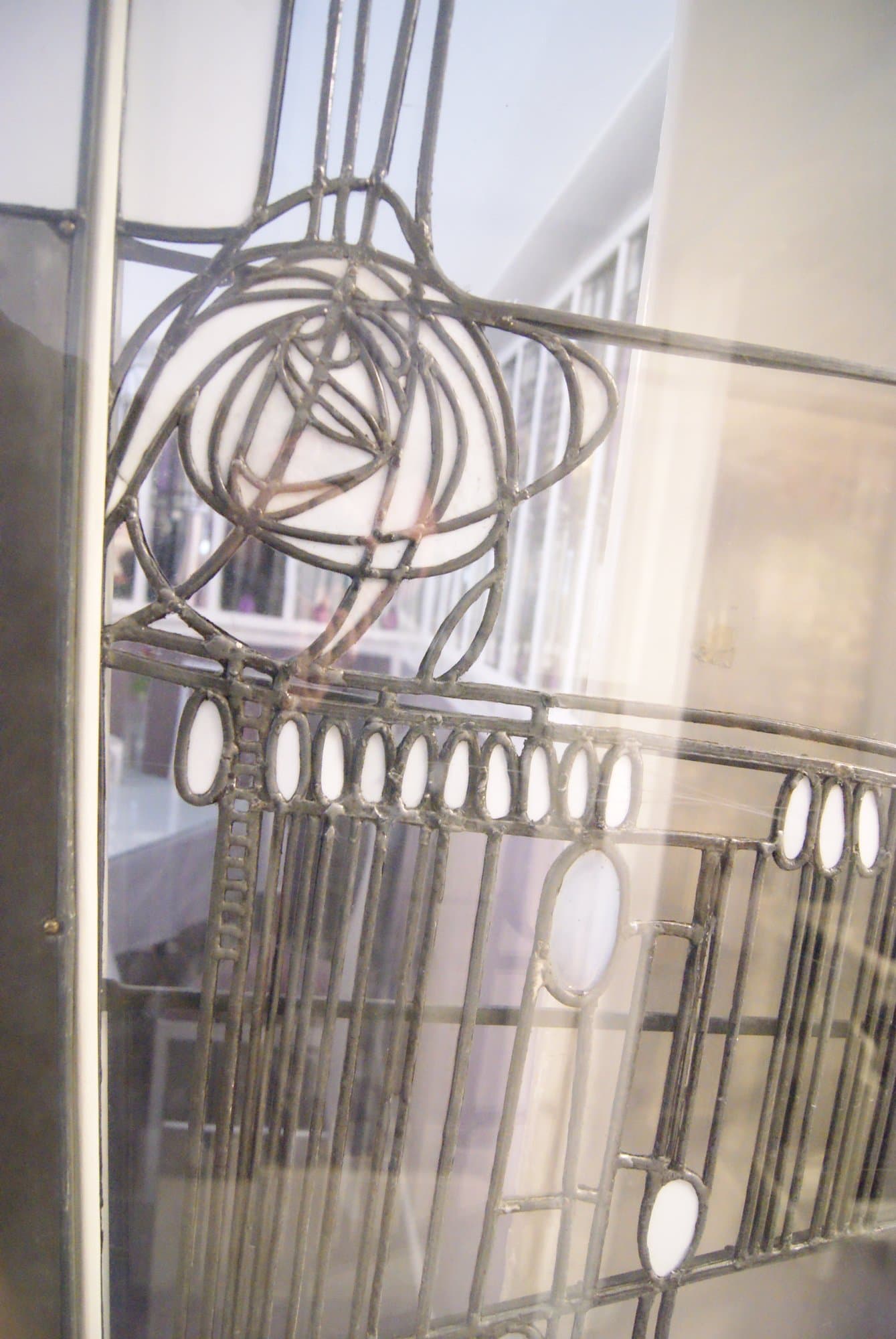
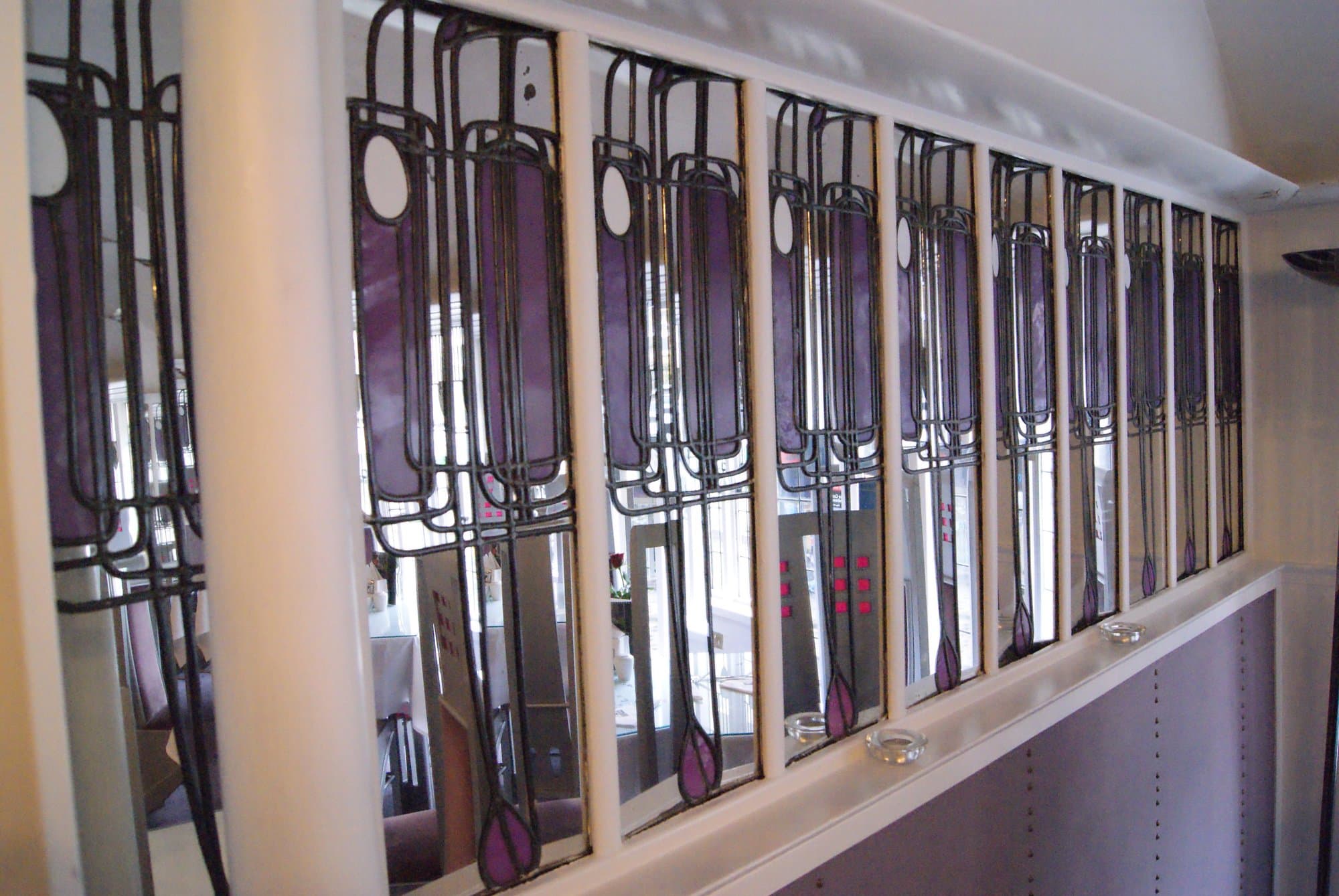
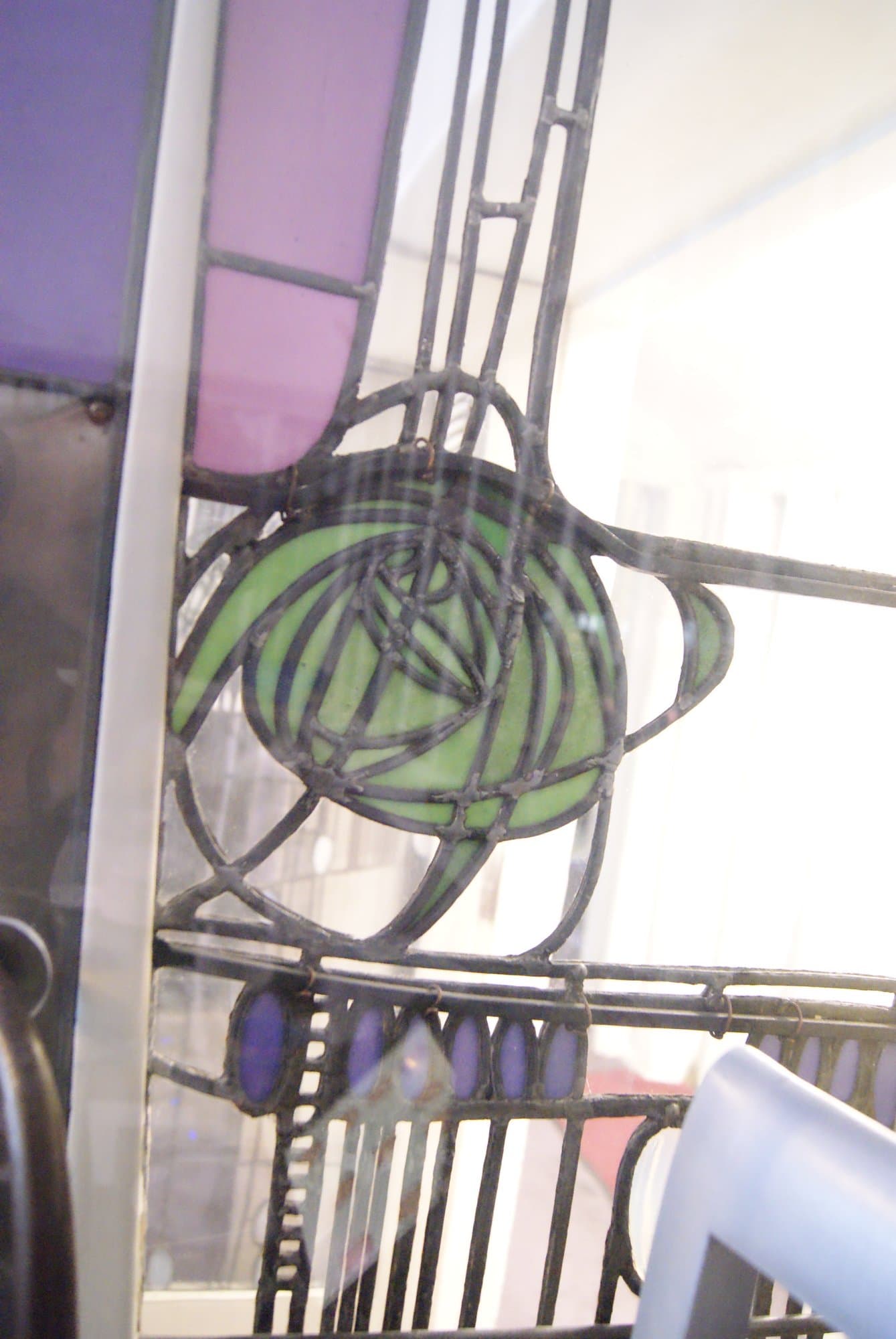
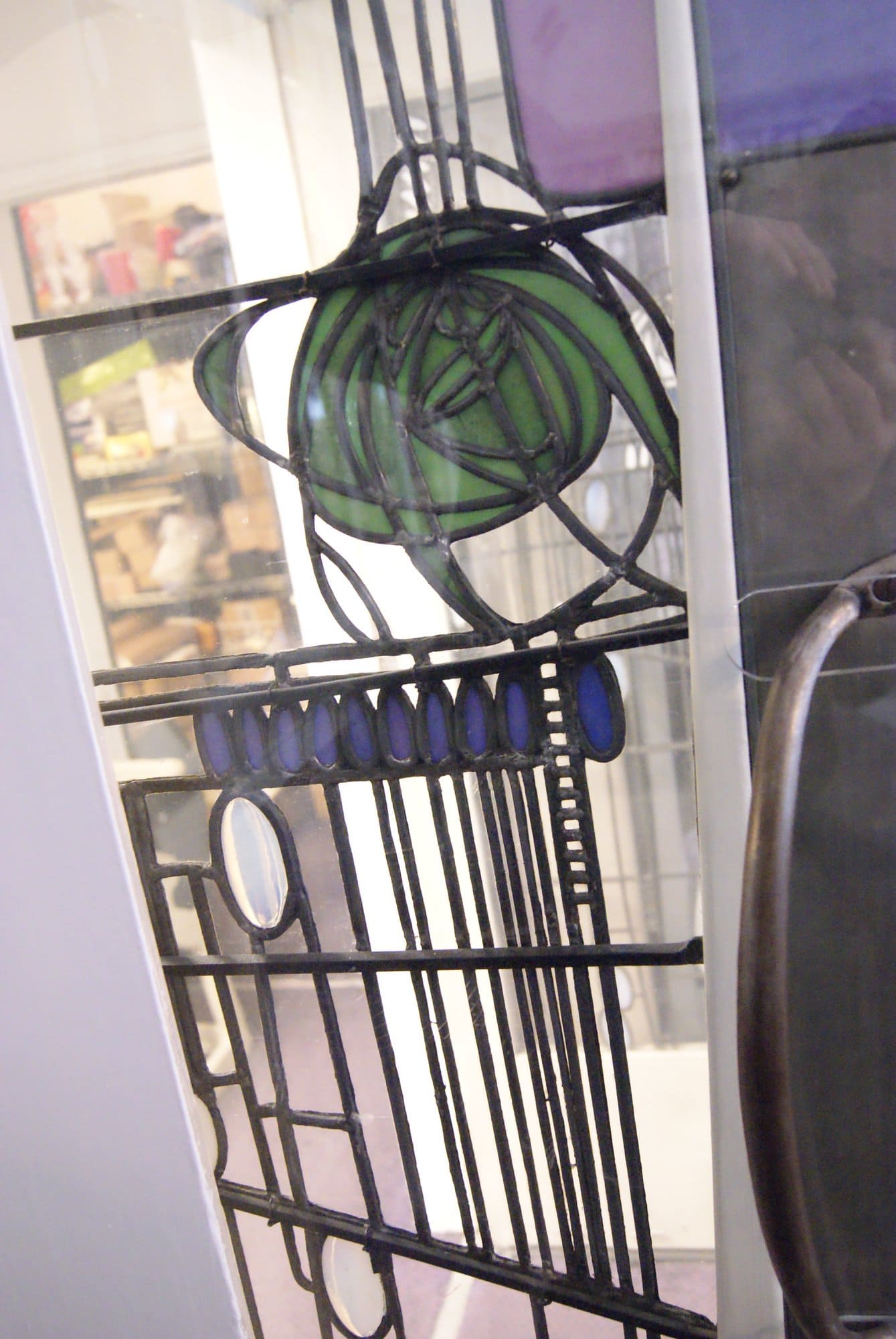
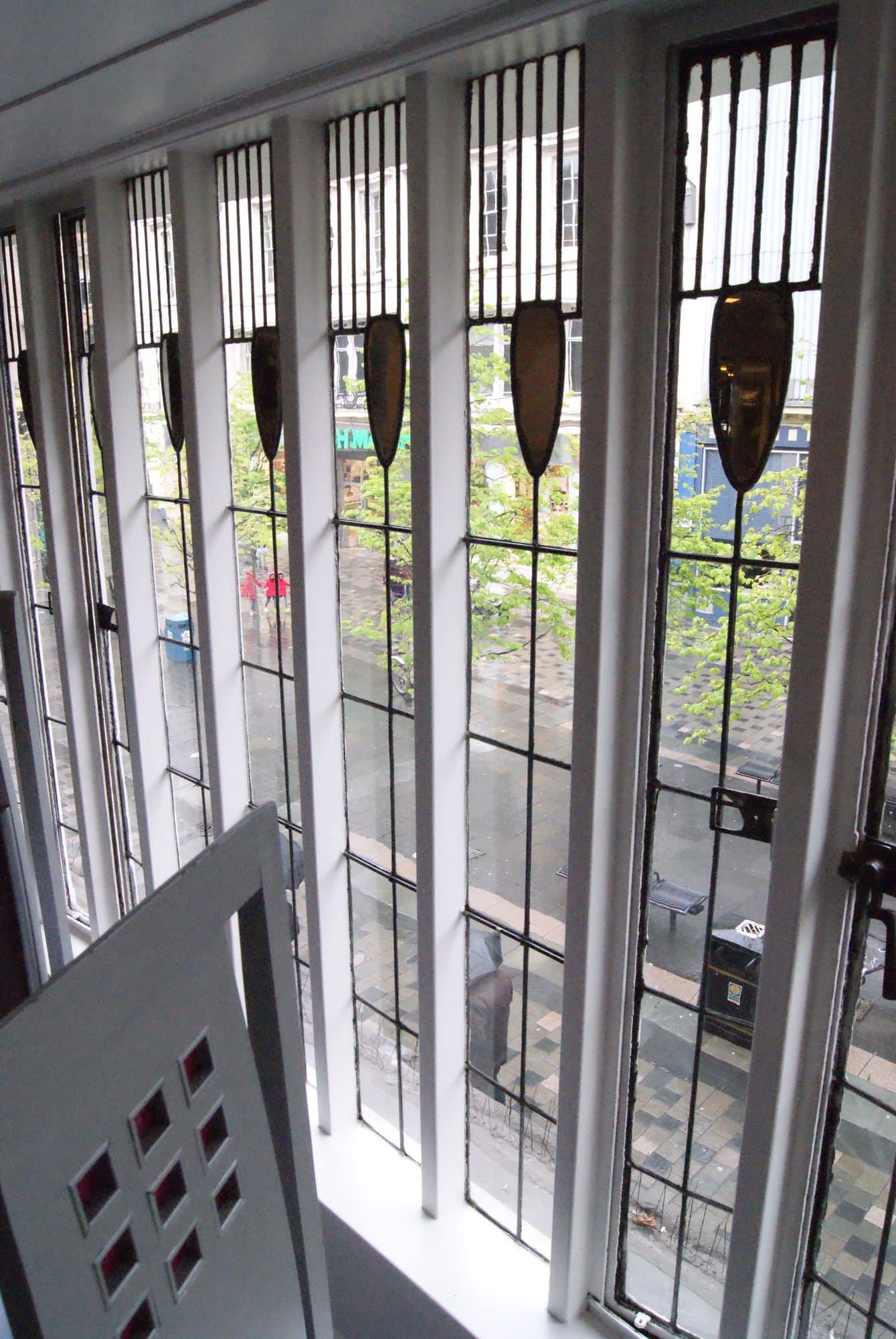
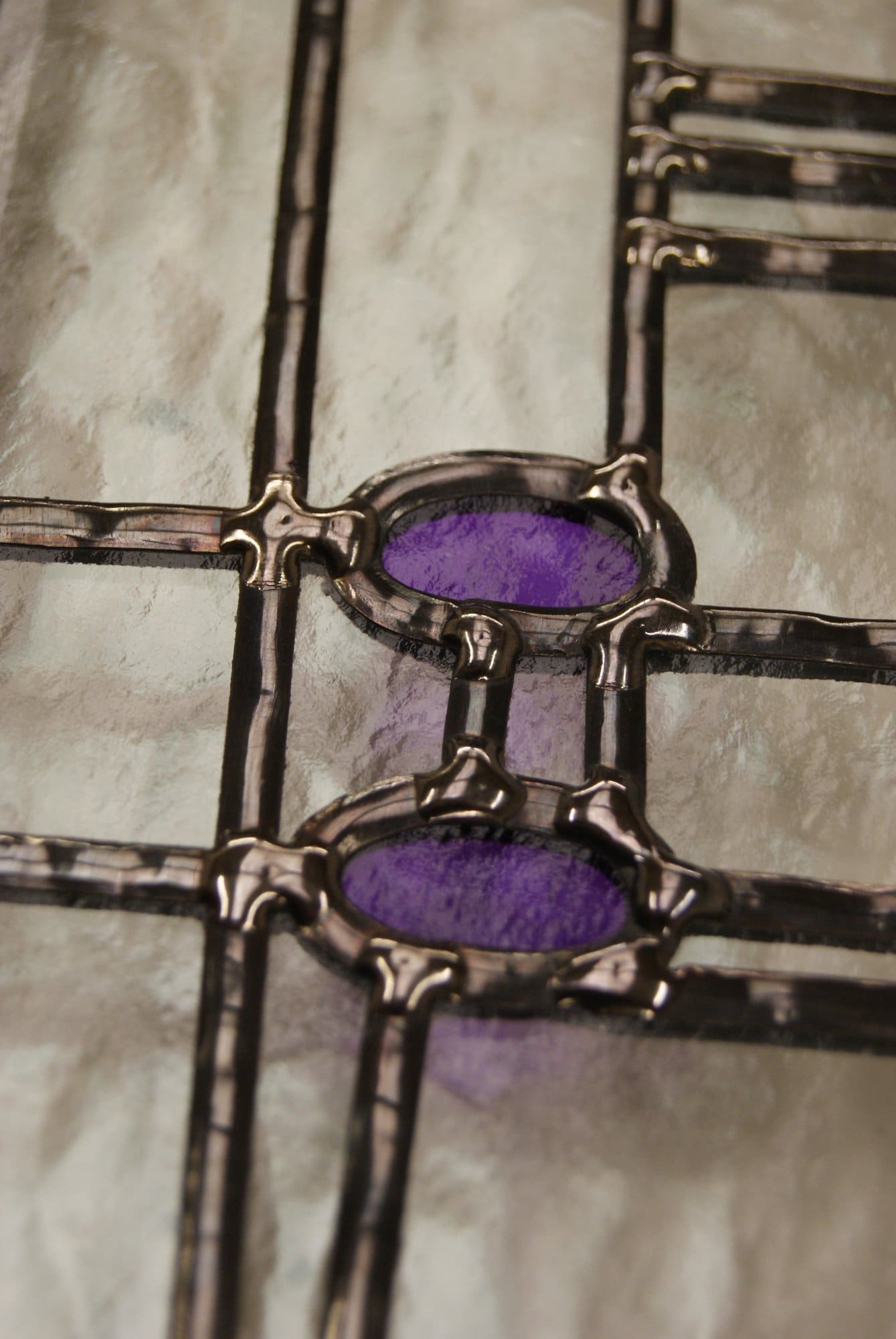
The windows photographed here are the tall ones at the front on Sauchiehall Street, narrow leaded panels in purple glass with thin stems rising into small bud or tulip shapes, all held in a fine lead grid. There is also a glazed door with a Mackintosh rose in lead lines and green glass, and the willow shape is repeated in the decoration around it. Even the chairs have glass in them, with small squares of pink glass set into the silver high backs.
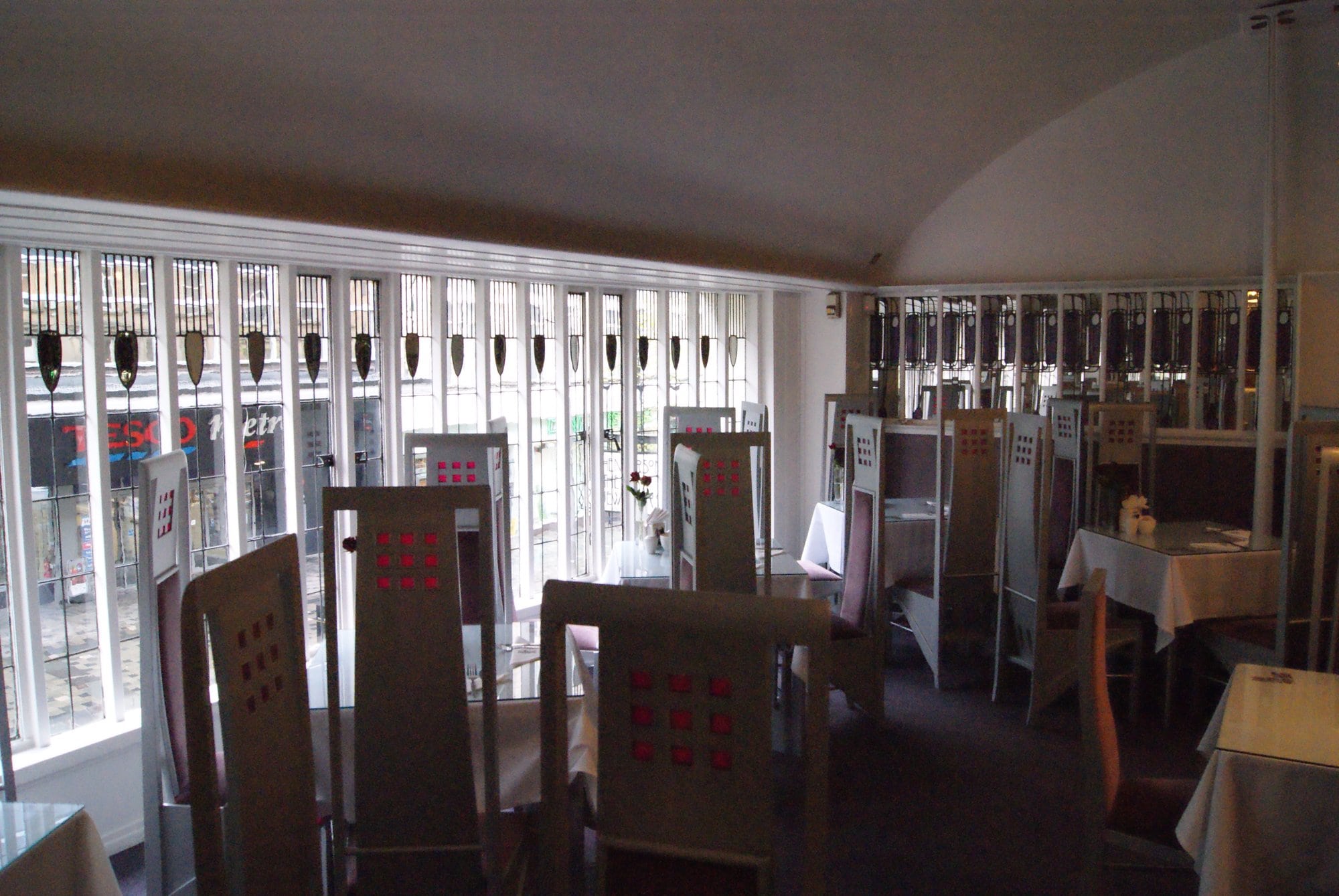
Photographs
These photographs were taken in May 2013, a year before the rescue described further down, so they show the rooms as they were before the 2014 to 2018 restoration. Some of what you would see now has been repaired or recreated.
The Room de Luxe
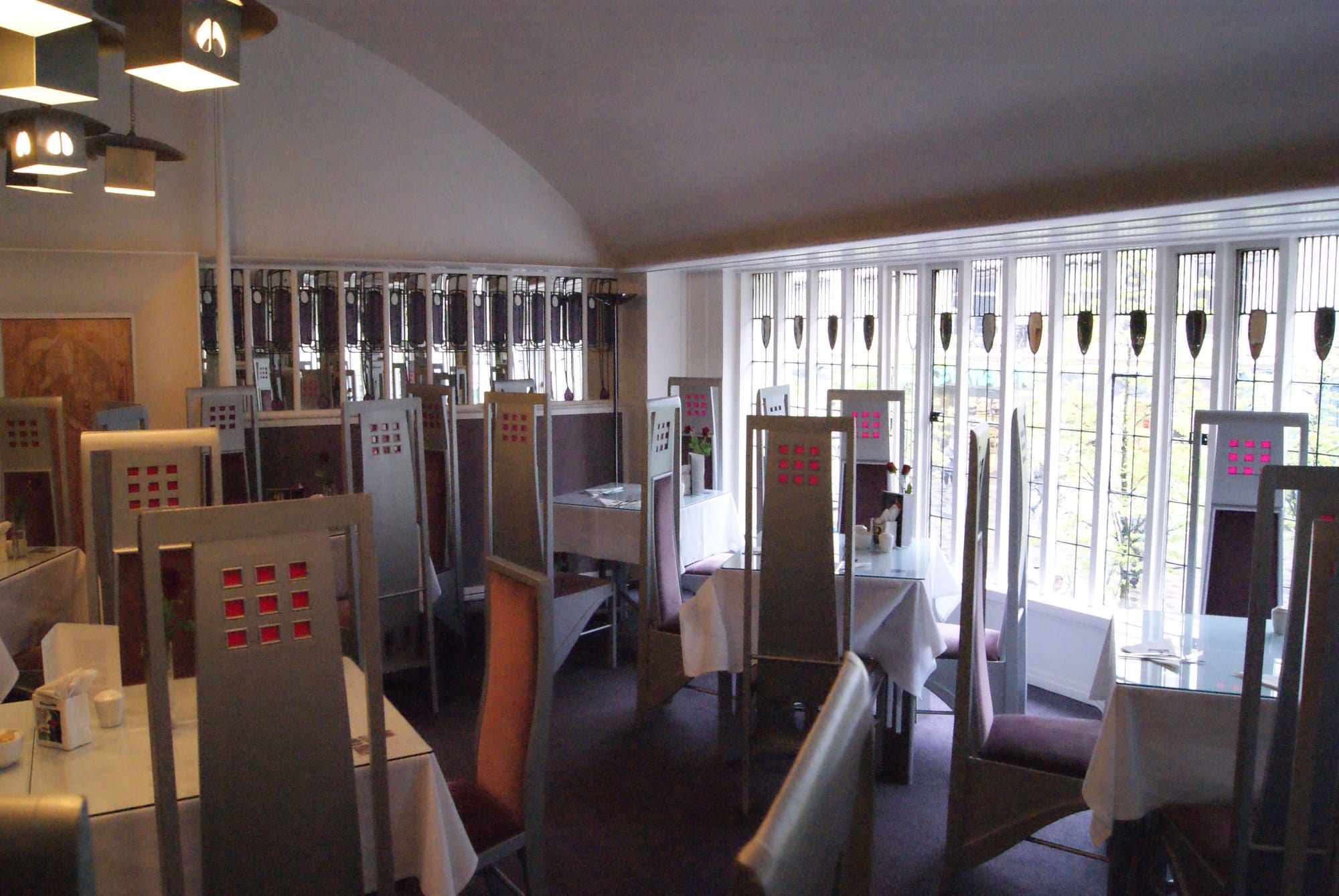
The first-floor room was the showpiece, and at the time it was described as a fantasy for afternoon tea. It has a curved ceiling, double doors of leaded glass, rose-purple seats and silver-painted tables with high-backed chairs. Above the white walls runs a frieze of coloured, mirrored and leaded glass. Opposite the fireplace is a gesso panel by Margaret Macdonald, based on a sonnet by Rossetti, “O Ye, all ye that walk in Willow Wood”.
After Miss Cranston
Kate Cranston sold up in 1917, after her husband died. Daly’s department store took over the building in 1928 and used the Room de Luxe as its tea room into the early 1980s. The business behind the tea rooms had gone into liquidation in 1954 and the building was sold. It was restored and reopened in 1983, with Henderson’s the jewellers on the ground floor and Anne Mulhern running the tea room, and in 2013 she took on the whole building.
Saved from a sale
The building then came close to being lost. In 2014 the owner went into receivership and the building was about to be sold off, and the Glasgow businesswoman Celia Sinclair bought it to stop that happening. A charity, The Willow Tea Rooms Trust, took it on and a restoration by the conservation architects Simpson & Brown followed. It cost about £10 million, nearly £4 million of it from the Heritage Lottery Fund, and the tea rooms reopened in July 2018 as Mackintosh at the Willow.
Since then it has faced difficulties, including the fire at the Glasgow School of Art, the pandemic and the cost of maintaining a listed building. The National Trust for Scotland took it on in January 2024, and in February 2026 renamed it The Mackintosh Tearooms. It is not the same as the Willow Tearooms on Buchanan Street, which are a separate business that kept the old name.
Where it is
It is at 217 Sauchiehall Street. Look at the front first, which is black and white with purple tiles, and the metal entrance doors with their green stylised roses.
What to look for
Compare these windows with Hill House. The restraint is the same, but here the glass runs in a long band with one shape repeated again and again. Look at how the purple changes in tone from one panel to the next. The glass itself is uneven, which gives hand-made coloured glass more depth than a flat printed colour.
A Willow style panel made with overlay
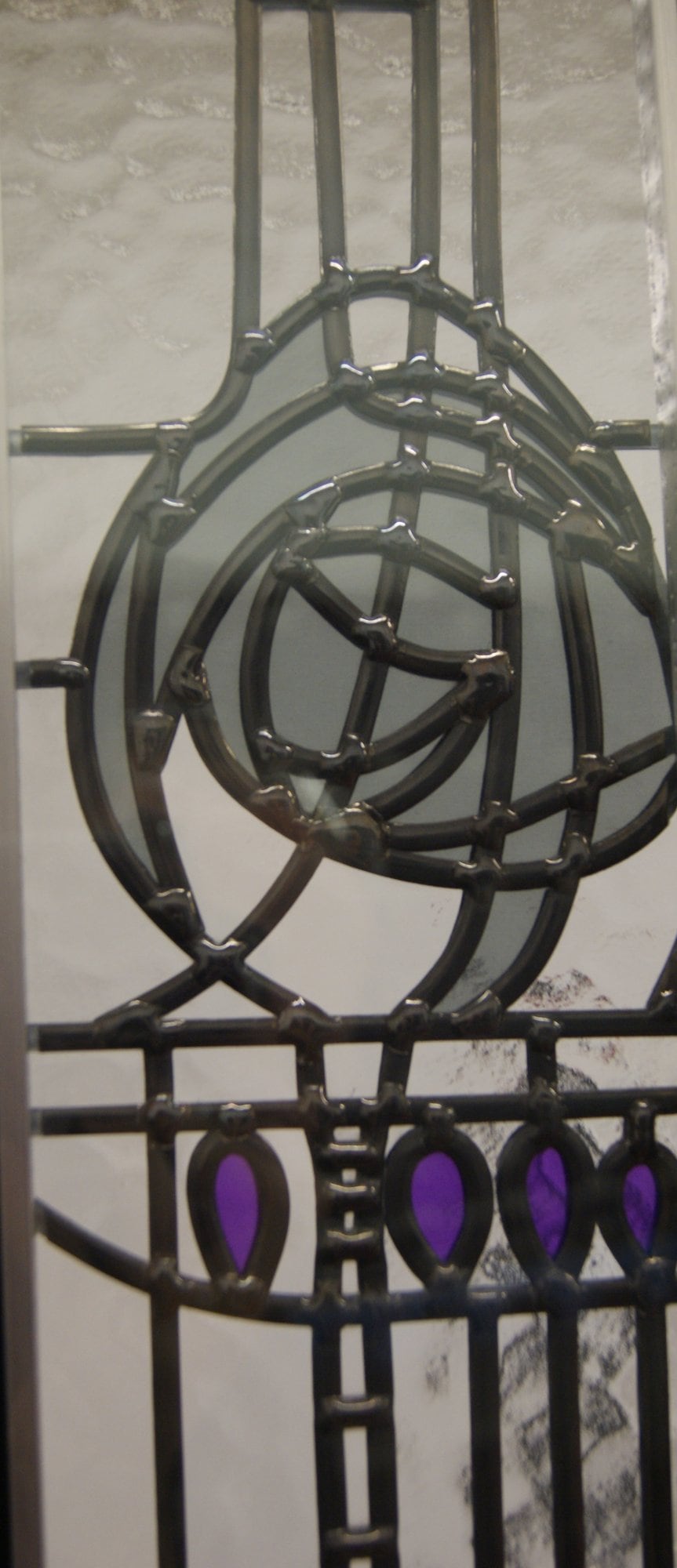
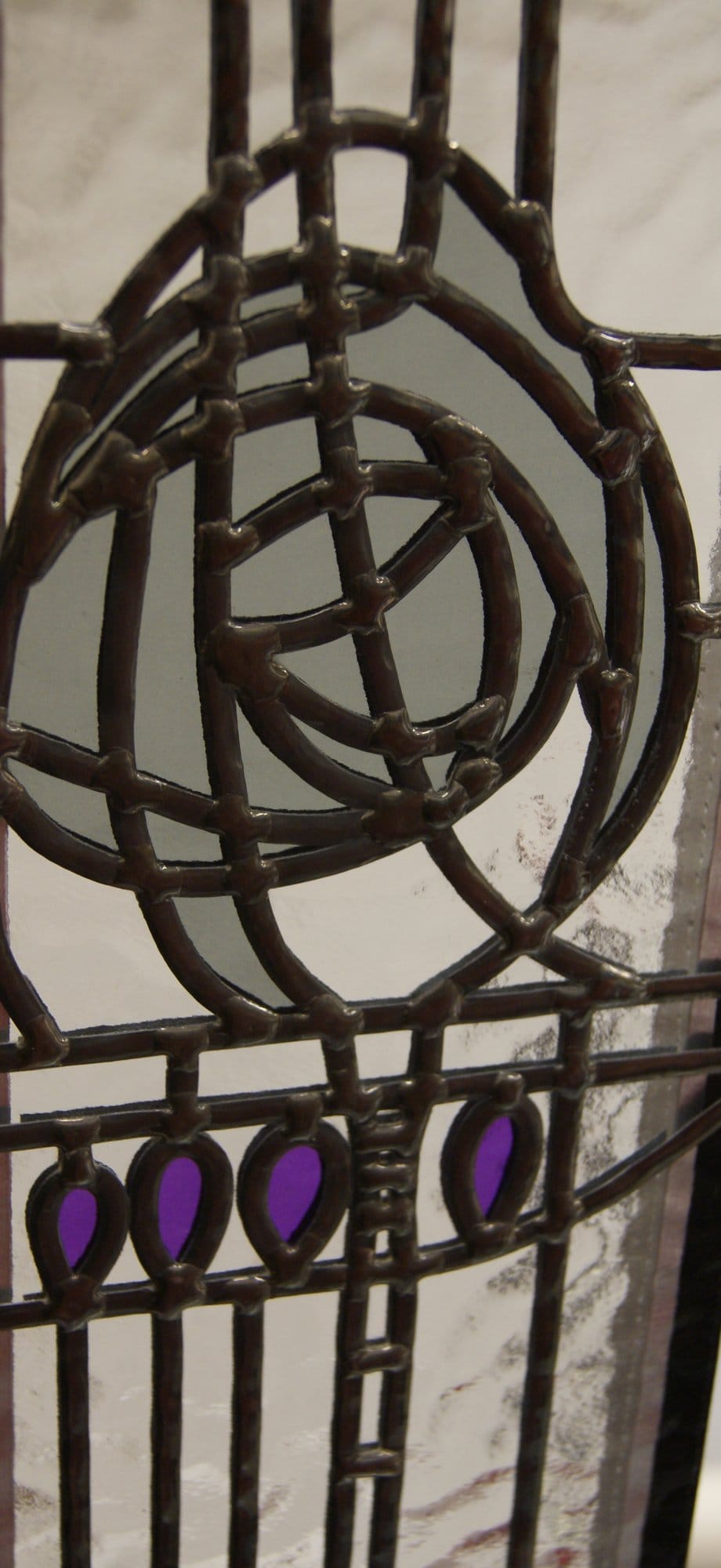
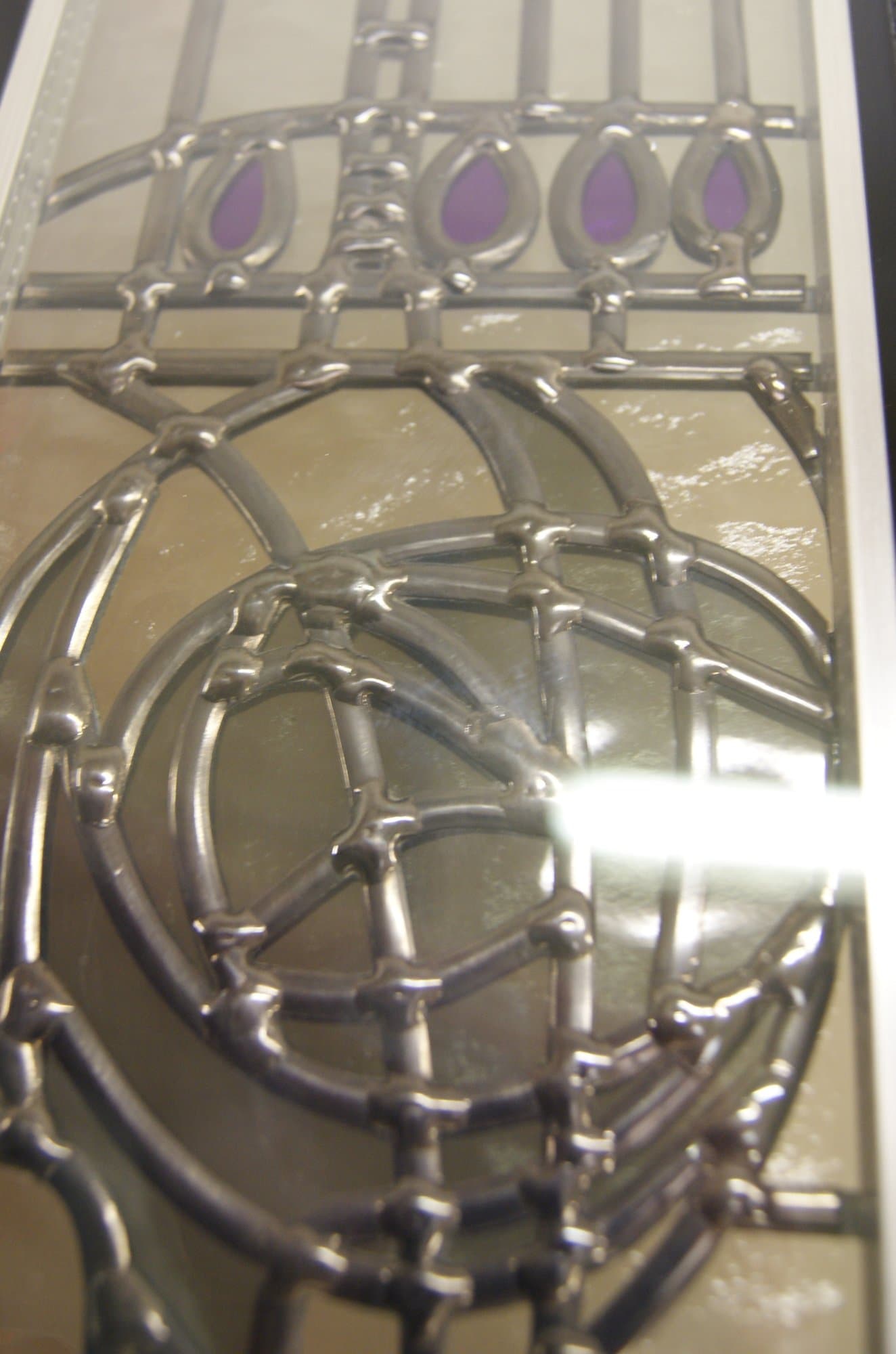
The windows above are leaded, as Mackintosh intended. The same design can also be produced today with the overlay method, where the lead and coloured glass are applied to a sheet of toughened glass. The panel below is a reproduction of a Willow Tea Rooms style panel produced this way. It has the rose, the long stems and the purple buds, and the lead lines follow the original pattern. You can read how the method works on the overlay stained glass page.
Sources and further reading
- National Trust for Scotland: Mackintosh at the Willow joins the Trust
- Mackintosh Architecture, University of Glasgow: Willow Tea Rooms
More Mackintosh
Read about Charles Rennie Mackintosh, Hill House, House for an Art Lover and 78 Derngate. For how this kind of window is made, see leaded lights.
This building is part of the stained glass tour of the UK, alongside other Scottish places on the Scottish trail.