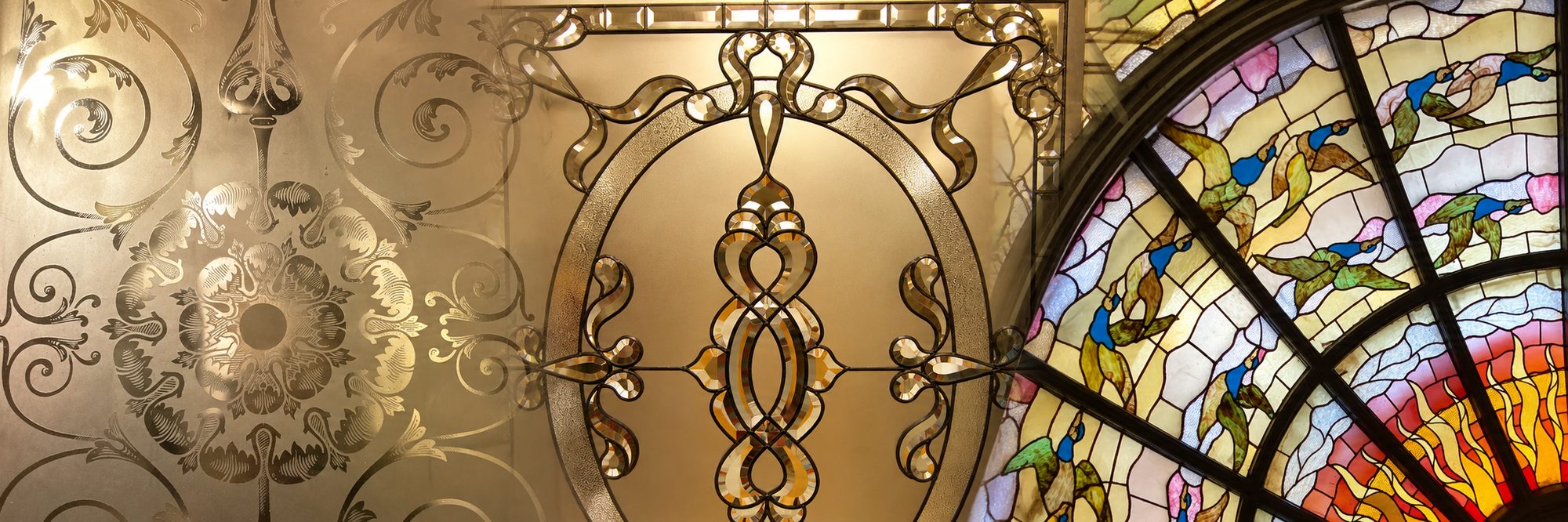

Sandblasting
Sandblasting shapes glass by firing abrasive grit at it through a nozzle with compressed air. A resist, usually a stencil of adhesive vinyl or rubber, protects the parts that are to stay clear. Where the grit hits bare glass it wears the surface away.
The depth is controlled by how long the blasting continues. A shallow blast leaves an even, frosted finish. A deeper blast cuts the glass in relief, and by moving to blast different areas to different depths, a skilled worker can carve images with shading and a three-dimensional effect, which is called deep carving.
It is the usual method for modern etched-look glass in doors, screens, partitions, balustrades and shop windows, because it is faster and safer than acid. Despite the name, the abrasive today is rarely sand, since silica dust is a health hazard. Aluminium oxide and similar grits are used instead.